









United Air Lines Trip 4 Crash
The United Air Lines Trip 4 crash was a tragic aviation accident that took place on 7 October 1935 in the United States. The aircraft was operating a scheduled passenger service for United Air Lines, one of the major American airlines of the period. The accident became part of the early history of commercial aviation in the United States, when passenger air travel was growing rapidly but aircraft, navigation systems, and weather technology were still developing.
The crash is remembered as an example of the difficulties faced by airline crews during the 1930s. Pilots had to fly long routes through changing weather and mountainous areas while depending on relatively simple navigation equipment. The accident also came at a time when government authorities were working to improve aviation regulations and accident investigation.
United Air Lines in the 1930s
United Air Lines was one of the leading airlines in the United States during the 1930s.
The company had grown from earlier aviation businesses that operated air-mail routes and passenger services. By the middle of the decade, United had established a network connecting many important American cities.
Commercial aviation was changing quickly.
Airlines were replacing older aircraft with newer all-metal airplanes. Passenger cabins were becoming more comfortable, aircraft were becoming faster, and scheduled airline services were becoming more dependable.
However, flying was still much more dangerous than it is today.
Pilots did not have GPS, satellite weather information, modern radar, or computerized flight-management systems. They had to depend on maps, compasses, radio signals, instruments, and their own judgment.
The Aircraft
United Air Lines operated several important aircraft types during this period.
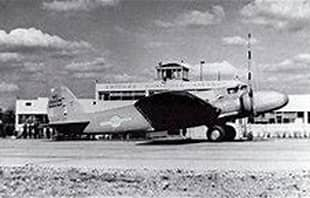
Aircraft used by American airlines in the 1930s included the Boeing 247, a modern twin-engine all-metal airliner that had helped change commercial aviation.
The Boeing 247 was faster than many earlier passenger aircraft. It had retractable landing gear, an enclosed cabin, and an advanced aerodynamic design.
It was an important aircraft in the development of American commercial air travel.
The introduction of such aircraft meant that airlines could offer faster services between major cities.
But increased speed also created new challenges for pilots and navigation systems.
The Flight of 7 October 1935
On 7 October 1935, United Air Lines Trip 4 was operating as a scheduled commercial flight.
The aircraft was carrying passengers and crew.
The journey was expected to be a normal airline operation.
However, the flight encountered serious difficulties.
The aircraft eventually crashed, causing the loss of lives aboard.
The accident immediately became a matter of concern for United Air Lines and aviation authorities.
Investigators began examining the circumstances surrounding the crash.
Flying in the 1930s
To understand the accident, it is important to understand how different aviation was in 1935.
Modern pilots have access to enormous amounts of information.
They can see their exact location on digital displays.
They receive detailed weather forecasts.
Air traffic controllers continuously monitor aircraft.
Aircraft systems provide warnings about terrain, traffic, and mechanical problems.
In 1935, pilots had far fewer resources.
Navigation was often based on radio ranges and visual landmarks.
If clouds covered mountains or other landmarks, pilots could become uncertain about their position.
This made instrument flying extremely important.
Weather Challenges
Weather was one of the greatest dangers facing airline pilots.
Clouds could reduce visibility.
Fog could hide terrain.
Rain could make navigation difficult.
Strong winds could push an aircraft away from its intended course.
Thunderstorms could produce dangerous turbulence.
Weather forecasting was improving during the 1930s, but forecasts were not as accurate or detailed as modern forecasts.
Pilots often had to make decisions using reports from airports and weather stations along their route.
A sudden change in conditions could therefore create a serious problem.
Mountainous Terrain
Mountain flying presented another major challenge.
Many important American airline routes crossed or passed near mountainous regions.
Aircraft had to maintain enough altitude to clear peaks and ridges.
If a pilot lost track of the aircraft’s position, the danger of controlled flight into terrain increased.
Today, aircraft have terrain-awareness systems that can warn pilots when they are approaching dangerous terrain.
These systems did not exist in the 1930s.
Pilots therefore had to maintain their position using navigation equipment and careful route planning.
The Accident
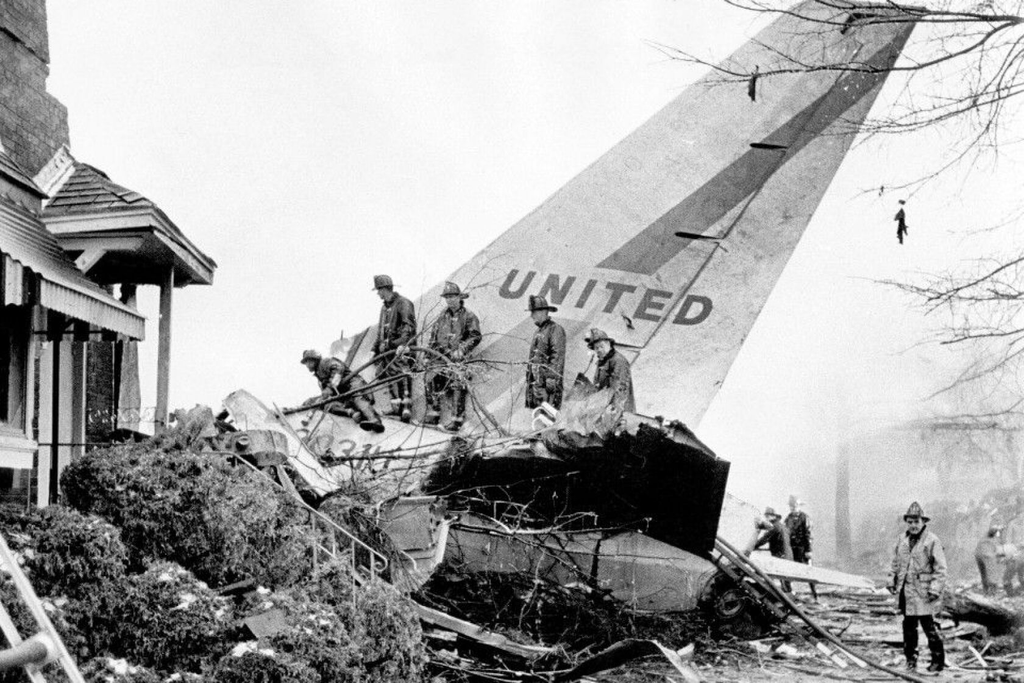
United Air Lines Trip 4 eventually crashed during its flight on 7 October.
The accident resulted in fatalities.
The aircraft was badly damaged by the impact.
Rescue teams and local authorities were notified.
Investigators traveled to the crash site to begin examining the wreckage.
The location and condition of the aircraft were important pieces of evidence.
Investigators wanted to know whether the aircraft had experienced a mechanical failure or whether weather, navigation, or pilot actions had contributed to the crash.
Searching for the Aircraft
Finding a crashed aircraft in the 1930s could be extremely difficult.
There were no satellite tracking systems.
Aircraft did not transmit their exact GPS location.
If an aircraft failed to arrive at its destination, search teams had to estimate where it might have gone.
They relied on the planned route, last radio communication, eyewitness reports, and information from other aircraft.
If the aircraft had crashed in remote or mountainous terrain, finding it could take considerable time.
This made aviation accidents especially difficult for families waiting for information.
The Investigation
Investigators carefully examined the wreckage.
They looked at the engines, propellers, wings, landing gear, flight controls, and fuselage.
The condition of the engines could show whether they were operating when the aircraft struck the ground.
The propellers could provide clues about engine power.
The location of the wreckage could help investigators reconstruct the direction and angle of impact.
Investigators also collected witness statements.
Weather records were examined.
Radio communications were reviewed when available.
The goal was to determine the most likely sequence of events.
No Modern Flight Recorders
One major problem for investigators was that commercial aircraft in 1935 did not have flight-data recorders.
Today, investigators can recover detailed information about an aircraft’s final minutes.
They can examine altitude, speed, heading, engine performance, and many other parameters.
In 1935, investigators did not have this information.
They had to reconstruct accidents using physical evidence.
This made it much harder to identify exactly what happened inside the cockpit before a crash.
Pilot Decision-Making
Pilots in the early airline industry carried enormous responsibility.
They had to manage the aircraft manually.
They navigated the route.
They monitored the weather.
They communicated with ground stations.
They had to make decisions about altitude and direction.
If weather became worse, the pilot had to decide whether to continue, change altitude, alter the route, or turn back.
These decisions could be difficult when information was limited.
The accident therefore became part of the broader history of improving pilot procedures and training.
Instrument Flying
The 1930s were an important period in the development of instrument flying.
Instrument flying allowed pilots to operate without depending completely on visual contact with the ground.
This was particularly useful in clouds and poor weather.
Aircraft were increasingly equipped with instruments that showed:
- Altitude
- Airspeed
- Direction
- Rate of climb or descent
- Aircraft attitude
Pilots needed specialized training to interpret these instruments correctly.
Airlines gradually introduced more systematic instrument-flying procedures.
Radio Navigation
Radio navigation was also developing rapidly.
Radio-range stations could help pilots follow predetermined routes.
These systems were especially valuable when visibility was poor.
Instead of relying only on landmarks, pilots could use radio signals to maintain a course.
However, radio navigation was not as precise or widespread as modern satellite navigation.
Equipment could also fail.
Pilots still needed traditional navigation skills.
The Human Cost
The most important part of any aircraft accident is the loss suffered by people.
The passengers aboard United Air Lines Trip 4 had ordinary reasons for traveling.
Some may have been traveling for business.
Others may have been visiting relatives or traveling for personal reasons.
The crew members were performing their jobs.
None expected the flight to end in tragedy.
The crash caused grief for families and friends.
It also affected the employees and wider community connected with United Air Lines.
Public Confidence in Air Travel
During the 1930s, the public was still developing confidence in commercial aviation.
Air travel offered major advantages.
It could reduce a journey that took many hours by train to a much shorter flight.
Business travelers could reach distant cities quickly.
Mail could also be delivered faster.
But every serious accident received considerable public attention.
Airlines needed to show that they were learning from accidents and improving their operations.
Safety Regulations
The federal government was becoming increasingly involved in aviation safety.
Regulations covered aircraft certification, pilot licensing, maintenance, and airline operations.
Accident investigations helped identify areas where rules needed to be strengthened.
The aviation industry was moving toward standardized procedures.
This was an important change.
Instead of relying only on individual pilot experience, airlines increasingly developed formal systems.
Aircraft Maintenance
Maintenance was another important safety issue.
Airline aircraft flew many hours.
Engines needed regular inspections.
Control cables and other systems needed to be checked.
Landing gear had to be maintained.
The aircraft structure needed inspection for damage or wear.
Modern airlines have extremely detailed maintenance programs.
The foundation for these programs was developed during the early decades of commercial aviation.
The Growth of United Air Lines
United Air Lines continued to grow despite accidents during its early history.
The airline became one of the major carriers in the United States.
Its network expanded.
Its aircraft became more advanced.
United eventually operated jet aircraft and became an important international airline.
The airline’s early history reflects the broader development of American aviation.
The industry moved from relatively small aircraft and basic airfields to sophisticated global airline networks.
The Importance of the Boeing 247 Era
The Boeing 247 and similar aircraft represented a major change in commercial aviation.
They were faster and more efficient than many earlier airplanes.
Their all-metal construction improved durability.
Retractable landing gear reduced aerodynamic drag.
Enclosed cabins improved passenger comfort.
But these aircraft also required better airports, navigation systems, and pilot training.
The technology of the aircraft was advancing faster than some of the supporting infrastructure.
Lessons from the Accident
The United Air Lines Trip 4 crash provided another reminder of the importance of aviation safety.
Several broad lessons from accidents of this era remained important:
Reliable navigation: Pilots need accurate information about their position.
Weather awareness: Crews need timely weather information.
Pilot training: Crews must be prepared for poor visibility and emergencies.
Aircraft maintenance: Mechanical systems must be inspected regularly.
Emergency planning: Search and rescue systems must be prepared to respond quickly.
Accident investigation: Every crash should be studied to prevent similar accidents.
These principles became central to modern aviation.
Improvements After the 1930s
Aviation safety improved significantly during the decades that followed.
Airlines introduced better instruments.
Radio navigation became more reliable.
Air traffic control expanded.
Weather forecasting improved.
Aircraft engines became more dependable.
Airframes became stronger.
Pilot training became more standardized.
Later, radar and computers transformed aviation.
Satellite navigation eventually provided highly accurate positioning.
Terrain-warning systems gave pilots additional protection.
Modern aviation is the result of this long process of technological and procedural improvement.
Historical Importance
The United Air Lines Trip 4 accident belongs to an important period in American aviation.
The United States was developing one of the world’s largest commercial airline systems.
Aircraft were becoming faster and more capable.
Airlines were connecting cities across the country.
However, the systems needed to support safe operations were still developing.
Accidents such as Trip 4 demonstrated the risks and encouraged further improvements.
Remembering the Accident
Historical aviation accidents should not be remembered only as statistics.
Each accident involved real people.
The passengers had families and personal stories.
The crew members had careers and loved ones.
The tragedy affected many people beyond the crash site.
Remembering these accidents also helps explain how aviation safety developed.
Today’s highly regulated airline industry did not appear suddenly.
It was built over decades through technological progress, professional training, regulation, and lessons learned from accidents.
Conclusion
The United Air Lines Trip 4 crash of 7 October 1935 was a tragic event during an important stage in the development of American commercial aviation.
United Air Lines was expanding its passenger network, and aircraft of the period were becoming faster, stronger, and more reliable. Yet the aviation environment of 1935 was very different from today’s.
Pilots did not have GPS, modern weather radar, satellite communications, terrain-warning systems, or computerized navigation. They relied on maps, instruments, radio navigation, weather reports, and their own experience.
These limitations made difficult weather and navigation especially dangerous.
The investigation of the crash was also more difficult than modern accident investigations. Without flight-data and cockpit voice recorders, investigators had to depend on wreckage, witness reports, weather records, and other evidence.
The accident formed part of a period of learning in commercial aviation. Airlines and authorities were developing better pilot training, maintenance procedures, navigation systems, weather services, and operating regulations.
United Air Lines continued to develop after the accident and eventually became one of the world’s major airlines. The aircraft and technology used by airlines also changed dramatically over the following decades.
The story of United Air Lines Trip 4 therefore represents more than one aviation accident. It reflects the challenges faced by early airline crews and the gradual development of the safety systems that modern passengers now take for granted.
The tragedy of 7 October 1935 remains part of aviation history and reminds us that today’s safe and reliable air travel was built through many years of experience, innovation, and lessons learned from the past.

Ajeet Yadav is an aviation enthusiast covering airline news, airports, aircraft, and industry developments through well-researched and reliable reporting.