







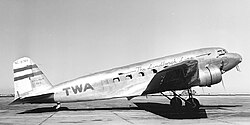
TWA Flight 6 Crash 6 May 1935
The TWA Flight 6 crash of 6 May 1935 was a tragic aviation accident in the early history of American commercial air travel. The flight was operated by Transcontinental & Western Air (TWA), one of the major airlines in the United States during the 1930s. The aircraft was flying a scheduled passenger service when it crashed in difficult weather conditions.
The accident became especially important because it involved a Douglas DC-2, one of the most advanced passenger aircraft of its time. The crash demonstrated that even modern aircraft could face serious dangers when operating in poor weather, particularly during the early period of instrument flying.
The accident also became part of the continuing development of airline safety in the United States. During the 1930s, airlines, aircraft manufacturers, pilots, and government authorities were learning how to operate commercial aircraft more safely and reliably.
TWA in the 1930s
Transcontinental & Western Air, commonly known as TWA, was one of America’s important airlines.
The company had been created in 1930 through the merger of several aviation businesses.
During the 1930s, TWA operated passenger and mail services across the United States.
Its routes connected major cities and provided faster transportation than trains.
The airline was developing rapidly as Americans became increasingly interested in air travel.
However, commercial aviation was still young.
Aircraft were becoming more advanced, but pilots still had to depend heavily on their own skills.
Navigation, weather information, and communication systems were not as sophisticated as they are today.
The Douglas DC-2
The aircraft associated with the flight was a Douglas DC-2, a twin-engine passenger aircraft.
The DC-2 was one of the most important commercial aircraft of the 1930s.
It was built by the Douglas Aircraft Company and represented a major improvement over many earlier airliners.
The aircraft had an all-metal structure and two powerful engines.
It was faster and more reliable than many older passenger aircraft.
The DC-2 could carry passengers in greater comfort and operate longer routes.
Its design influenced the development of later commercial aircraft, including the famous Douglas DC-3.
Because of its modern design, the DC-2 was widely regarded as an important step forward in airline transportation.
Commercial Flying in 1935
Flying in 1935 was very different from flying today.
A modern passenger aircraft can use satellite navigation, weather radar, automated flight systems, digital communications, and advanced air traffic control.
Aircraft in the 1930s had none of these technologies in their modern form.
Pilots relied on instruments, maps, compasses, radio communication, and visual landmarks.
When weather became poor, flying became much more difficult.
Clouds and fog could hide the ground.
Rain could reduce visibility.
Strong winds could push an aircraft away from its planned course.
Pilots had to make important decisions without the detailed information available to modern crews.
The Flight on 6 May 1935
On 6 May 1935, TWA Flight 6 was operating a scheduled commercial service.
The aircraft was carrying passengers and crew.
The flight was part of TWA’s regular operations.
Passengers boarded expecting to reach their destination safely.
The crew prepared the aircraft and began the flight.
However, the weather along the route was difficult.
The aircraft eventually encountered serious problems while flying in poor visibility.
The flight ended in a crash.
Difficult Weather
Weather played an important role in the accident.
The American Midwest and surrounding regions could experience rapidly changing weather during this period.
Pilots had to monitor conditions carefully.
Modern weather radar was not available.
Weather forecasts were based on observations from ground stations, aircraft reports, and other sources.
Pilots could receive weather information by radio, but the information was much less detailed than today’s forecasts.
A pilot could therefore encounter clouds, rain, fog, or turbulence without having a complete picture of the conditions ahead.
Instrument Flying
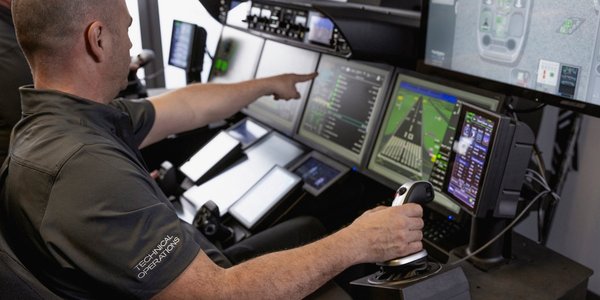
One of the major developments in aviation during the 1930s was instrument flying.
Instrument flying allowed pilots to control aircraft without seeing the ground.
This was especially important when an aircraft entered clouds.
Before instrument flying became common, pilots preferred to remain in visual conditions.
However, commercial airlines wanted to operate regular schedules even when visibility was poor.
This created a need for better instruments and better pilot training.
The TWA Flight 6 accident occurred during this period of transition.
Pilots were increasingly expected to operate aircraft in weather that would previously have been considered too difficult.
Navigation Problems
Navigation was another challenge.
Airline pilots had to follow routes between airports using maps, landmarks, radio signals, and compass headings.
Radio navigation was becoming more useful, but the system was still developing.
If a pilot became uncertain about the aircraft’s position, finding the correct route could be difficult.
This was especially dangerous when the aircraft was flying in clouds or darkness.
Modern GPS has almost eliminated many of these navigation problems, but pilots in the 1930s had to develop strong navigation skills.
The Final Part of the Flight
As TWA Flight 6 continued through difficult weather, the crew faced increasing challenges.
Visibility was poor.
The aircraft was flying in conditions where the ground could not easily be seen.
The pilot had to depend on instruments and available navigation information.
At some point, the aircraft’s flight path became unsafe.
The aircraft eventually crashed.
The impact caused severe damage to the aircraft.
The accident resulted in fatalities and immediately led to an investigation.
The Crash Site
The crash site became an important part of the investigation.
Investigators examined the aircraft wreckage carefully.
They looked for signs of:
- Engine failure
- Structural failure
- Fire
- Control problems
- Navigation errors
- Weather-related difficulties
The position of the wreckage could also help determine the aircraft’s direction and attitude at the time of impact.
Investigators compared the physical evidence with weather information and witness reports.
This process allowed them to reconstruct the final stage of the flight.
Early American Aviation Investigations
By the 1930s, the United States had developed systems for investigating serious aircraft accidents.
Government authorities examined major crashes involving commercial aircraft.
The purpose was not simply to identify responsibility.
Investigations also aimed to discover what could be changed to prevent similar accidents.
If a technical problem was discovered, other aircraft might be inspected.
If pilot training was found to be inadequate, training standards could be improved.
If weather information was insufficient, forecasting and communication systems could be developed.
This approach became an important foundation of modern aviation safety.
The Role of the Pilot
Pilots in the early airline industry had a very demanding job.
They had to control the aircraft while also navigating and monitoring weather.
They were responsible for making decisions about altitude, route, and safety.
The pilot could not simply rely on an automated system.
When visibility became poor, the pilot had to trust the aircraft’s instruments and personal judgment.
This made pilot training extremely important.
The development of standardized instrument-flying training became one of the major improvements in airline safety.
TWA’s Experience
TWA was operating in a competitive and rapidly changing aviation industry.
The company wanted to provide reliable service between major American cities.
Passengers expected flights to operate on schedule.
At the same time, pilots had to deal with weather that could make flying dangerous.
Airlines therefore had to balance schedule reliability with safety.
The growth of instrument flying helped solve this problem.
Instead of cancelling every flight when visibility became poor, trained crews could operate safely under controlled conditions.
But the technology and procedures were still developing in 1935.
Passenger Air Travel
For passengers, commercial flying was still a relatively new experience.
Air travel was often seen as exciting and modern.
Passengers could cross large parts of the country much faster than by train.
However, aircraft cabins were smaller and noisier than modern cabins.
Flights could also be uncomfortable during turbulence.
Safety equipment was limited.
Passengers had fewer protections than travelers have today.
Despite these limitations, the popularity of air travel continued to grow.
The Human Cost
Every aviation accident is ultimately a human tragedy.
The people aboard TWA Flight 6 were passengers and crew members who expected to complete a normal journey.
The passengers were using an increasingly popular form of transportation.
The crew was performing its professional duties.
The crash ended those lives suddenly.
Families received devastating news.
The accident also affected the wider TWA community.
In the 1930s, airline accidents received significant newspaper coverage because commercial aviation was still developing.
Public Confidence
Aviation accidents could affect public confidence.
Some people already considered flying dangerous.
A major crash could strengthen those fears.
Airlines therefore had to demonstrate that they were learning from accidents.
They needed to improve pilot training, aircraft maintenance, weather forecasting, navigation, and emergency procedures.
The development of commercial aviation depended on public trust.
Passengers needed to believe that airlines were taking every reasonable step to protect them.
Aircraft Maintenance
Maintenance was another major part of airline safety.
Commercial aircraft flew many hours each week.
Engines needed regular inspection.
Control systems had to be checked.
Wings and fuselage structures had to be examined for damage.
Propellers and landing gear also required careful maintenance.
The increasing use of metal aircraft created new engineering challenges.
Airlines and manufacturers gradually developed more detailed inspection procedures.
These practices helped improve the reliability of commercial aircraft.
Weather Forecasting Improvements
The 1930s saw important developments in weather forecasting.
Meteorological stations collected more information.
Radio communication made it possible to distribute weather reports more quickly.
Pilots could receive information before and during flights.
Over time, this system became increasingly sophisticated.
Today, airline crews can access highly detailed forecasts, satellite imagery, radar information, and computer models.
The technology available to the crew of TWA Flight 6 was much more limited.
Navigation Improvements
Radio navigation also improved during this period.
Radio beacons and other navigation systems helped pilots determine their position.
Air routes became more organized.
Airports developed better communication systems.
These improvements reduced the risk of pilots becoming lost or approaching airports incorrectly.
The experience gained from early accidents helped authorities understand where navigation systems were needed.
The Development of TWA
Despite the tragedy, TWA continued to grow.
The airline became one of the most famous names in American aviation.
It operated domestic routes and later became an important international carrier.
TWA became associated with the development of long-distance commercial air travel.
Its history included many technological changes.
The airline moved from early aircraft such as the DC-2 to larger and more advanced airplanes.
The experience of operating aircraft in the 1930s contributed to this development.
The Importance of the DC-2
The Douglas DC-2 itself became an important part of aviation history.
It demonstrated that all-metal twin-engine aircraft could provide fast and dependable passenger service.
Its success encouraged manufacturers to develop improved designs.
The DC-3, which followed, became one of the most successful commercial aircraft ever built.
Although the TWA Flight 6 accident was tragic, it occurred during a period when the industry was learning how to operate increasingly sophisticated aircraft.
Lessons from the Accident
The accident highlighted several important lessons.
Airlines needed better weather information.
Pilots required strong instrument-flying skills.
Navigation systems needed to become more reliable.
Aircraft maintenance had to be systematic.
Accident investigations needed to identify technical and operational weaknesses.
Passengers needed better safety procedures.
These lessons were gradually incorporated into commercial aviation.
Long-Term Changes in Aviation Safety
Over the following decades, aviation safety improved dramatically.
Aircraft became stronger.
Engines became more reliable.
Navigation became more accurate.
Radar became widely used.
Weather forecasting became more advanced.
Air traffic control developed.
Pilot training became highly standardized.
Emergency equipment improved.
Eventually, computers, satellites, GPS, and automated flight systems transformed aviation.
These improvements were the result of technological progress as well as lessons learned from accidents.
Historical Significance
The TWA Flight 6 accident of 6 May 1935 belongs to an important period in aviation history.
It occurred when commercial aviation was moving from a pioneering activity toward a mature transportation system.
Airlines were trying to operate regular schedules across large distances.
Aircraft such as the Douglas DC-2 demonstrated how far technology had already progressed.
But pilots still faced dangerous weather and limited navigation systems.
The accident therefore represents both the progress and the limitations of aviation in the mid-1930s.
Conclusion
The TWA Flight 6 crash of 6 May 1935 was a tragic event during the early development of American commercial aviation.
TWA was one of the major airlines of the United States, and the use of advanced aircraft such as the Douglas DC-2 showed how quickly passenger aviation was developing.
However, the technology available in 1935 was still limited. Pilots did not have GPS, modern weather radar, satellite communication, flight-data recorders, or computerized navigation. They had to rely on instruments, maps, radio information, and their own judgment.
Difficult weather could therefore create serious risks. When visibility became poor, pilots had to operate with much less information than modern airline crews receive.
The accident also demonstrates the importance of accident investigation. Each crash provided an opportunity to examine aircraft, weather, navigation, pilot procedures, and maintenance practices.
Over time, the aviation industry learned from these experiences. Better aircraft design, stronger maintenance programs, improved weather forecasting, radio navigation, instrument-flying training, and air traffic control gradually transformed commercial aviation.
The people aboard TWA Flight 6 lost their lives during a period when aviation was still developing. Their story is part of the larger history of commercial air travel and the difficult lessons that helped make modern aviation safer.
The 6 May 1935 TWA Flight 6 crash should therefore be remembered not only as a tragic accident but also as part of the long journey from early passenger aviation to the highly organized and technologically advanced airline industry of today.

Ajeet Yadav is an aviation enthusiast covering airline news, airports, aircraft, and industry developments through well-researched and reliable reporting.