












London, Scottish & Provincial Airways Airspeed Courier Crash 29 September 1934
The London, Scottish & Provincial Airways Airspeed Courier Crash was a tragic aviation accident that took place on 29 September 1934 in the United Kingdom. The accident involved an Airspeed Courier, a British passenger aircraft operated by London, Scottish & Provincial Airways (L.S.P.A.). The aircraft crashed during a scheduled commercial flight, resulting in the loss of everyone aboard.
The accident occurred during an important period in British aviation. Commercial flying was expanding, and airlines were operating regular services between towns and cities. However, aviation technology, pilot training, navigation systems, and safety procedures were still developing. Accidents involving passenger aircraft were not uncommon, and each disaster provided valuable information that helped improve aviation safety.
The L.S.P.A. The Airspeed Courier accident became part of the history of Britain’s early regional airline industry and showed the risks faced by passengers and crews during the pioneering years of commercial air travel.
London, Scottish & Provincial Airways
London, Scottish & Provincial Airways was one of the smaller British airlines operating during the 1930s.
The company was established to operate passenger and mail services between different parts of Britain.
Unlike today’s large airlines, many airlines of the 1930s were relatively small organizations. They operated limited fleets and served particular routes.
Regional airlines played an important role in the development of British aviation because they connected smaller communities with major cities.
Air travel was becoming increasingly attractive because it was much faster than traveling by road or rail.
However, the aircraft used by regional airlines were often smaller than those used on major international routes.
The Airspeed Courier
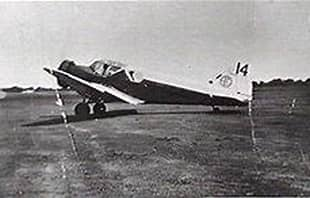
The aircraft involved in the accident was an Airspeed Courier.
The Courier was a British passenger aircraft developed by Airspeed Limited.
It was designed during a period when British aircraft manufacturers were developing modern commercial airplanes for short-distance passenger and mail services.
The Courier was a relatively small aircraft compared with later airliners.
Its design reflected the technology of the early 1930s.
Aircraft of this period were increasingly using metal components, although some still incorporated traditional construction techniques.
The Courier could carry passengers while also transporting mail and other loads.
It was designed for the growing market for regional commercial aviation.
Commercial Aviation in 1934
In 1934, commercial aviation was developing quickly.
Airlines were introducing scheduled services throughout Britain and Europe.
Passengers could now travel by air between many destinations that previously required long journeys by train or road.
However, flying was still considered an advanced and sometimes risky form of transportation.
Aircraft were smaller.
Cockpits were less sophisticated.
Navigation equipment was limited.
Weather forecasting was less accurate.
There were no modern flight-data recorders or cockpit voice recorders.
When an accident occurred, investigators had to depend on physical wreckage, eyewitnesses, weather records, and the statements of people connected with the flight.
The Flight on 29 September 1934
On 29 September 1934, the Airspeed Courier was operating a scheduled flight for London, Scottish & Provincial Airways.
The aircraft was carrying passengers and crew.
The flight was expected to be routine.
Passengers had boarded the aircraft for ordinary travel, while the crew prepared to complete the scheduled service.
At some point during the flight, however, the aircraft encountered difficulties.
The flight ended in a crash.
The accident caused the deaths of the people aboard and immediately led to an investigation into the circumstances.
The Accident
The aircraft crashed during the flight, causing severe damage.
The impact destroyed much of the aircraft.
Emergency services and local authorities were called to the scene.
The bodies of those aboard were recovered from the wreckage.
Because the aircraft was a commercial passenger plane, the accident attracted attention from aviation authorities and the British press.
The investigation began soon after the crash.
Investigators needed to determine whether the accident had resulted from mechanical failure, pilot error, weather, structural problems, or another cause.
Early Accident Investigation
Aviation accident investigations in the 1930s were very different from modern investigations.
Today, investigators can use:
- Flight-data recorders
- Cockpit voice recorders
- Radar information
- GPS data
- Aircraft computer systems
- Satellite tracking
- Detailed maintenance records
None of these systems were available in the same way in 1934.
Investigators therefore had to rely heavily on the wreckage.
They examined engines, control surfaces, wings, landing gear, and the aircraft’s structural components.
They also interviewed witnesses who may have seen the aircraft before the accident.
The Importance of Witnesses
Witnesses were extremely valuable in early aviation investigations.
A person on the ground might have seen the aircraft flying normally before the crash.
Another witness might have heard an unusual engine sound.
Someone else might have seen smoke, flames, or an unusual movement.
Investigators compared these accounts with physical evidence.
However, eyewitness testimony was not always accurate.
People could see an aircraft only for a few seconds, especially if the accident happened at a distance.
Investigators therefore needed to combine witness statements with technical evidence.
Aircraft Reliability
One of the major concerns during the early development of commercial aviation was aircraft reliability.
Aircraft engines were becoming more dependable, but mechanical failures still occurred.
An engine problem could be particularly dangerous for a small aircraft.
Twin-engine aircraft had some protection against the failure of one engine, but the loss of power could still create serious problems.
Single-engine aircraft were even more vulnerable.
Maintenance was therefore extremely important.
Airlines needed qualified mechanics to inspect aircraft regularly.
The Role of Pilot Training
Pilot training was another major part of aviation safety.
Commercial pilots in the 1930s needed to understand navigation, weather, aircraft handling, and emergency procedures.
However, training standards were still developing.
Flying an aircraft carrying passengers was very different from recreational flying.
Pilots had to make decisions quickly when weather or mechanical problems appeared.
The accident demonstrated the importance of experience and careful decision-making in commercial aviation.
Weather and Early Flying
Weather was one of the greatest challenges for early airline pilots.
Modern pilots can receive detailed weather information before departure and throughout a flight.
In the 1930s, weather information was much more limited.
Pilots relied on reports from weather stations, airports, radio operators, and their own observations.
Fog could make it difficult to see the ground.
Strong winds could affect an aircraft’s course.
Rain could reduce visibility.
Storms could create dangerous turbulence.
These conditions could become especially serious for smaller aircraft operating at relatively low altitudes.
Navigation in the 1930s
Navigation technology was also developing.
Pilots could use magnetic compasses, maps, landmarks, and radio navigation aids.
But these systems were not as accurate or widespread as modern navigation technology.
When flying over unfamiliar areas, pilots needed strong navigational skills.
If an aircraft became lost or drifted away from its intended route, it could be difficult to determine its exact position.
This was particularly important when weather conditions prevented pilots from seeing landmarks.
Importance of Regional Airlines
The accident should also be understood in the context of regional aviation.
Small airlines such as London, Scottish & Provincial Airways helped establish Britain’s domestic aviation network.
They provided connections between places that were not always served directly by major airlines.
These companies helped demonstrate that air travel could be useful not only for long international journeys but also for shorter domestic trips.
Their operations contributed to the growth of Britain’s aviation industry.
However, smaller airlines sometimes had fewer resources than major carriers.
Aircraft fleets were smaller, and maintenance and operational facilities could be more limited.
Public Reaction
An accident involving a passenger aircraft naturally attracted public attention.
In the 1930s, aviation was still seen as an exciting but dangerous new technology.
Newspapers frequently reported aircraft crashes.
Families of passengers were especially concerned about safety.
Each accident could affect public confidence in air travel.
Airlines therefore had an important responsibility to demonstrate that they were taking safety seriously.
Accident investigations were one way of identifying problems and preventing similar disasters.
The Human Cost
The most important part of the L.S.P.A. accident was the loss of life.
The passengers aboard the aircraft were ordinary people using a commercial transport service.
They may have been traveling for business, family reasons, or personal journeys.
The crew members were performing their professional duties.
None expected the flight to end in disaster.
For their families, the crash brought sudden grief.
The accident also affected the employees of London, Scottish & Provincial Airways and the local communities connected with the victims.
Behind every aircraft registration and accident report were real people whose lives were lost.
Development of British Aviation Safety
During the 1930s, the British aviation industry continued to improve.
Aircraft construction became stronger.
Engines became more reliable.
Pilot training became more organized.
Air traffic control developed.
Navigation aids improved.
Weather information became more useful.
Airports developed better facilities.
Governments also increased regulation of commercial aviation.
These changes were not caused by one accident alone.
Instead, they resulted from years of experience and lessons from many incidents.
The L.S.P.A. The Airspeed Courier crash formed part of this broader history.
Why Early Accidents Remain Important
Modern aviation safety is based on learning from past mistakes.
When an aircraft crashes, investigators attempt to determine exactly what went wrong.
The findings can lead to changes in aircraft design, maintenance requirements, pilot training, or operating procedures.
This principle was already developing in the 1930s.
Although investigators had fewer tools, they still carefully examined accident scenes.
Their work helped build the knowledge used by later generations of aviation professionals.
The Growth of Airspeed Aircraft
Airspeed Limited became an important British aircraft manufacturer during the interwar period.
The company produced several aircraft types for military and civilian use.
The Courier was one of its early commercial designs.
Aircraft manufacturers learned from accidents involving their products.
Structural components could be redesigned.
Engine installations could be improved.
Control systems could be strengthened.
Maintenance instructions could be changed.
This continuous process of improvement was essential to the development of modern aircraft.
The Legacy of the Crash
The 29 September 1934 London, Scottish & Provincial Airways Airspeed Courier crash belongs to an era when commercial aviation was still finding its place.
Regional airlines were trying to provide dependable passenger services.
Aircraft manufacturers were developing new designs.
Pilots were gaining experience with regular commercial operations.
Governments were creating aviation regulations.
At the same time, accidents remained a serious problem.
The tragedy demonstrated the risks that passengers and crews faced during this early period.
It also forms part of the long history through which aviation gradually became safer.
Conclusion
The London, Scottish & Provincial Airways Airspeed Courier Crash of 29 September 1934 was a tragic event in the early history of British commercial aviation.
The accident involved an Airspeed Courier operated by London, Scottish & Provincial Airways. The aircraft crashed during a scheduled service, resulting in the loss of the people aboard.
The disaster occurred at a time when aviation technology was developing rapidly. Commercial aircraft were becoming faster and more practical, while airlines were establishing regular domestic and regional routes across Britain.
However, many modern safety systems did not yet exist. Pilots had limited navigation equipment, weather information was less accurate, and aircraft did not carry flight recorders. Investigators had to depend mainly on physical evidence and witness reports when examining accidents.
The crash therefore illustrates the challenges faced by early commercial airlines. Aircraft reliability, pilot training, weather awareness, navigation, maintenance, and emergency procedures were all important areas in which the industry continued to develop.
The people who died in the accident were passengers and aviation workers who were simply taking part in an ordinary journey. Their deaths were a tragedy for their families and communities.
Today, the accident is remembered as part of Britain’s early aviation history. Events such as this helped the aviation industry understand its weaknesses and encouraged improvements in aircraft construction, maintenance, pilot training, navigation, weather forecasting, and regulation.
The story of the 29 September 1934 Airspeed Courier crash is therefore not only a story about an aircraft accident. It is also part of the larger story of how commercial aviation learned from tragedy and gradually developed into the highly regulated and much safer industry that exists today.

Ajeet Yadav is an aviation enthusiast covering airline news, airports, aircraft, and industry developments through well-researched and reliable reporting.