
















- Satellite communication in Indian aviation is shifting from a passenger Wi-Fi add-on to core infrastructure, supporting both onboard connectivity and real-time operational functions as fleet size and digital expectations rise.
- Regulatory clarity under the IFMC framework has enabled airlines, domestic providers, and global players such as Viasat (post-Inmarsat), Intelsat, and emerging LEO operators to expand services, though deployment remains limited to select routes.
- The market is moving toward integrated, multi-orbit connectivity systems that combine passenger, cockpit, and operational services, driven by advanced satellites, new antenna technologies, and rising competition in a fast-expanding aviation ecosystem.

As India’s aviation fleet expands and passenger expectations shift towards easy digital access, satellite communication is moving from an optional add-on to a core infrastructure. What was once viewed largely as in-flight Wi-Fi is now central to both passenger experience and airline operations.
India permits in-flight connectivity under its In-Flight and Maritime Connectivity (IFMC) framework, allowing aircraft to provide internet services while operating in Indian airspace. This regulatory clarity has unlocked a new wave of activity across the aviation satcom ecosystem, though it is deployed largely on select international routes for now.
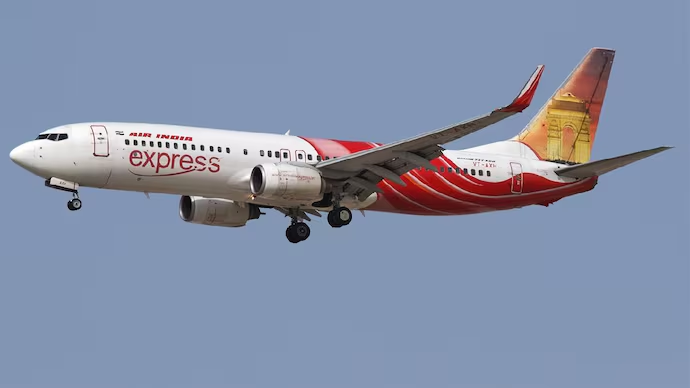
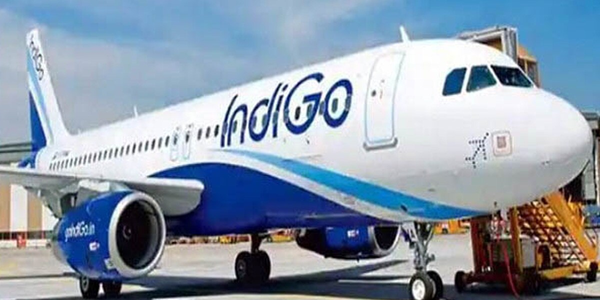
Presently, Air India is the only airline to provide in-flight Wi-Fi services on all flights operated by Air India’s A350, B787-9 and select A321neo aircraft. Low-cost carrier IndiGo was to have launched Wi-Fi services in mid-2025, delayed due to regulatory approvals.
In-Flight Connectivity
In-flight connectivity (IFC) remains the most visible application. It enables passengers to browse the internet, send messages and stream content at 35,000 feet. For airlines, satellite links allow real-time transmission of operational data, aircraft performance monitoring, route optimisation and improved fuel efficiency.
Among the early domestic movers is Nelco, part of the Tata Group. Nelco holds the licences required to provide IFC services in India and partners with Eutelsat to deliver broadband connectivity onboard aircraft. Its solutions extend beyond passenger Wi-Fi to cockpit communications, aircraft tracking and operational data exchange.

Another licensed provider, Station Satcom, offers satellite-based broadband services for aviation and maritime segments, focusing on enabling onboard Wi-Fi and mobile connectivity.
Global satellite operators are equally active. Intelsat (now SES) supplies high-throughput satellite capacity that powers many IFC solutions worldwide, including services covering Indian airspace.
New-generation low-earth orbit (LEO) providers are also entering the conversation. Eutelsat OneWeb brings LEO capability. Starlink, operated by SpaceX, is widely discussed as a potential entrant in aviation connectivity.
Multi-Layer Connectivity Approach
A major global contender is Viasat, which strengthened its aviation position after acquiring Inmarsat in 2023. The combined entity now offers a multi-layer connectivity approach spanning both cabin and cockpit requirements.
Viasat integrates Inmarsat’s safety-certified L-band services with its own high-capacity Ka-band satellites. This allows airlines to source passenger broadband, safety communications and operational data services through a single ecosystem. The strategy moves beyond traditional Wi-Fi towards a full-spectrum connectivity platform.
In India, Viasat runs a major R&D centre in Chennai. The company has partnered with Bharat Sanchar Nigam Limited (BSNL) to enable satellite services across aviation, maritime, defence and enterprise segments, including emerging direct-to-device offerings.
Since receiving Government of India authorisation in 2020, Viasat has been permitted to provide satellite-based connectivity aboard aircraft in Indian airspace. It has secured the mandatory IFMC licence and obtained approval from Indian National Space Promotion and Authorisation Centre (IN-SPACe) to utilise its GX satellite capacity under India’s Spacecom policy.

Ground Infrastructure
To support aviation services, Viasat has established dedicated ground infrastructure, including satellite ground stations configured specifically for IFC as well as safety and broader communication requirements.
In 2025, Viasat introduced its next-generation platform, Amara. Built on a multi-orbit architecture, Amara integrates geostationary (GEO), highly elliptical orbit (HEO) and LEO systems. Instead of relying on a single orbital layer, traffic can be dynamically routed across constellations to improve throughput, resilience and congestion management.
Viasat is working on an electronically steered antenna, Aera, capable of connecting to multiple satellite beams simultaneously and switching between them in real time. Commercial deployment is expected in 2028.
Globally, Viasat supports more than 60 airlines and enables connectivity on over 14,000 flights daily, delivering high-speed internet, live entertainment and wireless services.
Beyond Passenger Experience
Satcom’s role extends well beyond passenger internet. Satellite networks enable cockpit voice and data communications, real-time weather updates, aircraft health monitoring and continuous tracking. As fleet sizes increase, these capabilities become critical for safety, efficiency and regulatory oversight.
Airports are also emerging as important beneficiaries of satellite infrastructure. In remote or greenfield locations, satcom provides primary or backup connectivity, supports air traffic and ground operations, and ensures redundancy during fibre outages or natural disruptions. As India expands regional aviation and develops new airports, satellite systems can complement terrestrial networks.

The aviation satcom market is projected to expand steadily through the 2030s. Growth will be driven by multi-orbit networks, electronically steered antennas and AI-enabled traffic management. Integration with emerging 5G non-terrestrial networks is expected to enhance gate-to-gate connectivity.
Competition from pure LEO operators promising lower latency and higher throughput will remain intense. However, in fast-growing markets such as India, where aviation demand is accelerating, and regulatory frameworks are maturing, companies with regulatory compliance, local infrastructure and integrated multi-layer capability are likely to shape the evolution of in-flight connectivity.
Also Read: What Happens in a Business Jet Pre-Purchase Inspection

Chandrakanth R has over four decades of journalism experience, including 25 years as Chief Reporter at The Hindu and four years as Editor of Media One, Dubai. Since returning to India, he has specialised in aerospace and defence and regularly covers major international industry events.