



















- India’s business aviation sector is expanding, but regulatory clarity, infrastructure access and stronger safety frameworks remain central to supporting sustained fleet growth.
- Proposed reforms under the forthcoming Aircraft Rules 2026 — including frameworks for aircraft management service providers and fractional ownership — aim to formalise operating structures that have long functioned informally in the sector.
- Airport infrastructure constraints, particularly aircraft parking at major metro airports and limited facilities at smaller airstrips, continue to affect business aviation operations even as DGCA develops new operational and safety frameworks for non-scheduled operators.

India’s business aviation sector has never struggled for a growth story. What it has struggled with — consistently, over many years — is turning that story into a working operational and investment environment. The Corporate Jet Investor 2026 conference, which held its first India edition in Delhi, put that gap into clear focus.
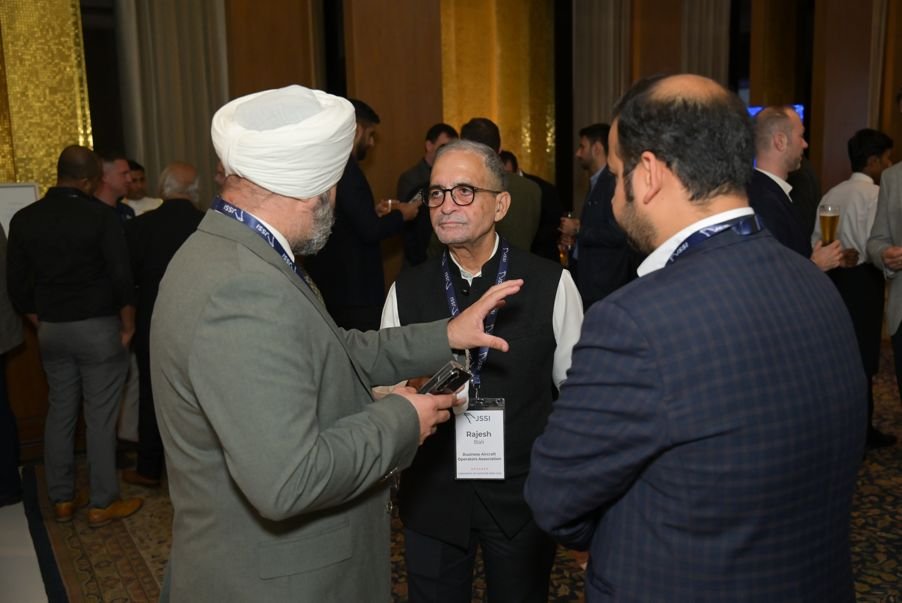
Discussions at the conference — including an address by DGCA Director General Faiz Ahmed Kidwai and a panel featuring Joint Director General Maneesh Kumar — centred on the policy bottlenecks, infrastructure constraints and safety structures that continue to shape how the sector operates in India, and the reforms now being proposed to address them.
The numbers that frame this conversation are not small. India’s business jet fleet reached 185 aircraft by the start of 2026 — officially becoming the largest charter market in the Asia-Pacific region. This follows a record-breaking 2024, where India recorded 18 net additions, the highest in the region, a growth lead it maintained throughout 2025. The combined non-scheduled operator fleet, including helicopters, has grown from 446 aircraft in 2019 to over 530 today, keeping the industry firmly on track to hit the forecast of 700 by 2029.
Kidwai, in his address, said India stands at the cusp of a transformation in non-scheduled operations — spanning business travel, charter jets, air ambulances and cargo — and that sustaining this growth demands investment not just in aircraft but equally in infrastructure and human resources.
The DGCA, he said, has been reviewing its certification requirements to reduce approval timelines and simplify compliance procedures, while remaining in consultation with industry stakeholders. He added that India has the potential to develop as a regional business aviation hub — not only in aircraft operations but also in areas such as maintenance, training and skill development — and invited the global business aviation community to establish a presence in the country.
Regulatory Reform in Motion
One of the most closely watched developments discussed at the conference was the proposed Aircraft Rules 2026 — new regulations drafted under the Aircraft Act 2024, which replaced aviation legislation dating back to 1934. These rules, currently under review with the Department of Justice ahead of formal notification, are expected to introduce for the first time a clear legal structure for two operating structures that have existed informally in India: Aircraft Management Service Providers (AMSPs) and fractional ownership.
Under the proposed AMSP framework, an aircraft owner would be able to appoint a licensed professional entity responsible for compliance oversight, airworthiness, operations and maintenance oversight. The management entity would operate under NSOP rules for commercial operations and under general aviation rules for private use. Detailed civil aviation regulations are being drafted alongside the rules so that operational guidance can be issued as soon as the legal framework is notified.
Fractional ownership is part of the same policy update, following several years of advocacy by BAOA. The proposed structure would allow multiple owners to share an aircraft and distribute the associated costs of crew currency, maintenance reserves and regulatory compliance across several users while retaining defined access rights. Kidwai indicated that the notification timeline could be three to four months, potentially extending slightly depending on the review process.
On the financing side, the Aircraft Act 2024 and India’s implementation of the Cape Town Convention address a concern that has kept many international lessors cautious about India-registered aircraft. A lender or lessor can now register their interest and receive recognition within five days, with legal protection that courts are bound to uphold.
DGCA’s eGCA platform has been updated to make all processes visible and trackable, removing much of the uncertainty that previously made approvals feel unpredictable for foreign lessors and lenders. GIFT City’s role in facilitating domestic and cross-border aircraft financing is still developing, Kidwai acknowledged, but the regulatory foundations are being put in place.
Foreign investment policy was another area discussed by industry participants. Current policy allows up to 74 per cent foreign direct investment in aircraft management companies, with government approval required beyond that level. BAOA has recommended opening the sector to full foreign investment, and the Ministry has formed a committee to review the proposal, with industry representation included in the discussions.
Airports, Airstrips and the Infrastructure Gap
India’s airport expansion over the past decade has largely been driven by scheduled airline traffic. Terminals, runways and apron capacity have primarily been designed around commercial airline growth. Business aviation infrastructure has often been added where space permits rather than incorporated into airport master plans from the outset.
At Delhi and Mumbai, this imbalance is particularly visible. Aircraft parking at both airports has become a significant operational constraint, with limited apron space and rising parking charges. Kidwai acknowledged that the Ministry is aware of these pressures and pointed to upcoming infrastructure developments — including Delhi’s second airport and Mumbai’s planned additional airport capacity — as longer-term solutions. Kumar noted during the panel discussion that the situation at Mumbai’s Chhatrapati Shivaji Maharaj International Airport remains challenging, although improvements are expected as additional infrastructure becomes available.
BAOA has been engaging with the Ministry on parking and infrastructure issues at both airports. While discussions are ongoing, industry representatives indicated that progress is being made, although specific details were not disclosed during the conference.

The infrastructure picture is more complex at smaller airports. DGCA has been compiling a database of airstrips currently used by non-scheduled operators, many of which operate without air traffic control services, weather reporting infrastructure or documented runway condition data.
Pilots operating into such locations often rely on visual procedures and locally available information.
Kumar said the data being collected will support the development of a regulatory structure for so-called non-powered airports — airstrips operating without full ATC infrastructure but subject to defined safety standards.
Such a framework could allow business aviation aircraft to operate more safely and consistently at smaller destinations. For the sector, this is particularly important as charter and corporate aircraft increasingly connect tier-2 and tier-3 cities where airline services remain limited.
Safety, Consolidation and the NSOP Challenge
Safety oversight within the non-scheduled operator segment was another recurring topic during the panel discussion. The structure of the sector itself presents challenges. Many NSOP operators manage only two or three aircraft, sometimes of different types, with limited operational support structures compared with scheduled airlines.
DGCA officials said stronger operational systems are essential as the sector grows. Maintenance record-keeping has been one focus area. The regulator is now requiring computerised, non-editable maintenance records for operators above certain complexity thresholds to improve traceability and oversight.
DGCA has strengthened the criteria for accountable managers — the individual responsible for safety decisions within an organisation. Regulators emphasised that this role must have genuine authority over operational resources and personnel so that safety decisions cannot be overridden by commercial considerations.
Aircraft management companies could also play an important role in improving operational discipline once the new regulatory framework is introduced. Consolidating airworthiness management, crew oversight and safety systems under professionally managed organisations could strengthen the operational baseline for aircraft that are currently managed individually by small operators.
Industry initiatives are also developing alongside regulatory reforms. BAOA is working to introduce the International Standard for Business Aircraft Operations (IS-BAO), an ICAO-recognised programme administered by the International Business Aircraft Council, as a third-party audit framework for smaller operators in India. Under the proposed structure, accredited auditors would assess operators, while DGCA would maintain oversight of the auditing process itself.
DGCA is examining the introduction of mandatory public disclosure by NSOP operators of certain safety-related information through their websites or similar platforms. A safety-ranking structure based on objective criteria is also being examined, with the intention of improving transparency for charter customers and encouraging higher operational standards.
For the operators, financiers, and service providers in the room, the discussion came back to a simple point. India’s business aviation market is expanding, and the regulatory architecture to support it is now taking shape. The question is how quickly those proposals — from aircraft management structures to infrastructure planning and safety oversight — translate into operational policy. Until then, the sector continues to grow within a system that is still struggling to catch up with its ambitions.
Also Read: Repositioning Aircraft Leasing: GIFT City’s Emerging Role