














- GIFT-IFSC’s tax framework for aircraft leasing has been significantly strengthened—a 20-year tax holiday, a 15% post-holiday concessional rate, and capital gains exemptions now make it broadly comparable to Dublin across key parameters.
- Tax litigation uncertainty around foreign lessors operating in India, an underdeveloped treaty network, the BEPS Pillar 2 complication for large lessors, and an unresolved dividend tax continue to temper investor enthusiasm and boardroom decisions.
- The platform has crossed the threshold from promise to operational reality—with 370-plus assets leased and 38 leasing entities registered as of December 2025—but what it needs now are landmark transactions, legal precedents, and resolution of structural gaps to cement its position as a genuine global leasing hub.
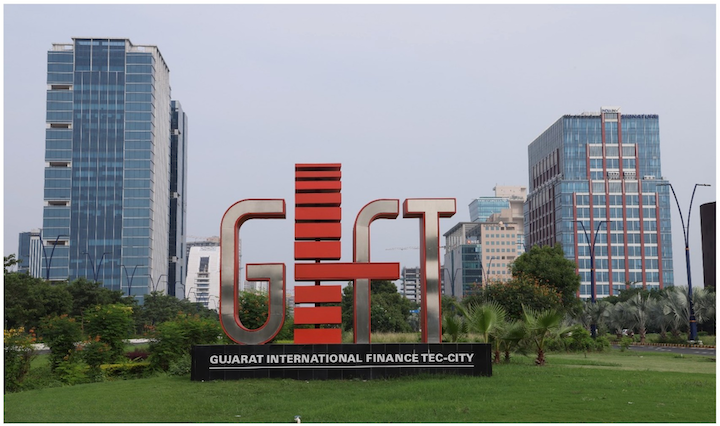
India’s ambition to position GIFT-IFSC—India’s International Financial Services Centre at GIFT City, Gujarat—as a credible global aircraft leasing hub has made measurable progress—but the distance between a well-designed framework and a genuinely preferred destination is still being covered. The tax and regulatory architecture has been substantially strengthened in recent years, and the numbers reflect that momentum: 38 leasing entities are now registered at GIFT-IFSC, with 196 aircraft, 89 engines and 85 ground support units leased as of December 2025.
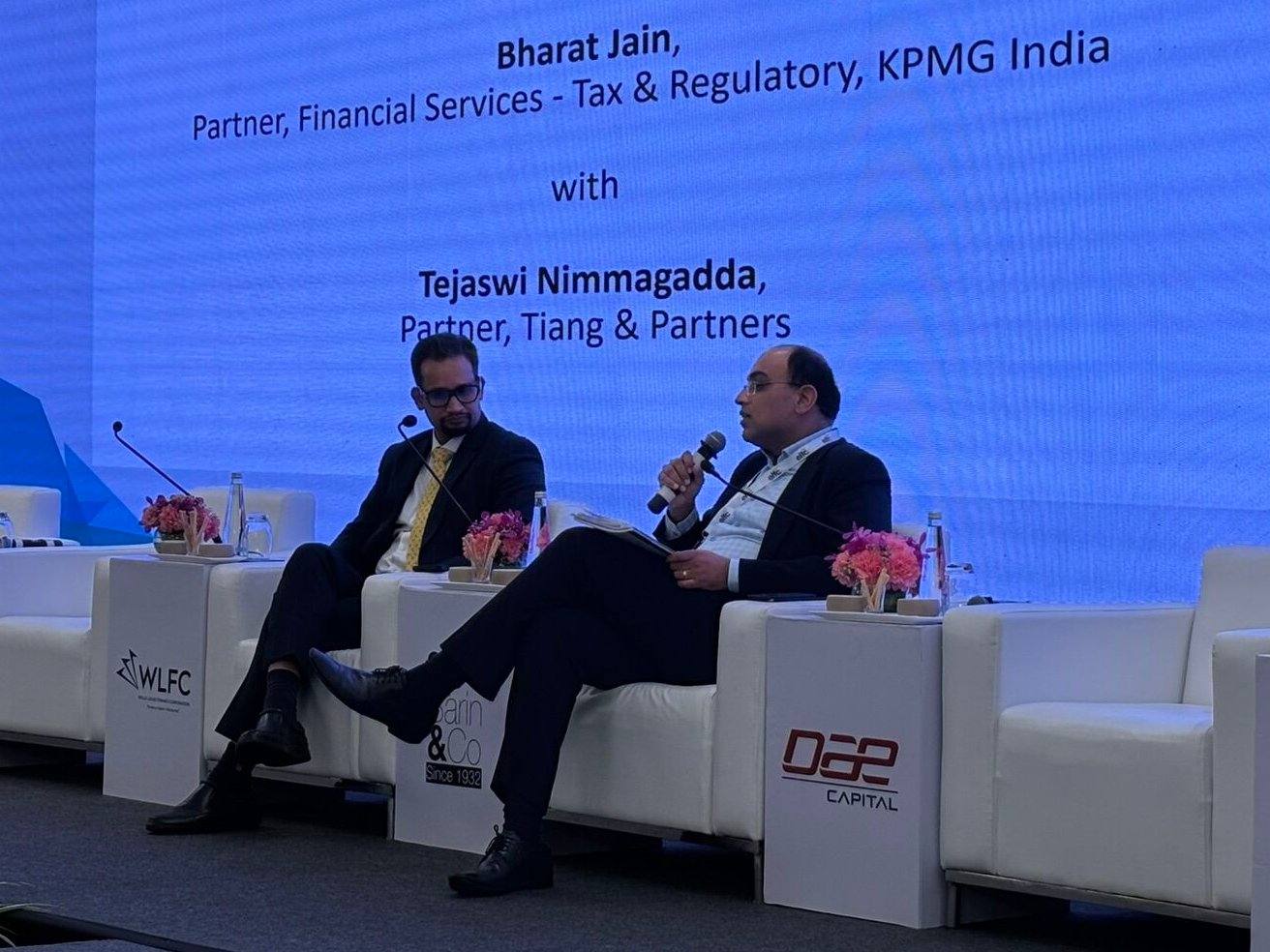
Yet for every board of directors—whether in Dublin, Singapore, or New York—weighing an investment decision, the question is not just what the framework offers, it is what still stands in the way. This was the central thread of a detailed session at the 4th Airline Economics Growth Frontiers India conference.
What the Recent Budget Changed
The most significant recent development is the expansion of the tax holiday. GIFT-IFSC entities can now claim a 20-year tax holiday within their first 25 years of operation, with the flexibility to choose when to commence it—the only condition being that once started, it runs consecutively. Think of it as a 20-year window of zero corporate tax that an investor can position at the most advantageous point within a 25-year timeline.
For the period after the tax holiday ends, the earlier prospect of a standard corporate tax rate, unattractive by any international benchmark, has been replaced by a concessional rate of 15%. This gives investors a clear long-term picture of what their tax costs will look like across the full life of their investment.
On capital gains, GIFT-IFSC has moved ahead of Dublin in one respect: any profit arising from the sale of an aircraft during the tax holiday period, and this exemption applies only within that tax holiday window, is fully exempt from tax. In Dublin, by contrast, any sale above the depreciated book value of the aircraft is taxed as a business profit.
Importantly, this exemption has since been extended beyond just the aircraft itself—it now covers the sale of shares of the GIFT entity as well. In practical terms, this means that when one investor sells their stake in the leasing company to another, there is no need to renegotiate the lease agreement with the airline—a far cleaner and commercially simpler exit route.

Photo: David Gladson/Unsplash
The budget also introduced a safeguard to prevent domestic businesses from simply relocating to GIFT on paper—without any genuine new activity—purely to access the tax benefits.
Entities restructuring an existing India-based business into GIFT without substantive new operations will not qualify.
For aircraft leasing entities specifically, existing structural safeguards already address this concern, so the provision carries no material impact on the sector.
Two Structures, One Remaining Tax Friction
Two leasing structures are currently available within GIFT-IFSC. In the first, a global investor sets up a GIFT entity, acquires an aircraft—funded through equity or borrowings from overseas lenders, on which interest payments carry no withholding tax—and leases it to an Indian airline.
India allows aircraft to be depreciated at 40% per year for tax purposes—meaning the asset’s value is written down rapidly in the books, generating tax losses in the early years of the lease. These losses are offset against income in later years. Combined with the 20-year tax holiday, the entity pays effectively zero corporate tax through most of the lease period.
The second is the LILO—Lease-In, Lease-Out structure. Here, an overseas entity owns the aircraft and leases it to a GIFT-IFSC entity, which then sub-leases it to the Indian airline. The GIFT entity sits in the middle, earning a small margin for the intermediary function. That margin benefits from the same 20-year tax holiday, making this structure attractive for global lessors who want a presence in India without transferring ownership of the asset.
In both structures, the only consistent direct tax friction at the corporate level is the 10.92% tax on dividend distributions to non-resident investors—in simple terms, when profits are paid out to the overseas investors who own the GIFT entity—compared to 20%, the rate that applies to non-resident investors in any regular Indian company outside GIFT-IFSC.
Investors who are in a growth phase—retaining and reinvesting profits within the GIFT entity rather than paying them out—will find this friction considerably reduced in practice.
Two operational friction points also remain. First, when a GIFT-IFSC entity invoices an Indian airline for lease rentals, it must currently collect and remit 5% Integrated GST (IGST) to the government. According to practitioners involved in these discussions, consultations to relax or eliminate this obligation are at an advanced stage.

Second, in the LILO structure, the GIFT entity receives the aircraft from an overseas owner under what is called a head lease—the primary lease agreement between the overseas owner and the GIFT entity.
When the GIFT entity makes payments to that overseas owner under this arrangement, there is exemption from income-tax in the hands of overseas owner under the domestic income-tax law provided GIFT entity has commenced operations before 1 April 2030. Accordingly, there is no withholding tax applicable on head lease rentals payable to overseas owner of aircraft.
The entity must apply to the tax office for a NIL withholding tax certificate to avoid this deduction.
No revenue is actually lost in this process, but the administrative requirement adds friction—and practitioners have been recommending its removal for several years, with the matter reportedly close to resolution.
Against Dublin: Three Layers
Benchmarking GIFT-IFSC against Dublin is best done across three layers of taxation, because in any international aircraft leasing deal, tax exposure exists at three distinct points in the chain. The first is at the airline level—when an Indian airline pays lease rentals to a GIFT entity, there is no tax deducted at source. This mirrors the position under the India-Ireland tax treaty, which also prevents India from taxing such payments to Dublin-based lessors.
The second is at the level of the leasing company itself—specifically, the corporate tax it pays on its own income and profits. Ireland’s corporate tax rate is moving from 12.5% to 15% under the OECD’s Base Erosion and Profit Shifting (BEPS) Pillar 2 framework—a global agreement requiring all major jurisdictions to impose a minimum 15% corporate tax.
In practice, because aircraft depreciation is heavily front-loaded in the early years, the leasing company accumulates large tax deductions early on, which pushes its actual tax liability towards the later years of its life, making it less of an immediate concern for a growing lessor.
In GIFT-IFSC, the 20-year tax holiday means zero tax at the entity level through most of the aircraft’s lease life, making this layer essentially a non-issue.
The third is at the investor level—what happens when the leasing company pays dividends, interest, or capital gains back to its investors. This is where Dublin has historically had the clearest advantage, with a treaty network of nearly 70 countries ensuring that such outflows are largely tax-free in Ireland (i.e. the jurisdiction of the leasing company).

For GIFT-IFSC, the 10.92% dividend tax applies—but a survey of 27 European countries shows that 19 of them do not tax foreign dividends received by their residents. Japan and the United States—for investors holding 10% or more in a GIFT entity—similarly impose no tax on such dividends. The practical impact of the dividend tax, therefore, depends heavily on where the investor is based, and for many major investor geographies, it may not be a significant friction at all.
The Challenges That Shape Boardroom Decisions
Tax certainty and predictability remain the most consequential unresolved issue—and this is the one that shapes boardroom conversations most directly. Indian tax authorities have been questioning aircraft leasing transactions in ways that suggest a limited understanding of how such deals work globally.
Pure operating leases—where the airline simply pays to use the aircraft and returns it at the end—have been reclassified as finance leases, which carry very different tax implications. Sale-and-leaseback transactions, a standard tool in aviation finance where an airline sells an aircraft to a lessor and immediately leases it back, have been scrutinised without adequate appreciation of their commercial rationale. And top-tier lessors with clear, established presence in Dublin have been subjected to the same treaty eligibility challenges as smaller operators who may genuinely lack adequate substance there.

According to Bharat Jain, Partner, Financial Services – Tax & Regulatory, KPMG India: “The moment a tax order is framed, it becomes a yearly exercise—gradually the amount becomes big, and in all these cases, the tax cost is on Indian Airlines.”
The consequence is direct: Indian carriers end up bearing the litigation costs and the incremental tax burden, making it more expensive for Indian airlines to finance and expand their fleets. And no lessor’s board will seriously consider a GIFT-IFSC investment while this cloud hangs over the broader India leasing environment.
The reassurance is that this litigation risk does not carry over to GIFT-IFSC. The Dublin disputes are fundamentally treaty-based—they turn on the interpretation of tax treaty language and whether a foreign entity qualifies for its protections. GIFT-IFSC benefits, by contrast, are written directly into India’s domestic tax statute. They do not depend on treaty interpretation or subjective eligibility assessments—making the legal position far more defined and predictable.
Further protection comes from a change effective April 1, 2026. Under the General Anti-Avoidance Rule (GAAR)—a provision that allows tax authorities to deny benefits if they believe a structure was created primarily to avoid tax—there has always been a theoretical risk of challenges to GIFT entities.
The new safeguard requires that, before GAAR can be invoked against a GIFT-IFSC entity, the Commissioner of Income-tax must first obtain a factual report from the IFSC Authority. This adds a meaningful institutional check that significantly strengthens investor confidence.
Two structural gaps remain. The first is the treaty network—Ireland’s nearly 70-country coverage means a Dublin lessor can redeploy an aircraft from India to most other markets without significant tax exposure in the destination country. A GIFT-based lessor does not yet enjoy this flexibility, and building a comparable treaty network is a long-term process.
The second is the BEPS Pillar 2 challenge for large lessors: because GIFT-IFSC’s 20-year tax holiday results in a zero effective tax rate in India, a large lessor based in Ireland—or any other Pillar 2 jurisdiction—will find its home country stepping in to impose a top-up tax to reach the 15% minimum.
The benefit of the tax holiday is therefore offset at the investor’s home country level for these larger players.
For them, a 15% GIFT tax rate combined with group relief—a mechanism where a profitable entity’s tax liability can be reduced by offsetting losses from another entity within the same corporate group—may actually deliver better net returns than a tax holiday that is neutralised abroad.
However, redesigning the incentive to accommodate large lessors risks undermining its appeal for smaller players who still value the holiday. According to Tejaswi Nimmagadda, Partner at TN Partners, “BEPS Pillar 2 is primarily a concern for the largest lessors. For the broader investor universe, the current framework remains highly competitive.”
The SPV Question
No aircraft financing hub can be considered fully bankable without a robust Special Purpose Vehicle (SPV) framework. In global aviation finance, each aircraft is typically held in a separate SPV, a standalone company created for the sole purpose of owning that one aircraft. This ring-fences the asset from the broader balance sheet of the leasing company or its parent.
The critical question is whether that SPV is truly bankruptcy remote—meaning that in a default or insolvency situation, a court cannot treat the SPV’s aircraft as belonging to the parent company or manager and make it available to their creditors. Lenders and credit rating agencies examine this closely before committing to any financing.
The standard solution in mature leasing jurisdictions such as Ireland and the Cayman Islands is the charitable orphan trust structure—the shares of the SPV are held by an independent corporate services entity, with a trust declared over them in favour of charitable organisations. This ensures no controlling party—not the lessor, not the financier, not the airline—can claim the SPV’s assets. Creditors can then enforce their security over the aircraft independently and with confidence.

Photo: Zoshua Colah/ Unsplash
GIFT-IFSC is working towards replicating this domestically, but India’s company law starts from mainland principles, and adapting these to create a fully bankruptcy-remote structure requires specific enabling conditions still being worked through.
Some structures have already been validated, with certain foreign elements still in use. The stated goal is a fully domestic solution, with indications that GIFT City is “very close” to getting there.
The Tianjin precedent is instructive: when China’s aircraft leasing free trade zone was established, identical questions about SPV bankruptcy remoteness circulated for years—until US Exim Bank financed a Tianjin SPV and declared itself comfortable with the analysis. The debate effectively ended after that single landmark transaction. GIFT-IFSC may need a similar defining deal to shift market confidence from theoretical discussion to practical certainty.
The Honest Assessment
GIFT-IFSC has moved well past the stage where its framework needs to be defended—the conditions for deal-making are genuinely in place. What separates ambition from outcome now is a sharper agenda: resolving the tax litigation environment, removing the dividend tax friction, expanding the treaty network, and completing the SPV framework. These are not design challenges—they are execution challenges.
Every transaction that closes, every precedent that is set, and every investor that commits make the next step considerably easier.
* This article is based on a session at the 4th Airline Economics Growth Frontiers India conference. Technical perspectives are those of the speakers and have been reported editorially.
Also Read: Repositioning Aircraft Leasing: GIFT City’s Emerging Role