
















Western Air Express Flight 7 Crash January 12, 1937
The Western Air Express Flight 7 crash was a tragic aviation accident that happened on January 12, 1937, near Newhall, California, in the United States. The aircraft was a Boeing 247D operated by Western Air Express. It was flying from Salt Lake City, Utah, to Burbank, California, when it crashed into Los Pinetos Peak in the San Gabriel Mountains.
There were 13 people aboard the aircraft—10 passengers and 3 crew members. Five people died and eight survived. Among those who died was Martin Johnson, a well-known American explorer, author, photographer, and filmmaker. His wife, Osa Johnson, survived the accident but suffered serious injuries.
The accident was one of several serious airline crashes in the Southern California mountains during the 1930s. It showed the dangers of flying in poor weather when aircraft navigation systems were still developing.
Western Air Express
Western Air Express was an important American airline during the early development of commercial aviation.
The company operated passenger, mail, and cargo services across the western United States. Its routes connected cities such as Salt Lake City, Las Vegas, Los Angeles, and San Diego.
Air travel was becoming increasingly popular during the 1930s. People could travel much faster by airplane than by train or automobile.
However, airline operations were still very different from modern aviation.
Pilots did not have GPS, satellite navigation, modern weather radar, or computerized flight-management systems. They had to depend on maps, radio navigation, visual landmarks, aircraft instruments, and their own judgment.
The Boeing 247D
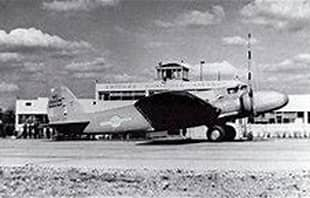
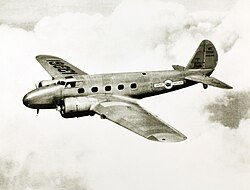
The aircraft involved in Flight 7 was a Boeing 247D.
The Boeing 247 was one of the most advanced passenger aircraft of its time. It had an all-metal structure, two engines, retractable landing gear, and a streamlined design.
It was much faster than many older passenger aircraft.
The aircraft could carry passengers and mail and was widely regarded as an important step forward in commercial aviation.
The aircraft involved in the accident was registered NC13315. It had been built only a few years earlier and was operating as part of Western Air Express’s scheduled service.
The Flight Route
Flight 7 was operating a scheduled service from Salt Lake City to Burbank.
The broader route included stops and connections through the western United States. The flight was part of a regular airline operation rather than a special or experimental flight.
The aircraft carried ten passengers and three crew members.
The crew consisted of the pilot, co-pilot, and a stewardess.
The journey initially proceeded normally.
However, as the aircraft approached Southern California, weather conditions became increasingly difficult.
Bad Weather Near Newhall
The major problem during the final part of the flight was poor visibility.
The area around Newhall and the San Gabriel Mountains was experiencing bad weather.
There was heavy rain, fog, and low visibility.
These conditions made it difficult for the pilot to see mountains and other terrain.
Modern aircraft can use satellite navigation and terrain-warning equipment to help pilots understand their position. In 1937, such technology did not exist.
The pilot had to depend on the available navigation equipment and information from the ground.
The Approach to Burbank
The aircraft was approaching the Union Air Terminal at Burbank, which was the destination airport.
As the aircraft approached the Los Angeles area, it was necessary to descend toward the airport.
This was a dangerous stage of the flight because the region contained mountains.
The pilot needed to know the aircraft’s exact position before descending to a lower altitude.
According to the investigation, the aircraft was off its intended course and had descended too low while the crew did not have positive knowledge of its exact location.
Flying Toward the Mountain
The aircraft eventually approached the mountains near Newhall.
Visibility was extremely poor.
The pilot suddenly saw a mountain ridge ahead.
There was very little time to avoid it.
The pilot, William L. Lewis, reacted by reducing engine power and attempting to make the aircraft’s impact less severe.
The aircraft struck the mountainside near Los Pinetos Peak.
The impact occurred at an elevation of approximately 3,550 feet, close to the summit.
The Impact
The aircraft did not simply fall vertically onto the mountain.
The left wing first struck the ground.
The aircraft then slid along the mountainside for approximately 125 feet.
This movement helped reduce some of the force of the impact.
The aircraft finally came to rest facing in a direction opposite to the direction in which it had first struck the mountain.
The aircraft was badly damaged.
Several passengers and crew members suffered serious injuries.
Five people eventually died as a result of the accident.
Eight people survived.
The Survivors
The survival of eight people was partly due to the way the aircraft struck the mountainside.
The pilot survived.
The stewardess also survived.
Several passengers suffered serious injuries but were able to escape the wreckage.
One young passenger reportedly managed to walk approximately five miles down the mountain to find help. His journey helped rescuers locate the crash site.
The difficult mountain terrain made the rescue operation extremely challenging.
Rescue Operation
After the crash, local authorities began searching for the aircraft.
The remote location made it difficult to reach.
There were no modern helicopters available to quickly reach the site.
Searchers had to travel through rugged mountain terrain.
Local residents and emergency personnel participated in the search.
Reports from people near the area helped authorities understand where the aircraft might have crashed.
A newspaper report from the period described how a local rancher heard an airplane engine sputter and apparently stop near his ranch.
Such eyewitness reports were extremely valuable in the days before modern aircraft tracking.
The Death of Martin Johnson
One of the most famous victims of the accident was Martin Johnson.
Martin Johnson and his wife Osa Johnson were internationally known explorers and filmmakers.
The couple became famous for their travels and films showing wildlife and remote parts of the world.
Martin suffered a serious head injury in the crash.
He later died from his injuries.
Osa survived but was seriously injured.
The death of Martin Johnson attracted considerable public attention because of his international reputation.
His wife continued their work after the accident, despite suffering permanent physical effects from her injuries.
The Investigation
The accident was investigated by the Accident Board of the Bureau of Air Commerce, which was the federal aviation accident investigation authority at the time.
This organization was an important predecessor to the modern National Transportation Safety Board (NTSB).
Investigators examined the aircraft wreckage, weather conditions, navigation, altitude, and actions of the flight crew.
The official investigation concluded that the accident was connected to the adverse weather and the pilot’s decision to descend to an unsafe altitude without positive knowledge of the aircraft’s position.
Controlled Flight Into Terrain
The accident is now generally described as an example of controlled flight into terrain, or CFIT.
CFIT occurs when an aircraft that is still under the control of its pilots unintentionally flies into terrain.
The aircraft may be mechanically capable of flying.
The danger comes from the crew not realizing how close they are to the ground or mountains.
This type of accident was particularly dangerous during the early years of aviation.
Pilots had limited navigation technology.
There were no electronic terrain-warning systems.
The Problem of Low Altitude
One of the most important lessons from Flight 7 was the danger of descending too low in mountainous terrain.
The aircraft was approaching Burbank.
The crew needed to descend to reach the airport.
However, descending before confirming the aircraft’s exact position created a serious risk.
In mountain areas, an aircraft may be at an apparently reasonable altitude but still be dangerously close to a mountain.
Modern aviation therefore uses minimum safe altitudes and detailed instrument procedures.
Navigation Technology in 1937
Navigation technology in 1937 was developing rapidly but was still limited.
Pilots could use radio signals to help determine their position.
They could also use maps and visual landmarks.
However, heavy fog and rain could make visual navigation almost impossible.
The pilot might know the general direction of the airport but still be uncertain about the aircraft’s exact position.
This was one of the key problems in the Flight 7 accident.
Weather and Visibility
Weather was a major factor.
The aircraft encountered heavy rain and poor visibility while approaching Southern California.
Mountains can be particularly dangerous when they are hidden by clouds.
A pilot may see a mountain only when the aircraft is already too close to avoid it.
That is apparently what happened during Flight 7.
The pilot suddenly saw the ridge and attempted to reduce the impact.
Unfortunately, there was not enough time to avoid the mountain.
Pilot Response
Although the aircraft could not avoid the mountain, the pilot’s final actions may have reduced the severity of the crash.
When he saw the ridge, he reduced engine power.
The aircraft then struck the hillside rather than continuing at full power into the mountain.
The aircraft also slid along the slope.
These actions may have helped some people survive.
Eight of the thirteen people aboard survived the accident.
Why the Accident Was Important
The Flight 7 accident occurred less than three weeks after another serious airline crash in the same general region.
On December 27, 1936, United Air Lines Flight 34, another Boeing 247, crashed near Newhall.
That accident killed everyone aboard.
The two accidents demonstrated the dangers of approaching Los Angeles-area airports through mountainous terrain in poor weather.
The repeated accidents increased attention on navigation, minimum altitudes, weather information, and flight procedures.
Improvements in Aviation Safety
Accidents such as Flight 7 helped aviation authorities understand the need for better procedures.
Pilots needed more reliable navigation information.
Minimum safe altitudes needed to be respected.
Weather conditions needed to be considered carefully.
Air traffic control and radio communication needed improvement.
Airlines also needed better pilot training for instrument flying.
These improvements eventually became standard parts of modern aviation.
Development of Instrument Flying
Instrument flying became increasingly important during the 1930s.
Pilots needed to learn how to fly without relying on outside visual references.
This was especially important when clouds, fog, or rain covered the ground.
Instrument flying allowed aircraft to operate more safely in poor weather.
However, it required specialized training.
Pilots needed to trust their instruments rather than trying to continue visual flight in conditions where they could not see the terrain.
Modern Terrain Protection
Today, commercial aircraft have technology that greatly reduces the risk of accidents like Flight 7.
Aircraft can use GPS and other navigation systems to determine their exact location.
Digital maps show terrain.
Terrain-awareness and warning systems can alert pilots when they are approaching dangerous ground.
Air traffic controllers can monitor aircraft.
Pilots also receive detailed weather information.
None of these systems were available to the crew of Flight 7.
Search and Rescue Then and Now
The rescue operation also demonstrates how much aviation emergency response has changed.
In 1937, rescuers had to travel through mountains to reach the crash.
Today, rescue helicopters can reach difficult locations quickly.
Aircraft can transmit emergency signals.
Modern tracking systems can help authorities locate an aircraft.
Emergency medical teams can be transported directly to accident sites.
These improvements have saved many lives.
The Human Cost
Five people died in the Flight 7 accident.
Eight survived, but several suffered serious injuries.
The victims included passengers who had simply been traveling from one city to another.
For their families, the accident was a sudden tragedy.
The death of Martin Johnson also affected the international community because he was a well-known explorer and filmmaker.
The accident therefore received considerable public attention.
The Impact on Osa Johnson
Osa Johnson survived the crash despite serious injuries.
She suffered injuries to her back and neck.
Even after the accident, she continued to share the work she and Martin had created.
Her determination became an important part of the story of the accident.
She later pursued legal action related to the crash, but her lawsuit was ultimately unsuccessful after appeals.
Lessons for Future Pilots
The Flight 7 accident provides several important lessons.
Never Descend Without Knowing Your Position
A pilot must know where the aircraft is before descending in mountainous terrain.
Weather Must Be Taken Seriously
Poor visibility can hide dangerous terrain.
Minimum Altitudes Are Important
Safe altitude rules exist to protect aircraft from mountains and other obstacles.
Instrument Training Is Essential
Pilots must be able to fly safely when visual references disappear.
Good Communication Matters
Reliable communication with air traffic services can help pilots manage difficult situations.
Accident Investigations Save Lives
Investigating accidents helps identify weaknesses and improve future operations.
The Legacy of Western Air Express Flight 7
Western Air Express Flight 7 became an important case in the history of American aviation safety.
The accident demonstrated how dangerous mountain flying could be when visibility was poor.
It also showed why pilots should not descend simply because they are approaching their destination.
A destination airport may be close, but the surrounding terrain can still present a serious threat.
The lessons from accidents such as Flight 7 contributed to the development of safer instrument procedures and better navigation systems.
The Evolution of Western Air Express
Western Air Express continued operating after the crash.
The airline remained an important part of American aviation and eventually became associated with the development of Western Airlines.
The company’s aircraft changed as technology advanced.
Early piston-engine aircraft were eventually replaced by larger and faster airplanes.
Later, jet aircraft transformed passenger travel.
The airline industry that exists today is very different from the one in which Flight 7 operated.
Aviation Technology Today
A modern aircraft flying from Salt Lake City to Burbank would have access to technology that the crew of Flight 7 could not have imagined.
The crew would have accurate satellite navigation.
The aircraft would have terrain-warning equipment.
Weather radar could help identify dangerous weather.
Air traffic controllers could monitor the aircraft.
Pilots would receive detailed weather briefings.
Modern operating procedures would also specify safe altitudes and instrument approaches.
These systems provide several layers of protection.
Remembering the Accident
The Western Air Express Flight 7 crash should be remembered not only as a tragic event but also as part of the development of aviation safety.
The accident occurred during a period when commercial aviation was growing rapidly.
Airlines were connecting more cities.
Aircraft were becoming faster.
Passengers were beginning to trust air travel.
But safety systems had not yet reached the level that exists today.
The people aboard Flight 7 became part of the history from which later generations learned.
Conclusion
The Western Air Express Flight 7 crash of January 12, 1937, was a tragic accident near Newhall, California.
The Boeing 247D was flying from Salt Lake City to Burbank when it encountered heavy rain, fog, and poor visibility during its approach to the Los Angeles area. The aircraft was off course and descended to a dangerously low altitude without the crew having positive knowledge of its position. It eventually struck Los Pinetos Peak in the San Gabriel Mountains.here were 13 people aboard, including 10 passengers and three crew members. Five people died and eight survived. One of the victims was the famous explorer and filmmaker Martin Johnson. His wife, Osa Johnson, survived the crash but suffered serious injuries. The accident showed the dangers of flying in mountainous areas during poor weather. It also demonstrated the limitations of aviation technology in the 1930s.
Today, pilots have GPS, terrain-warning systems, weather radar, improved air traffic control, advanced communication equipment, and extensive instrument-flight training. These developments have made accidents like Flight 7 far less likely.
The story of Western Air Express Flight 7 is therefore an important part of aviation history. It reminds us that modern aviation safety has been built through many years of experience, investigation, technological progress, and lessons learned from tragedies.
Most importantly, the accident should be remembered for the people who lost their lives and for the survivors whose lives were changed forever. Their story remains a reminder of both the risks faced by early airline passengers and the remarkable progress that has made commercial air travel much safer today.

Ajeet Yadav is an aviation enthusiast covering airline news, airports, aircraft, and industry developments through well-researched and reliable reporting.