







TWA Flight 8 Crash 1 March 1938
The TWA Flight 8 crash was a tragic aviation accident that occurred on 1 March 1938 in the United States. The aircraft was operated by Transcontinental & Western Air (TWA), one of the major American airlines of the period. The accident happened during a scheduled passenger flight and resulted in the loss of everyone aboard.
The crash took place during a period when commercial aviation was developing quickly. Aircraft were becoming faster and more comfortable, and airlines were expanding their routes across the United States. However, aviation safety systems were still much less developed than they are today.
TWA Flight 8 became one of the accidents remembered from the early period of American commercial aviation. It illustrates the difficulties faced by pilots, passengers, airlines, and investigators during the late 1930s.
TWA in the 1930s
Transcontinental & Western Air, commonly known as TWA, was one of America’s leading airlines during the 1930s.
The airline operated passenger, mail, and cargo services across the United States.
TWA was expanding its network as demand for air travel increased.
The company connected major American cities and played an important role in developing long-distance domestic air transportation.
Air travel in the 1930s was very different from modern flying.
Aircraft were smaller.
Routes often required several stops.
Navigation was less precise.
Weather information was more limited.
Pilots had to rely heavily on their own experience.
Aircraft Used by TWA
TWA operated several important aircraft during this period.
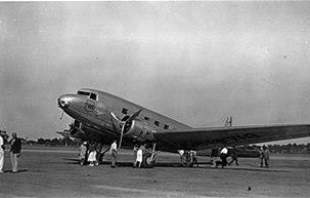
Among them were aircraft from manufacturers such as Douglas and Lockheed.
These airplanes represented a major improvement over the aircraft used during the 1920s.
They had enclosed passenger cabins.
They used powerful piston engines.
They could fly at much higher speeds.
They also offered passengers greater comfort.
However, the aircraft still lacked many of the automated safety systems used today.
The Flight
On 1 March 1938, TWA Flight 8 was operating as a scheduled service.
The aircraft was carrying passengers and crew.
The flight was part of TWA’s regular domestic network.
The journey began normally.
The passengers expected to reach their destination safely.
The crew was experienced and trained for commercial operations.
However, the flight eventually ended in tragedy.
Challenges of Early Airline Flying
Commercial flying during the 1930s required pilots to deal with many hazards.
Weather was one of the biggest.
Fog could make it difficult to see the ground.
Snow and rain could reduce visibility.
Strong winds could affect the aircraft.
Thunderstorms could create dangerous turbulence.
Mountainous terrain could also be a major hazard.
Modern aircraft have systems that help pilots avoid many of these dangers.
In the 1930s, pilots had fewer tools.
Navigation in the 1930s
Navigation technology was improving rapidly.
Radio beacons were being installed across the country.
Pilots could use radio signals to help determine their position.
However, the system was not as precise as modern satellite navigation.
Pilots also relied on maps, compasses, landmarks, and dead reckoning.
Dead reckoning means calculating the aircraft’s position using its previous position, direction, speed, and estimated time.
This required considerable skill.
A small navigation error could become significant over a long distance.
Weather Information
Weather forecasting was also less advanced.
Airlines received reports from airports and weather stations.
Pilots could communicate with ground stations using radio.
However, there was no weather radar providing a detailed picture of storms.
There were no satellites providing continuous weather images.
Pilots therefore sometimes had limited knowledge of conditions ahead.
This could make difficult weather situations especially dangerous.
The Accident
TWA Flight 8 eventually crashed during its journey on 1 March 1938.
The aircraft was destroyed.
The accident resulted in fatalities.
Emergency personnel responded to the crash site.
Investigators were then tasked with determining what had happened.
As with other accidents from this period, the investigation relied on the wreckage, witness statements, weather information, and the available operational records.
The Crash Investigation
Investigators examined the aircraft carefully.
They inspected the engines.
They looked at the wings and fuselage.
They examined the flight controls.
They checked the landing gear.
They also studied the condition of the aircraft before the crash.
The investigation attempted to determine whether the accident had been caused by:
- Mechanical failure
- Weather
- Navigation
- Pilot error
- Structural problems
- A combination of factors
The Importance of Physical Evidence
In modern aviation investigations, investigators can obtain large amounts of electronic data.
In 1938, this was not possible.
There were no flight-data recorders.
There were no cockpit voice recorders.
There were no satellite tracking systems.
Investigators had to reconstruct the flight from physical evidence.
The condition of the wreckage could provide important clues.
For example, investigators could determine whether an engine was producing power at the moment of impact by examining propeller and engine components.
Pilot Decisions
Pilots during this era had to make many decisions without the assistance of modern computers.
They had to choose routes.
They had to monitor fuel.
They had to assess weather.
They had to maintain altitude.
They had to navigate using available radio and visual information.
When unexpected conditions developed, the pilot had to decide whether to continue, turn around, divert, or land.
The safety of everyone aboard depended heavily on these decisions.
Importance of Crew Training
Airline pilots were highly trained professionals.
Commercial aviation demanded considerable skill.
A pilot needed to understand aircraft systems, engines, navigation, weather, and emergency procedures.
The crew also had to work together.
The captain and other crew members shared information and monitored the aircraft.
This teamwork was an important part of airline safety.
The Role of TWA
TWA took aviation safety seriously.
Like other major airlines, the company had procedures for aircraft maintenance, pilot training, route planning, and communication.
However, the entire aviation industry was still learning.
Every accident provided additional information about how aircraft and airline systems could fail.
Airlines used this information to improve future operations.
Aircraft Maintenance
Regular maintenance was already a central part of commercial aviation.
Aircraft were inspected and serviced.
Engines were checked.
Flight controls were examined.
Mechanical components were replaced when necessary.
However, maintenance technology was not as advanced as it is today.
Modern aircraft can use sensors and computerized systems to monitor many components.
In the 1930s, maintenance teams depended much more on physical inspection and mechanical testing.
Emergency Response
Emergency response was also different in the 1930s.
Many airports and communities had fire departments and rescue services.
However, specialized aviation rescue teams were not as widespread as today.
Access to remote crash sites could take many hours.
Rescuers might have to travel by road, horseback, or on foot.
This made the location of a crash an important factor in survival.
The Human Cost
The most important part of any aviation accident is the people involved.
The passengers on TWA Flight 8 were ordinary people traveling for their own reasons.
Some may have been traveling for business.
Others may have been visiting family or friends.
The crew members were doing their jobs.
Their families expected them to return home.
The crash brought sudden loss and grief.
Public Reaction
Airline accidents attracted significant attention in newspapers during the 1930s.
Commercial aviation was still relatively new.
Many people followed aviation news closely.
A serious airline crash could therefore raise questions about whether air travel was safe.
Airlines understood that public confidence was essential to their future.
Growing Confidence in Air Travel
Despite accidents, more people were choosing to fly.
Aircraft were becoming increasingly reliable.
Airlines were expanding.
Airports were improving.
Navigation systems were developing.
Passenger cabins were becoming more comfortable.
These changes gradually made flying a normal part of long-distance transportation.
Development of Air Traffic Control
The late 1930s saw major improvements in air traffic control.
Air routes became more organized.
Ground stations communicated with aircraft.
Controllers could provide pilots with information about traffic and weather.
This reduced the risk of collisions and helped aircraft maintain safer routes.
Over time, air traffic control became a highly sophisticated system.
The Importance of Radio
Radio was one of the most important technologies in early commercial aviation.
It allowed pilots to communicate with airports.
They could report their position.
They could receive weather information.
They could receive navigation assistance.
However, radio communication was not always perfect.
Signal quality could be affected by distance and atmospheric conditions.
Modern aircraft have several communication systems, making communication much more reliable.
Lessons From Historical Accidents
Historical accidents help explain how modern aviation safety developed.
When an accident occurs, investigators ask what went wrong.
They then determine whether changes are necessary.
The lessons can lead to:
- Better pilot training
- Improved aircraft design
- Stronger maintenance procedures
- Better weather forecasting
- Improved navigation
- Better airport facilities
- Improved emergency response
This continuous process has helped make modern aviation extremely safe.
Aviation Before World War II
TWA Flight 8 occurred just before the beginning of the Second World War.
The aviation industry was changing rapidly.
Military aircraft were developing quickly.
Civilian aircraft were also becoming faster and more capable.
The experience gained during this period would contribute to major advances in aviation after the war.
Technology Compared With Today
The difference between aircraft in 1938 and modern aircraft is enormous.
A modern airliner has:
- Satellite navigation
- Digital flight instruments
- Weather radar
- Advanced autopilot systems
- Terrain-warning equipment
- Collision-avoidance systems
- Flight-data recorders
- Cockpit voice recorders
- Modern emergency equipment
The pilots of TWA Flight 8 did not have these technologies.
They had to depend on basic instruments, radio, maps, and experience.
The Growth of TWA
TWA continued to grow after the accident.
The airline eventually became famous for its long-distance domestic and international services.
It operated many famous aircraft over the decades.
The company became an important part of American aviation history.
Its aircraft eventually included large piston-engine airliners, jet aircraft, and wide-body aircraft.
TWA remained a major airline for much of the twentieth century.
The Evolution of Passenger Aircraft
The aircraft used by airlines in the 1930s were already advanced for their time.
But aviation technology continued to develop.
Aircraft became pressurized.
This allowed them to fly at higher altitudes.
Cabins became larger.
Engines became more powerful.
Jet engines later transformed commercial aviation.
These developments made long-distance flying faster and safer.
The Importance of Remembering Early Aviation
It is easy to take modern aviation for granted.
Millions of people fly every day.
But the modern aviation system was built through decades of experimentation and experience.
Early pilots faced conditions that would be considered unacceptable today.
They flew without many modern safety systems.
The risks they faced helped inspire later improvements.
Human Courage
Early airline crews demonstrated considerable courage.
They operated aircraft over long distances with limited technology.
They flew through changing weather.
They navigated with basic equipment.
They were responsible for the lives of their passengers.
Their work helped establish the foundation of modern commercial aviation.
Remembering the Victims
The victims of TWA Flight 8 should be remembered as people rather than simply as names in an accident report.
They had families, friends, careers, and personal dreams.
The crew members also had years of experience and professional responsibilities.
Their loss affected many people.
Remembering them keeps the human side of aviation history alive.
Safety Improvements After the 1930s
Aviation safety improved dramatically during the decades after the accident.
Aircraft certification became stricter.
Pilot training became more standardized.
Air traffic control became more sophisticated.
Weather information improved.
Navigation became more accurate.
Emergency equipment improved.
Aircraft engines became more reliable.
All of these developments contributed to safer commercial air travel.
Why TWA Flight 8 Matters
The TWA Flight 8 accident is part of the larger story of aviation’s transition from pioneering technology to modern transportation.
The aircraft involved was part of a generation that helped make scheduled passenger travel practical.
The accident showed that significant risks remained.
It also reminds us that aviation safety is not a finished process.
Engineers and airlines must continue to identify and reduce risks.
Conclusion
The TWA Flight 8 accident of 1 March 1938 belongs to an important period in the development of American commercial aviation.
TWA was one of the country’s leading airlines, and air travel was becoming increasingly popular. Aircraft were faster, stronger, and more comfortable than the airplanes of the previous decade.
However, the technology available to pilots was still limited.
Pilots did not have satellite navigation, modern weather radar, terrain-warning systems, flight-data recorders, or computerized flight-management systems. They depended on maps, compasses, radio navigation, weather reports, aircraft instruments, and their own judgment.
The accident demonstrated the risks that existed during this period of aviation history. Investigators had to rely on the wreckage and other available evidence to understand the circumstances surrounding the crash.
Every historical accident contributed to the development of safer aviation. Engineers studied aircraft failures. Airlines improved maintenance and training. Governments developed stronger regulations. Navigation and communication systems became more reliable.
Over the following decades, these improvements transformed commercial aviation.
TWA continued to grow and became one of the best-known airlines in American history. The aviation industry also moved from piston-powered aircraft to turboprops and eventually to jet airliners.
Today, flying is supported by highly advanced technology and strict safety standards. Modern aircraft have multiple systems designed to prevent accidents and help pilots respond to emergencies.
The story of TWA Flight 8 on 1 March 1938 is therefore part of a much larger story. It represents the challenges faced by early commercial aviation and the continuing effort to make air travel safer.
The people involved should be remembered with respect. Their experience forms part of the history that helped later generations understand aviation risks and develop better aircraft, better procedures, and better safety systems.
The history of aviation is not only a story of technological success. It is also a story of lessons learned from tragedy. TWA Flight 8 remains part of that important history.

Ajeet Yadav is an aviation enthusiast covering airline news, airports, aircraft, and industry developments through well-researched and reliable reporting.