











KNILM Douglas DC-3 PK-AFV Shootdown 3 March 1942
The KNILM Douglas DC-3 PK-AFV incident was a tragic aviation event that happened on 3 March 1942, during the early and dangerous months of the Second World War in the Pacific. The aircraft, a Douglas DC-3-194B named Pelikaan, was operated by KNILM, the Royal Netherlands Indies Airways. It was flying from Bandung, Java, in the Netherlands East Indies, to Broome, Western Australia, carrying passengers who were escaping the rapidly advancing Japanese forces.
As the aircraft approached Broome, it was attacked by Japanese Mitsubishi A6M Zero fighters. The DC-3 was damaged and its left engine caught fire, but the pilot, Ivan Smirnov, managed to make an emergency landing on the beach at Carnot Bay, about 80 kilometres north of Broome. The aircraft was later strafed by the Japanese fighters. Four people aboard were killed, while eight survived.
The incident became famous not only because of the attack but also because the aircraft was carrying a valuable shipment of diamonds. Many of the diamonds disappeared after the crash, creating one of Australia’s most famous wartime aviation mysteries.
KNILM and Aviation in the Netherlands East Indies
KNILM was the Royal Netherlands Indies Airways, the airline that operated air services in the Dutch East Indies, an area that is now largely Indonesia.
Before the Second World War, aviation was becoming increasingly important in Southeast Asia. The Dutch East Indies consisted of thousands of islands, and air travel provided a fast way to connect important cities.
KNILM operated passenger, mail, and cargo flights between different parts of the region.
The airline used modern aircraft for its time, including Douglas DC-3s.
However, the peaceful development of aviation changed dramatically after Japan entered the war in December 1941.
The Japanese Advance
Japan attacked Pearl Harbor on 7 December 1941.
Japanese forces then moved rapidly through Southeast Asia.
The Dutch East Indies became a major target because of its natural resources and strategic location.
Japanese forces attacked and occupied large areas.
By early 1942, Java was under serious threat.
Many civilians, military personnel, government workers, and aviation personnel were trying to escape.
Air transport became extremely important because it could move people much faster than ships or land transport.
The Aircraft – Douglas DC-3
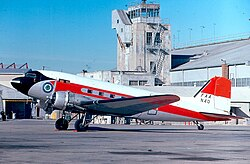
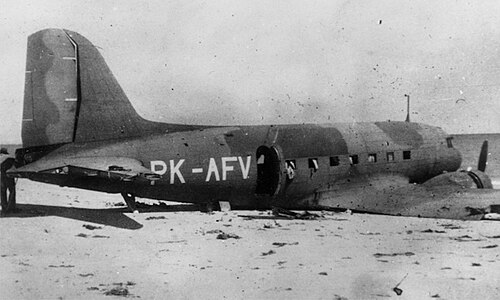
The aircraft involved was a Douglas DC-3-194B, registration PK-AFV, named Pelikaan.
The aircraft had originally been operated by KLM, the Dutch national airline, and had carried the registration PH-ALP. After the German invasion of the Netherlands in 1940, the aircraft was transferred to KNILM and re-registered as PK-AFV.
The DC-3 was one of the most successful passenger aircraft of the period.
It was a twin-engine, all-metal aircraft with retractable landing gear.
The aircraft was well suited to long-distance passenger transportation.
Its reliability and range made it extremely valuable during the evacuation of the Dutch East Indies.
The Name Pelikaan
The aircraft was known as Pelikaan, which means pelican in Dutch.
It had already served with KLM before being transferred to KNILM.
By March 1942, however, the aircraft was being used in a very different environment.
Instead of carrying passengers during normal commercial travel, it was helping people escape a war zone.
The Passengers
There were 12 people aboard the aircraft:
- 4 crew members
- 8 passengers
Several of the passengers were military personnel.
The passengers were traveling because of the dangerous situation in Java.
Among those aboard were people connected with the Dutch and Allied military effort.
They were trying to reach Australia, which had become an important base for Allied operations in the Pacific.
Captain Ivan Smirnov
The pilot was Captain Ivan Smirnov, a Russian-born aviation pioneer and former First World War flying ace.
He was an experienced pilot.
His skill would become extremely important later in the flight.
Smirnov was responsible for flying the DC-3 toward Broome.
He had to navigate a long route while also dealing with the possibility of Japanese military activity.
The Diamond Shipment
One of the most unusual parts of the story involved a package of diamonds.
Before the aircraft left Bandung, a package containing diamonds was given to Captain Smirnov.
The diamonds belonged to a Bandung business called NV de Concurrent.
Smirnov was instructed to deliver the package to a representative of the Commonwealth Bank after reaching Australia. Reports indicate that he did not know the true contents of the package when he accepted it.
The diamonds were extremely valuable.
Their estimated value at the time has been placed at approximately A£150,000 to A£300,000.
This valuable cargo would later become the center of a major mystery.
The Flight From Java
PK-AFV departed from Bandung in the early morning of 3 March 1942.
The aircraft was heading toward Australia.
The journey was part of the desperate evacuation from Java.
The crew had to fly across a large area while Japanese forces were operating throughout the region.
The aircraft eventually approached the coast of Western Australia.
The destination was Broome, an important wartime aviation center.
Broome Under Attack
Broome was an important location because it was being used as a stopping point for aircraft evacuating people from the Netherlands East Indies.
The town had become extremely busy.
Many aircraft were arriving with refugees and military personnel.
However, Broome was also vulnerable to Japanese attack.
On 3 March 1942, Japanese aircraft launched an attack on Broome.
The attack created chaos in the area.
Aircraft were trying to land or move away while Japanese fighters and other aircraft operated nearby.
The Japanese Fighters
As PK-AFV approached Broome, three Japanese Mitsubishi A6M Zero fighters encountered the aircraft.
The fighters had been involved in the attack on Broome and were returning toward their base in Timor.
The Japanese pilots spotted the Dutch airliner.
The DC-3 was flying along the coast.
The fighters were at a higher altitude and attacked from above.
The Attack
The Japanese fighters opened fire on the DC-3.
The aircraft was hit by gunfire.
The left engine caught fire.
Captain Smirnov was also wounded in his arms and hip.
The situation was extremely dangerous.
The aircraft had suffered serious damage.
There was no normal airport immediately available.
The crew needed to find somewhere to land.
Captain Smirnov’s Emergency Landing
Despite his injuries and the damaged aircraft, Smirnov managed to control the DC-3.
He brought the aircraft down toward the coast.
He attempted an emergency landing at Carnot Bay.
The landing was made on the beach and shallow water.
This was a remarkable piece of flying under extremely difficult conditions.
The damaged aircraft reached the beach instead of crashing into the sea.
The Landing
The aircraft landed with its landing gear down.
As it moved along the beach and into the shallow water, one of the wheels was damaged.
The right tire reportedly burst, causing the aircraft to turn sharply.
The aircraft eventually came to rest in the water.
The landing also helped extinguish the fire in the left engine.
The immediate danger from the burning engine was reduced.
But the passengers and crew were still not safe.
The Second Attack
The Japanese fighters returned.
Instead of leaving the damaged aircraft alone, they attacked it again.
They strafed the aircraft with machine-gun fire.
This second attack caused additional deaths and injuries.
The flight engineer and three passengers were killed.
Among the dead were a mother and her young child.
The attack made an already terrible situation even worse.
The Survivors
Eight people survived the attack.
They were injured, frightened, and stranded in a remote coastal area.
The wrecked aircraft provided limited protection.
The survivors had to wait for help.
The location was far from major settlements.
The hot and isolated environment created additional challenges.
Another Japanese Attack
The danger did not end after the fighters left.
The following day, a Japanese Kawanishi H6K flying boat located the wreckage.
The aircraft dropped bombs on the area.
It later returned and attacked again.
Fortunately, the bombs did not cause additional deaths or serious damage to the survivors.
The survivors were still trapped on the beach.
Six Days of Waiting
The survivors spent approximately six days waiting to be rescued.
The remote location made rescue difficult.
They had limited food and water.
They also had to deal with injuries and the fear of another Japanese attack.
Eventually, a rescue party reached them.
The survivors were brought to safety.
Their survival was remarkable considering the circumstances.
The Missing Diamonds
After the survivors were rescued, another mystery emerged.
The valuable diamond shipment was missing.
The diamonds had been aboard the aircraft.
The package had apparently been opened or lost during the crash and subsequent events.
Some diamonds were recovered.
However, a very large quantity disappeared.
This led to an investigation into what had happened to the missing stones.
Jack Palmer
A local mariner named Jack Palmer reached the crash site a few days after the accident.
He later handed over diamonds worth more than A£20,000.
This discovery raised questions about how many other diamonds might have been taken from the wreckage.
Palmer and two other men, James Mulgrue and Frank Robinson, were later prosecuted in connection with the diamonds.
All three were acquitted in 1943.
The Diamond Mystery
The missing diamonds became one of the most famous mysteries connected with Australia’s wartime history.
Reports over the years have suggested that diamonds were found in different places.
Some were reportedly recovered from people in the Broome area.
Others were said to have been hidden or discovered many years later.
However, no one was convicted of stealing the missing diamonds.
The exact fate of much of the shipment remains uncertain.
The Human Tragedy
The diamond story is fascinating, but the most important part of the event was the loss of human life.
Four people aboard the aircraft were killed.
They included members of the crew and passengers.
One of the passengers was a mother traveling with her young child.
The deaths occurred during an attack on a civilian aircraft carrying people fleeing a war zone.
The Difficult Position of Refugees
The passengers aboard PK-AFV were not simply ordinary tourists.
They were escaping a rapidly expanding war.
Java was falling under Japanese control.
People were trying to reach Australia because it was becoming one of the main Allied bases in the region.
Their journey represented the wider human cost of the Japanese advance through Southeast Asia.
Broome During the War
Broome was an important aviation location.
Its position made it useful for flights between Australia and the Netherlands East Indies.
Aircraft from Java frequently stopped there.
As a result, Broome became crowded with refugees, military personnel, aircraft crews, and other travelers.
The Japanese attack on Broome demonstrated how vulnerable the town was.
Importance of the Incident
The PK-AFV incident was important for several reasons.
First, it demonstrated the danger faced by civilian aircraft during wartime.
Second, it showed the importance of experienced pilots.
Third, it became a famous example of an aircraft surviving a military attack and making an emergency landing.
Finally, the disappearance of the diamonds created a mystery that continued long after the war.
A Wartime Civilian Aircraft
The DC-3 was a civilian airliner.
It was not designed as a military aircraft.
It did not have weapons or armor to protect it against fighter aircraft.
The crew had very few options when the Japanese fighters attacked.
Their best chance was to escape and land as quickly as possible.
Captain Smirnov succeeded in doing that.
The Courage of Captain Smirnov
Captain Smirnov’s actions were remarkable.
He had been wounded.
One engine was burning.
The aircraft was under attack.
Despite these conditions, he managed to keep control of the DC-3 and land it.
His experience as a pilot was extremely valuable.
His actions saved many lives.
The Douglas DC-3 in Wartime
The DC-3 was one of the most important aircraft of the Second World War.
Military versions were widely used for transporting troops and supplies.
Civilian versions also continued to perform important work.
PK-AFV was an example of how a passenger aircraft could become part of a wartime transportation network.
Navigation and Long-Distance Flying
Flying from Java to Australia was challenging even during peacetime.
The route involved long distances over water.
Pilots had to depend heavily on navigation equipment and careful planning.
During wartime, the danger was much greater.
The crew also had to consider enemy aircraft.
No Modern Safety Systems
The crew of PK-AFV did not have modern technology.
There was:
- No GPS
- No satellite communication
- No modern radar warning system
- No digital moving map
- No flight-data recorder
- No satellite tracking
The pilots depended on basic instruments, radio, maps, and experience.
The successful emergency landing showed the importance of pilot skill under such conditions.
The End of the Flight
Although PK-AFV did not reach Broome airport, the aircraft’s emergency landing allowed eight people to survive.
The aircraft itself was badly damaged and was never returned to normal airline service.
The wreck remained on or near the beach at Carnot Bay.
It later became an important historical reminder of the events of March 1942.
Historical Importance of the Wreck
The wreck of the DC-3 became known as the Diamond DC-3.
It has attracted historians and aviation enthusiasts.
The site represents a remarkable wartime story involving:
- Aviation
- The Japanese attack on Broome
- Refugees
- Military personnel
- A skilled pilot
- An emergency landing
- Lost diamonds
Few aviation accidents have such a combination of history and mystery.
Lessons From the Incident
The incident demonstrates how quickly a normal airline flight could become a life-threatening emergency during wartime.
The crew had to react immediately to the attack.
Captain Smirnov had to control a damaged aircraft while wounded.
The passengers had to survive the crash and then endure another attack.
The survivors then spent days waiting for rescue.
Their experience shows the extreme difficulties faced by people trying to escape the war in Southeast Asia.
The Broader War
The incident occurred during Japan’s rapid expansion across the Pacific.
In early 1942, Japanese forces were advancing toward Australia.
The fall of the Netherlands East Indies was a major strategic development.
Thousands of people were attempting to escape.
Australia became an important destination for refugees and Allied forces.
The flight of PK-AFV was part of this much larger movement of people.
Remembering the Victims
The four people who died aboard PK-AFV should be remembered with respect.
They were caught in the violence of a war that had spread across Southeast Asia.
Their deaths were not caused by ordinary aviation failure.
The aircraft was attacked while carrying people who were trying to escape the conflict.
The survivors also carried the emotional and physical effects of the event for the rest of their lives.
The Diamond Story Today
The missing diamonds continue to make the PK-AFV incident famous.
Some diamonds were recovered shortly after the crash.
Others were reportedly discovered years later.
But a large part of the shipment was never accounted for.
The story has inspired books, historical research, documentaries, and continued interest in the wreck.
The mystery has become part of Australian wartime folklore.
Conclusion
The KNILM Douglas DC-3 PK-AFV incident of 3 March 1942 was one of the most remarkable aviation events of the early Pacific War.
The aircraft, named Pelikaan, was a Douglas DC-3 operated by KNILM. It was flying from Bandung, Java, to Broome, Western Australia, carrying eight passengers and four crew members.
The passengers were escaping the Japanese advance through the Netherlands East Indies.
Among the aircraft’s cargo was a valuable shipment of diamonds that had been entrusted to Captain Ivan Smirnov for delivery in Australia.
As the aircraft approached Broome, three Japanese Zero fighters attacked it.
The DC-3 was badly damaged and its left engine caught fire. Captain Smirnov was wounded, but he managed to control the aircraft and make an emergency landing at Carnot Bay, approximately 80 kilometres north of Broome.
The Japanese fighters then strafed the aircraft.
Four people were killed, including three passengers and one crew member. Eight people survived.
The survivors then faced another danger when a Japanese flying boat returned the following day and bombed the wreckage. Fortunately, the bombing caused no additional deaths. The survivors eventually spent about six days in the remote area before being rescued.After the rescue, the disappearance of the diamonds created another chapter in the story.
Some diamonds were recovered, including a substantial quantity handed over by local mariner Jack Palmer. Palmer and two other men were later tried over the diamonds but were acquitted. No one was ultimately convicted of stealing the missing stones.The story of PK-AFV is therefore much more than an aircraft accident.
It is a story of war, evacuation, courage, survival, and mystery.
It shows the dangers faced by civilian aviation during the Second World War and demonstrates the remarkable skill of pilots who had to operate without the technology available today.
Captain Ivan Smirnov’s successful emergency landing saved many lives.
The eight survivors also demonstrated extraordinary endurance during their days stranded on the remote Australian coast.
Today, the Pelikaan is remembered as the “Diamond DC-3”, and its story remains an important part of the aviation and wartime history of Western Australia.
Most importantly, the four people who died should be remembered as victims of a terrible wartime attack. Their story, together with the survival of the others, remains a powerful reminder of how dangerous air travel could become when civilian aviation was caught in the middle of a global war.

Ajeet Yadav is an aviation enthusiast covering airline news, airports, aircraft, and industry developments through well-researched and reliable reporting.