










American Airlines Flight 63 Flagship Ohio Crash
American Airlines Flight 63, known as Flagship Ohio, was involved in a tragic aviation accident on 28 July 1943. The aircraft was a Douglas DC-3, one of the most important passenger aircraft of its time. The flight was operated by American Airlines during the difficult years of the Second World War.
The accident happened in the United States while the aircraft was flying from Cleveland, Ohio, toward Nashville, Tennessee. The aircraft encountered severe weather and lost control before crashing near Trammel, Kentucky. The accident resulted in the deaths of many people aboard and became one of the significant accidents in American commercial aviation during the wartime period.
The story of Flagship Ohio is important because it shows the dangers faced by airline crews and passengers in the early 1940s. Aircraft technology was improving quickly, but weather forecasting, navigation equipment, and warning systems were much less advanced than they are today.
American Airlines in the 1940s
American Airlines was already a major American airline by 1943.
The company operated passenger and mail services between many cities in the United States.
During the Second World War, air travel remained important even though the country was focused heavily on military aviation.
Airlines transported:
- Business travelers
- Military personnel
- Government workers
- Important cargo
- Families and ordinary passengers
The airline industry also provided pilots, mechanics, and aircraft for the national war effort.
The Douglas DC-3
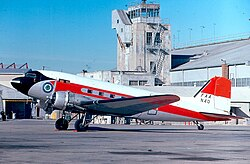
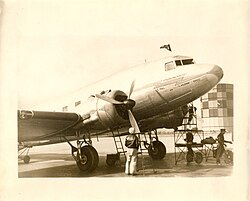
The aircraft involved in Flight 63 was a Douglas DC-3.
The DC-3 was one of the most successful aircraft designs in aviation history.
It was a twin-engine propeller aircraft that could carry passengers over relatively long distances.
Before the DC-3, many airlines struggled to make passenger services financially successful.
The DC-3 helped change this situation.
It was reliable, relatively fast, and economical to operate.
Because of these qualities, many airlines used it extensively.
Flagship Ohio
American Airlines gave many of its aircraft special names.
The aircraft involved in this accident was named Flagship Ohio.
The word “Flagship” was used by American Airlines as part of its identity during the golden age of aviation.
Passengers often viewed these aircraft as symbols of modern transportation.
The aircraft was designed to provide a comfortable passenger journey.
However, even a reliable aircraft could be placed in danger by severe weather.
The Flight
On 28 July 1943, Flight 63 was operating on a scheduled route.
The flight was traveling from Cleveland, Ohio, toward Nashville, Tennessee.
The aircraft carried passengers and crew.
The journey began normally.
The crew had experience with the route and with the Douglas DC-3.
However, weather conditions along the route were becoming increasingly difficult.
Weather Conditions
The main factor associated with the accident was severe weather.
Thunderstorms can be dangerous for aircraft.
They can contain:
- Strong winds
- Heavy rain
- Turbulence
- Lightning
- Powerful updrafts
- Powerful downdrafts
- Sudden changes in wind direction
Modern aircraft have weather radar that helps pilots avoid the most dangerous storms.
In 1943, pilots had much less information.
Thunderstorms in the 1940s
Weather forecasting had improved by the 1940s, but it was still limited.
Meteorologists could provide forecasts and warnings.
However, pilots could not see weather systems in the same detailed way modern crews can.
There was no cockpit weather radar comparable to today’s systems.
A storm could therefore become a serious hazard before a pilot fully understood its strength.
Turbulence
Turbulence can make an aircraft move suddenly.
Passengers may be thrown against their seats.
Loose objects can move around the cabin.
Strong turbulence can also make aircraft control difficult.
Severe thunderstorms can produce extremely powerful air movements.
An aircraft entering such a storm can experience sudden changes in altitude and airspeed.
The Flight Near Kentucky
As Flight 63 traveled southward, the aircraft encountered a severe storm system.
The aircraft was flying over Kentucky.
The crew attempted to continue through the area.
At some point, the aircraft encountered conditions that caused it to lose control.
The DC-3 descended rapidly.
It eventually crashed near Trammel, Kentucky, in Daviess County.
The Crash
The aircraft struck the ground with considerable force.
The DC-3 was destroyed.
There was no opportunity for a normal landing.
The accident occurred in a rural area.
People on the ground quickly became aware that an aircraft had crashed.
Emergency responders and local residents went to the crash site.
Rescue Efforts
In 1943, emergency response systems were not as organized as they are today.
There were no modern nationwide emergency helicopter networks.
Local police, firefighters, medical workers, and civilians often had to respond to aircraft crashes.
The difficult terrain around the crash site made the response more challenging.
Rescuers worked to locate survivors and recover the victims.
Loss of Life
The accident resulted in a large loss of life.
Most people aboard the aircraft were killed.
The tragedy affected families across the United States.
Passengers had boarded the aircraft expecting to reach their destinations safely.
Instead, their journey ended suddenly in the Kentucky countryside.
The crew members also lost their lives while carrying out their professional duties.
Investigation
After the accident, investigators examined the wreckage.
They wanted to understand why the aircraft had crashed.
Investigators considered:
- Weather
- Aircraft condition
- Engine performance
- Pilot actions
- Flight path
- Navigation
- Altitude
- Wind conditions
Weather became one of the most important areas of investigation.
The Importance of Weather Investigation
Understanding the weather was particularly important because thunderstorms were associated with the accident.
Investigators examined available weather observations.
They studied reports from nearby locations.
They also looked at information available to the crew before and during the flight.
This helped investigators understand what the pilots may have encountered.
Human Factors
The crew had to make decisions using the information available at the time.
A modern pilot can receive detailed weather information during a flight.
In 1943, the options were much more limited.
Pilots had to use weather reports, radio communication, visual observations, and personal experience.
If a storm became stronger than expected, the crew had fewer tools to understand its exact location and intensity.
Aircraft Reliability
The Douglas DC-3 had a strong reputation for reliability.
There was no indication that the basic design was unsuitable for passenger service.
The accident instead demonstrated that even a reliable aircraft could be vulnerable to severe weather.
Aircraft safety depends on more than mechanical reliability.
It also depends on weather information, pilot decisions, navigation, training, and operating procedures.
Night and Weather Flying
Weather flying was especially difficult when visibility was poor.
Clouds could hide dangerous conditions.
At night, pilots could not see terrain or clouds clearly.
Lightning could provide brief flashes of visibility but could also make conditions confusing.
The crew had to depend heavily on instruments and radio information.
Aviation Navigation in 1943
Navigation technology was far less advanced than today.
Pilots used:
- Magnetic compasses
- Radio beacons
- Charts
- Dead reckoning
- Visual landmarks
Radio navigation helped pilots follow routes, but it was not as accurate or comprehensive as satellite navigation.
There was no GPS.
There were no digital moving maps.
Pilots had to calculate much of their position manually.
The Role of the DC-3
The DC-3 was designed for reliable passenger transportation.
Its twin-engine design allowed it to continue flying after certain types of engine problems.
Its strong construction made it suitable for regular airline operations.
Thousands of DC-3 aircraft were eventually built.
Many were used by military and civilian operators.
The accident involving Flagship Ohio did not reduce the aircraft’s importance.
Wartime Aviation
The accident occurred only months before the end of the Second World War.
American aviation was expanding rapidly.
Military aircraft were being produced in enormous numbers.
Thousands of pilots were being trained.
Air transport was becoming more important.
Airlines continued operating domestic passenger routes despite wartime conditions.
This meant that the aviation industry was gaining valuable experience.
The Importance of Commercial Flights
Domestic airline travel was becoming increasingly popular.
Business travelers valued the speed of air transportation.
Government workers and military personnel also depended on airline services.
Passengers could travel between major cities much faster than by train.
The growth of airline travel meant that safety standards needed to improve.
Lessons From Flight 63
The accident demonstrated the dangers of severe thunderstorms.
One important lesson was the need to avoid powerful storm systems whenever possible.
Another lesson was the importance of better weather information.
Pilots need to know where dangerous storms are located.
They also need to understand how strong the storms are.
Modern aviation has developed many systems to provide this information.
Development of Weather Radar
One of the most important later improvements was weather radar.
Weather radar allows pilots and controllers to identify areas of heavy precipitation.
It can help pilots avoid the strongest parts of thunderstorms.
This technology became increasingly important after the Second World War.
Today, weather radar is standard equipment on most commercial passenger aircraft.
Better Forecasting
Weather forecasting also improved dramatically.
Meteorologists gained access to better observation systems.
Weather balloons provided information about the atmosphere.
Later, radar networks and satellites provided much more detailed information.
Modern pilots can receive frequent updates about storms along their route.
Improved Pilot Training
Pilot training also became more sophisticated.
Modern pilots learn how to recognize dangerous weather.
They are trained to avoid severe thunderstorms rather than attempting to fly through the strongest areas.
They also learn how turbulence and wind changes can affect aircraft.
These lessons have helped reduce weather-related accidents.
Air Traffic Control
Air traffic control also became more advanced.
Controllers can provide pilots with information about nearby aircraft and weather.
They can help aircraft change routes.
Radar allows controllers to monitor aircraft more effectively.
These systems provide additional safety layers.
Emergency Procedures
Modern aviation also has better emergency procedures.
Aircraft are equipped with emergency beacons.
Search-and-rescue organizations have better equipment.
Crash locations can be identified more quickly.
Medical response can begin sooner.
These improvements have greatly increased the chance of survival after some accidents.
The Human Cost
It is important not to look at Flight 63 only as a technical event.
Every passenger had a personal story.
They had families, friends, jobs, and plans.
The crew members were professionals who were performing their normal duties.
Their families expected them to return home.
The crash suddenly ended those lives.
Remembering the Victims
The victims of the Flagship Ohio accident should be remembered as people rather than simply numbers in an accident report.
Their deaths affected families and communities.
The accident became part of the history of American commercial aviation.
Their story also contributed to the growing understanding of weather-related aviation risks.
The Golden Age of Aviation
The 1930s and 1940s are often described as an important period in aviation development.
Aircraft were becoming faster and more reliable.
Airline networks were expanding.
Passengers were becoming more comfortable with flying.
However, the technology still had serious limitations.
The Flagship Ohio accident is an example of the risks of this transitional period.
Aviation Safety Then and Now
The difference between aviation in 1943 and aviation today is enormous.
A modern airline flight benefits from:
- Satellite navigation
- Weather radar
- Advanced flight instruments
- Digital communication
- Radar-based air traffic control
- Terrain warning systems
- Improved weather forecasting
- Better pilot training
- Stronger emergency procedures
None of these systems were available in their modern form to the crew of Flight 63.
The Legacy of the Accident
The accident became an example of the dangers of severe weather for commercial aviation.
It helped demonstrate that even experienced pilots operating reliable aircraft could face extreme risks when encountering powerful storms.
Over the decades, the aviation industry developed better ways to identify and avoid dangerous weather.
The lessons from older accidents remain useful for safety experts today.
Why the Story Is Important
The story of American Airlines Flight 63 is important because it connects aviation history with the development of modern safety.
The accident occurred at a time when commercial aviation was growing rapidly.
The Douglas DC-3 had made passenger air travel more practical.
Airlines were expanding their networks.
But weather remained one of the greatest natural hazards.
The accident showed that aircraft technology alone could not guarantee safety.
A Changing Industry
After the Second World War, commercial aviation entered a new period.
Aircraft became faster.
Airports became larger.
Navigation systems improved.
Weather forecasting became more scientific.
Passenger numbers increased.
The airline industry gradually developed the safety systems that are familiar today.
The DC-3’s Long Career
The DC-3 continued to serve for many decades after the Flagship Ohio accident.
It was used by airlines, cargo companies, militaries, and other operators.
Some DC-3 aircraft remain in operation even today for specialized purposes.
Its long career is evidence of the strength and practicality of the design.
Remembering Flagship Ohio
The name Flagship Ohio remains connected with the history of American Airlines and early commercial aviation.
The aircraft was part of an era when flying was still a relatively new form of mass transportation.
The passengers aboard the aircraft were taking advantage of a technology that had transformed travel.
Their tragic accident reminds us that the growth of aviation came with difficult lessons.
The Importance of Learning From Accidents
Aviation has become safer because the industry studies accidents carefully.
Investigators look for the chain of events that led to a crash.
They ask what could have been done differently.
The answers can lead to:
- New equipment
- Better training
- New regulations
- Improved weather information
- Safer flight procedures
This process has helped make aviation one of the safest forms of transportation.
Conclusion
The American Airlines Flight 63 – Flagship Ohio accident of 28 July 1943 was a tragic event in the history of American commercial aviation.
The aircraft was a Douglas DC-3, one of the most successful passenger aircraft of its generation. It was operated by American Airlines on a scheduled flight from Cleveland toward Nashville.
The flight encountered severe weather while traveling over Kentucky. The aircraft eventually crashed near Trammel, Kentucky, resulting in a major loss of life.
The accident demonstrated the serious danger that thunderstorms could present to aircraft in the early 1940s. Although pilots had access to weather forecasts and radio communication, they did not have modern weather radar, satellite information, digital navigation, or the sophisticated warning systems used today.
The crew therefore had to make difficult decisions using limited information.
The tragedy also occurred during the Second World War, a period when American aviation was expanding rapidly. Airlines continued operating important passenger and mail services while military aviation was developing at an extraordinary pace.
The Douglas DC-3 represented one of the major advances of the period. It made passenger travel faster, more reliable, and more practical. However, the accident showed that even a highly successful aircraft could be vulnerable to severe natural conditions.
In the decades that followed, aviation safety improved greatly.
Weather radar became available.
Forecasting became more accurate.
Navigation systems became more reliable.
Air traffic control became more advanced.
Pilot training became more standardized.
Aircraft received better instruments and warning systems.
These improvements were not created by one accident alone, but accidents such as Flight 63 helped aviation experts understand the dangers that needed to be addressed.
The story of Flagship Ohio is therefore not only a story of tragedy. It is also part of the larger history of aviation safety.
The passengers and crew aboard the aircraft were ordinary people traveling during an extraordinary period in history. They expected to reach their destinations safely. Their lives ended unexpectedly during a flight through dangerous weather.
Remembering Flight 63 helps us understand how difficult commercial flying could be in the early 1940s and how much modern aviation has changed.
Today, pilots have tools that provide detailed information about storms, aircraft position, terrain, and surrounding traffic. They can often avoid dangerous weather long before reaching it.
The passengers of Flight 63 did not have those advantages.
Their story remains an important reminder that modern aviation safety has been built through technological progress, careful investigation, professional training, and lessons learned from past tragedies.

Ajeet Yadav is an aviation enthusiast covering airline news, airports, aircraft, and industry developments through well-researched and reliable reporting.