









Aeroflot Tupolev ANT-20bis Crash 14 December 1942
The Aeroflot Tupolev ANT-20bis accident of 14 December 1942 was a tragic event in the history of Soviet aviation. The aircraft involved was a Tupolev ANT-20bis, a very large Soviet passenger and transport aircraft. The accident happened during the difficult years of the Second World War, when Soviet aviation was under enormous pressure to transport people, equipment, and supplies across a huge country.
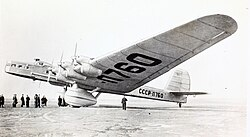
The ANT-20bis was an unusual aircraft. It was developed from the famous Tupolev ANT-20, also known as Maksim Gorky. The original ANT-20 had been one of the largest aircraft in the world during the 1930s. The ANT-20bis was an improved version designed for practical passenger and transport operations.
The loss of the aircraft in December 1942 was particularly serious because it involved a large aircraft at a time when aviation was already facing shortages of trained personnel, fuel, spare parts, and equipment.
Aeroflot During the Second World War
Aeroflot was the main civil aviation organization of the Soviet Union.
Before the war, Aeroflot operated passenger, mail, and cargo services across the Soviet Union. Because the Soviet Union was enormous, aircraft were extremely useful for connecting distant cities.
When Germany invaded the Soviet Union in June 1941, the role of aviation changed dramatically.
Civil aircraft and crews became part of the wider wartime transportation system.
Aeroflot aircraft were used to transport:
- Passengers
- Medical supplies
- Military personnel
- Equipment
- Important documents
- Food and other supplies
Pilots and engineers worked under difficult conditions.
The Tupolev ANT-20bis
The Tupolev ANT-20bis was a large Soviet aircraft designed by the Tupolev design bureau.
It was based on the earlier ANT-20.
The original ANT-20 had been designed as a giant aircraft that could demonstrate Soviet engineering capability.
The ANT-20bis was more practical.
It was intended for regular transportation rather than simply being a demonstration aircraft.
The aircraft was large and had several engines.
Its size allowed it to carry many passengers and a significant amount of cargo.
A Remarkable Aircraft for Its Time
The ANT-20bis represented the ambitions of Soviet aviation during the 1930s.
At a time when many passenger aircraft were relatively small, Soviet engineers were experimenting with very large aircraft.
The ANT-20bis had a spacious fuselage and was designed for long-distance operations.
Its design showed the Soviet desire to develop aircraft that could operate across the enormous distances of the country.
The Wartime Environment
The accident happened on 14 December 1942.
By that time, the Soviet Union had been fighting Germany for about eighteen months.
The Eastern Front was one of the largest and most destructive battlefields in history.
Soviet forces were fighting major battles across Ukraine, Belarus, Russia, and other territories.
Transportation was extremely important.
Railways were overloaded.
Roads were often damaged.
Weather could make ground transportation even more difficult.
Aircraft offered a faster way to move people and supplies.
Winter Conditions
December in the Soviet Union could be extremely difficult for aviation.
Cold temperatures, snow, ice, and short daylight hours created additional challenges.
Aircraft needed careful preparation before flights.
Engines and other systems had to operate in freezing conditions.
Pilots also had to deal with poor visibility and changing weather.
Navigation was more difficult when the ground was covered with snow.
The Importance of Navigation
Modern aircraft use satellite navigation, digital maps, radar, and many electronic systems.
The crew of an ANT-20bis had nothing like today’s technology.
Pilots depended on:
- Maps
- Magnetic compasses
- Radio navigation
- Visual references
- Weather reports
- Dead reckoning
Long-distance navigation therefore required considerable skill.
In winter, landmarks could be difficult to identify.
Snow could make the landscape appear almost uniform.
The Flight
On 14 December 1942, the ANT-20bis was involved in a scheduled Soviet aviation operation.
The aircraft was operating under wartime conditions.
The flight required the crew to deal with the usual challenges of operating a very large aircraft as well as the additional problems created by winter.
During the flight, the aircraft encountered serious difficulties.
The flight eventually ended in a crash.
The accident resulted in the loss of the aircraft and the people aboard.
The Aircraft’s Size
The ANT-20bis was considerably larger than many conventional passenger aircraft of the period.
Operating such a large aircraft required careful management.
Its multiple engines provided power and some redundancy.
However, a large aircraft also had greater weight and required more space for takeoff and landing.
Engineers and pilots had to monitor many systems.
Engine Reliability
The aircraft’s engines were critical to its operation.
Multi-engine aircraft were designed so that the loss of one engine would not necessarily cause an immediate disaster.
However, multiple engine problems could become extremely dangerous.
Engine performance could also be affected by cold temperatures, maintenance conditions, fuel quality, and other factors.
During wartime, maintenance resources could be limited.
Wartime Maintenance
The Soviet aviation industry was under enormous pressure during the war.
Factories had been moved eastward to protect them from advancing German forces.
Large numbers of aircraft were needed.
Engineers and mechanics were working under difficult conditions.
Spare parts and fuel were valuable.
Aircraft sometimes had to remain in service even when operating conditions were far from ideal.
This environment increased the challenges faced by civil aviation.
The Crew
Large aircraft such as the ANT-20bis required several crew members.
The captain was responsible for the aircraft and the flight.
Other crew members helped with navigation, engineering, communications, and passenger duties.
The engineers were especially important because the aircraft had multiple engines and complex systems.
The crew needed to work together carefully.
Soviet Aviation Personnel
Soviet pilots had gained considerable experience during the 1930s.
They had operated aircraft across the vast Soviet Union.
Many had also gained experience in difficult weather and remote areas.
During the war, however, aviation personnel were under enormous pressure.
Experienced pilots were also needed by the military.
Civil aviation therefore faced competition for trained personnel.
The Accident Investigation
After the crash, investigators examined the available evidence.
Aviation investigations in the Soviet Union considered several possible factors, including:
- Weather
- Aircraft condition
- Engine performance
- Crew actions
- Navigation
- Flight planning
- Ground procedures
The investigators attempted to determine why the aircraft could not complete the flight safely.
Accident investigations were important because aviation authorities could use their findings to improve future operations.
Difficulties of Investigating Wartime Accidents
Investigating an aviation accident during wartime was not easy.
Information could be incomplete.
Aircraft records might be difficult to obtain.
Witnesses could be unavailable.
Military secrecy could also affect the release of information.
In some cases, historical records from this period remain incomplete or contradictory.
For historians today, this means that some details about Soviet aviation accidents must be treated carefully.
Soviet Aviation and Safety
The Soviet Union was developing aviation rapidly during the 1930s and 1940s.
Large aircraft programs were part of that development.
However, aviation safety standards were still evolving.
There were fewer internationally standardized procedures than exist today.
Weather forecasting was less advanced.
Navigation technology was more limited.
Aircraft systems were less automated.
Pilots had to rely heavily on their own judgment and experience.
The Role of Aeroflot
Aeroflot continued operating throughout the war, although its activities were heavily affected by military needs.
The organization became an important part of Soviet transportation.
It connected cities that were far apart.
It carried supplies to areas that were difficult to reach by road.
It also transported personnel.
The ANT-20bis was particularly valuable because of its capacity.
The Legacy of the ANT-20
The ANT-20bis was connected to the history of the original ANT-20.
The original aircraft, Maksim Gorky, had been built as a symbol of Soviet technological achievement.
It was a huge aircraft for its time.
The aircraft had attracted international attention because of its unusual size.
The ANT-20bis represented an attempt to take some of those ideas and develop them into a more practical transport aircraft.
Large Aircraft Before Modern Airliners
The ANT-20bis appeared before the era of modern high-capacity airliners.
Aircraft designers around the world were experimenting with larger aircraft.
The goal was to carry more passengers and cargo over greater distances.
However, large aircraft also created engineering challenges.
Engines were less powerful and less reliable than modern turbofan engines.
Structures were heavier.
Navigation systems were primitive.
Runways and airports were less developed.
The Second World War Changed Aviation
The Second World War accelerated aircraft development.
Military requirements pushed engineers to improve:
- Engines
- Navigation
- Radar
- Communications
- Aircraft structures
- Weather forecasting
- Pilot training
These developments would later influence commercial aviation.
By the end of the war, aircraft were much faster and more capable than they had been in 1939.
Winter Flying
The December accident also reminds us how difficult winter aviation could be.
Snow and ice can affect aircraft in many ways.
Ice can accumulate on wings and control surfaces.
Snow can make runways dangerous.
Very low temperatures can affect engines and mechanical systems.
Visibility can fall rapidly during snowstorms.
In the 1940s, aircraft had fewer systems for detecting and dealing with these problems.
The Human Cost
Behind the technical history of the accident were people.
The crew members were aviation professionals performing their duties.
Passengers were depending on the aircraft to carry them safely to their destination.
Their families expected them to return.
The crash ended those expectations.
Every aviation accident represents a human tragedy, regardless of how large or historically important the aircraft may have been.
Why the Accident Matters
The ANT-20bis accident is important because it represents several important aspects of aviation history.
It shows the development of large Soviet transport aircraft.
It demonstrates the importance of civil aviation during wartime.
It highlights the difficulties of winter operations.
It also provides an example of the risks faced by aviation crews before modern safety technology existed.
Lessons From Early Aviation
Early aircraft accidents helped aviation authorities understand the importance of systematic safety.
Pilots needed better training.
Aircraft needed stronger maintenance programs.
Navigation systems needed improvement.
Weather forecasting had to become more accurate.
Air traffic control needed to develop.
These improvements gradually reduced the risk of accidents.
Modern Aviation Compared With 1942
A modern passenger aircraft is very different from the ANT-20bis.
Today’s aircraft use sophisticated computers.
Pilots have digital navigation displays.
Weather radar provides information about storms.
Satellite navigation provides accurate position information.
Aircraft engines are monitored continuously.
Air traffic controllers can track aircraft using radar and other systems.
Emergency systems are also much more advanced.
These developments have made modern air travel much safer.
The Importance of Historical Research
Historical aviation accidents can be difficult to research.
Some events occurred during periods of war or political instability.
Records may have been lost.
Different sources may provide different information.
Researchers therefore need to compare official documents, aviation histories, newspaper reports, and other archival material.
This is particularly important when studying Soviet aviation during the Second World War.
Remembering Soviet Aviation Crews
The pilots and engineers who worked during the war played an important role in keeping transportation systems functioning.
They often worked under difficult conditions.
They flew in severe weather.
They operated aircraft that required constant attention.
They transported people and supplies across enormous distances.
Their contribution is an important part of aviation history.
The Broader Story of Soviet Aircraft
The Soviet Union produced many important aircraft designers and engineers.
Andrei Tupolev became one of the country’s most famous aircraft designers.
His design bureau later produced aircraft such as the Tu-104, Tu-114, and many military aircraft.
The ANT-20 and ANT-20bis were early examples of the ambitious engineering projects that helped establish this tradition.
From Giant Propeller Aircraft to Jet Airliners
The ANT-20bis belonged to the age of large propeller aircraft.
Only a few decades later, jet airliners would transform aviation.
Jet engines allowed aircraft to fly faster and higher.
Long-distance routes became easier.
Passenger aircraft became more efficient.
Large airports replaced many of the limitations faced by early aviation.
The giant Soviet propeller aircraft therefore belongs to an important transitional period.
A Symbol of an Earlier Era
The ANT-20bis can be seen as a symbol of the early attempt to create very large transport aircraft.
It combined ambitious engineering with the practical needs of a huge country.
Its accident demonstrated, however, that aircraft size alone could not guarantee safety.
Reliable systems, good navigation, skilled crews, proper maintenance, and favorable operating conditions were all necessary.
Conclusion
The Aeroflot Tupolev ANT-20bis accident of 14 December 1942 belongs to a difficult and important period in the history of Soviet aviation.
The ANT-20bis was one of the largest and most unusual Soviet transport aircraft of its time. It had been developed from the famous ANT-20 and represented the Soviet Union’s ambitious efforts to build large passenger and transport aircraft.
By the time of the accident, however, the world was at war.
The German invasion of the Soviet Union had transformed civil aviation. Aeroflot’s aircraft and crews were increasingly involved in transportation activities connected with the war.
The accident took place during the difficult winter season. Cold temperatures, snow, limited visibility, and primitive navigation technology made flying much more demanding than it is today.
The crew of the ANT-20bis had to depend on their experience, instruments, maps, radio communication, and weather information.
Modern aviation has many systems that were unavailable in 1942. Satellite navigation, weather radar, digital flight instruments, advanced air traffic control, automatic warning systems, and highly reliable engines have transformed the safety of air travel.
The ANT-20bis accident therefore provides an important reminder of how much aviation has changed.
It also shows the important role that Aeroflot played during the Second World War. Civil aviation was not simply about transporting passengers. Aircraft became an essential part of the national transportation system.
The accident also belongs to the larger history of the Tupolev design bureau and Soviet aircraft development. The ANT-20bis demonstrated the ambition of Soviet engineers to build large aircraft capable of carrying people and cargo across enormous distances.
Although the aircraft was eventually lost, the work behind it contributed to the broader development of Soviet aviation.
Most importantly, the people aboard the aircraft should be remembered. They were part of a generation living through one of the most difficult periods of the twentieth century.
The story of the 14 December 1942 Aeroflot ANT-20bis accident is therefore not only about an aircraft. It is about the challenges of early aviation, the pressures of wartime transportation, the development of Soviet aircraft engineering, and the human cost of operating aircraft in an era when aviation technology was still developing.

Ajeet Yadav is an aviation enthusiast covering airline news, airports, aircraft, and industry developments through well-researched and reliable reporting.