








Croydon Dakota Accident January 25, 1947
The Croydon Dakota Accident of January 25, 1947, was a tragic event in the early history of post-war British civil aviation. It involved a Douglas Dakota, the British name commonly used for the civilian version of the famous Douglas DC-3 and its military C-47 family.
The accident happened during a period when Britain was rebuilding its aviation industry after World War II. The war had produced huge advances in aircraft technology, navigation, and pilot training. When peace returned, many military aircraft were converted for civilian passenger operations. Airlines began opening routes again and carrying increasing numbers of passengers.
However, the transition from wartime flying to large-scale commercial aviation was not easy. Airports were busy, weather conditions could be difficult, and navigation and landing equipment was much less advanced than what is available today.
The Croydon Dakota accident became one of the incidents that reflected the difficulties of this early post-war period.
Croydon Airport
To understand the accident, it is important to know about Croydon Airport.
Croydon was one of Britain’s most important airports during the early development of commercial aviation. It served London before the opening of Heathrow.
During the 1920s and 1930s, Croydon became an important center for international air travel. Airlines operating from the airport connected Britain with Europe and other parts of the world.
The airport also played an important role during World War II.
By January 1947, however, Britain’s aviation system was changing.
London’s aviation needs were increasing, and larger airports were becoming necessary. Croydon still handled aircraft, but the country’s commercial aviation network was moving toward newer facilities.
The Douglas Dakota
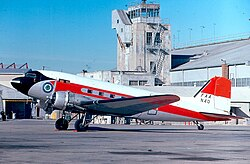
The aircraft involved was a Douglas Dakota.
The Dakota was the British designation for the civilian DC-3 and related aircraft derived from the military C-47.
It was one of the most important aircraft in aviation history.
The DC-3 had revolutionized passenger travel before World War II. It was fast, reliable, and comfortable compared with many earlier aircraft.
During the war, the military version became one of the main transport aircraft used by Allied forces.
Thousands of C-47s were produced.
After the war, many of these aircraft were converted for civilian service.
British airlines and other operators used Dakotas extensively.
They became a familiar sight at airports throughout Britain and Europe.
Post-War British Aviation
The accident occurred only about a year and a half after the end of World War II.
Britain was still recovering from the war.
The country faced shortages of fuel, equipment, spare parts, and other resources.
At the same time, the demand for air transportation was increasing.
People wanted to travel internationally again.
Business connections were being restored.
Mail and cargo needed to move quickly.
Airlines were therefore under pressure to provide regular services.
Many pilots and aircraft from wartime operations were now being used in civilian aviation.
This created an important challenge: military aircraft and experience had to be adapted to the requirements of commercial passenger operations.
The Flight
The Dakota involved in the January 25 accident was operating in the Croydon area.
The flight was being conducted during a period of difficult winter weather.
As with many aviation accidents of the era, the aircraft had to operate with technology that was much more basic than modern systems.
Pilots depended on radio navigation, instruments, charts, and visual references.
When weather conditions were poor, the final approach to an airport could become particularly difficult.
The accident occurred during this challenging period of aviation development.
Winter Weather
January can bring difficult flying conditions in Britain.
Fog, low clouds, rain, frost, and poor visibility were common concerns.
In 1947, Britain also experienced an exceptionally severe winter.
The winter of 1946–47 became famous for heavy snow, freezing conditions, and transportation problems across the country.
Airports were affected by these conditions.
Runways could become difficult to use.
Visibility could change quickly.
Aircraft operations required careful planning.
For a pilot approaching an airport, bad weather could make it difficult to identify the correct approach path.
Navigation in the 1940s
Modern aircraft use satellite navigation and sophisticated computerized systems.
In 1947, pilots had much fewer tools.
Navigation relied heavily on:
- Radio beacons
- Magnetic compasses
- Paper charts
- Dead reckoning
- Radio communication
- Visual landmarks
Dead reckoning involved estimating the aircraft’s position based on its heading, speed, time, and wind.
This could work well when conditions were predictable.
However, wind could change.
Navigation errors could accumulate.
If an aircraft was approaching an airport in fog or low cloud, the crew might not be able to see the ground clearly enough to identify their exact position.
The Approach to Croydon
The final approach to an airport is one of the most demanding parts of any flight.
Pilots must maintain the correct altitude, speed, heading, and descent rate.
They must also configure the aircraft for landing.
At a busy airport, the crew must communicate with air traffic control and follow the correct approach procedure.
In 1947, these procedures were less advanced than modern instrument approaches.
Aircraft did not have the same level of automated guidance.
Pilots had to control the aircraft manually and interpret navigation information themselves.
Poor visibility made the task even more difficult.
The Accident
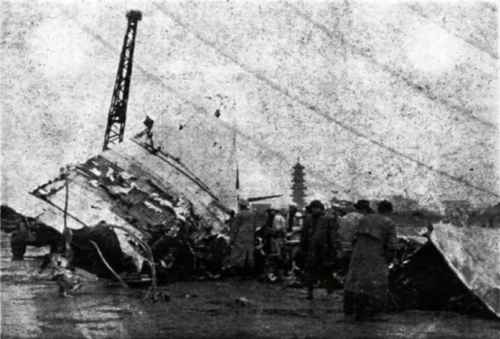
On January 25, 1947, the Dakota was involved in an accident at Croydon.
The aircraft crashed during the airport operation, causing fatalities and injuries.
The aircraft was badly damaged.
Emergency crews responded to the scene.
Firefighters and rescue workers worked to reach the aircraft and assist those involved.
The accident attracted attention because Croydon was an important London aviation center.
It also highlighted the difficult conditions under which post-war airlines were operating.
Emergency Response
Emergency response in the 1940s was much less developed than today.
Modern airports have specialized rescue and firefighting vehicles positioned close to runways.
They also have medical teams and detailed emergency plans.
Aircraft can transmit emergency information automatically.
In 1947, rescue workers depended much more on airport staff, telephones, radio messages, and eyewitness reports.
Firefighters had to reach the accident site quickly using the facilities available at the airport.
The response to the Croydon accident therefore required the coordinated efforts of airport personnel and emergency services.
The Investigation
After the accident, authorities investigated what had happened.
Investigators examined the aircraft, the flight circumstances, the weather, and the airport environment.
They considered questions such as:
- Was there a mechanical problem?
- Were the weather conditions suitable for the approach?
- Was the aircraft correctly positioned?
- Were the navigation aids operating properly?
- Were correct procedures followed?
- Did pilot actions contribute to the accident?
Investigators also examined the wreckage.
Mechanical components could sometimes reveal whether a system had failed before the crash.
Witnesses and airport personnel could provide additional information.
Difficulties of Historical Investigations
Investigating a 1940s aircraft accident was difficult.
Modern aircraft carry flight-data recorders that record altitude, speed, heading, engine information, and many other parameters.
Cockpit voice recorders preserve conversations between crew members.
These devices help investigators reconstruct an accident in great detail.
The Dakota involved in the Croydon accident did not have modern recorders.
Investigators therefore had to reconstruct the sequence of events using physical evidence, documents, radio messages, weather reports, and witness statements.
This meant that some details could remain uncertain.
Pilot Training
Pilot training was another important issue in post-war aviation.
Many pilots flying for civilian airlines had military backgrounds.
They had experience flying transport aircraft under difficult conditions.
However, commercial aviation required different procedures.
Pilots had to learn passenger operations, airline schedules, civilian navigation systems, and airport procedures.
They also needed to understand the performance of aircraft in different weather conditions.
The rapid expansion of civil aviation made standardized training increasingly important.
The Dakota’s Role in Civil Aviation
The Dakota became one of the most important aircraft of the post-war period.
Its reliability and availability made it ideal for airlines rebuilding their fleets.
It could carry passengers and cargo and operate on many different routes.
The aircraft was also relatively easy to maintain compared with larger and more complex aircraft.
However, the fact that an aircraft had a strong reputation did not eliminate the risks of flying.
Weather, navigation, human factors, maintenance, and airport conditions could all contribute to accidents.
The Croydon accident was therefore part of the larger history of Dakota operations around the world.
Croydon’s Changing Role
The accident also occurred during a period when Croydon’s importance was beginning to decline.
Croydon had been Britain’s main international airport before the war.
But London’s aviation needs had grown.
Larger aircraft were being developed.
Passenger numbers were increasing.
Modern airports required longer runways and more space.
The British government eventually developed London Airport at Heathrow, which opened for commercial operations in 1946.
As Heathrow expanded, Croydon’s role gradually decreased.
Croydon eventually closed to airline operations.
Lessons From the Accident
The Croydon Dakota accident illustrated several important aviation safety lessons.
Weather Matters
Winter conditions can make airport operations difficult.
Accurate Navigation Is Essential
Pilots need reliable information during an approach.
Instrument Flying Is Important
Aircraft must be able to operate safely when visual references are unavailable.
Pilot Training Must Be Strong
Crews need appropriate training for different aircraft and weather conditions.
Airport Facilities Matter
Runways, navigation aids, communication systems, and emergency services all contribute to safety.
Accident Investigations Are Valuable
Every accident can provide lessons that help prevent future accidents.
Improvements in Aviation Safety
The decades following the accident saw major improvements in aviation.
Radio navigation systems became more advanced.
Air traffic control developed rapidly.
Radar became widely used.
Instrument landing systems allowed aircraft to make more accurate approaches in poor visibility.
Weather forecasting improved.
Airports received better lighting and runway equipment.
Pilot training became more standardized.
Aircraft maintenance procedures became more detailed.
Eventually, jet aircraft replaced many piston-powered passenger aircraft.
These changes transformed air travel.
Modern Comparison
A modern aircraft approaching a major London airport has access to technology that would have seemed almost impossible in 1947.
Pilots can use GPS and other navigation systems.
Air traffic controllers can monitor aircraft using advanced surveillance technology.
Weather radar provides information about storms and dangerous weather.
Instrument landing systems can guide aircraft toward runways.
Aircraft terrain-warning systems can alert pilots when they are too close to the ground.
Flight-data recorders allow investigators to understand exactly what happened during an accident.
These systems greatly reduce many of the risks faced by earlier generations of pilots.
The Human Cost
The most important part of the Croydon Dakota accident was the loss of life.
The passengers aboard the aircraft were ordinary people traveling for different reasons.
Some may have been traveling for work or business.
Others may have been returning home or visiting family.
The crew members were professionals performing their duties.
For families and friends, the accident was a sudden and painful tragedy.
The loss did not end when the aircraft was removed from the crash site.
The people connected with the victims carried the effects of the accident for many years.
Historical Importance
The Croydon Dakota accident is important because it occurred during a major transition in British aviation.
The war had ended, but the aviation industry was still adjusting to peacetime operations.
Military aircraft were being converted for passenger use.
Former military pilots were joining airlines.
Airports were becoming busier.
New technology was being introduced.
At the same time, Britain was developing new airports to meet the future needs of international air travel.
The accident therefore belongs to an important chapter in the history of British aviation.
Remembering Croydon
Croydon Airport has an important place in the history of British aviation.
It was the airport from which many early international passenger services operated.
It helped establish London as an important center of international air travel.
The Dakota accident is one of the tragedies associated with this historic airport.
Although aviation technology has changed enormously since 1947, the basic principles of safety remain familiar.
Pilots must understand weather.
Aircraft must be properly maintained.
Navigation must be accurate.
Airports must provide suitable facilities.
Crews must be trained for emergencies.
These lessons remain important today.
Conclusion
The Croydon Dakota Accident of January 25, 1947, was a tragic event during the early post-war period of British commercial aviation.
The Douglas Dakota was one of the most important aircraft of the time. Originally developed from the Douglas DC-3 and widely used as the military C-47, it became a major part of the civilian airline fleets that were rebuilding after World War II.
The accident occurred during a difficult period. Britain was experiencing severe winter weather, and aviation systems were much less advanced than they are today. Pilots had to depend on radio navigation, charts, instruments, and visual references. Airports also had fewer advanced navigation and emergency facilities.
Croydon itself was an important part of London’s aviation history, although its role was already beginning to change as Heathrow developed into the capital’s major airport.
The accident demonstrated why aviation safety requires more than a reliable aircraft. Pilot training, navigation, weather information, airport facilities, maintenance, communication, and emergency response must all work together.
Over the following decades, these areas improved greatly. Radar, instrument landing systems, improved weather forecasting, satellite navigation, computerized aircraft systems, and modern air traffic control transformed commercial aviation.
The Croydon Dakota accident remains part of the history of this transformation. It reminds us that the safe and efficient airline system passengers experience today was built through decades of technological progress and, sadly, through lessons learned from tragedies involving earlier generations of aircraft and aviation professionals.

Ajeet Yadav is an aviation enthusiast covering airline news, airports, aircraft, and industry developments through well-researched and reliable reporting.