
















National Airlines Flight 16 Crash October 5, 1945
National Airlines Flight 16 was involved in a tragic aviation accident on October 5, 1945, near Lakeland, Florida. The aircraft, a Lockheed 18-50 Lodestar, was operating a scheduled passenger flight from Miami to Lakeland with several stops along the way. During its final approach to Lakeland Municipal Airport, the pilots attempted to make a missed approach after encountering a cloud. The aircraft failed to climb properly, passed beyond the runway, and crashed into Lake Parker. Two passengers died, while 13 other people survived.
The accident became an important example of the dangers involved in performing a go-around or missed approach, especially when a pilot delays the decision or does not follow the safest procedure.
The Flight
National Airlines Flight 16 was a scheduled domestic passenger flight in the United States. The route began in Miami, Florida, and included stops at Fort Myers, Sarasota, St. Petersburg, and Tampa, before the aircraft continued to its final destination, Lakeland.
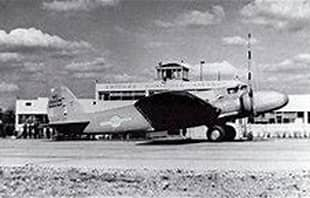
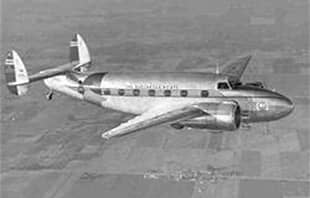
The aircraft was a Lockheed 18-50 Lodestar, registered NC18199. It had originally been built for the U.S. Army Air Corps in 1942 and was later leased to National Airlines. The aircraft had accumulated about 1,798 hours of flying time by the date of the accident.
There were 15 people aboard:
- 12 passengers
- 3 crew members
- 2 passengers died
- 13 people survived
The crew included Captain William Merrill Corry, First Officer William Hawley Conrad, and stewardess Ethel Katherine McCoy.
Departure From Miami
The flight actually began on the evening of October 4, 1945, even though the accident occurred shortly after midnight on October 5.
Flight 16 departed Miami at approximately 9:12 p.m. The aircraft was already about one hour and 15 minutes behind schedule, partly because of delays involving the aircraft’s earlier operations.
The first parts of the journey were completed normally.
The aircraft stopped at Fort Myers, then continued to Sarasota, St. Petersburg, and finally Tampa.
There were no major problems reported during these parts of the flight.
After refueling at Tampa, the aircraft prepared for the short final leg to Lakeland.
The Final Leg
Flight 16 left Tampa at approximately 12:45 a.m. on October 5.
The distance between Tampa and Lakeland was only about 33 miles, making this the final and relatively short part of the journey. The aircraft climbed to approximately 1,500 feet and proceeded toward Lakeland.
At Lakeland, the weather report showed approximately nine miles of visibility, with scattered clouds around 500 feet. These conditions were not considered extremely poor, and the crew proceeded with the approach.
At about 12:58 a.m., when the aircraft was approximately seven miles from the airport, the pilots began a straight-in descent toward the northeastern runway.
At first, the approach appeared normal.
Unexpected Cloud
As the aircraft descended, the pilots encountered an unexpected cloud at approximately 600 feet.
This was an important moment in the accident.
The captain decided that the aircraft should not continue the approach under those conditions. He therefore began a missed approach, also known as a go-around.
A missed approach is a standard aviation procedure. If pilots cannot safely land, they increase engine power, configure the aircraft for climbing, and move away from the runway before attempting another approach or proceeding to another airport.
The decision to abandon an unsafe approach can save lives.
However, the procedure must be started early enough and performed correctly.
The Go-Around
The captain ordered the landing gear to be retracted and announced that he was going to make another approach.
However, the aircraft did not climb as expected.
According to the investigation, the captain waited too long before fully committing to the go-around and did not establish the necessary climb soon enough. The aircraft continued forward at a very low altitude instead of climbing safely away from the airport.
Witnesses on the ground saw the aircraft traveling along the runway at only about 30 to 40 feet above the ground.
The aircraft passed over the runway and continued beyond its end.
Immediately beyond the airport was Lake Parker.
The aircraft could not climb sufficiently to avoid the water.
The Crash Into Lake Parker
Flight 16 passed approximately 1,000 feet beyond the end of the runway before striking Lake Parker.
The aircraft hit the water in a relatively level attitude. It then traveled farther across the surface of the lake before coming to rest in approximately 10 feet of water.
The impact seriously damaged the aircraft.
The fuselage began to sink, creating a dangerous situation for the passengers and crew.
However, many people were able to escape from the aircraft.
The accident could have resulted in a much greater loss of life, but local people responded quickly and helped rescue survivors.
Rescue Operation
The crash occurred close to the airport and populated areas, which allowed local residents and rescuers to reach the scene relatively quickly.
The aircraft was partly submerged in Lake Parker.
People inside had to escape from the damaged fuselage before it became completely submerged.
Local residents helped bring survivors out of the aircraft.
According to records of the accident, the rescue of the survivors was completed within about 30 minutes.
Unfortunately, two passengers were unable to escape and drowned.
The other 13 people survived, although several suffered injuries.
The quick response of local people played an important role in preventing an even greater tragedy.
The Investigation
The accident was investigated by the Civil Aeronautics Board (CAB), the federal agency responsible for investigating major aviation accidents in the United States at the time.
The CAB received notification of the accident at approximately 2:05 a.m. on October 5. An air safety investigator arrived at the crash site later that morning.
Investigators examined the aircraft, the flight path, weather reports, runway conditions, and the actions of the pilots.
One important question was whether the aircraft had suffered a mechanical failure.
The investigation found no significant aircraft equipment malfunction that explained the accident.
Instead, investigators focused on the way the missed approach had been performed.
Cause of the Accident
The Civil Aeronautics Board determined that the accident was caused by pilot error during the missed approach.
The investigation found that the captain had delayed the go-around and did not establish the necessary climb quickly enough.
The aircraft continued almost the entire length of the runway at a very low altitude.
By the time the aircraft was beyond the runway, there was not enough distance or altitude available to recover safely.
The CAB also found that there were alternative procedures available that could have allowed the aircraft to complete the missed approach safely.
The accident therefore became an important lesson about the need for pilots to make an early decision when an approach becomes unsafe.
Why a Go-Around Is Important
A go-around is a normal part of aviation.
It does not necessarily mean that something has gone seriously wrong. Pilots may go around because of weather, another aircraft on the runway, unstable approach conditions, poor visibility, or any other situation that makes landing unsafe.
The key is to make the decision early.
If a pilot waits too long, the aircraft may be too close to the ground or too far along the runway to climb safely.
Flight 16 demonstrated exactly this danger.
The aircraft was already very low when the crew attempted to complete the missed approach.
The Importance of Aircraft Familiarity
Another issue considered by investigators was the captain’s familiarity with the specific aircraft.
The Lockheed 18-50 had particular performance characteristics. Pilots needed to understand how quickly the aircraft could accelerate, climb, and change configuration during a missed approach.
The CAB concluded that the captain’s unfamiliarity with certain aircraft performance information contributed to the delayed response.
This highlighted the importance of pilot training and knowledge of aircraft limitations.
A pilot must know how an aircraft will behave when power is increased, landing gear is retracted, and the aircraft is configured for a climb.
The Lockheed Lodestar
The Lockheed Model 18 Lodestar was a twin-engine aircraft developed in the late 1930s.
It was used for both passenger transportation and military operations.
During World War II, many Lodestars were used for military purposes.
The aircraft involved in Flight 16 had been built for military service before being placed into commercial operations.
The Lodestar was capable of carrying passengers over domestic routes and was used by several airlines.
The aircraft itself was not found to have suffered a major mechanical failure in this accident.
Instead, the disaster demonstrated how an otherwise functioning aircraft could still be lost because of an unsuccessful landing procedure.
Aviation in 1945
The accident happened only a few months after the end of World War II.
Aviation was changing rapidly.
Thousands of military pilots were returning to civilian life, aircraft technology was improving, and commercial airlines were preparing for major growth.
However, aviation procedures were still developing.
Modern systems such as GPS, digital flight displays, computerized flight management systems, and advanced terrain-warning equipment did not exist.
Pilots had to depend much more on their own judgment and basic aircraft instruments.
This made proper training and strict adherence to procedures extremely important.
Lessons From Flight 16
The accident provided several important safety lessons.
1. Make the go-around decision early
If an approach becomes unsafe, pilots should not wait until the aircraft is extremely close to the runway.
2. Follow the correct missed-approach procedure
A missed approach must be performed according to the aircraft’s position, altitude, and published procedure.
3. Understand aircraft performance
Pilots need to know how their aircraft will behave during a climb, especially with landing gear and flaps being changed.
4. Train for unexpected situations
An unexpected cloud or sudden change in visibility can occur even when weather conditions appear generally good.
5. Prioritize safety over completing the landing
A pilot should always be prepared to abandon an approach rather than continue an unstable or unsafe landing.
The Human Side
The accident was not just a technical event.
Fifteen people were aboard Flight 16.
Twelve were passengers who expected to arrive safely at Lakeland.
Three were crew members performing their professional duties.
Two passengers lost their lives in the cold water of Lake Parker.
The 13 survivors were fortunate to escape the sinking aircraft, but many were injured.
The accident affected families, friends, and the employees of National Airlines.
For those who lost loved ones, the event was a personal tragedy rather than simply another aviation statistic.
Legacy of National Airlines Flight 16
National Airlines Flight 16 remains an important case in aviation history because it demonstrates the dangers of an improperly executed missed approach.
The aircraft did not suffer a catastrophic engine failure or structural breakup.
Instead, a series of decisions during the final moments of the flight resulted in the aircraft remaining too low and traveling beyond the runway.
The accident helped reinforce the importance of pilot training, aircraft-specific knowledge, and timely go-around decisions.
Modern pilots are trained extensively to recognize unstable approaches and to abandon a landing when necessary.
Conclusion
The National Airlines Flight 16 accident of October 5, 1945, was a tragic but important event in the history of commercial aviation.
The Lockheed 18-50 Lodestar was flying from Miami to Lakeland, with stops at Fort Myers, Sarasota, St. Petersburg, and Tampa. There were 15 people aboard. During the final approach to Lakeland, the aircraft encountered an unexpected cloud at about 600 feet. The captain decided to make a missed approach, but the aircraft did not climb sufficiently. It passed beyond the runway and crashed into Lake Parker.
Two passengers died by drowning, while 13 people survived. Investigators found no major mechanical failure and concluded that the accident resulted from the pilot’s delayed and improperly executed missed-approach procedure.
The accident remains a useful lesson in aviation safety. A go-around is one of the most important tools available to pilots, but it must be started early and performed correctly.
The story of Flight 16 shows that safe flying depends not only on a reliable aircraft but also on good training, sound judgment, knowledge of aircraft performance, and the willingness to abandon an unsafe landing.

Ajeet Yadav is an aviation enthusiast covering airline news, airports, aircraft, and industry developments through well-researched and reliable reporting.