












American Airlines Flight 6001 Crash January 10, 1945
American Airlines Flight 6001 was involved in a tragic aviation accident on January 10, 1945, near Burbank, California. The flight was operated by American Airlines using a Douglas DC-3 passenger aircraft. During a night approach to Burbank, the aircraft encountered poor weather and crashed into the nearby Verdugo Hills. All 24 people on board, including 21 passengers and three crew members, were killed.
The accident happened during the final year of World War II, when commercial aviation in the United States was expanding rapidly. Aircraft were becoming more reliable, but pilots still faced major challenges when flying at night, especially in fog, clouds, and mountainous areas.
The Flight
American Airlines Flight 6001 was a long transcontinental flight from New York City’s LaGuardia Airport to Hollywood Burbank Airport in California. The aircraft made stops during its journey, including El Paso, Texas, and Phoenix, Arizona.
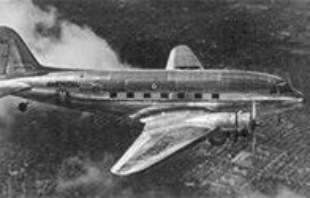
The aircraft was a Douglas DC-3-277B, registered NC25684. It had been built in 1940 and had accumulated almost 14,900 hours of flying time. Its most recent inspection had been completed only a few days before the accident, on January 6, 1945.
There were 21 passengers and three crew members aboard the aircraft.
The captain was Joseph Russell McCauley, who had thousands of hours of flying experience, including extensive experience with the DC-3. The first officer was Robert Gaylord Eitner, who also had considerable experience. A stewardess, Lila Agnes Docken, was the third crew member.
The Journey to California
Flight 6001 departed from New York on the evening of January 9, 1945, at approximately 7:23 p.m. Eastern War Time.
The flight continued across the United States during the night. After reaching El Paso, the crew continued toward California.
As the aircraft approached the Los Angeles area, weather conditions became an important concern.
The weather at Burbank was not good enough for a normal visual approach. Because of the unfavorable conditions, the flight was initially cleared toward Newhall, California, rather than directly approaching Burbank. (Wikisource)
This decision was intended to keep the aircraft away from the airport until the crew could determine whether conditions were suitable for landing.
Poor Weather at Burbank
The weather around Burbank during the early morning hours was difficult.
Reports showed low clouds, fog, and limited visibility. One report recorded a ceiling of about 700 feet, an overcast sky, visibility of approximately two miles, and light fog. Other observations showed that conditions could vary considerably.
For a modern pilot, such conditions can be managed with advanced instruments, satellite navigation, weather information, and sophisticated approach systems.
In 1945, however, pilots had far fewer tools.
They had to depend heavily on radio navigation, instruments, weather reports, and established procedures.
Flying close to mountains in these conditions was particularly dangerous.
The Approach to Burbank
At approximately 3:06 a.m., the flight was cleared to proceed toward Burbank. Later, the crew received a weather report and was cleared for a standard instrument approach.
The aircraft began its approach at about 3:55 a.m.
The approach was being conducted during darkness and poor weather. The crew was therefore relying heavily on instruments.
At approximately 4:06 a.m., people at the airport observed the aircraft crossing the airport area near the lower edge of the clouds.
The aircraft then began a left turn, apparently as though it were preparing to circle for landing.
However, the crew soon realized that they could not maintain visual contact with the ground.
The Final Radio Message
The captain contacted air traffic control and reported that he could not maintain visual contact.
He indicated that the aircraft would proceed toward Palmdale, which was being used as an alternate airport.
This was the last known communication from Flight 6001.
After that message, attempts were made to contact the aircraft.
The control tower, American Airlines, and other radio stations tried to establish communication, but there was no response.
The aircraft had disappeared into the darkness and poor weather.
Search for the Aircraft
When Flight 6001 failed to arrive and could not be contacted, a search began.
The poor weather and darkness made the search difficult.
The aircraft was not immediately located.
After daylight arrived, searchers were able to examine the surrounding hills more effectively.
At approximately 9:30 a.m., the wreckage was spotted on a hillside about 2.75 miles northeast of Burbank Airport.
The aircraft had crashed into the Verdugo Hills.
The impact was severe, and the aircraft was destroyed by the impact and subsequent fire.
All 24 people aboard were killed.
The Investigation
The accident was investigated by the Civil Aeronautics Board (CAB), the federal agency responsible for investigating major aviation accidents in the United States at that time.
Investigators examined the aircraft, flight path, weather reports, radio communications, and approach procedures.
The investigation found that weather conditions at Burbank were below the required minimums at the time of the accident. The official report also noted that the pilot had not been properly advised of the latest weather information.
This was an important finding because accurate weather information is essential for safe instrument approaches.
The investigation also examined the aircraft’s movements after it crossed the airport.
The Missed Approach Problem
One of the most important parts of the investigation involved the aircraft’s missed-approach procedure.
When a pilot cannot safely complete an instrument approach, a missed approach allows the aircraft to climb away from the airport and follow a predetermined safe route.
However, the official investigation concluded that the pilot attempted to use the standard missed-approach procedure after the aircraft had already moved into a position where the procedure could not safely be followed.
According to the Civil Aeronautics Board, the aircraft therefore made a climbing turn toward the nearby hills rather than away from them.
The official probable cause was described as the pilot’s attempt to use the standard missed-approach procedure after following another course to a point where that procedure could no longer be safely applied.
The Danger of Mountainous Terrain
The accident demonstrates why mountainous terrain can be extremely dangerous during instrument flying.
The Verdugo Hills were close to Burbank Airport. When an aircraft was flying in darkness or clouds, pilots could not easily see the hills.
If an aircraft was slightly off the expected course, it could approach rising terrain without giving the crew enough time to react.
Modern aircraft have terrain-awareness and ground-proximity warning systems that can warn pilots when they are approaching dangerous terrain.
Such technology did not exist in 1945.
Pilots had to depend on their instruments, charts, navigation signals, and established procedures.
The Douglas DC-3
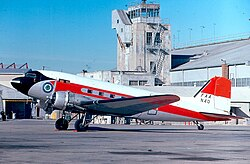
The aircraft involved in the accident was a Douglas DC-3, one of the most important aircraft designs in aviation history.
The DC-3 had two engines and was widely used by American Airlines and other carriers.
It was considered a reliable aircraft and had played a major role in making commercial air travel practical.
During World War II, military versions of the DC-3 were also used extensively for transporting troops and supplies.
The Flight 6001 accident was not simply a story about an unreliable aircraft. The investigation focused heavily on navigation, weather, approach procedures, and the circumstances surrounding the missed approach.
The Human Cost
The accident had a terrible human cost.
There were 24 people aboard Flight 6001, and none survived.
The passengers had been traveling across the United States and were nearing the end of their journey.
Among the passengers were military personnel, reflecting the wartime nature of travel during 1945.
The three crew members were responsible for operating the aircraft and caring for the passengers.
For their families, the crash brought sudden and devastating loss.
The accident also affected American Airlines employees and the wider aviation community.
Lessons From the Accident
The Flight 6001 accident provided important lessons about instrument flying.
One major lesson was that a standard procedure must always be considered in relation to the aircraft’s actual position.
A procedure designed for one location or heading may not be safe if the aircraft has already moved away from the expected position.
Another important lesson involved weather information.
Pilots need the latest available weather reports, particularly when approaching an airport with low clouds and poor visibility.
The accident also demonstrated the importance of safe routes around mountainous airports.
Improvements in Aviation Safety
Since 1945, aviation has changed enormously.
Modern pilots receive extensive training in instrument flying and missed approaches.
Aircraft have accurate navigation systems and digital flight displays.
Airports have sophisticated instrument landing systems and improved air traffic control.
Weather forecasting is much more accurate, and pilots can receive detailed weather information before and during a flight.
Most importantly, modern aircraft can warn pilots when they are approaching dangerous terrain.
These improvements were developed over many decades, with accident investigations playing an important role.
Conclusion
The American Airlines Flight 6001 crash of January 10, 1945, was a tragic accident that occurred during a difficult night approach to Burbank, California.
The Douglas DC-3 was carrying 21 passengers and three crew members when it crashed into the nearby Verdugo Hills. All 24 people aboard died.
The investigation found that poor weather was an important factor. The official report also concluded that the aircraft’s missed-approach procedure was applied from a position where it could not be safely followed.
The accident illustrates the challenges faced by pilots in the 1940s. Flying at night in fog and low clouds near mountains was extremely difficult, especially without the advanced navigation and terrain-warning systems available today.
Although the loss of Flight 6001 was tragic, the lessons from accidents like this helped aviation authorities improve procedures, weather reporting, navigation, pilot training, and terrain safety.
Today, modern aviation is much safer because generations of pilots, engineers, investigators, and safety experts have learned from the accidents of the past. The story of American Airlines Flight 6001 remains an important part of that history.

Ajeet Yadav is an aviation enthusiast covering airline news, airports, aircraft, and industry developments through well-researched and reliable reporting.