











American Airlines Flight 2 Crash February 10, 1944
American Airlines Flight 2 was involved in a tragic aviation accident on February 10, 1944, during the difficult years of World War II. The accident occurred near the Mississippi River, close to the area of Memphis, Tennessee, and resulted in the loss of everyone aboard the aircraft. The disaster became one of the notable accidents in the history of American Airlines during the early years of commercial aviation.
The early 1940s were an important period for air travel in the United States. Airlines were operating regular passenger services across the country, but aircraft navigation and communication systems were still much less advanced than they are today. Pilots had to depend heavily on radio navigation, instruments, maps, and their own judgment.
The Flight
American Airlines Flight 2 was a scheduled passenger service operating during a period when the United States was heavily involved in World War II. American Airlines was one of the country’s major commercial carriers, and its aircraft continued to transport passengers across the United States.
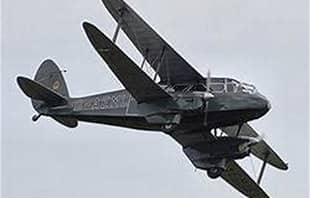
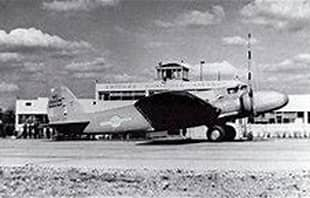
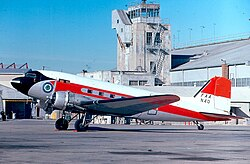
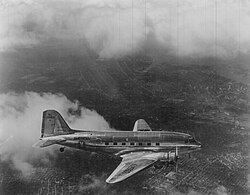
The aircraft assigned to the flight was a Douglas DC-3, one of the most successful passenger aircraft of the period. The DC-3 had two engines and was considered a reliable and capable airliner. Thousands of aircraft based on the DC-3 design were also being used for military transportation during the war.
Flight 2 was carrying passengers and crew when it began its journey on February 10, 1944. The people aboard included ordinary travelers as well as individuals traveling for work and other wartime-related reasons.
At that time, flying at night or during poor weather was considerably more difficult than it is today.
Weather and Visibility
Weather conditions played an important role in the accident.
The aircraft was operating in an area where weather could change quickly. Low visibility and darkness made it difficult for the crew to use visual landmarks for navigation.
Modern pilots can use satellite navigation, digital charts, weather radar, and terrain-warning systems. Pilots in 1944 did not have these advantages.
They depended on radio signals and instruments to determine their position.
When an aircraft was flying over a large area such as the Mississippi River valley, determining its exact position could be challenging, especially when visual references were unavailable.
The Final Moments
During the flight, the aircraft was approaching the Memphis area. At some point, the aircraft’s position became a serious concern.
The crew was attempting to navigate according to the available information. However, the aircraft did not remain safely aligned with its intended route.
The Douglas DC-3 eventually approached the Mississippi River.
The aircraft struck the river and was destroyed.
The accident happened suddenly, leaving little opportunity for anyone aboard to escape. Rescue teams were sent to the area, but the conditions made recovery difficult.
There were no survivors.
The Mississippi River
The location of the accident made the disaster particularly difficult for rescuers.
The Mississippi River is one of the largest rivers in North America. In the 1940s, reaching an aircraft wreck in the river was much more difficult than it would be today.
Rescuers had to work with limited equipment and poor visibility. Water recovery operations were also dangerous.
Pieces of the aircraft and personal belongings were recovered from the river, helping investigators establish what had happened.
The crash attracted attention because American Airlines was a major airline, and Flight 2 was a scheduled passenger service.
The Investigation
Following the accident, investigators began examining the aircraft and the circumstances surrounding the crash.
Investigators looked at several possible factors. These included the aircraft’s mechanical condition, weather, navigation, radio equipment, and the actions of the flight crew.
The Douglas DC-3 had a strong safety record, so investigators did not simply assume that the aircraft itself was responsible.
Navigation was one of the most important areas of investigation.
In the early 1940s, airline pilots commonly used radio navigation systems to determine their position. These systems were useful but were not as precise or reliable as today’s navigation technology.
Investigators examined the available radio information and reconstructed the aircraft’s probable flight path.
Navigation Challenges in the 1940s
To understand accidents from this period, it is important to understand how pilots navigated.
Today, a pilot can look at a moving map and see the aircraft’s exact position. In 1944, this was impossible.
Pilots used instruments, compass readings, radio beacons, charts, and estimated positions.
A small navigation error could become much larger over time.
At night, the problem became even more serious. A pilot might not be able to see the ground or recognize landmarks. Cloud, fog, rain, or darkness could hide important geographical features.
An aircraft could therefore be several miles away from its expected position without the crew immediately realizing it.
The Importance of Radio Navigation
Radio navigation was becoming increasingly important in commercial aviation during the 1940s.
Airports and navigation stations transmitted radio signals that pilots could use to establish their direction. Pilots used these signals together with their charts and instruments.
However, radio navigation required careful interpretation.
Signal interference, atmospheric conditions, equipment problems, or incorrect settings could affect the information available to a crew.
Pilots also needed to correctly identify which navigation signal they were receiving.
The accident involving Flight 2 demonstrated the importance of accurate navigation during airline operations.
Safety During World War II
The accident occurred when the United States was deeply involved in World War II.
The war placed enormous pressure on the aviation industry. Aircraft factories were producing large numbers of airplanes, pilots and mechanics were in high demand, and aviation technology was developing quickly.
Commercial airlines continued to operate, but the overall aviation environment was very different from today’s.
Many aircraft designs were being adapted for military use. The DC-3, for example, became the basis for the C-47 Skytrain, a military transport aircraft.
Despite these challenges, airlines continued to develop better procedures and training.
Every major accident was carefully investigated because the information could help prevent future tragedies.
The Human Cost
Behind every aviation accident are people whose lives were suddenly lost.
The passengers aboard American Airlines Flight 2 had families and friends waiting for them. Some were traveling for business, while others may have been traveling for personal or wartime-related reasons.
The crew members were trained professionals who had accepted the risks associated with aviation.
For their families, the crash was a devastating event.
The accident also affected the employees of American Airlines. Airline staff worked closely together, and the loss of an aircraft and its crew was deeply felt within the company.
Development of Aviation Safety
Accidents such as Flight 2 contributed to the gradual development of modern aviation safety.
Investigations helped authorities understand the risks associated with navigation, weather, aircraft operations, and human factors.
Over the following decades, aviation technology improved dramatically.
Aircraft received better instruments and navigation equipment. Air traffic control systems became more sophisticated. Weather forecasting improved. Pilot training became more standardized.
Later, technologies such as radar, satellite navigation, ground-proximity warning systems, and advanced communication equipment provided pilots with much more information.
These improvements did not happen because of one accident alone. Instead, aviation safety developed through decades of experience and lessons learned from many accidents.
Why Flight 2 Is Remembered
American Airlines Flight 2 is remembered as part of the history of commercial aviation during a period of rapid change.
The accident occurred at a time when flying was becoming an important form of transportation but still involved risks that modern passengers rarely consider.
The disaster demonstrated the dangers of operating an aircraft at night and navigating in difficult conditions with limited technology.
It also showed the importance of accurate position information and reliable navigation procedures.
Conclusion
The American Airlines Flight 2 accident of February 10, 1944, was a tragic event during an important period in American aviation history. The aircraft was operating a scheduled passenger service when it crashed near the Mississippi River in the Memphis area, resulting in the deaths of everyone aboard.
The accident occurred at a time when commercial aviation depended on technology that was basic compared with today’s systems. Pilots had to rely on radio navigation, instruments, charts, and their experience. Night flying and poor visibility made these challenges even greater.
Although the loss of Flight 2 was tragic, investigations into aviation accidents helped the industry understand its weaknesses. Over time, those lessons contributed to better navigation, improved pilot training, stronger operating procedures, and safer aircraft.
The story of American Airlines Flight 2 is therefore not only a story of an aviation disaster. It is also a reminder of the difficult conditions faced by early airline crews and of the long process through which aviation became one of the safest forms of transportation in the world.

Ajeet Yadav is an aviation enthusiast covering airline news, airports, aircraft, and industry developments through well-researched and reliable reporting.