







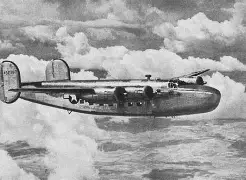
United Air Lines/USAAF Consolidated C-87 Crash –2 August 1943
The United Air Lines/USAAF Consolidated C-87 accident of 2 August 1943 was a tragic event during the Second World War. The aircraft involved was a Consolidated C-87 Liberator Express, a transport aircraft developed from the famous B-24 Liberator bomber. The aircraft was associated with both United Air Lines and the United States Army Air Forces (USAAF) during the wartime period.
The early 1940s were a period of rapid change in aviation. Aircraft were becoming larger, faster, and capable of flying much greater distances. At the same time, the Second World War created an enormous need for transport aircraft. Soldiers, government officials, engineers, mail, food, fuel, spare parts, and other important supplies had to be moved across long distances.
The C-87 was developed to help meet this need. However, long-distance flying during wartime was difficult and dangerous. Aircraft crews had to operate with limited navigation technology, changing weather conditions, demanding schedules, and few of the safety systems available to modern pilots.
The United States in 1943
By August 1943, the United States had been fighting in the Second World War for more than a year and a half.
American military operations were expanding across several regions.
Aircraft were needed in Europe, North Africa, the Pacific, Asia, and other areas.
Transport aviation became especially important.
Fighting an overseas war required enormous quantities of supplies.
Military transport aircraft moved:
- Troops
- Ammunition
- Food
- Fuel
- Medical supplies
- Aircraft parts
- Communications equipment
Without transport aircraft, military operations over great distances would have been much more difficult.
The Consolidated Aircraft Company
The aircraft was produced by Consolidated Aircraft, an important American aircraft manufacturer.
Consolidated was responsible for the development of the B-24 Liberator, one of the most widely used American heavy bombers of the war.
The B-24 had four engines and a long range.
It could carry a large amount of equipment and could operate over great distances.
These characteristics made its basic airframe attractive for transport operations.
Development of the C-87
The C-87 Liberator Express was a transport version of the B-24.
Instead of carrying bombs and defensive weapons, the C-87 was modified to carry passengers and cargo.
The aircraft retained the basic four-engine configuration of the bomber.
The interior was changed to accommodate people and equipment.
This conversion allowed the USAAF to obtain a long-range transport aircraft without creating an entirely new design.
A Bomber Used as a Transport
Using a bomber as a transport aircraft was a practical wartime decision.
The United States needed aircraft quickly.
Designing a completely new aircraft could take years.
The B-24 was already being produced in large numbers.
Factories already had experience building the aircraft.
Converting the basic design into a transport version allowed the military to expand its transport capacity more quickly.
United Air Lines
United Air Lines was one of America’s leading commercial airlines.
Before the war, United operated passenger and mail services across the United States.
The airline had experienced pilots, mechanics, engineers, and other aviation specialists.
When the war began, the American commercial airline industry became closely connected with national transportation requirements.
Civilian airline expertise was valuable to military aviation.
Civilian and Military Cooperation
During the war, commercial airlines supported the national aviation system in many ways.
Airline pilots and mechanics had important skills.
Airlines had experience operating regular schedules.
They understood passenger and cargo transportation.
Military organizations could use this experience for wartime missions.
The United Air Lines connection with the C-87 reflects this close relationship between American commercial and military aviation.
The Flight of 2 August 1943
On 2 August 1943, the C-87 was involved in a fatal accident.
The aircraft was operating as part of wartime transportation.
The mission involved moving personnel and/or important wartime materials.
The flight took place during a period when long-distance military transport was extremely important.
However, the aircraft did not complete its journey safely.
It crashed, resulting in fatalities.
Difficult Wartime Flying
Flying a large four-engine aircraft during the early 1940s required considerable skill.
The pilot had to control the aircraft while monitoring multiple engines and systems.
Other crew members had their own responsibilities.
A navigator helped determine the aircraft’s position.
Radio operators maintained communication.
Engineers monitored the engines and mechanical systems.
The crew had to work together continuously.
Navigation in 1943
Navigation technology was much less advanced than it is today.
There was no GPS.
There were no digital moving maps.
There were no modern satellite navigation systems.
Pilots and navigators relied on:
- Magnetic compasses
- Paper charts
- Radio navigation
- Dead reckoning
- Celestial navigation
- Visual landmarks
Long-distance navigation was therefore a highly specialized skill.
The Navigator’s Job
The navigator played an important role on long-distance flights.
The navigator calculated the aircraft’s position.
Wind speed and direction had to be considered.
The navigator also calculated estimated arrival times.
If the aircraft encountered unexpected winds, the calculations had to be updated.
A small error could become much larger over a long distance.
The Flight Engineer
A large aircraft such as the C-87 also required careful engine monitoring.
The flight engineer watched:
- Engine temperature
- Oil pressure
- Fuel consumption
- Engine speed
- Electrical systems
- Hydraulic systems
The engineer could alert the pilots if something appeared abnormal.
This was important because the pilot could not constantly monitor every system.
Weather
Weather was another major challenge.
In 1943, weather forecasting was improving but was still much less accurate than today.
Crews could receive weather reports before departure.
However, conditions could change during a long flight.
Aircraft could encounter:
- Thunderstorms
- Strong winds
- Heavy rain
- Fog
- Low clouds
- Icing
- Turbulence
Modern weather radar and satellite systems provide pilots with much more information.
The Danger of Icing
Icing was a serious problem for aircraft flying through cold clouds.
Ice could form on the wings and other aircraft surfaces.
This could change the shape of the wing and reduce its ability to produce lift.
Ice could also affect propellers and engines.
Modern aircraft have sophisticated anti-icing systems.
Aircraft of the 1940s had more limited protection.
Long-Distance Transport Routes
Military transport routes could be extremely long.
Aircraft sometimes had to cross oceans, deserts, mountains, or remote areas.
There were relatively few emergency landing locations.
If an aircraft developed a serious problem far from an airport, the crew had very few options.
This made reliability and careful planning extremely important.
The Accident
The C-87 involved in the 2 August 1943 accident crashed during its wartime operation.
The aircraft was destroyed.
People aboard were killed.
The accident was investigated by the relevant military authorities.
Investigators attempted to determine the sequence of events that led to the crash.
Accident Investigation
Aircraft accident investigation during the Second World War was becoming increasingly systematic.
Investigators examined the wreckage.
They inspected engines and flight controls.
They studied weather conditions.
They reviewed available radio communications.
They looked at the crew’s experience and flight plan.
They also considered maintenance records.
The goal was to identify the most likely cause.
Human Factors
Human performance was an important consideration.
Pilots could become tired during long missions.
Navigation required concentration.
Weather could increase stress.
Mechanical problems could require immediate decisions.
In wartime, crews were sometimes required to operate under demanding schedules.
Training helped them manage these problems, but it could not eliminate every risk.
Aircraft Maintenance
Maintenance was essential for four-engine aircraft.
The C-87 had four engines and many complex systems.
Each engine required inspection.
Propellers needed careful maintenance.
Electrical and hydraulic systems had to be checked.
Because wartime aircraft often flew frequently, maintenance crews had demanding responsibilities.
The Importance of Engine Reliability
The four-engine configuration provided some protection against a single engine failure.
A C-87 could potentially continue flying after losing one engine.
However, losing multiple engines could become extremely dangerous.
Engine performance also affected fuel consumption and range.
Pilots therefore needed to monitor all four engines carefully.
Wartime Production Pressure
Aircraft production during the war was enormous.
American factories were producing thousands of military aircraft.
The demand was urgent.
Factories had to work quickly.
Maintenance organizations also had to support a huge fleet.
This created a challenging environment for aviation personnel.
Transport Aircraft and the War Effort
Transport aircraft did not normally receive the same public attention as fighter aircraft or bombers.
However, their work was essential.
A military force cannot operate effectively without supplies.
Transport aircraft helped move personnel and equipment to distant bases.
They also evacuated wounded personnel and delivered mail.
The C-87 was part of this important transportation system.
The Importance of the C-87
The C-87 had a particularly important role because of its range.
The aircraft could carry passengers and cargo over long distances.
This made it useful for missions connecting distant military bases.
The design was especially valuable where transport capacity was limited.
Problems With the Design
The C-87 was based on a bomber.
It was not designed from the beginning as a passenger transport aircraft.
This created some operational challenges.
The aircraft’s interior and systems were adapted for transport.
Crews therefore had to work with a design originally intended for a different purpose.
Despite these challenges, the C-87 performed valuable wartime service.
Safety Compared With Modern Aviation
Aviation in 1943 had far fewer safety systems than modern aviation.
Today’s aircraft have:
- GPS
- Weather radar
- Digital navigation
- Advanced engine monitoring
- Satellite communication
- Terrain-warning systems
- Automated flight systems
- Sophisticated air traffic control
The C-87 relied much more heavily on human judgment.
The Importance of Pilot Training
Training was especially important during wartime.
Pilots needed to learn how to operate large multi-engine aircraft.
They had to understand engine failures.
They had to learn instrument flying.
They needed to navigate without visual landmarks.
They also had to understand emergency procedures.
Many pilots received extensive training before being assigned to long-distance missions.
The Human Cost
The accident was not simply a technical event.
The people aboard the aircraft were individuals with families and friends.
Some were serving the military.
Others may have been traveling because of wartime duties.
The crew members were performing an important transportation role.
Their deaths caused pain for families and colleagues.
Wartime Families
During the Second World War, families were already living with uncertainty.
Millions of people were serving in the armed forces.
When an aircraft failed to arrive, families could face long periods of uncertainty before receiving official information.
An aviation accident therefore affected many people beyond those directly involved.
The Development of Better Transport Aircraft
The war led to rapid improvements in transport aviation.
Aircraft designers learned from military operations.
New transport aircraft were developed.
The Douglas C-54 Skymaster, for example, became an important long-range transport aircraft.
It was specifically designed for transport work and offered advantages over converted bomber designs.
The Postwar Aviation Revolution
After the war, aviation entered a new era.
Large passenger aircraft became increasingly common.
Airports expanded.
International routes grew.
Navigation systems improved.
Commercial airlines benefited from aircraft technology developed during the war.
The modern airline industry began to take shape.
The End of the C-87 Era
The C-87’s importance declined as newer transport aircraft became available.
Purpose-built transport aircraft were generally better suited to carrying passengers and cargo.
The end of the war also reduced the enormous wartime demand for military transport.
Many aircraft were retired or sold.
Lessons From the Accident
The accident of 2 August 1943 illustrates several important aviation lessons.
Long-distance flying requires reliable navigation.
Aircraft must be maintained carefully.
Crews need accurate weather information.
Pilot workload must be managed.
Aircraft should be designed with their intended mission in mind.
These principles continue to guide aviation safety today.
Weather Technology
One of the biggest changes since 1943 has been weather technology.
Modern meteorologists use satellites, radar, weather stations, aircraft reports, and computer models.
Pilots can receive updated weather information while flying.
They can change routes to avoid severe conditions.
This greatly reduces the risks associated with unexpected weather.
Navigation Technology
Navigation has also changed completely.
A modern aircraft can determine its exact position using satellite systems and other navigation technologies.
The crew can see the planned route on digital displays.
Flight computers can calculate distances, fuel requirements, and arrival times.
The C-87 crew had to perform many of these calculations manually.
Air Traffic Control
Modern air traffic control provides another layer of safety.
Controllers can track aircraft.
They can provide instructions.
They can help pilots avoid other aircraft.
They can assist during emergencies.
During the 1940s, air traffic control systems were much less advanced.
Emergency Response
Emergency response has also improved.
Modern aircraft carry emergency equipment and tracking systems.
Search-and-rescue organizations can respond quickly.
Aircraft locations can often be determined accurately.
In the 1940s, locating a missing aircraft could be extremely difficult.
Historical Importance
The United Air Lines/USAAF C-87 accident is important because it represents the challenges of wartime air transportation.
It occurred during a period when aviation was developing very rapidly.
The aircraft itself represented a clever wartime solution.
The B-24 airframe could be adapted to transport people and supplies.
This helped the United States meet its enormous wartime transportation requirements.
Remembering the Crew
The crew members involved in wartime transport operations deserve recognition.
Transport crews performed difficult missions that were essential to military operations.
They often flew long distances through unfamiliar regions.
They worked with limited technology.
They carried people and supplies that were urgently needed.
Their contribution was an important part of the Allied war effort.
The Broader History
The C-87 story is part of a larger history.
The Second World War transformed aviation.
Aircraft became faster.
Engines became more powerful.
Navigation improved.
Radio communication developed.
Radar became increasingly important.
Large-scale air transport became possible.
Many of these developments later transformed civilian aviation.
From Wartime Transport to Modern Airlines
After 1945, the world did not return to the aviation conditions of the 1930s.
Air travel became increasingly normal.
Former military aircraft were converted for civilian use.
New passenger aircraft were developed.
Airlines established international routes.
The experience gained during the war helped create the foundations for the modern commercial airline industry.
Why We Remember Old Aviation Accidents
Historical aviation accidents help explain how safety standards developed.
Every accident provides information.
Engineers study aircraft failures.
Pilots study operational mistakes.
Investigators study weather and human factors.
Regulators introduce new rules.
The goal is to prevent similar accidents.
A Lasting Lesson
The 2 August 1943 C-87 accident reminds us that aviation safety depends on many different elements.
A reliable aircraft is important.
Experienced pilots are important.
Good navigation is important.
Accurate weather information is important.
Proper maintenance is important.
Clear procedures are important.
Modern aviation combines all these elements.
Conclusion
The United Air Lines/USAAF Consolidated C-87 accident of 2 August 1943 took place during one of the most demanding periods in aviation history.
The Second World War created an enormous need for long-range transport aircraft. Military forces needed to move soldiers, equipment, fuel, food, mail, and other supplies across great distances. Aircraft became essential to this effort.
The C-87 Liberator Express was developed from the famous B-24 Liberator bomber to help meet this transportation need. It used the B-24’s four-engine configuration and long-range capability but was modified to carry passengers and cargo instead of bombs.
The aircraft was connected with wartime operations involving the United States Army Air Forces and the American commercial aviation industry, including United Air Lines.
The accident on 2 August 1943 resulted in loss of life and demonstrated the risks faced by wartime transport crews.
At that time, pilots did not have the technology available today. There was no GPS, no modern weather radar, no digital flight-management system, and no sophisticated terrain-warning equipment.
Navigators depended on charts, compasses, radio signals, dead reckoning, and other traditional methods.
Weather could change quickly, and long-distance flights could pass through areas where emergency landing options were limited.
The crew also had to manage a large four-engine aircraft with mechanical systems that required constant attention.
The accident therefore illustrates the difficult combination of technology, weather, navigation, maintenance, and human decision-making that shaped early wartime aviation.
The Second World War eventually accelerated improvements in nearly every area of aviation. Better engines were developed. Navigation systems became more reliable. Radar technology advanced. Weather forecasting improved. Aircraft design became more specialized. Transport aircraft were built specifically for carrying people and cargo.
After the war, these developments helped create the modern airline industry.
The C-87 itself represents an important step in that development. It demonstrated how existing aircraft designs could be adapted quickly to meet new transportation requirements.
Although the accident was tragic, studying events such as this helps explain why aviation safety systems developed.
Today, pilots have accurate navigation, detailed weather information, sophisticated communication systems, advanced engine monitoring, and many other safety tools. Aircraft can be tracked from the ground, and emergency services can respond much faster.
The crews of 1943 did not have these advantages.
They depended heavily on their training, experience, teamwork, and judgment.
The 2 August 1943 C-87 accident should therefore be remembered as part of the history of wartime aviation and the development of air transportation. It reminds us of the risks faced by the people who operated aircraft during the Second World War and of the many technological and procedural improvements that have made modern aviation safer.
Most importantly, it shows that aviation progress has been built over many decades. The lessons learned from earlier aircraft, earlier crews, and earlier accidents helped create the safer and more advanced aviation system used around the world today.

Ajeet Yadav is an aviation enthusiast covering airline news, airports, aircraft, and industry developments through well-researched and reliable reporting.