










Pan Am Boeing 314 Yankee Clipper Crash 22 February 1943
The Pan Am Boeing 314 Yankee Clipper accident of 22 February 1943 was a tragic event in the history of early international aviation. The aircraft involved was the famous Boeing 314 Clipper, operated by Pan American Airways. The Boeing 314 was one of the largest and most advanced passenger flying boats of its time.
The accident happened during the difficult years of the Second World War, when Pan Am’s aircraft were being used for important international transportation. Flying boats connected countries before long-range land airplanes and modern airports became common. They carried passengers, mail, cargo, and government personnel across oceans.
The Yankee Clipper was an important part of this story. Its accident demonstrated that even the most advanced aircraft of the period could be affected by difficult operating conditions, navigation challenges, and human factors.
Pan American Airways
Pan American Airways, usually known as Pan Am, was one of the most famous airlines in the world during the early twentieth century.
The company became famous for developing international air routes.
Before the Second World War, Pan Am operated services across the Caribbean, South America, the Pacific, and the Atlantic.
The airline became particularly famous for its large flying boats, known as Clippers.
These aircraft allowed passengers to travel between countries when suitable airports were not yet available.
The Boeing 314 Clipper
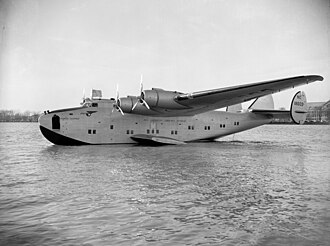
The Boeing 314 was a huge four-engine flying boat.
It was designed specifically for long-distance passenger travel.
The aircraft had a large hull that allowed it to land and take off from water.
The Boeing 314 had several engines mounted on its wings.
It could carry passengers, crew, baggage, mail, and cargo.
For its time, it was an impressive engineering achievement.
The Yankee Clipper
The aircraft involved in the accident was named Yankee Clipper.
The name “Clipper” reflected Pan Am’s tradition of naming its aircraft after famous ships and maritime transportation.
The Boeing 314 aircraft were designed to provide a luxurious travel experience.
Passengers could enjoy comfortable seating and sleeping facilities on longer journeys.
The aircraft also had dining and other passenger-service facilities.
Flying on a Clipper was considered a prestigious experience.
International Aviation Before Modern Airliners
In the 1930s and early 1940s, international air travel was very different from today.
Modern airports with long runways were not available everywhere.
Large aircraft could not simply fly nonstop between distant countries using today’s navigation technology.
Flying boats solved part of this problem.
They could operate from rivers, bays, lakes, and sheltered coastal waters.
This allowed airlines to establish international routes without building a runway at every destination.
The Importance of Flying Boats
Flying boats played a major role in early commercial aviation.
Pan Am became one of the world’s leading flying-boat operators.
Its aircraft connected North America with Central and South America.
Later, the airline established important transatlantic and transpacific routes.
The Boeing 314 was among the largest flying boats ever used in regular passenger service.
It represented the peak of this technology.
World War II
The Yankee Clipper accident occurred during the Second World War.
By February 1943, the United States had been at war for more than a year.
International transportation had become closely connected with military activities.
Pan Am’s aircraft were used to transport important people and materials.
Civilian aviation continued, but it operated under wartime restrictions.
Routes, schedules, and security procedures were affected by the conflict.
Wartime Flying
Wartime flying presented many challenges.
Aircraft crews needed to be aware of military operations.
Navigation information could be restricted.
Weather could change quickly.
There were also fewer resources available for purely civilian aviation because military needs received priority.
Experienced crews were particularly valuable.
Pan Am had a large number of pilots and navigators with experience in long-distance flying.
The Flight
On 22 February 1943, the Yankee Clipper was operating a scheduled Pan Am service.
The aircraft was carrying passengers and crew.
The flight was part of the airline’s international transportation network.
The aircraft was expected to complete its journey normally.
However, the flight ended in a serious accident.
The Boeing 314 crashed during an approach and landing operation.
The Landing
Large flying boats required careful handling during landing.
Unlike a modern aircraft landing on a runway, a flying boat landed on water.
The crew had to judge:
- Wind direction
- Wave conditions
- Water surface
- Aircraft speed
- Approach angle
- Distance from obstacles
A mistake during landing could result in a dangerous impact with the water.
Water Landings
Landing a very large flying boat was a specialized skill.
The aircraft’s hull had to contact the water at the correct angle.
If the aircraft hit the water too hard, the hull could be damaged.
If it approached too quickly or at the wrong angle, the aircraft could bounce or lose control.
Weather and water conditions were therefore extremely important.
The Accident
During the flight’s landing operation, the aircraft experienced a serious accident.
The Yankee Clipper crashed while attempting to land.
The aircraft was badly damaged.
A number of people aboard were killed, while others survived.
The accident caused significant concern because the Boeing 314 was one of Pan Am’s most important aircraft.
The Human Cost
The accident resulted in fatalities among the people aboard the aircraft.
Passengers had been traveling for personal, business, or wartime-related reasons.
The crew members were performing their normal professional duties.
Their deaths were a terrible loss for their families.
The accident also affected Pan Am employees who had worked with the aircraft and its crew.
The Investigation
Following the accident, investigators examined what had happened.
They considered the aircraft’s condition and the circumstances of the landing.
Investigators also looked at:
- Weather
- Water conditions
- Wind
- Visibility
- Pilot actions
- Aircraft handling
- Navigation
- Landing procedures
The purpose was to determine what factors had contributed to the accident.
Human Factors
Human factors were an important part of aviation safety during this period.
Large aircraft required precise control.
Pilots had to make decisions based on limited information.
A landing on water could be especially difficult because the surface was constantly moving.
Even a small error in judgment could have serious consequences.
The Role of the Captain
The captain of a flying boat was responsible for making the final decisions about the flight.
The captain had to consider the weather and water conditions before landing.
The crew needed to work together.
Navigators, radio operators, engineers, and pilots each had different responsibilities.
Good communication between crew members was essential.
Navigation in the 1940s
Navigation was much more difficult than it is today.
There was no GPS.
There were no digital maps.
Pilots and navigators depended on:
- Magnetic compasses
- Radio navigation
- Charts
- Celestial navigation
- Dead reckoning
- Visual observations
Experienced navigators were therefore extremely important on long-distance flights.
Radio Communication
Radio was one of the most important technologies available to aviation crews.
It allowed aircraft to communicate with ground stations.
Crews could receive weather reports and other information.
However, radio communication could not provide the same level of information as modern digital systems.
There could be interference or incomplete information.
The Boeing 314’s Importance
The Boeing 314 was a remarkable aircraft.
It had been designed for long-distance travel at a time when aviation technology was still developing.
The aircraft could carry many passengers across oceans.
Its size and range made it valuable to Pan Am.
During the war, this capability became even more important.
Pan Am and the War Effort
Pan Am played an important role in supporting Allied transportation.
Its crews operated routes that connected North America with other parts of the world.
Pan Am aircraft transported government officials and other important passengers.
The airline’s experience with international aviation made its personnel valuable during the war.
Safety Challenges
The accident highlighted several safety challenges.
Flying boats operated from water rather than controlled airport runways.
Water conditions could change quickly.
Navigation equipment was limited.
Weather forecasts were less accurate.
Aircraft systems were less automated.
Pilots had to depend heavily on experience.
These factors made early international flying much more difficult than modern airline travel.
The End of the Flying Boat Era
The Boeing 314 represented the high point of the flying-boat era.
However, that era was already beginning to disappear.
During the Second World War, land-based aircraft improved quickly.
Long-range aircraft became faster and more reliable.
Airports with long runways were constructed around the world.
After the war, these developments made flying boats increasingly unnecessary.
Postwar Aviation
After 1945, aircraft such as the Douglas DC-4, Lockheed Constellation, and later jet airliners transformed international aviation.
Passengers could fly from one airport to another without needing a water landing.
Airports became major international transportation centers.
Flying boats could no longer compete economically with land-based aircraft.
The Legacy of the Boeing 314
Although the Boeing 314 had a relatively short commercial career, it left an important legacy.
It proved that large aircraft could operate international passenger routes.
It helped establish the idea of regular long-distance commercial air travel.
It also showed the importance of navigation, weather forecasting, crew coordination, and specialized pilot training.
Lessons From the Accident
The Yankee Clipper accident provided important lessons about flying-boat operations.
Pilots needed to carefully evaluate water conditions.
Landing procedures had to be precise.
Crew coordination was essential.
Weather information had to be accurate.
Aircraft maintenance had to be thorough.
These principles remain important in aviation today.
Improvements in Aviation Safety
Aviation safety improved rapidly during and after the Second World War.
Navigation systems became more accurate.
Weather forecasting improved.
Air traffic control developed.
Aircraft instruments became more reliable.
Pilot training became more standardized.
Airport infrastructure improved.
All of these developments reduced the risks associated with commercial flying.
Modern Aircraft
Modern passenger aircraft are very different from the Boeing 314.
A modern aircraft has advanced navigation systems.
Pilots can use satellite positioning.
Weather radar helps crews identify dangerous storms.
Digital flight instruments provide accurate information.
Air traffic controllers can monitor aircraft.
Aircraft also have sophisticated warning systems.
These improvements make modern air travel far safer.
Historical Importance of Pan Am
Pan Am played an important role in the development of international aviation.
The airline helped create routes that later became standard international services.
Its Clippers became symbols of luxury and adventure.
The Boeing 314 was particularly famous because of its enormous size and long-range capability.
The Yankee Clipper was part of this important history.
The Human Side of Aviation History
It is easy to focus on aircraft specifications when studying old aviation accidents.
However, the most important part of any accident is the people involved.
Passengers boarded the aircraft expecting to reach their destination.
Crew members reported for work expecting to complete another flight.
Their families expected them to return.
When the accident occurred, many lives were changed forever.
Remembering the Victims
The people who lost their lives in the Yankee Clipper accident deserve to be remembered.
They were part of an era when international aviation was still relatively new.
Passengers who chose to travel by air were taking part in a new form of transportation.
The crew members helped make international air travel possible.
Their work came with risks that modern crews rarely face.
Aviation’s Changing Technology
The history of the Yankee Clipper shows how quickly aviation technology changed.
In the 1930s, a huge flying boat was considered one of the greatest achievements in transportation.
Only a few decades later, jet airliners were crossing oceans at much higher speeds.
Navigation changed from manual calculations to electronic systems.
Communication changed from basic radio to satellite communications.
The aviation world became much more connected.
Why the Accident Matters Today
The accident remains relevant because aviation safety is based on learning from previous events.
Every accident provides information about what can go wrong.
Investigators use this information to improve procedures.
Pilots receive better training.
Aircraft are redesigned.
Airports become safer.
Navigation and warning systems become more advanced.
The lessons of early aviation therefore continue to influence modern aviation.
The Final Years of the Clippers
The Boeing 314 aircraft operated during a relatively short period.
The war increased their importance for a few years.
But technological progress quickly made them outdated.
After the war, passengers wanted faster and more convenient travel.
Land-based aircraft could operate from airports located close to major cities.
Flying boats required suitable bodies of water and special facilities.
Their commercial use therefore declined rapidly.
A Symbol of Early International Travel
The Yankee Clipper remains a symbol of the early era of international aviation.
It represented a time when crossing an ocean by air was a major adventure.
Passengers traveled in large flying boats rather than modern jetliners.
Navigators used charts and radio signals.
Pilots had to carefully study weather and water conditions.
The journey itself was considered an important experience.
Conclusion
The Pan Am Boeing 314 Yankee Clipper accident of 22 February 1943 is an important event in the history of early international aviation.
The Boeing 314 was one of the most impressive passenger aircraft of its time. Its large size, four engines, long range, and passenger facilities made it a symbol of the golden age of flying boats.
Pan American Airways used aircraft such as the Yankee Clipper to connect distant parts of the world before modern airports and long-range land airplanes became common.
The accident occurred during the Second World War, when aviation was under enormous pressure. Aircraft were being used for passenger transportation, military support, government travel, mail, and cargo. Pan Am was an important part of this international transportation system.
The Yankee Clipper’s accident demonstrated the risks of operating large flying boats. Water landings were very different from modern runway landings. Pilots had to carefully judge wind, waves, visibility, speed, and aircraft position.
The accident also occurred during an era when aviation technology was limited. There was no GPS, no modern terrain or traffic-warning system, and no computerized flight management system. Pilots and navigators depended heavily on experience, charts, radio communication, and manual calculations.
The development of aviation after the Second World War changed all of this.
Land-based aircraft became more capable.
Airports expanded.
Navigation systems improved.
Weather forecasting became more accurate.
Air traffic control became more sophisticated.
Eventually, jet aircraft made long-distance travel faster and more convenient.
As these changes occurred, the great flying boats gradually disappeared from commercial aviation.
The Yankee Clipper therefore belongs to an important chapter in the history of air travel. It represents the ambition of early aviation and the effort to connect countries across oceans.
Most importantly, the accident reminds us that behind every aircraft and every flight are real people. The passengers and crew aboard the aircraft were individuals with families, careers, and plans for the future. Their lives were lost in a tragic aviation accident during a difficult period of world history.
The story of the Yankee Clipper is therefore both a story of technological achievement and a reminder of the dangers faced by the pioneers of international air travel. Its history helps us understand how aviation developed from large propeller-driven flying boats into the highly advanced and much safer global airline system that exists today.

Ajeet Yadav is an aviation enthusiast covering airline news, airports, aircraft, and industry developments through well-researched and reliable reporting.