









Pan Am Flight 1104 Crash 21 January 1943
The Pan Am Flight 1104 crash was a tragic aviation accident that happened on 21 January 1943, during the Second World War. The aircraft was operated by Pan American Airways, one of the most important international airlines of the period. The flight was being operated in the Caribbean region when the aircraft crashed, killing everyone aboard.
The accident happened at a time when commercial aviation was very different from the modern airline industry. Aircraft had limited navigation equipment, weather information was less accurate, and many civilian aircraft were operating in support of wartime transportation. The war had also changed international air travel. Routes were being used to move military personnel, government officials, mail, and important supplies.
Pan Am played an important role in this wartime transportation system. Its aircraft operated long routes across oceans and remote areas. Crews had to deal with difficult weather, unfamiliar geography, limited navigation aids, and the possibility of military activity.
The Flight 1104 accident was therefore not simply an ordinary airline accident. It occurred during a period when aviation was being used extensively to support the Allied war effort.
Pan American Airways
Pan American Airways, commonly called Pan Am, was one of the most famous airlines in aviation history.
The company became known for its international routes.
Before the Second World War, Pan Am operated flying boats and land aircraft across the Caribbean, Central America, South America, and the Pacific.
The airline helped establish many international air routes.
By the early 1940s, Pan Am had become an important part of American transportation.
Its experience with long-distance flying was especially valuable during the war.
Aviation During World War II
The accident occurred in January 1943.
The United States had been involved in the Second World War for more than a year.
The war had dramatically increased the importance of aviation.
Aircraft were being used to transport troops, weapons, equipment, fuel, mail, and government personnel.
Civilian airlines also continued operating important services.
Pan Am was particularly valuable because of its experience operating international routes.
The Aircraft
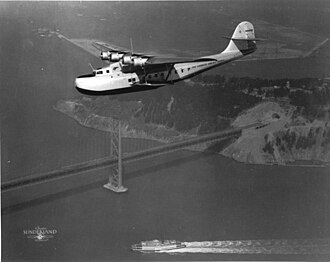
Pan Am Flight 1104 involved a Martin M-130 flying boat, one of the large aircraft associated with the airline’s early international operations.
The Martin M-130 was a remarkable aircraft for its time.
It was a large, four-engine flying boat designed for long-distance passenger service.
The aircraft could operate from water instead of needing a conventional runway.
This made it extremely useful for international routes during the 1930s and early 1940s.
Flying Boats
Flying boats were an important part of early international aviation.
Large airports with long concrete runways were not yet available in many parts of the world.
A flying boat could use a suitable harbor, bay, or river.
This allowed airlines to establish routes between countries without building expensive airports.
Pan Am became one of the world’s leading operators of flying boats.
The Martin M-130
The Martin M-130 had four engines.
Its large hull allowed passengers and crew to travel in relative comfort compared with earlier aircraft.
The aircraft was designed for long-range travel.
It represented the advanced technology of commercial aviation during the 1930s.
However, it was still a propeller-driven aircraft with relatively basic navigation equipment compared with modern airliners.
The Flight
Pan Am Flight 1104 was operating during wartime conditions.
The aircraft was carrying passengers and crew as part of an important transportation service.
The route involved travel between Caribbean and South American locations.
The flight was expected to be completed normally.
However, the aircraft encountered serious difficulties.
The flight ended in a fatal crash.
Difficult Flying Conditions
The early 1940s presented many challenges to airline crews.
Pilots had to depend on their own judgment and experience.
There were no satellite navigation systems.
There were no modern cockpit computers.
Weather radar was not available in the form used today.
Radio navigation was developing but was not as comprehensive as modern navigation systems.
These limitations were especially important when aircraft were flying over water.
Navigation Over Water
Over land, pilots could use mountains, rivers, roads, towns, and other landmarks.
Over water, there were far fewer visual references.
Clouds or darkness could make visual navigation almost impossible.
Pilots therefore depended on instruments and radio navigation.
If the aircraft was near mountainous terrain, accurate navigation became even more important.
A small error in position could place an aircraft dangerously close to land.
The Importance of Weather
Weather was another major factor in early aviation.
Forecasting technology was much less advanced than it is today.
Pilots could receive weather reports, but the information was limited.
Sudden changes could occur.
Clouds and poor visibility could hide terrain.
Rain and strong winds could make flying more difficult.
For a large flying boat, weather could affect both flight and landing conditions.
The Crew
A large Pan Am flying boat required a highly trained crew.
The captain was responsible for the overall flight.
Other crew members handled navigation, radio communication, engineering, and passenger services.
Engineers monitored the aircraft’s engines and mechanical systems.
Navigation was a particularly important responsibility.
Long-distance flights required careful calculations and continuous monitoring of the aircraft’s position.
Wartime Passengers
Many airline passengers during this period were traveling for reasons connected with the war.
Some were military personnel.
Others were government officials, business representatives, engineers, or people involved in international transportation.
International routes had become strategically important.
A Pan Am flight could carry people and information between areas that were difficult to reach by sea or land.
The Accident
During Flight 1104, the aircraft did not complete its planned journey.
The aircraft crashed in western Trinidad, in the area around the Guanapo region.
The accident occurred at night.
The aircraft struck mountainous terrain.
The crash destroyed the aircraft.
All people aboard were killed.
Impact With the Mountains
The aircraft was flying in an area where mountainous terrain created a serious hazard.
At night, mountains could be extremely difficult to see.
If the aircraft was lower than expected or slightly off its planned route, the crew might not have had enough time to react.
The collision with terrain was catastrophic.
The large flying boat could not survive the impact.
Why Terrain Was Dangerous
Controlled flight into terrain was a significant danger during early aviation.
Today, aircraft have sophisticated terrain-warning systems.
These systems can warn pilots when an aircraft is getting dangerously close to mountains or other obstacles.
In 1943, such technology did not exist.
Pilots had to depend on charts, navigation instruments, radio information, and visual observation.
At night or in poor visibility, this was extremely difficult.
Investigation
After the accident, an investigation was conducted to determine what had happened.
Investigators examined the wreckage and available information.
They considered several possible factors, including:
- Navigation
- Flight altitude
- Weather
- Pilot actions
- Aircraft condition
- Radio communication
- Route planning
The investigation attempted to determine why the aircraft had reached dangerous terrain.
Human Factors
Human factors were an important consideration.
Flying at night requires concentration.
Pilots must constantly monitor instruments and navigation information.
A small mistake can become dangerous if it continues for several minutes.
Fatigue can also affect judgment.
During wartime, airline crews often worked demanding schedules.
The Importance of Altitude
Maintaining a safe altitude is one of the most important parts of flight safety.
When aircraft are flying near mountains, pilots need sufficient altitude to clear the terrain.
A navigation error combined with an insufficient altitude can lead to disaster.
Modern flight procedures therefore use minimum safe altitudes and detailed terrain information.
In 1943, such systems were much less advanced.
Communication Problems
Radio communication was an important part of aviation at the time.
Pilots communicated with ground stations and other facilities.
However, communication coverage was not as comprehensive as today’s systems.
There could also be delays, interference, or misunderstandings.
Pilots sometimes had to make decisions without complete information.
Pan Am’s Experience
Pan Am had considerable experience with long-distance flying.
Its pilots had operated routes over oceans and remote areas for many years.
The airline had developed procedures for navigation and communications.
However, even experienced crews faced risks that were difficult to eliminate.
The technology available to them placed limits on what they could know about their exact position.
The Human Cost
The accident resulted in the deaths of everyone aboard the aircraft.
The passengers had families and friends waiting for them.
The crew members were experienced professionals who were performing an important job.
Their deaths were a major loss.
The accident also affected Pan Am employees and the wider aviation community.
Wartime Aviation Safety
The Flight 1104 accident demonstrated the importance of improving aviation safety during wartime.
Aircraft were flying more frequently.
Routes were becoming busier.
Crews were operating under pressure.
Military and civilian aviation were expanding simultaneously.
This created a need for better navigation and air traffic control.
The Development of Navigation Systems
During and after the Second World War, navigation technology improved rapidly.
Radio navigation systems became more accurate.
New systems allowed pilots to determine their position more reliably.
Radar technology also developed quickly.
These technologies eventually became essential to commercial aviation.
Radar
Radar had been developed primarily for military purposes.
It allowed operators to detect aircraft from the ground.
After the war, radar became increasingly important for civilian air traffic control.
Controllers could track aircraft and help maintain safe separation.
This was a major improvement over the systems available in 1943.
Terrain Awareness
One of the most important safety developments was the creation of terrain-awareness technology.
Modern aircraft can compare their position and altitude with terrain databases.
Warning systems can alert pilots if the aircraft is approaching dangerous terrain.
Such technology helps prevent accidents that once occurred because pilots could not see mountains in darkness or clouds.
The End of the Flying Boat Era
The accident also belongs to the final period of the great flying boats.
During the 1930s, flying boats represented the future of international travel.
By the end of the Second World War, however, land-based aircraft had improved dramatically.
Aircraft such as the Douglas DC-4 and later the Lockheed Constellation could fly long distances from conventional airports.
Large airports were also being developed around the world.
Flying boats gradually became less important.
The Importance of Pan Am
Pan Am played a major role in establishing international commercial aviation.
Its flying boats connected the United States with many parts of the world.
The airline developed procedures for operating in remote regions.
It trained pilots and crews for long-distance flying.
Its history is closely connected with the development of global air transportation.
The Legacy of the Martin M-130
The Martin M-130 was an important aircraft in aviation history.
It demonstrated that large aircraft could provide international passenger services.
The aircraft represented the technological ambitions of the 1930s.
However, the design also belonged to an era before modern aviation systems.
The Flight 1104 accident illustrates some of the dangers faced by crews flying these aircraft.
Lessons From the Accident
The accident provided important lessons about the dangers of night flying near mountainous terrain.
Pilots must maintain accurate navigation.
They must maintain adequate altitude.
They must understand local geography.
They must have reliable weather information.
And they must have effective communication with ground facilities.
These principles remain important today.
Modern Aviation Compared With 1943
A flight today would have many layers of protection.
The aircraft would likely have:
- GPS or other satellite navigation
- Digital terrain maps
- Weather radar
- Ground-based radar
- Advanced radio systems
- Terrain-warning equipment
- Automated navigation
- Flight data recording
The pilots would receive much more information than the crew of Flight 1104 had available.
The Importance of Accident Investigations
Every aviation accident provides an opportunity to learn.
Investigators look at what happened and why.
They examine whether the accident resulted from:
- Technical failure
- Weather
- Human error
- Navigation problems
- Communication issues
- Operational procedures
The goal is not only to identify responsibility.
It is also to prevent similar accidents in the future.
Remembering the Crew
The crew of Pan Am Flight 1104 were aviation professionals working during a difficult period.
They were responsible for transporting passengers across international routes.
Their work required skill and courage.
The accident ended their lives while they were performing their duties.
Their contribution forms part of the history of early commercial aviation.
Remembering the Passengers
The passengers were also victims of a dangerous period in aviation.
They were traveling for different personal and professional reasons.
Some may have been traveling because of the war.
Others were continuing important international work.
Regardless of their reason for traveling, they expected to arrive safely.
Their families were left with the painful consequences of the crash.
Aviation and the War
The Second World War changed aviation permanently.
Aircraft became faster and more reliable.
Navigation improved.
Radar developed.
Air traffic control became more sophisticated.
Long-distance aircraft became more capable.
Many technologies developed during the war later became useful in civilian aviation.
Accidents during this period also demonstrated where safety systems needed improvement.
Historical Importance
The Pan Am Flight 1104 accident is an important part of the history of wartime aviation.
It shows the risks associated with early international air travel.
It also demonstrates the difficulty of flying large aircraft at night in areas with mountainous terrain.
The accident occurred at a time when technology could not provide pilots with the information that modern crews receive automatically.
A Changing Aviation World
In 1943, aviation was moving through a major transition.
The flying boat was still important.
But conventional land aircraft were improving rapidly.
The war accelerated the development of aircraft engines, navigation, communications, and airports.
Within a few years, the international aviation industry would look very different.
Safety Improvements
Over time, aviation authorities introduced better procedures for mountainous areas.
Routes were designed with terrain in mind.
Minimum safe altitudes were established.
Navigation aids became more reliable.
Air traffic controllers gained better information.
Aircraft received improved instruments.
These changes reduced the risks faced by airline crews.
Why Flight 1104 Should Be Remembered
The Flight 1104 accident should not be forgotten simply because it happened many decades ago.
Historical accidents show how aviation safety developed.
Every improvement in modern aviation has been influenced by the experiences of earlier generations.
The pilots and passengers of these early flights were part of the process that eventually led to today’s safer air transportation system.
Conclusion
The Pan Am Flight 1104 accident of 21 January 1943 was a tragic event during the Second World War.
Pan American Airways was one of the world’s leading international airlines, and its crews operated long-distance routes under extremely challenging conditions.
The aircraft involved was a large Martin M-130 flying boat, a type that represented the advanced passenger aviation technology of the 1930s.
The flight took place during wartime, when aviation had become essential for transporting people, mail, and important supplies.
The aircraft crashed in western Trinidad near the Guanapo area, striking mountainous terrain during the flight. The accident resulted in the deaths of all those aboard.
The tragedy illustrates the difficulties of early aviation.
Pilots did not have GPS.
They did not have modern terrain-warning systems.
They had limited weather information.
Radar-based civilian air traffic control was still developing.
When flying at night near mountains, these limitations could be extremely dangerous.
The accident also highlights the importance of accurate navigation and safe altitude.
Modern aircraft have many systems designed to prevent pilots from accidentally flying into terrain. Satellite navigation, digital charts, radar, terrain-warning systems, and sophisticated air traffic control have greatly improved aviation safety.
The accident also belongs to the final years of the great flying-boat era.
Flying boats had helped create international commercial aviation by allowing airlines to operate from water when large airports were unavailable.
Pan Am was one of the major companies responsible for developing this system.
After the Second World War, better land-based aircraft and larger airports gradually made flying boats less practical.
The story of Pan Am Flight 1104 therefore represents both a tragedy and an important chapter in aviation history.
It reminds us of the risks faced by early airline crews and passengers and shows how much aviation technology and safety procedures have changed.
The people aboard the aircraft were traveling during an extraordinary period of history. They expected their journey to continue normally, but the flight ended in tragedy.
Their story remains part of the long history of aviation—a history shaped by technological progress, human experience, difficult lessons, and the continuing effort to make air travel safer.

Ajeet Yadav is an aviation enthusiast covering airline news, airports, aircraft, and industry developments through well-researched and reliable reporting.