







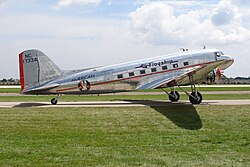
American Airlines Flight 28 Crash 23 October 1942
The American Airlines Flight 28 crash was a tragic aviation accident that happened on 23 October 1942 in California, United States. The aircraft was a Douglas DC-3, operated by American Airlines on a scheduled passenger flight. During the flight, the airliner collided with a United States Army Air Forces B-34 bomber near Palm Springs, California.
The accident was especially tragic because it involved two aircraft in the air at the same time. The DC-3 was carrying civilian passengers and airline crew, while the military aircraft was on a training flight. The collision destroyed the airliner and killed everyone aboard. The bomber was also damaged, although its crew survived.
The accident happened during the Second World War, when military aircraft were operating extensively across the United States. Civilian airlines were also continuing to provide important transportation services. The combination of heavy military flying and commercial aviation created new challenges for air traffic safety.
The American Airlines Flight 28 accident became an important event in the history of aviation because it demonstrated the dangers of mid-air collisions and the need for better coordination between civilian and military aircraft.
American Airlines in 1942
American Airlines was one of the largest commercial airlines in the United States.
By the early 1940s, the airline had established an extensive network connecting major American cities. Its aircraft carried passengers, mail, and cargo across the country.
The Douglas DC-3 was the main aircraft used on many of these routes.
The DC-3 had become famous for its reliability and efficiency. It was faster and more comfortable than many earlier passenger aircraft.
However, even a reliable aircraft depended on proper navigation and communication to remain safe.
The Douglas DC-3
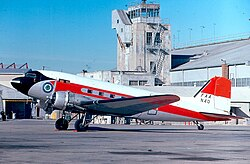
The aircraft involved in Flight 28 was a Douglas DC-3.
The DC-3 was a twin-engine, all-metal aircraft.
It was designed to carry passengers over relatively long distances.
The aircraft had two radial engines and retractable landing gear.
It became one of the most successful airliners in aviation history.
During the Second World War, many DC-3s were also adapted for military transportation.
The aircraft involved in Flight 28 was being operated as a civilian airliner.
The Route
American Airlines Flight 28 was operating from Los Angeles to New York.
The flight was a scheduled service.
The aircraft had passengers aboard who were traveling across the United States.
The flight was expected to be routine.
The crew was experienced, and the DC-3 was a proven aircraft.
However, the aircraft entered an area where military aircraft were also operating.
Military Aviation During World War II
The accident happened in 1942, less than one year after the United States entered the Second World War.
Military aviation was expanding at an enormous rate.
Thousands of pilots were being trained.
Military aircraft were flying across the country.
Training flights were taking place at many bases.
California was especially important because it contained numerous military airfields and training facilities.
This meant that civilian aircraft often operated in the same general airspace as military aircraft.
The B-34 Bomber
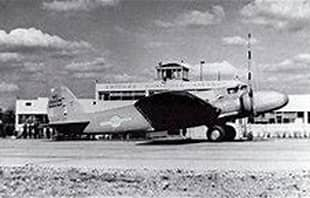
The second aircraft involved in the accident was a Lockheed B-34 Ventura bomber operated by the United States Army Air Forces.
The B-34 was a military aircraft used for training and other duties.
It was a twin-engine aircraft with considerably different characteristics from the DC-3.
The bomber was operating on a military training mission.
Its crew was conducting a normal flight when the collision occurred.
The Military Crew
The B-34 had a crew aboard.
Unlike the passengers on the American Airlines aircraft, the people on the bomber were military personnel.
The crew had been trained to operate military aircraft.
They were flying in an environment where many military training flights were being conducted.
The accident would demonstrate how difficult it could be to maintain separation between aircraft during wartime.
The Flight on 23 October
On 23 October 1942, American Airlines Flight 28 departed Los Angeles.
The aircraft climbed away from the airport and continued along its planned route.
The weather in the region was generally suitable for flight.
There was no major storm or widespread weather system that directly caused the collision.
The accident was instead connected with the positions of the two aircraft.
Flight Near Palm Springs
The DC-3 was flying near the Palm Springs area.
This region lies close to the San Jacinto and San Bernardino mountain ranges.
The area was also important for military training.
The Army Air Forces operated aircraft in the region.
The DC-3 and the B-34 were therefore operating in an environment where careful coordination was essential.
The Collision
The two aircraft came into conflict in the air.
The B-34 bomber collided with American Airlines Flight 28.
The bomber’s wing struck the DC-3.
The impact was catastrophic for the passenger aircraft.
The DC-3 was severely damaged and quickly lost control.
The bomber was also damaged but remained controllable.
The DC-3 Breaks Apart
The force of the collision caused the DC-3 to suffer massive structural damage.
The aircraft fell toward the ground.
There was no opportunity for the passengers or crew to escape.
The aircraft crashed in mountainous terrain near Palm Springs.
Everyone aboard the American Airlines aircraft was killed.
The B-34 Survives
The military bomber suffered serious damage.
However, its crew managed to maintain control of the aircraft.
They were able to land safely.
The survival of the bomber crew was an important part of the investigation because investigators could question them about what they saw before and during the collision.
The Human Cost
The American Airlines aircraft carried 12 people.
There were nine passengers and three crew members.
All 12 people aboard the DC-3 died.
The loss was devastating for their families.
The passengers had been traveling on an ordinary commercial flight.
The crew had been performing their normal duties.
No one expected the flight to end in a disaster.
The Crash Site
The DC-3 crashed in the mountainous region near Palm Springs.
The terrain made access difficult.
Investigators had to examine the wreckage carefully.
They searched for evidence that could explain the aircraft’s final movements.
The condition of the wreckage also helped show how the collision had occurred.
Investigation Begins
The accident was investigated by aviation authorities.
Because the accident involved a civilian airliner and a military aircraft, both civilian and military authorities had an interest in determining what happened.
Investigators examined:
- Aircraft wreckage
- Pilot testimony
- Flight paths
- Weather
- Navigation
- Communication
- Military procedures
- Civilian airline procedures
The goal was to determine how the two aircraft had reached the same area at the same time.
No Mechanical Failure
There was no major evidence suggesting that a mechanical failure had caused the collision.
The aircraft were both capable of flying.
The problem was not that either aircraft suddenly lost an engine or suffered a structural failure before the collision.
The key issue was the lack of adequate separation between the aircraft.
The Difficulty of Seeing Other Aircraft
One major challenge in aviation at that time was visual detection.
Pilots had to look outside the cockpit to identify other aircraft.
There was no modern traffic-collision avoidance system.
There was no digital display showing nearby aircraft.
There were no satellite-based tracking systems.
Pilots could therefore have difficulty seeing another aircraft until it was very close.
Aircraft Speed
Aircraft in the early 1940s were much faster than many earlier aircraft.
The DC-3 could travel at a high cruising speed for its era.
Military aircraft could also move quickly.
This reduced the amount of time pilots had to react if another aircraft appeared in their path.
A pilot might see another aircraft only seconds before a collision.
Military and Civilian Airspace
The accident highlighted the difficulty of operating civilian and military aircraft in the same region.
During wartime, military aircraft were essential.
Training flights could not simply stop because civilian aircraft were using the same broad airspace.
At the same time, passenger aircraft needed safe routes.
Better coordination was necessary.
Air Traffic Control
Air traffic control systems were still developing.
Controllers provided important assistance to pilots, but the system was not as advanced as modern air traffic control.
Radar was not yet widely available for routine civilian traffic control.
Controllers often depended on radio reports from pilots.
This meant that aircraft positions were not always known with the accuracy available today.
Wartime Pressure
The war created enormous pressure on the aviation system.
Military pilots needed training.
New airfields were being constructed.
More aircraft were being produced.
Civilian airlines continued operating because transportation was still necessary.
The number of aircraft in American skies increased rapidly.
This created new safety challenges.
Importance of Communication
Communication between pilots and ground stations was an important safety tool.
Pilots could report their position and receive instructions.
However, radio communication was not a complete substitute for visual awareness.
A pilot could still misunderstand information or fail to see another aircraft.
The Flight 28 accident demonstrated the importance of combining communication with reliable separation procedures.
Mid-Air Collisions
A mid-air collision occurs when two aircraft collide while airborne.
Such accidents are among the most dangerous events in aviation.
There is usually very little time to react.
Modern aviation therefore uses several layers of protection.
These include:
- Air traffic control
- Radar
- Transponders
- Collision-warning systems
- Standard routes
- Controlled airspace
- Crew procedures
Many of these systems became more sophisticated after the Second World War.
The Role of Radar
Radar was being developed rapidly during the war.
It was extremely valuable for military operations.
However, routine civilian use of radar-based air traffic control was still in its early stages.
Modern radar allows controllers to track aircraft continuously.
This provides a major safety advantage.
Lessons for Military Aviation
The accident also had implications for military aviation.
Training aircraft needed to operate safely around civilian routes.
Pilots had to maintain a careful lookout.
Military bases and civilian airports needed better coordination.
The growth of wartime aviation made these issues increasingly important.
Lessons for Commercial Aviation
For commercial airlines, the accident demonstrated that passenger aircraft could be placed at risk by other aircraft operating nearby.
Airlines needed better route coordination.
Pilots needed clear information about military activity.
Air traffic control needed effective procedures for separating different types of traffic.
Pilot Training
Pilot training was another important area.
Pilots had to understand the importance of maintaining a proper lookout.
They also needed to follow assigned routes and altitudes.
Military pilots had to understand civilian traffic patterns.
Civilian pilots had to be aware of military operations.
Good training could reduce the chance of a collision.
Navigation Technology
Navigation technology was also improving.
Pilots could use radio navigation aids to maintain routes.
However, radio navigation primarily told pilots where they were relative to navigation stations.
It did not necessarily tell them where every other aircraft was.
That is why modern traffic systems became so important.
The Human Factor
The accident also demonstrates the importance of human factors.
Pilots may become focused on navigation, aircraft controls, or other tasks.
A pilot can miss an aircraft that is difficult to see against the background.
At high speed, even a small mistake in observation can have serious consequences.
Modern cockpit procedures are designed to reduce these risks.
The Impact on Families
The deaths aboard Flight 28 caused enormous grief.
Twelve families lost relatives.
The passengers had simply been traveling from one part of the United States to another.
The crew members were experienced professionals.
Their deaths showed that commercial air travel still involved serious risks during the early 1940s.
The War and Civilian Life
The accident occurred at a time when civilian life was deeply affected by the war.
People were traveling for business, family reasons, and military duties.
Airlines continued operating despite wartime restrictions.
The skies were increasingly crowded with military aircraft.
The Flight 28 accident showed how the war could affect ordinary civilian transportation.
Historical Importance
The American Airlines Flight 28 accident is important because it illustrates the early development of air traffic safety.
Today, a civilian airliner and military aircraft operating in the same area would normally be subject to strict separation procedures.
Aircraft would also be visible to air traffic controllers through radar and electronic tracking.
Pilots would have access to collision-warning systems.
These protections were not available in 1942.
Development of Better Separation
Following the growth of aviation, governments and aviation authorities introduced increasingly sophisticated separation rules.
Aircraft were assigned specific altitudes.
Controlled airspace became more common.
Flight plans were monitored.
Communication procedures were improved.
Radar tracking eventually became an essential part of air traffic control.
Modern Collision Avoidance
Modern aircraft also have Traffic Collision Avoidance Systems (TCAS).
These systems can detect nearby aircraft equipped with appropriate transponders.
They provide warnings to pilots when there is a risk of collision.
If necessary, the system can provide instructions to help aircraft move away from each other.
Such technology represents a major improvement over the conditions of 1942.
Why Flight 28 Still Matters
The Flight 28 accident may seem like a distant historical event, but its lessons remain relevant.
Aviation safety depends on separation.
Every aircraft must know where it is and where other aircraft are.
Communication must be clear.
Procedures must be followed.
Technology should provide additional protection.
When several safety layers fail at the same time, the consequences can be catastrophic.
The Legacy of the DC-3
The accident did not diminish the importance of the Douglas DC-3.
The DC-3 remained one of the most successful aircraft designs in history.
Thousands of DC-3s and military versions were produced.
The aircraft continued flying for decades.
The accident instead showed that even a reliable aircraft could not protect itself from a collision with another aircraft.
Aviation During the 1940s
The early 1940s were a period of rapid aviation development.
Aircraft were becoming faster.
Engines were becoming more powerful.
Radio navigation was improving.
Radar was being developed.
Air traffic systems were evolving.
The experience of accidents such as Flight 28 contributed to this broader process.
Remembering the Victims
The 12 people who died aboard American Airlines Flight 28 should be remembered with respect.
They were passengers and crew members whose lives ended during an ordinary journey.
Their deaths were not the result of an aircraft simply failing mechanically.
They became victims of a dangerous interaction between civilian and military aviation during wartime.
Broader Safety Lessons
The accident taught several important lessons.
Aircraft operating in the same region must be properly separated.
Pilots need accurate information.
Military and civilian aviation authorities need effective coordination.
Visual lookout remains important.
Technology can reduce the chance of human error.
And accident investigations are essential because they help identify weaknesses in the aviation system.
Conclusion
The American Airlines Flight 28 crash of 23 October 1942 was a tragic mid-air collision involving a civilian Douglas DC-3 and a United States Army Air Forces B-34 bomber near Palm Springs, California.
The DC-3 was operating a scheduled passenger flight.
The B-34 was on a military mission.
The two aircraft came into conflict in the air, and the bomber struck the passenger aircraft.
The DC-3 was destroyed and crashed in the mountains.
All 12 people aboard the American Airlines aircraft were killed.
The B-34 was damaged, but its crew survived and managed to land the aircraft.
The accident happened during the Second World War, when American skies were becoming increasingly crowded with military and civilian aircraft.
The United States was training thousands of pilots and operating large numbers of military aircraft. At the same time, commercial airlines continued to provide essential passenger and mail services.
The technology available at the time was far less advanced than what exists today.
There was no modern radar-based air traffic system, no GPS, and no traffic collision avoidance system.
Pilots depended heavily on visual observation, radio communication, navigation aids, and established procedures.
The Flight 28 accident demonstrated the dangers created when two aircraft were not adequately separated.
In the decades that followed, aviation authorities developed stronger systems for controlling air traffic.
Radar became an important tool.
Aircraft began using transponders.
Controlled airspace expanded.
Communication procedures improved.
Eventually, collision-warning systems such as TCAS provided another layer of protection.
The tragedy of Flight 28 therefore forms part of the long history of aviation safety.
It reminds us that safe aviation depends on many different systems working together.
Aircraft must be properly maintained.
Pilots must be trained.
Routes must be planned.
Air traffic controllers must have accurate information.
Military and civilian operators must coordinate.
And technology must provide additional protection when human beings make mistakes.
The 23 October 1942 accident was a terrible loss for the families of the 12 passengers and crew members aboard the DC-3.
It also occurred during one of the most difficult periods in American history.
Today, modern aviation is far safer because many of the problems faced by pilots in the 1940s have been addressed through better technology, stronger regulations, improved communication, and decades of experience.
The story of American Airlines Flight 28 is therefore not only a story of tragedy. It is also a reminder of how the aviation industry learned from its past and gradually built the safer skies that passengers experience today.

Ajeet Yadav is an aviation enthusiast covering airline news, airports, aircraft, and industry developments through well-researched and reliable reporting.