







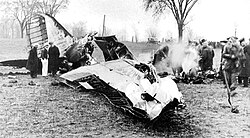
American Airlines Flight 1 Crash 30 October 1941
The American Airlines Flight 1 crash was a tragic aviation accident that happened on 30 October 1941 in the United States. The aircraft was operated by American Airlines, one of the country’s major commercial airlines. The flight was a scheduled passenger service, and the accident resulted in the deaths of everyone on board.
The crash happened during a period when commercial aviation was growing quickly. Aircraft such as the Douglas DC-3 had made air travel faster and more comfortable, but aviation safety systems were still developing. Pilots depended heavily on radio navigation, instruments, weather reports, and their own experience.
The accident became an important part of American aviation history because investigators looked closely at the aircraft’s navigation, the actions of the flight crew, and the conditions during the flight.
American Airlines
American Airlines was already an important airline in the United States by 1941.
The company had developed a large network connecting major cities. It carried passengers, mail, and cargo and operated some of the most modern passenger aircraft available at the time.
During the 1930s, American Airlines expanded rapidly as air travel became more popular.
Commercial aviation was becoming an important part of American transportation. People who once depended on trains could now travel between distant cities in a much shorter time.
However, flying in the early 1940s still involved risks that are much less common today.
The Aircraft
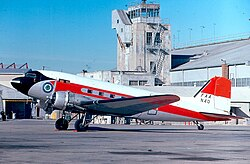
American Airlines Flight 1 was operated by a Douglas DC-3.
The DC-3 was one of the most successful passenger aircraft ever built.
It had two engines and an all-metal structure. It could carry a useful number of passengers and had enough range for important domestic routes.
The aircraft was considered modern for its time.
The success of the DC-3 helped establish scheduled passenger aviation as a practical business.
Many airlines around the world used the aircraft.
The Flight
On 30 October 1941, American Airlines Flight 1 was operating as a scheduled passenger service.
The aircraft was carrying passengers and crew.
The flight was expected to be routine.
The crew consisted of experienced aviation professionals who were familiar with the aircraft and the route.
Passengers had boarded the aircraft expecting to reach their destination safely.
Instead, the aircraft disappeared during the flight and later crashed.
The Accident
Flight 1 crashed near St. Thomas, Ontario, Canada, in the area of the Canadian city of London, Ontario.
The aircraft went down in a wooded area.
All 20 people aboard were killed.
The accident was particularly shocking because the aircraft was a modern airliner and the flight had been operating normally before the crash.
The wreckage was spread through the crash area, and investigators were sent to determine what had happened.
The Importance of the Location
Although American Airlines was a United States company, the crash occurred in Canada.
This meant that Canadian authorities and aviation officials were involved in the investigation.
The location also created challenges for investigators.
The aircraft had crashed in a wooded area, and recovering evidence required careful work.
Investigation
Investigators examined the wreckage carefully.
They looked at:
- Engines
- Propellers
- Flight controls
- Instruments
- Radio equipment
- Structural components
- Weather information
- Navigation records
- Witness statements
In 1941, investigators did not have the sophisticated tools available today.
There were no flight-data recorders.
There were no cockpit voice recorders.
There was no GPS tracking.
Investigators therefore had to reconstruct the flight using physical evidence and available records.
Navigation in the Early 1940s
Navigation was one of the most important parts of commercial aviation.
Pilots used radio navigation systems, maps, compasses, and dead reckoning.
Radio ranges helped pilots follow routes.
The pilot would listen to radio signals and determine whether the aircraft was flying in the correct direction.
However, these systems were not perfect.
A navigation mistake could place an aircraft away from its intended course.
Weather
Weather was another major factor in aviation during this period.
Pilots had access to weather forecasts, but the information was much less detailed than modern weather information.
There were no weather satellites.
There was no modern weather radar network.
Pilots could encounter clouds, rain, fog, turbulence, or strong winds.
If visibility became poor, pilots had to depend on instruments and radio navigation.
Instrument Flying
By 1941, instrument flying had become an important part of professional aviation.
Pilots were trained to fly without relying entirely on outside visual references.
Important instruments included:
- Altimeter
- Airspeed indicator
- Artificial horizon
- Compass
- Vertical speed indicator
The artificial horizon helped pilots understand the aircraft’s attitude when the horizon could not be seen.
Instrument flying required concentration and training.
Human Factors
Aviation accidents are often caused by a combination of factors.
Pilot workload, weather, navigation, communication, and equipment condition can all affect flight safety.
In 1941, pilots had to perform many tasks manually.
They needed to control the aircraft while also communicating with ground stations and monitoring navigation equipment.
Modern aircraft automate many of these tasks.
No Modern Flight Recorders
One of the biggest challenges for investigators was the lack of flight recorders.
Today, investigators can recover detailed information from a flight-data recorder.
They can examine:
- Altitude
- Airspeed
- Heading
- Engine performance
- Vertical speed
- Aircraft configuration
A cockpit voice recorder can also show what the pilots were discussing.
In 1941, investigators had none of these resources.
The Crash Site
The crash site provided important physical evidence.
Investigators studied the positions of the wreckage.
They examined the condition of the engines and propellers.
They looked for evidence of fire or mechanical failure.
They also examined the aircraft’s flight controls.
This work helped investigators determine whether the aircraft had suffered a mechanical problem before impact.
Mechanical Failure
Aircraft engines and systems were carefully examined.
Investigators wanted to determine whether an engine failure could explain the crash.
The DC-3 had two engines, so it could continue flying after the loss of one engine under suitable conditions.
However, serious problems affecting the aircraft’s structure or controls could still cause a crash.
Determining whether mechanical failure was involved was therefore an important part of the investigation.
The Role of the Crew
The flight crew was responsible for navigating and controlling the aircraft.
The captain had overall responsibility for the flight.
Other crew members helped with radio communication, navigation, and aircraft operation.
Teamwork was essential.
At that time, cockpit procedures were not as standardized as they are today.
Modern airline operations use clearly defined responsibilities between crew members.
Aviation Regulation
American aviation regulation was becoming stronger during this period.
The federal government had already established national standards for aircraft and airline operations.
The Civil Aeronautics Board investigated major accidents and made safety recommendations.
These investigations played an important role in improving commercial aviation.
World War II
The accident occurred more than two years after the beginning of the Second World War.
The United States had not yet entered the war directly, but aviation was already being affected by the international conflict.
American aircraft production was increasing.
Military aviation was expanding.
Airports and navigation systems were receiving greater attention.
The attack on Pearl Harbor would occur only a few weeks after the Flight 1 accident.
Aviation Technology
The technology available in 1941 was advanced for its time but primitive compared with today’s systems.
Pilots did not have:
- GPS
- Satellite communications
- Digital flight displays
- Ground-proximity warning systems
- Traffic collision avoidance systems
- Modern weather radar
- Digital flight management systems
Instead, pilots depended on instruments, radio, maps, and experience.
The DC-3 and Safety
The Douglas DC-3 had an excellent reputation.
Its two-engine configuration provided additional safety compared with many earlier single-engine designs.
It also had strong construction and good performance.
However, no aircraft design can eliminate every risk.
Accidents could still happen because of weather, navigation problems, human error, or mechanical issues.
The Human Cost
The most important part of the Flight 1 accident was the loss of life.
There were 20 people aboard the aircraft, and none survived.
Every passenger had a reason for traveling.
Some may have been traveling for business.
Others may have been visiting family or traveling between cities.
The crew members were professionals doing their normal work.
The accident suddenly ended all of their journeys.
Effect on American Airlines
A fatal crash was a serious event for any airline.
American Airlines had to cooperate with investigators and review the circumstances.
The company also had to deal with the grief of families and the impact on public confidence.
Airlines depended heavily on passengers trusting their aircraft and crews.
The Importance of Accident Reports
Accident reports are important because they help the aviation industry learn.
Investigators do not only ask who was responsible.
They also ask:
What happened?
Why did it happen?
What conditions contributed to it?
What could prevent a similar accident?
This approach has helped make aviation progressively safer.
Safety Improvements
Over the following decades, aviation developed many improvements.
These included:
- Better navigation systems
- Improved weather forecasting
- More advanced aircraft instruments
- Standardized pilot training
- Better cockpit procedures
- Stronger maintenance rules
- Improved air traffic control
- Flight-data recorders
Many of these improvements were influenced by lessons from earlier accidents.
Crew Coordination
One major development in aviation safety has been improved crew coordination.
Today, pilots use structured procedures to communicate and cross-check important decisions.
One pilot can verify the work of another.
This reduces the chance that one person’s mistake will remain unnoticed.
Such systems became increasingly important after decades of aviation experience.
Emergency Procedures
Modern airlines also have detailed emergency procedures.
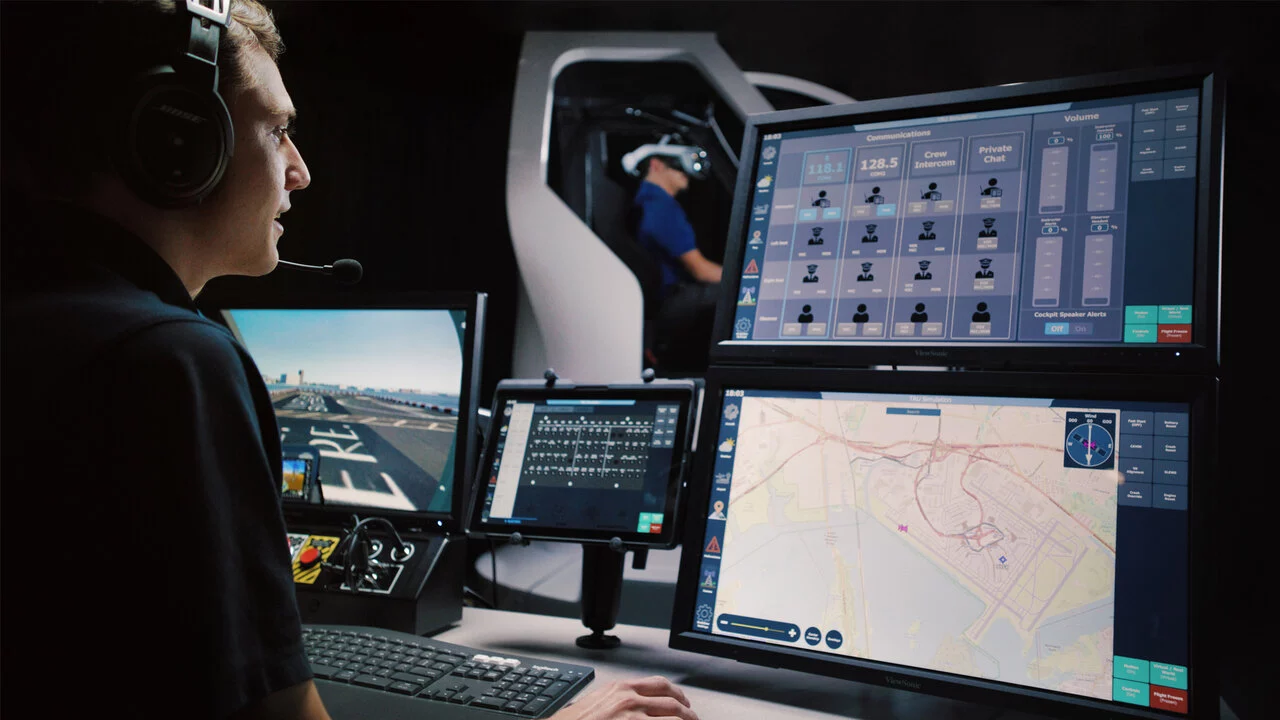
Pilots practice failures through simulator training.
They learn how to respond to:
- Engine failure
- Navigation problems
- Instrument failure
- Fire
- Pressurization problems
- Bad weather
In 1941, pilot training was already developing, but modern simulator-based training was not available at the same level.
The Evolution of Navigation
Navigation technology improved enormously during and after the Second World War.
Radio navigation became more accurate.
Radar became widely used.
Long-range navigation systems improved.
Later, inertial navigation and satellite navigation transformed aviation.
Today, pilots can know their position with remarkable accuracy.
Weather Forecasting
Weather information also improved.
Modern aircraft can receive detailed weather information.
Weather radar can show areas of heavy precipitation.
Satellites provide global weather observations.
Pilots can avoid dangerous storms before reaching them.
This is a major difference from early commercial aviation.
Air Traffic Control
Modern air traffic control also provides another layer of safety.
Controllers monitor aircraft and provide instructions.
Aircraft can be kept separated from each other.
Controllers can help pilots when they have navigation or communication problems.
In the early 1940s, these systems were much less developed.
Lessons From the Accident
The Flight 1 crash demonstrates the importance of several safety principles.
Accurate navigation is essential.
Aircraft instruments must be properly maintained.
Pilots need clear procedures.
Weather information must be reliable.
Communication between pilots and ground stations is important.
Accident investigation must be detailed so that lessons can be applied to future flights.
A Changing Aviation Industry
The accident occurred during a period of rapid change.
Air travel was moving from a specialized service to a major form of transportation.
The DC-3 had helped make this possible.
Airlines were becoming larger.
More passengers were choosing to fly.
Governments were developing stronger regulations.
At the same time, aviation was entering the technological age created by the Second World War.
The Broader Historical Context
The Flight 1 accident should also be understood in the context of 1941.
Europe was at war.
North America was preparing for a much greater military role.
Aircraft production was increasing.
New navigation and communication technologies were being developed.
Within months, the United States would enter the Second World War.
The aviation industry would be transformed.
The Legacy of Early Airliner Accidents
Accidents such as Flight 1 contributed to the development of safer aviation.
Every investigation provided information.
Engineers could improve aircraft.
Airlines could improve procedures.
Pilots could receive better training.
Government agencies could introduce new safety standards.
The process was gradual, but it produced major improvements.
Remembering the Victims
The people aboard Flight 1 should be remembered as individuals, not simply as statistics.
They were passengers and crew members traveling during a period of major historical change.
Their families experienced a sudden and painful loss.
Remembering the victims is an important part of aviation history.
Modern Comparison
A similar flight today would operate under very different conditions.
The aircraft would be continuously monitored.
Its position would be known to air traffic control.
The crew would have advanced navigation equipment.
Weather information would be updated continuously.
Terrain-warning systems could alert the pilots if the aircraft approached dangerous terrain.
If an emergency occurred, investigators would have detailed flight recordings.
These systems did not exist in 1941.
Conclusion
The American Airlines Flight 1 crash of 30 October 1941 was a tragic event in the history of American commercial aviation.
The accident happened during a period when air travel was expanding rapidly. The Douglas DC-3 represented the new generation of reliable and comfortable passenger aircraft, and American Airlines was building an important national transportation network.
Despite these advances, aviation safety was still developing.
Pilots depended on radio navigation, maps, instruments, weather reports, and personal experience. They did not have GPS, satellite tracking, modern weather radar, computerized navigation, terrain-warning systems, or flight-data recorders.
When Flight 1 crashed near St. Thomas, Ontario, investigators had to work with the evidence available at the scene. They examined the wreckage, engines, instruments, weather information, navigation records, and other evidence to understand what had happened.
The loss of all 20 people aboard was a tragedy for their families and for American Airlines.
The accident also illustrates an important point about aviation history: modern safety has developed through many years of experience. Improvements in navigation, aircraft design, pilot training, maintenance, communication, air traffic control, and accident investigation have all contributed to the remarkable safety of modern air travel.
The early 1940s were also a major turning point because the Second World War was changing aviation technology. Radar, radio systems, navigation equipment, aircraft engines, and air traffic procedures would develop rapidly during the following years.
These technologies later became valuable to civilian aviation.
The story of American Airlines Flight 1 is therefore not simply the story of one aircraft accident. It is part of the larger story of how commercial aviation developed during a difficult period in history.
The passengers and crew who lost their lives should be remembered with respect. Their accident became part of the long record of aviation experience that helped future generations build better aircraft, stronger operating procedures, and safer skies.
Today, passengers can board an airliner with confidence because aviation has many layers of protection. The systems that now seem normal were built over decades through engineering, training, regulation, investigation, and lessons learned from tragedies such as American Airlines Flight 1.

Ajeet Yadav is an aviation enthusiast covering airline news, airports, aircraft, and industry developments through well-researched and reliable reporting.