

















Jersey Airways D.H.86 Crash 4 November 1938
The Jersey Airways D.H.86 crash was a tragic aviation accident that occurred on 4 November 1938. It involved a de Havilland D.H.86 Express, a four-engine passenger aircraft operated by Jersey Airways. The accident took place during an important period in the development of commercial aviation, when airlines were expanding their services between Britain, the Channel Islands, and continental Europe.
The crash resulted in the loss of lives and attracted attention to the safety of the de Havilland D.H.86 and the challenges faced by airlines operating in difficult weather conditions. The event is part of the wider history of early commercial aviation, when aircraft technology was improving rapidly but navigation, weather forecasting, and safety procedures were still developing.
Jersey Airways
Jersey Airways was an important airline serving the Channel Islands. It operated flights connecting the islands with mainland Britain and other destinations.
The Channel Islands had an important relationship with Britain and France. Because they are located in the English Channel, air transportation provided a fast way for passengers, mail, and goods to travel.
Before regular air services became common, journeys to and from the islands depended heavily on ships. Aircraft offered a much faster alternative.
Jersey Airways therefore played an important role in the growth of commercial aviation in the region.
The de Havilland D.H.86 Express
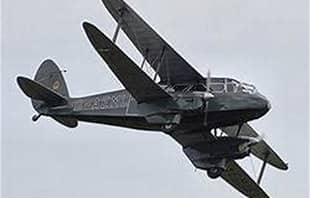
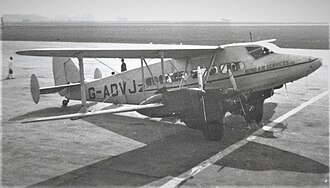
The aircraft involved was a de Havilland D.H.86 Express.
The D.H.86 was a four-engine biplane designed for passenger and mail services.
It was developed in Britain during the 1930s.
The aircraft had four engines mounted on the wings and a relatively large passenger cabin for its time.
The design was intended for long-distance and regional commercial operations.
Several airlines used the D.H.86 in Britain and overseas.
The aircraft represented an important stage between the smaller aircraft of the 1920s and the faster all-metal airliners that became common before and after the Second World War.
Commercial Aviation in the 1930s
The 1930s were an exciting period for aviation.
Airlines were developing regular passenger services.
Aircraft were becoming faster, more comfortable, and more reliable.
However, aviation was still very different from what passengers experience today.
Pilots did not have satellite navigation.
There were no GPS systems.
Weather radar was not available in the modern sense.
Aircraft instruments were much simpler.
Radio navigation was developing but was not available everywhere.
These limitations made flying through poor weather particularly difficult.
The Flight
On 4 November 1938, a Jersey Airways D.H.86 was involved in a fatal accident.
The aircraft was operating a commercial service in the Channel Islands area.
The flight was part of the normal activities of Jersey Airways.
Passengers were using the aircraft for ordinary travel.
The crew was responsible for flying the aircraft safely through the route.
Unfortunately, the flight ended in disaster.
Weather Conditions
Weather was an important concern for aircraft operating around the Channel Islands.
The English Channel is known for rapidly changing weather.
Cloud, rain, fog, and strong winds can develop quickly.
In the 1930s, pilots had fewer tools to understand and predict these conditions.
A pilot could receive weather information before departure, but information available during the flight was limited.
This meant that crews often had to make decisions using incomplete information.
The Accident
The aircraft crashed during the flight, killing people aboard.
The accident was investigated by aviation authorities.
Investigators examined the aircraft, the weather, the crew’s actions, and the operating procedures of the airline.
As with many aviation accidents from the period, determining the exact sequence of events was difficult because modern flight recorders did not exist.
There was no modern cockpit voice recorder.
There was no flight-data recorder.
Investigators therefore had to rely on witness statements, physical evidence, radio communications, weather records, and aircraft examination.
Why Early Aircraft Accidents Were Difficult to Investigate
Today, investigators can recover large amounts of information from an aircraft’s flight-data recorder.
They can examine:
- Airspeed
- Altitude
- Heading
- Engine performance
- Aircraft position
- Pilot inputs
- Warning systems
In 1938, none of this information was automatically recorded.
If an aircraft crashed, investigators had to reconstruct the flight from available evidence.
This made accident investigation much more difficult.
The Role of the Crew
Commercial airline crews in the 1930s had demanding jobs.
They had to operate the aircraft while also managing navigation and communication.
The aircraft required careful monitoring of its four engines.
The crew also had to pay attention to weather and visibility.
Flying over the Channel Islands required knowledge of local geography and weather patterns.
Despite their training, crews were operating with technology that was much less advanced than modern equipment.
Four-Engine Aircraft
The D.H.86 had four engines.
At first, having four engines might seem to make the aircraft extremely safe.
Multiple engines provided some redundancy.
If one engine stopped working, the aircraft could potentially continue flying.
However, four engines also meant more mechanical systems that needed maintenance.
The aircraft’s engines, fuel systems, controls, and other equipment all had to work properly.
A serious problem affecting the aircraft’s structure or control system could still result in an accident.
Aircraft Design and Safety
The D.H.86 belonged to an earlier generation of aircraft.
Many aircraft of the period were built using mixed construction methods.
The D.H.86 was a biplane with a relatively narrow fuselage compared with later airliners.
The aviation industry was rapidly moving toward all-metal monoplane designs.
Aircraft such as the Douglas DC-3 showed the future direction of passenger aviation.
By the late 1930s, aircraft design was changing quickly.
The D.H.86 represented an earlier stage in this development.
The Importance of Maintenance
Airline safety depends heavily on maintenance.
Commercial aircraft fly frequently, sometimes every day.
Engines, control surfaces, landing gear, and structural components must be inspected regularly.
The D.H.86’s four engines and other systems required careful maintenance.
An aircraft accident could therefore lead investigators to examine whether mechanical maintenance played a role.
Investigation
Following the crash, authorities investigated the accident.
Investigators considered several possible factors.
These included:
- Weather
- Pilot actions
- Navigation
- Aircraft condition
- Engine performance
- Operating procedures
- Visibility
The purpose of an aviation investigation is not simply to identify one mistake.
It is to understand why the accident occurred and determine how similar accidents might be prevented.
Navigation in 1938
Navigation was one of the biggest challenges facing pilots.
Pilots used maps, compass readings, landmarks, dead reckoning, and radio signals.
Over land, visible landmarks could help.
Over water, navigation was more difficult.
The Channel Islands presented another challenge because weather could hide the islands and coastline.
A small navigation error could become dangerous when visibility was poor.
Fog and Visibility
Fog was particularly dangerous for aircraft operating around the Channel Islands.
An aircraft flying in fog might be unable to see the ground or sea clearly.
Mountains, buildings, coastlines, and other landmarks could disappear.
Without modern terrain-warning equipment, the crew had to depend heavily on instruments and navigation information.
The Channel Islands
The Channel Islands are located in the English Channel between southern Britain and northern France.
The islands include:
- Jersey
- Guernsey
- Alderney
- Sark
- Herm
Jersey is the largest of the islands.
The islands have long been connected with maritime transportation.
During the 1930s, aviation offered a new and exciting way to connect them with Britain.
The Importance of Jersey Airport
Jersey’s aviation infrastructure was developing during this period.
Airfields and airport facilities were becoming increasingly important as passenger aviation expanded.
Jersey Airways helped establish regular air transportation for the islands.
Passengers could avoid long sea journeys.
Air travel also provided faster transportation for mail and business.
Impact on Passengers
The people aboard the aircraft were ordinary travelers.
Some were traveling for business.
Others were traveling for personal reasons.
The accident suddenly ended their journeys.
Their deaths affected families and friends.
In the 1930s, commercial aviation accidents received significant public attention because passenger flying was still relatively new.
Public Reaction
A fatal airline accident was a serious event for the local community.
Jersey and the surrounding islands had relatively small populations.
Many people knew each other directly or indirectly.
The loss of passengers and airline employees therefore had a strong local impact.
The crash also raised questions about the safety of airline operations.
Impact on Jersey Airways
Jersey Airways had to deal with the consequences of the accident.
Airlines depend heavily on public confidence.
Passengers must believe that flying is safe.
A serious crash can affect an airline’s reputation.
However, airlines also use accidents as opportunities to review their procedures.
Safety improvements often come from understanding what went wrong.
Aviation Safety Before World War II
The accident happened just before the outbreak of the Second World War.
In 1938, aviation was undergoing major changes.
Aircraft were becoming faster and more advanced.
Radio navigation was improving.
Airports were developing.
Governments were increasing aviation regulation.
However, safety standards were still developing.
Many systems that are considered normal today had not yet been invented.
No Flight Recorders
One major limitation was the absence of flight recorders.
Modern commercial aircraft carry devices that record important flight information.
These devices are extremely useful after accidents.
They allow investigators to reconstruct the final minutes of a flight.
In 1938, investigators did not have this advantage.
They had to work from physical evidence and human testimony.
Improvements in Weather Forecasting
Weather forecasting was also developing.
Meteorologists were becoming better at understanding storms and pressure systems.
But they did not have today’s satellite imagery.
They also did not have modern weather radar networks.
Forecasts were therefore less precise.
Pilots sometimes encountered conditions that were worse than expected.
Radio Communication
Radio was one of the most important technologies in aviation.
It allowed pilots to communicate with ground stations.
It also allowed airports to send weather and operational information.
However, radio communication was not as reliable or comprehensive as today’s systems.
Communication could be affected by distance, atmospheric conditions, and equipment limitations.
Lessons From the Accident
The Jersey Airways accident formed part of the continuing history of aviation safety development.
Important lessons from accidents during this era included the need for:
- Better pilot training
- Improved weather information
- More reliable navigation
- Strong maintenance procedures
- Better aircraft design
- Improved airport facilities
- Stronger government regulation
These principles became increasingly important as passenger aviation expanded.
The Transition to Modern Airliners
The late 1930s marked a major turning point.
Aircraft such as the Douglas DC-3 were demonstrating the advantages of modern low-wing monoplanes.
All-metal construction was becoming more common.
Retractable landing gear was improving aircraft performance.
Engines were becoming more powerful.
Passenger cabins were becoming more comfortable.
The D.H.86 belonged to an earlier generation of aviation technology.
World War II
Only months after the accident, Europe entered the Second World War.
Civilian aviation in Britain changed dramatically.
Many aircraft were taken into military service.
Air routes were reduced or suspended.
Airports were affected by military operations.
The aviation industry turned its attention toward military transportation and aircraft production.
Historical Importance
The Jersey Airways D.H.86 crash is part of the larger story of aviation development in Britain.
It shows that commercial aviation did not become safe overnight.
Safety was developed through decades of experience.
Every accident provided information that could be used to improve aircraft, procedures, training, and infrastructure.
Remembering the Victims
The people who died in the accident should be remembered as individuals rather than simply as numbers.
They were passengers traveling on a commercial aircraft and crew members doing their professional duties.
Their families experienced the sudden loss of loved ones.
The tragedy reminds us that behind every aviation accident are human stories.
Aviation Safety Today
Modern passenger aviation is dramatically safer than it was in the 1930s.
Modern aircraft use advanced navigation systems.
Pilots receive detailed weather information.
Air traffic controllers monitor aircraft.
Aircraft engines and structures undergo extensive testing.
Flight-data recorders provide investigators with detailed information.
Emergency systems help crews respond to problems.
Terrain-warning systems help prevent aircraft from flying into mountains or other obstacles.
These developments came from many decades of experience.
The Importance of Historical Accidents
Studying old aviation accidents is valuable because it helps explain why today’s safety rules exist.
A rule that seems obvious today may have been created because an earlier accident showed its importance.
Navigation procedures, weather requirements, maintenance standards, and pilot training have all been shaped by aviation history.
Conclusion
The Jersey Airways D.H.86 accident of 4 November 1938 belongs to an important period in the development of commercial aviation.
Jersey Airways was helping connect the Channel Islands with Britain at a time when air travel was becoming an increasingly important form of transportation. The de Havilland D.H.86 Express represented the technology of its era, with four engines and the ability to carry passengers and mail over regional routes.
The accident showed the difficulties faced by airlines during the 1930s. Pilots had to work with limited navigation equipment, incomplete weather information, and relatively simple communication systems. Aircraft also lacked many of the safety technologies that are standard today.
Weather was an important concern for aviation around the Channel Islands. Fog, cloud, wind, and poor visibility could make flying extremely difficult. In such conditions, pilots had to rely heavily on their training and the limited instruments available to them.
Investigating an accident in 1938 was also much more difficult than investigating one today. There were no flight-data recorders or cockpit voice recorders. Investigators had to reconstruct the accident using physical evidence, weather information, radio records, and witness accounts.
The crash occurred only a few months before the outbreak of the Second World War, when European aviation was about to enter a completely different period. Civilian airlines would soon face restrictions, military demands, and enormous changes in aircraft technology.
The history of the Jersey Airways D.H.86 therefore provides an important look at the early days of commercial aviation. It reminds us that the modern aviation safety system was built gradually through experience, investigation, engineering improvements, and better operating procedures.
Today, passengers can fly across the English Channel with advanced navigation systems, detailed weather forecasts, modern communications, and highly regulated aircraft. The technology is very different from that of 1938.
But the basic goal remains the same: to carry passengers safely from one place to another.
The victims of the Jersey Airways D.H.86 accident are part of the history that helped aviation learn and improve. Their story is a reminder of the risks faced by the pioneers of commercial air travel and of the enormous progress that has been made in aviation safety since the 1930s.

Ajeet Yadav is an aviation enthusiast covering airline news, airports, aircraft, and industry developments through well-researched and reliable reporting.