







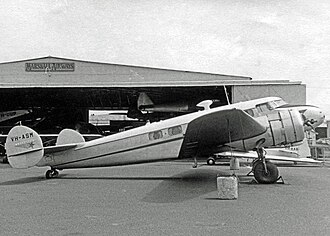
Chicago and Southern Flight 4 Crash August 5, 1936
The Chicago and Southern Flight 4 crash was a tragic aviation accident that took place on August 5, 1936, in the United States. The flight was operated by Chicago and Southern Air Lines, a growing American airline of the 1930s. The aircraft crashed during a scheduled passenger flight, resulting in the deaths of the people aboard.
The accident happened during an important period in the development of commercial aviation. Airlines were expanding their routes, passenger numbers were increasing, and aircraft were becoming faster and more reliable. However, many of the safety systems that are normal today were still being developed.
The Flight 4 accident became part of the history of early American commercial aviation and illustrated the challenges faced by pilots, passengers, and airlines during this period.
Chicago and Southern Air Lines
Chicago and Southern Air Lines was an American airline that operated during the 1930s.
The company was founded during a period when commercial aviation was growing rapidly across the United States.
Airlines were developing routes between major cities and smaller communities.
Air travel offered an important advantage over rail and road transportation because it could greatly reduce travel time.
Chicago and Southern became an important regional airline and later expanded its operations.
The airline operated several types of aircraft during its history.
Its operations included the transportation of passengers, mail, and other cargo.
Aviation in 1936
The year 1936 was an important time for commercial aviation.
Aircraft construction had changed significantly from the wooden airplanes of earlier decades.
Metal aircraft were becoming increasingly common.
Aircraft engines were becoming more powerful.
Passenger cabins were becoming more comfortable.
Airlines were also developing regular schedules.
Despite these improvements, aviation still had significant risks.
Pilots did not have GPS or modern satellite navigation.
There was no modern weather radar.
There were no computerized flight-management systems.
Aircraft did not carry flight-data recorders.
Pilots had to rely heavily on their own skills and the instruments available in the cockpit.
The Aircraft
Chicago and Southern operated aircraft designed for passenger and mail services.
Aircraft of the period were generally smaller than modern commercial airliners.
They carried a limited number of passengers.
Many aircraft had two or three engines.
The use of multiple engines improved reliability because an aircraft could sometimes continue flying after losing one engine.
However, losing power at a low altitude could still be extremely dangerous.
Aircraft design was continuing to improve, and manufacturers were learning important lessons from accidents.
Flight 4
On August 5, 1936, Chicago and Southern Flight 4 was operating as a scheduled service.
The aircraft carried passengers and crew.
The flight began normally.
However, the journey eventually ended in a serious accident.
The aircraft crashed during the flight.
The accident caused fatalities and attracted attention from aviation authorities.
Investigators were sent to examine the wreckage and determine what had happened.
The Challenges of Early Airline Flying
Flying a commercial aircraft in the 1930s required a high level of concentration.
Pilots had to control the aircraft manually.
They monitored the engines and other mechanical systems.
They also had to navigate the route.
Radio operators and other crew members assisted with communications.
Pilots also had to pay attention to weather conditions.
Modern aircraft automate many of these tasks.
In 1936, much more depended on the crew.
Navigation
Navigation was one of the major challenges faced by early airline pilots.
Pilots used maps, compasses, visual landmarks, and radio navigation aids.
Radio navigation was becoming more important, but coverage was not as complete as modern navigation networks.
If an aircraft was flying through clouds or poor visibility, the pilot might not be able to see landmarks.
A small navigation error could become significant over a long distance.
Modern GPS and digital navigation systems have almost completely changed this aspect of aviation.
Weather
Weather could also create serious problems.
Pilots had to deal with clouds, fog, rain, strong winds, thunderstorms, and other conditions.
Weather forecasts in the 1930s were much less detailed.
There were no satellites observing weather systems around the world.
There was also no modern airborne weather radar.
Pilots therefore had to depend on reports from airports and weather stations.
They also had to use their own judgment during the flight.
The Accident
During Flight 4, the aircraft encountered circumstances that resulted in the crash.
The aircraft was destroyed in the accident.
Rescue personnel and local authorities responded to the scene.
Investigators began collecting evidence.
They examined the aircraft’s engines and control systems.
They looked for signs of structural failure.
They also considered whether weather or pilot actions had played a role.
Because there were no flight recorders, investigators had to reconstruct the accident using physical evidence and witness accounts.
Accident Investigation in the 1930s
Accident investigations were very different from those carried out today.
Modern investigators can use flight-data recorders to determine altitude, speed, heading, engine performance, and many other details.
They can also use cockpit voice recordings.
Investigators in the 1930s did not have these tools.
They had to rely on:
- Aircraft wreckage
- Witness statements
- Weather reports
- Radio communications
- Maintenance records
- Pilot experience
- Flight plans
The investigators then tried to reconstruct the final moments of the flight.
Mechanical Problems
One possible cause considered after an aircraft crash is mechanical failure.
An engine can lose power.
A propeller can fail.
A control system can become damaged.
A structural component can break.
Investigators therefore inspect aircraft wreckage carefully.
They need to determine whether a component failed before impact or was broken during the crash.
This distinction is very important.
Damage caused by the crash itself should not be mistaken for a cause of the crash.
Pilot Decision-Making
Pilot decisions were also an important part of early aviation investigations.
Pilots had to make decisions with limited information.
They might have to decide whether to continue through difficult weather or change their route.
They might need to decide whether to descend or climb.
They might need to divert to another airport.
A decision that seems simple from the ground can be difficult when made inside an aircraft.
This is one reason why modern aviation places so much emphasis on standardized procedures and crew training.
Emergency Procedures
Emergency procedures were less developed in the 1930s.
Aircraft did not have the sophisticated warning systems found in modern cockpits.
There were fewer emergency navigation aids.
Communication systems were more limited.
Pilots often had to recognize problems themselves.
This increased the importance of training and experience.
Over time, airlines developed standardized emergency checklists and procedures.
These became an important part of aviation safety.
Search and Rescue
Searching for a crashed aircraft was difficult during the 1930s.
Aircraft were not continuously tracked from space.
There were no modern emergency locator transmitters.
If a plane failed to arrive at its destination, authorities had to determine where it might have gone down.
Search teams could include police officers, military personnel, airline employees, and local residents.
Terrain and weather could make the work even more difficult.
Today, satellite tracking and emergency systems make aircraft searches much faster.
The Human Cost
The most important part of any aviation accident is the loss of human life.
The passengers aboard Flight 4 were ordinary people traveling for different reasons.
Some may have been traveling for business.
Others may have been visiting family or traveling for personal reasons.
The crew members were performing their jobs.
None expected the journey to end in tragedy.
The deaths affected families, friends, and communities.
The airline also lost members of its aviation family.
Public Reaction
Commercial aviation was still relatively new in the 1930s.
People were fascinated by aircraft and increasingly willing to travel by air.
At the same time, accidents could make people question the safety of flying.
Newspapers reported major crashes and investigations.
Airlines understood that public confidence was essential.
Every accident created pressure to improve aircraft, training, maintenance, and operating procedures.
Government Aviation Regulation
The American government was increasingly involved in aviation safety.
Authorities established requirements for aircraft certification.
Pilots needed licenses.
Airlines had to follow operating regulations.
Aircraft required inspections and maintenance.
Airports and navigation systems were also being developed.
Accident investigations helped authorities identify areas where additional rules were needed.
Importance of Airway Systems
The United States was developing an extensive network of airways.
These routes used ground-based navigation facilities.
Pilots could follow established paths between cities.
This made commercial flying more organized.
As air traffic increased, these systems became increasingly important.
Eventually, radar and computerized air traffic management would make the system far more sophisticated.
Improving Pilot Training
Pilot training improved as airlines became more professional.
Pilots were trained in aircraft systems.
They learned navigation.
They practiced emergency procedures.
Instrument flying became increasingly important.
Airlines also began to place greater emphasis on standardized operating procedures.
These developments reduced the dependence on individual judgment alone.
Aircraft Development
The 1930s were a period of rapid aircraft development.
Manufacturers were building faster and stronger airplanes.
Twin-engine aircraft became increasingly popular.
All-metal construction was becoming standard.
Engine reliability improved.
Cabin design became better.
These improvements helped commercial aviation become more practical.
The lessons learned from accidents contributed to the development of safer aircraft.
The Growth of Chicago and Southern
Chicago and Southern Air Lines continued to operate after the accident.
The airline eventually expanded its network and became an important part of American aviation.
It operated routes in different regions and carried increasing numbers of passengers.
Its history demonstrates how quickly the airline industry developed during the twentieth century.
Chicago and Southern later became part of a larger airline through a merger.
The company’s history remains connected with the development of the American airline system.
Aviation Safety Lessons
The Flight 4 accident belongs to a larger history of aviation safety.
Several important lessons emerged from accidents of this period.
Better Navigation
Pilots need accurate information about their position.
Better Weather Information
Crews need reliable weather reports before and during flights.
Strong Aircraft Design
Aircraft must be able to withstand the demands of commercial operations.
Regular Maintenance
Aircraft and engines require careful inspection.
Pilot Training
Pilots need to be prepared for unexpected situations.
Emergency Procedures
Standard procedures can help pilots respond quickly under pressure.
Accident Investigation
Every accident should be studied carefully so that lessons can be learned.
The Difference Between 1936 and Today
Modern aviation is dramatically different from the world in which Flight 4 operated.
Today, an aircraft can determine its location using satellites.
Pilots receive detailed weather information.
Air traffic controllers can track aircraft.
Aircraft systems can warn crews about mechanical problems.
Terrain-warning systems can alert pilots when they are approaching dangerous ground.
Flight recorders preserve information about aircraft operations.
Emergency locator systems can help rescuers find aircraft.
These systems are the result of decades of technological development and lessons learned from earlier accidents.
Remembering the Victims
The people who died in Flight 4 should not be forgotten.
For their families, the accident was not simply an aviation event.
It was a personal tragedy.
The loss of a family member can have effects that last for generations.
Studying aviation accidents should therefore be done with respect.
The purpose is to understand what happened and learn how similar tragedies can be prevented.
Why Historical Aviation Accidents Matter
Historical accidents help explain why modern aviation procedures exist.
Many rules that seem normal today were developed because earlier pilots and passengers faced risks that were not well understood.
Accident investigations helped identify dangerous practices.
Engineers learned how aircraft could fail.
Pilots learned how to respond to emergencies.
Governments developed stronger regulations.
Airlines improved their operating procedures.
This process gradually transformed aviation.
The Legacy of Early American Aviation
The 1930s were an important period in the history of American aviation.
Airlines were becoming professional transportation companies.
Passengers were beginning to trust aircraft as a practical means of travel.
Aircraft technology was improving quickly.
Airports were expanding.
Airways and navigation systems were being developed.
But this progress came with challenges.
Accidents such as the Chicago and Southern Flight 4 crash became part of the difficult learning process.
Conclusion
The Chicago and Southern Flight 4 crash of August 5, 1936, was a tragic event during the early development of commercial aviation in the United States.
Chicago and Southern Air Lines was part of a growing airline industry that was transforming transportation. Airplanes were allowing passengers to travel between American cities much faster than before.
However, the technology available in 1936 was very different from today’s technology.
Pilots had no GPS, satellite tracking, modern weather radar, terrain-warning systems, or flight-data recorders. Navigation depended on maps, compasses, radio aids, visual landmarks, and pilot judgment.
When Flight 4 crashed, investigators had to work with the limited evidence available at the time. They examined the aircraft wreckage, considered weather and operating conditions, and used witness information to understand what had happened.
The accident is part of the larger history of aviation safety.
During the decades that followed, aircraft became stronger and more reliable. Navigation became more accurate. Weather forecasting improved. Air traffic control developed. Pilot training became more systematic. Aircraft maintenance became more strictly regulated. Emergency procedures became standardized.
Chicago and Southern Air Lines continued its operations and became part of the story of the growth of American commercial aviation.
The tragedy of August 5, 1936 reminds us that the modern aviation system was not created in a single day. It developed through decades of innovation, careful investigation, regulation, and lessons learned from accidents.
The passengers and crew of Flight 4 were part of the early age of commercial air travel. Their story remains a reminder of the risks faced by aviation pioneers and of the continuing importance of safety in air transportation.

Ajeet Yadav is an aviation enthusiast covering airline news, airports, aircraft, and industry developments through well-researched and reliable reporting.