











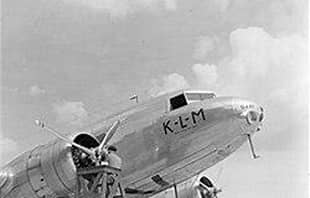
Bushehr KLM Douglas DC-2 Crash 17 July 1935
The Bushehr KLM Douglas DC-2 Crash was a tragic aviation accident that took place on 17 July 1935 near Bushehr, Persia (present-day Iran). The aircraft involved was a Douglas DC-2 operated by KLM Royal Dutch Airlines during one of the airline’s long-distance international services.
The accident occurred during an important period in the development of commercial aviation. Airlines were beginning to connect Europe with Asia through regular routes, and aircraft such as the Douglas DC-2 were making long-distance passenger travel faster and more practical. However, flying across remote regions was still difficult. Pilots had limited navigation equipment, weather information was less developed, and airports along international routes often had only basic facilities.
The Bushehr accident became one of the tragedies associated with the early years of KLM’s long-distance operations. It also illustrates the challenges faced by pilots and passengers who traveled thousands of kilometres by air during the 1930s.
KLM and International Aviation
KLM, or Koninklijke Luchtvaart Maatschappij, was founded in 1919 in the Netherlands.
By the 1930s, KLM had become an important international airline.
The company operated European passenger and mail services and had established a famous long-distance route between the Netherlands and the Dutch East Indies.
The route to the Dutch East Indies was one of the longest regular airline services in the world at that time.
Aircraft had to make many stops along the way.
Typical stops included cities and airfields in southern Europe, the Middle East, British India, Southeast Asia, and the Dutch East Indies.
These long journeys required careful planning.
Fuel had to be available.
Aircraft had to be inspected.
Crews had to manage long flying hours.
Weather had to be considered.
The Douglas DC-2
The aircraft involved in the Bushehr accident was a Douglas DC-2.
The DC-2 was one of the most advanced commercial aircraft of the early 1930s.
It was built by the Douglas Aircraft Company in the United States.
The aircraft used an all-metal construction and had two engines.
Compared with many earlier passenger aircraft, the DC-2 was faster, stronger, and more comfortable.
It could carry passengers over considerably longer distances.
The DC-2 became popular with airlines around the world.
KLM was one of the airlines that recognized the advantages of the type.
For long-distance routes, aircraft such as the DC-2 represented a major technological improvement.
Long-Distance Flying in the 1930s
Long-distance airline travel in the 1930s was very different from today’s international flying.
A modern aircraft can travel thousands of kilometres without stopping.
Pilots have access to satellite navigation, weather radar, satellite communications, and computerized flight-management systems.
In 1935, none of these modern technologies existed.
Pilots depended on:
- Maps
- Magnetic compasses
- Radio communication
- Visual landmarks
- Basic navigation calculations
- Information from airports along the route
Aircraft also had to stop frequently for fuel.
The route between Europe and Asia could take several days.
Passengers therefore spent a long time traveling.
The Journey Toward the Middle East
The KLM aircraft was operating on an international route when it reached the Middle East.
One of the important points along these routes was Bushehr, a port city on the Persian Gulf.
Bushehr was an important location for air routes between Europe and India.
The city had an airfield used by aircraft traveling through the region.
For early international aviation, places such as Bushehr were extremely important.
They provided landing facilities, fuel, weather information, and communication services.
Bushehr in the 1930s
Bushehr was very different from a modern international airport.
The airfield had basic facilities compared with today’s airports.
There were no long concrete runways like those used by modern wide-body aircraft.
Navigation systems were limited.
Aircraft often depended on visual navigation.
Weather observations were available, but forecasting technology was still developing.
The surrounding region included large areas of desert and rugged terrain.
For an aircraft crew, a problem during flight could therefore become extremely serious.
The Flight of 17 July 1935
On 17 July 1935, the KLM Douglas DC-2 was operating a scheduled international flight.
The aircraft was carrying passengers and crew.
The flight was part of KLM’s important international service.
The aircraft was expected to continue its journey normally.
However, the flight ended in a crash near Bushehr.
The accident resulted in fatalities.
The event shocked KLM and the aviation community because the DC-2 was considered a modern and capable passenger aircraft.
The Accident
The aircraft crashed near Bushehr during the flight.
The impact severely damaged the aircraft.
Emergency workers and local authorities responded to the accident.
Because aviation rescue systems were not as developed as they are today, reaching a crash site could be difficult.
The aircraft wreckage was examined to determine what had happened.
Investigators had to consider many possible causes.
These included:
- Mechanical failure
- Engine problems
- Navigation difficulties
- Weather
- Pilot error
- Structural failure
- Problems during takeoff or landing
The exact reconstruction of an accident from this period was often difficult because there were no flight recorders.
The Importance of the Investigation
Aviation investigations were essential for improving safety.
Investigators examined the engines, propellers, wings, fuselage, landing gear, and controls.
They searched for evidence of mechanical failure.
They also studied weather information.
Witnesses were questioned.
The investigators tried to determine what the crew had been doing before the crash.
Even small pieces of evidence could be important.
For example, the position of the control surfaces could provide information about how the aircraft was being operated.
The condition of the engines could indicate whether they were running when the aircraft struck the ground.
Navigation Difficulties
Navigation was a major challenge on international routes.
The landscape around Bushehr included large areas where there were few obvious landmarks.
A pilot could use the coastline, mountains, roads, settlements, and other features for navigation.
But poor visibility could make these landmarks difficult to identify.
Radio navigation technology was still developing.
If the aircraft became uncertain about its position, the crew had fewer options than modern pilots.
This made accurate navigation extremely important.
Weather Conditions
Weather could also make flying difficult in the region.
The Persian Gulf area can experience high temperatures, strong winds, dust, and reduced visibility.
Dust and haze can make it difficult for pilots to identify an airfield.
High temperatures can also affect aircraft performance because hot air is less dense.
An aircraft requires more runway and may climb less effectively in very hot conditions.
These factors were especially important for early aircraft operating from relatively basic airfields.
The Role of the Crew
The crew of a long-distance KLM aircraft had a demanding responsibility.
Pilots had to fly the aircraft, navigate, monitor engines, communicate with ground stations, and make decisions about weather.
Other crew members also had important responsibilities.
The radio operator maintained communication.
Engineers or other technical personnel monitored the aircraft’s mechanical condition.
Long-distance flights required teamwork.
The crew had to remain alert during many hours of flying.
Human Factors
Human factors were an important part of early aviation safety.
Fatigue could affect concentration.
Long international flights were physically demanding.
Pilots had to make decisions while operating in unfamiliar regions.
A small mistake could become serious when combined with bad weather or technical problems.
Modern aviation has strict rules concerning crew duty periods and rest.
These rules developed over many years as the industry learned more about fatigue and human performance.
Passenger Travel in the 1930s
For passengers, traveling by air in 1935 was still a special experience.
Air travel was faster than many other forms of transportation.
However, passengers had to accept a much rougher journey than today’s travelers.
Aircraft cabins were smaller.
Noise levels were high.
Turbulence could be uncomfortable.
Flights were frequently affected by weather.
There were also more stops because aircraft had limited range.
Despite these difficulties, demand for air travel continued to increase.
The Human Cost of the Crash
The most tragic aspect of the Bushehr accident was the loss of life.
Passengers had boarded the KLM aircraft expecting to continue their international journey.
The crew was carrying out a normal airline operation.
Instead, the aircraft crashed near Bushehr.
Families of the victims received devastating news.
The accident affected not only KLM but also the wider aviation community.
Every serious commercial aircraft accident during this period attracted attention because airlines were still trying to establish air travel as a safe and reliable form of transportation.
KLM’s Reputation
KLM had a strong reputation for international flying.
Its route between Amsterdam and the Dutch East Indies was an important achievement.
The airline had experience operating aircraft over Europe, the Middle East, India, and Southeast Asia.
The Bushehr accident was therefore particularly significant.
It showed that even experienced airlines and modern aircraft faced serious risks when operating long-distance routes.
KLM continued its international services despite the accident.
The Importance of Airfields Along International Routes
The accident also highlights the importance of intermediate airfields.
Long-distance flights could not simply fly directly from Europe to Asia.
Aircraft needed regular stops.
Airfields such as Bushehr provided:
- Fuel
- Maintenance
- Weather reports
- Radio communication
- Passenger services
- Emergency assistance
As international aviation expanded, these facilities became increasingly important.
Many later airports developed from the basic airfields used during this early period.
Improvements in Aviation Safety
During the 1930s and later decades, aviation safety improved rapidly.
Aircraft engines became more reliable.
Airframes became stronger.
Navigation equipment improved.
Radio communication became more effective.
Weather forecasting became more accurate.
Air traffic control developed.
Pilot training became more standardized.
Airport rescue services became stronger.
These improvements reduced many of the risks that early airline crews faced.
The Development of the Douglas Aircraft
The Douglas Aircraft Company continued to develop commercial aircraft.
The DC-2 was followed by the famous Douglas DC-3.
The DC-3 transformed commercial aviation.
It was larger, more comfortable, and highly reliable.
It helped airlines operate profitable passenger services.
The success of the DC-3 demonstrated how quickly aviation technology was advancing during the 1930s.
The DC-2 was an important step toward this future.
Why the Bushehr Crash Matters
The Bushehr accident is important because it occurred during the development of international commercial aviation.
European airlines were beginning to operate regular services across continents.
Aircraft were traveling farther than ever before.
But infrastructure and technology had not developed at the same speed.
A modern aircraft might be able to travel thousands of kilometres, but the systems supporting it were still basic.
The accident demonstrates the gap between aircraft capability and the safety infrastructure of the period.
Lessons from Early International Flights
Early international accidents taught airlines several important lessons.
Flight planning needed to be detailed.
Weather had to be carefully monitored.
Fuel reserves needed to be sufficient.
Aircraft needed regular maintenance.
Pilots needed strong navigation skills.
Communication systems needed improvement.
Airfields needed better facilities.
Emergency response needed to become faster.
These lessons contributed to the gradual professionalization of international aviation.
Aviation Between Europe and Asia
KLM’s Europe-to-Asia route was one of the great achievements of early aviation.
Aircraft crossed enormous distances.
Crews worked through different climates.
They traveled across mountains, deserts, and tropical regions.
Every successful flight demonstrated the possibilities of commercial aviation.
Every accident demonstrated the challenges.
The Bushehr crash belongs to this wider history.
Legacy
The 17 July 1935 KLM Douglas DC-2 crash near Bushehr remains a reminder of the risks faced by early airline crews.
The DC-2 represented advanced aircraft technology for its time.
Yet technology alone could not eliminate the dangers of long-distance flying.
Pilots still had to deal with weather, navigation, aircraft performance, and fatigue.
The accident occurred during a period when safety systems were still being developed.
Its place in aviation history helps explain why later generations of aircraft and airline operations became increasingly sophisticated.
Conclusion
The Bushehr KLM Douglas DC-2 Crash of 17 July 1935 was a tragic event in the early history of international commercial aviation.
The accident involved a KLM Douglas DC-2 operating along the airline’s important international route between Europe and Asia. The aircraft crashed near Bushehr, an important stopping point on the Persian Gulf.
At the time, KLM was one of the world’s leading international airlines. Its long-distance route to the Dutch East Indies demonstrated the growing possibilities of air travel. The Douglas DC-2 was also an advanced aircraft for its time, offering greater speed, strength, and passenger comfort than many earlier airliners.
However, flying in 1935 remained challenging. Pilots had limited navigation equipment, weather information was less detailed, and many airports had only basic facilities. Long-distance flights also placed considerable demands on aircraft and crews.
The Bushehr accident illustrates these challenges. A crash during an international flight could result from a combination of technical, environmental, navigational, and human factors. Investigators had to examine wreckage and witness reports because modern flight recorders did not exist.
The tragedy also forms part of the long process through which aviation became safer. Better aircraft design, engine reliability, navigation systems, weather forecasting, pilot training, airport facilities, and air traffic control were all developed over time.
For the passengers and crew involved, however, the flight ended in tragedy. Their loss affected their families and the KLM community.
The 17 July 1935 Bushehr crash is therefore an important part of the history of early international aviation. It reminds us that the development of commercial air travel was achieved through both remarkable technological progress and difficult lessons learned from accidents.
Today, international flights cross the same broad regions with advanced aircraft and sophisticated navigation systems. The contrast shows how dramatically aviation has changed since the pioneering days of the 1930s.

Ajeet Yadav is an aviation enthusiast covering airline news, airports, aircraft, and industry developments through well-researched and reliable reporting.