












Swissair Curtiss T-32 Condor II Tuttlingen Crash 27 July 1934
The Swissair Curtiss T-32 Condor II Tuttlingen Crash was a tragic aviation accident that happened on 27 July 1934 near Tuttlingen, Germany. A Swissair Curtiss AT-32C Condor II, registered CH-170, crashed while flying from Zurich to Berlin. The aircraft encountered a severe thunderstorm and strong turbulence, after which part of its right wing separated from the aircraft. The plane became uncontrollable and crashed into a forest.
All 12 people aboard, including nine passengers and three crew members, were killed. The accident was particularly important in Swiss aviation history because it was Swissair’s first fatal aviation accident since the airline was founded in 1931. It was also one of the major civil aviation disasters of 1934.
Swissair in the Early 1930s
Swissair was a young airline when the Tuttlingen accident occurred. The company had been founded in 1931 and was developing scheduled services connecting Switzerland with other European countries.
During the early 1930s, international air travel was still relatively new. Aircraft were becoming faster and more reliable, but flying remained much more difficult than it is today.
Pilots had to deal with changing weather, limited navigation equipment, and aircraft technology that was still developing.
Swissair was trying to establish itself as a reliable European airline. Its services connected Switzerland with important cities in Germany and other countries.
The flight involved in the Tuttlingen accident was part of this growing international network.
The Curtiss T-32 Condor II
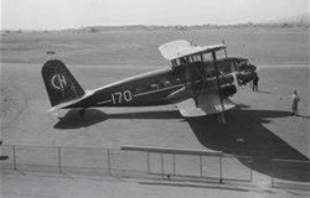
The aircraft was a Curtiss AT-32C Condor II, a special version of the Curtiss T-32 designed for Swissair.
The aircraft carried the registration CH-170 and had only been in service for a few months. It had been delivered to Swissair in early 1934 and entered service in March of that year.
The Condor II was a twin-engine aircraft with a distinctive biplane design, meaning it had two sets of wings.
It was designed for passenger transportation and could carry up to about 15 passengers, although the aircraft involved in this flight carried nine passengers.
The aircraft was powered by two Wright Cyclone engines.
For its time, it was a modern commercial aircraft.
However, its structure included complex wing and engine-support systems, and investigators later focused on structural problems in these areas.
The Flight from Zurich to Berlin
On 27 July 1934, the aircraft departed from Dübendorf Airport near Zurich.
The planned route was:
Zurich → Stuttgart → Leipzig/Halle → Berlin
The flight was a regular scheduled passenger service.
There were nine passengers and three crew members aboard.
The crew consisted of:
- Armin Mühlematter, the pilot
- Hans Daschinger, the radio operator and flight engineer
- Nelly Diener, the flight attendant
Nelly Diener was especially notable. She was Europe’s first professional female flight attendant, and she had joined Swissair only a few months earlier.
Her death made the disaster particularly well known in European aviation history.
Nelly Diener – The “Angel of the Skies”
Nelly Diener was only 22 years old when she died.
She had become one of the first women to work as a professional flight attendant in Europe.
Diener had joined Swissair on 1 May 1934, only a few months before the accident.
Her work involved taking care of passengers during flights.
She served meals and drinks, helped passengers who were nervous about flying, and made the cabin more comfortable.
Because she was one of the first female flight attendants in Europe, she became an important figure in early aviation.
Swiss newspapers and aviation publications later remembered her as the “Angel of the Skies.”
Her death became one of the most remembered parts of the Tuttlingen disaster.
Flying Toward Germany
After leaving Zurich, the Condor flew north toward Germany.
The aircraft was expected to stop at Stuttgart before continuing to Leipzig and Berlin.
The flight was initially normal.
However, weather conditions in southern Germany were becoming difficult.
The region contained thunderstorms and areas of strong turbulence.
At the time, pilots did not have modern weather radar or satellite weather information.
They had to depend on weather reports, visual observations, radio information, and their own judgment.
A large thunderstorm could therefore present a serious danger.
The Thunderstorm
As the aircraft approached the area near Tuttlingen, it encountered a severe thunderstorm.
The aircraft was flying at several thousand feet when it entered an area of strong turbulence.
Thunderstorms can produce powerful vertical and horizontal air movements.
Modern aircraft are designed to withstand considerable turbulence, but severe weather can still create dangerous conditions.
In 1934, aircraft structures were less advanced than those of modern airliners.
The Condor was subjected to powerful forces as it flew through the storm.
The aircraft began to experience serious structural stress.
Structural Failure
The accident happened very quickly.
During the flight through the storm, the aircraft’s right wing separated.
The loss of such a major part of the aircraft made continued flight impossible.
The aircraft immediately became uncontrollable.
The Condor entered a steep descent toward the ground.
There was no realistic opportunity for the crew to recover the aircraft.
The plane crashed into a forest near Tuttlingen, in what is now the German state of Baden-Württemberg.
The impact was catastrophic.
All 12 people aboard were killed.
The Crash Site
The aircraft crashed in a wooded area near Wurmlingen and Tuttlingen.
The wreckage was scattered across the forest.
Parts of the right wing and engine were found away from the main fuselage, providing important evidence for investigators.
Some structural components had separated from the aircraft before the main body reached the ground.
This was a critical clue.
It indicated that the aircraft had suffered a structural failure while it was still airborne.
The location of the wreckage also helped investigators reconstruct the final moments of the flight.
The Investigation Begins
After the accident, German and Swiss investigators examined the wreckage.
The investigation focused particularly on the right wing and engine-mount structure.
Investigators wanted to know whether the aircraft had failed because of the storm alone or whether there had been a weakness in its construction.
This was an important question.
If the accident had been caused entirely by extreme weather, it would have been primarily a weather-related disaster.
If a structural weakness had existed, however, the accident could have important consequences for other aircraft of the same type.
Findings About the Wing
Investigators found evidence of fractures in the wing and engine-mount structure.
One investigation concluded that defects in the construction and welding of structural components had contributed to the failure.
Engine vibration was also considered an important factor.
The aircraft’s engines were mounted to the wing structure, meaning that vibrations from the engines could place repeated stress on structural components.
Over time, repeated stress can produce metal fatigue.
A small crack can grow gradually until the structure can no longer support the required load.
The investigation suggested that such a process may have occurred in the Condor’s structure.
The Role of Turbulence
The severe thunderstorm was another important factor.
Even if the aircraft had a hidden structural weakness, the violent turbulence may have provided the final stress that caused the structure to fail.
Investigators identified more than one fracture.
One was associated with the wing and engine-mount structure and was linked to construction and welding problems combined with engine vibration.
Another fracture was believed to have resulted from the forces created by the storm. This means the disaster was probably not caused by one simple problem.
Instead, structural weakness and extreme weather may have combined to produce the failure.
Why the Accident Was Important
The Tuttlingen crash was important because it demonstrated the dangers of structural weaknesses in aircraft.
During the 1930s, aircraft manufacturers were developing new designs at a rapid pace.
Engine power was increasing.
Aircraft were becoming faster.
Passenger aircraft were carrying more people.
As aircraft performance improved, structural components had to withstand greater forces.
This made careful engineering and manufacturing extremely important.
A small defect in a structural connection could become dangerous when combined with engine vibration and severe turbulence.
Swissair’s First Fatal Accident
The crash was especially significant for Swissair.
The airline had been operating for only a few years.
Until this accident, it had not suffered a fatal aviation accident.
The loss of an aircraft with 12 people aboard was therefore a major event for the young airline.
Swissair had to deal with the loss of its employees, passengers, and aircraft.
The accident also forced the company and aviation authorities to examine the safety of its aircraft and operating procedures.
Impact on European Aviation
The Tuttlingen accident also attracted attention beyond Switzerland.
International air travel was becoming increasingly important in Europe.
Aircraft regularly crossed national borders, making aviation safety a matter of international concern.
An accident involving a Swiss airline in Germany therefore involved authorities from more than one country.
The investigation demonstrated the importance of cooperation between national aviation authorities.
As European aviation developed, international standards for aircraft construction, maintenance, navigation, and pilot training became increasingly important.
The Human Tragedy
Behind the technical investigation were 12 individual lives.
Nine passengers had boarded the aircraft expecting to travel safely from Zurich toward Berlin.
The three crew members were performing their normal duties.
The pilot, radio operator, and flight attendant were responsible for operating the aircraft and caring for the passengers.
None of them could have known how quickly the flight would turn into a disaster.
For their families, the accident was a devastating loss.
The death of Nelly Diener was particularly remembered because of her pioneering role as a female flight attendant.
Improvements in Aircraft Design
Accidents such as Tuttlingen contributed to the continuing improvement of aircraft design.
Manufacturers increasingly focused on:
- Stronger structural connections
- Better welding techniques
- Improved materials
- More detailed inspections
- Better protection against metal fatigue
- Stronger engine mounts
- Improved testing of wings and fuselage structures
These developments became increasingly important as aircraft became faster and more powerful.
Modern aircraft undergo extensive structural testing before entering passenger service.
The lessons learned from early aircraft accidents helped create those standards.
Understanding Metal Fatigue
One important lesson from the Tuttlingen accident was the danger of metal fatigue.
Metal can appear strong and undamaged while developing tiny cracks after repeated stress.
Engine vibration, repeated flight loads, and turbulence can all contribute to this process.
If a crack is not discovered, it can grow until the structure suddenly fails.
Modern aircraft maintenance programs therefore include detailed inspections for fatigue damage.
Engine mounts, wings, fuselage structures, and other critical areas are regularly inspected.
The Tuttlingen disaster occurred during a period when engineers were still learning how important these problems could be.
Weather Awareness
The accident also demonstrated the importance of avoiding severe thunderstorms.
Today, airline crews receive detailed weather information before and during flights.
Weather radar can show areas of heavy precipitation and help pilots avoid the worst parts of storms.
Aircraft can also communicate with air traffic control and receive updated weather information.
In 1934, these tools were much more limited.
Pilots had to make decisions with less information.
The Condor’s encounter with severe turbulence showed how dangerous that limitation could be.
Legacy of the Accident
The Tuttlingen crash remains an important event in Swissair’s history.
It was the airline’s first fatal accident and one of the most serious aviation disasters of 1934.
It also became closely associated with Nelly Diener, whose short career as Europe’s first female flight attendant ended with the crash.
The accident is remembered in the Tuttlingen region, where a memorial marks the tragedy.
The crash also remains relevant to aviation historians because of the investigation into the aircraft’s structural failure.
Conclusion
The Swissair Curtiss T-32 Condor II Tuttlingen Crash of 27 July 1934 was one of the most significant aviation disasters of the early 1930s.
The Swissair aircraft, CH-170, was flying from Zurich to Berlin, with planned stops at Stuttgart and Leipzig. It encountered a severe thunderstorm near Tuttlingen, Germany. During the flight through strong turbulence, the aircraft suffered a structural failure and its right wing separated. The aircraft then crashed into a forest, killing all 12 people aboard.The investigation found evidence of fractures in the wing and engine-mount structure. Investigators considered defective construction and welding, engine vibration, and the violent forces of the thunderstorm as important factors.
The accident was Swissair’s first fatal aviation accident and became one of the deadliest civil aviation accidents of 1934.
The death of Nelly Diener, Europe’s first female flight attendant, gave the tragedy an additional place in aviation history. Her pioneering career had lasted only a few months before the accident.
The Tuttlingen crash demonstrated that aircraft safety depended not only on pilot skill and weather awareness but also on the strength and quality of aircraft construction. Problems involving welding, structural fatigue, engine vibration, and severe turbulence could combine to produce a catastrophic failure.
Today, the accident is remembered as an important lesson from the early period of commercial aviation. It helped demonstrate why aircraft structures must be carefully designed, manufactured, tested, and inspected. The tragedy also forms part of the long history of improvements that have made modern air travel far safer than it was in the 1930s.

Ajeet Yadav is an aviation enthusiast covering airline news, airports, aircraft, and industry developments through well-researched and reliable reporting.