










Air France Wibault 282T English Channel Crash 9 May 1934
The Air France Wibault 282T English Channel Crash was a tragic aviation accident that took place on 9 May 1934 over the English Channel. The aircraft was operated by Air France, one of Europe’s major airlines, and was flying on an international passenger route between Paris and London. The aircraft disappeared during the journey and crashed into the sea. All people aboard were killed.
The accident happened during an important period in the development of commercial aviation. Airlines were beginning to connect European cities with regular passenger services, but aircraft and navigation systems were still far less advanced than those used today. Flying over the English Channel was especially challenging because of changing weather, limited navigation equipment, and the difficulty of locating an aircraft after a crash at sea.
The disaster became part of the early history of Air France and highlighted the dangers faced by passengers and crews during the pioneering years of European airline travel.
Air France in the 1930s
Air France was created in 1933 through the merger of several French aviation companies. The new airline quickly became one of the most important carriers in Europe.
Its network connected France with other European countries and with destinations farther away.
The airline inherited aircraft, routes, pilots, and operating experience from the companies that had existed before the merger.
By 1934, Air France was working to establish reliable scheduled services between major European cities.
The route between Paris and London was especially important.
London and Paris were major political, commercial, and cultural centers. Air travel provided a much faster way to travel between the two cities than traditional surface transportation.
However, the journey required crossing the English Channel.
The Wibault 282T
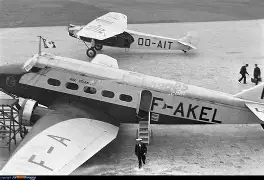
The aircraft involved in the accident was a Wibault 282T, a French-built passenger aircraft.
The Wibault 282T belonged to a generation of aircraft designed for commercial passenger operations.
It was a relatively modern aircraft for its time and was capable of carrying passengers on scheduled airline routes.
The aircraft had been developed by the French aviation industry during a period when manufacturers were trying to produce faster, safer, and more comfortable passenger aircraft.
Air France used several different types of aircraft as it developed its network.
The Wibault was part of this early generation of French commercial aircraft.
The Paris-London Air Route
The Paris-London route was one of Europe’s important international air connections.
Passengers could travel between the two capitals in a few hours.
For business travelers, government officials, wealthy tourists, and other passengers, this was a major advantage.
However, crossing the English Channel created special challenges.
The aircraft could not make an ordinary emergency landing if something went wrong.
If an aircraft lost power over land, the pilot could sometimes search for an open field or road.
Over the sea, the options were much more limited.
An emergency landing on water could easily destroy the aircraft and put passengers in immediate danger.
The Flight on 9 May 1934
On 9 May 1934, the Air France aircraft was operating a scheduled international flight.
The aircraft departed from France and began its journey toward Britain.
The passengers expected to reach their destination safely.
The flight initially appeared to be normal.
There was no indication that the aircraft was going to become involved in a major disaster.
At some point during the journey, however, the aircraft encountered serious trouble.
The aircraft eventually disappeared over the English Channel.
When it failed to arrive at its destination, authorities began to suspect that it had crashed into the sea.
The English Channel
The English Channel is a relatively narrow stretch of water separating southern England from northern France.
Today, it is crossed by thousands of aircraft and ships every day.
In 1934, however, aviation over the Channel was much more difficult.
Pilots had fewer navigation aids.
Weather reports were less detailed.
Aircraft communication systems were less reliable.
If an aircraft disappeared over the sea, search teams had to rely heavily on reports from ships, aircraft, and coastal observers.
There was no satellite tracking.
There were no modern emergency locator transmitters.
There were no GPS coordinates that could immediately show the aircraft’s position.
These limitations made an accident at sea particularly difficult to investigate.
The Disappearance
The Wibault disappeared during its flight.
When it failed to reach its destination, an immediate search operation was organized.
Ships in the English Channel were alerted.
Aircraft could also be used to search from above.
Searchers attempted to identify floating wreckage or other evidence that could show where the aircraft had gone down.
The English Channel was a busy waterway, but that did not necessarily make finding a crashed aircraft easy.
The sea was large, and wreckage could quickly spread across the water.
Strong winds and currents could carry debris away from the original crash location.
Search for the Aircraft
The search for the missing Air France aircraft was extremely difficult.
Search crews had to cover a large area.
They looked for pieces of the aircraft, floating objects, oil on the surface, or survivors.
Ships could search the water directly, while aircraft could scan larger areas from above.
However, the technology available in 1934 was primitive compared with modern search-and-rescue systems.
There were no helicopters capable of hovering over a suspected crash site.
There were no satellite images.
There were no sophisticated sonar systems specifically designed to quickly locate a small aircraft wreck.
This made the search dependent on eyewitness reports and visual observation.
Why Sea Crashes Were So Dangerous
An aircraft crash over water presented several dangers.
First, the aircraft could break apart when it hit the sea.
Second, passengers could be injured or trapped inside the aircraft.
Third, cold water could quickly cause hypothermia.
Fourth, even if passengers survived the initial impact, rescue teams might not reach them quickly.
In 1934, passenger aircraft did not have the modern emergency equipment found on today’s commercial airplanes.
Life-saving equipment was less sophisticated.
Communication between an aircraft and rescue authorities was also limited.
These factors made accidents over the English Channel particularly serious.
Investigating the Accident
After the crash, investigators attempted to determine what had happened.
Aviation investigators examined the available information about the aircraft, crew, route, and weather.
They also considered reports from ships and other people who may have seen the aircraft.
However, investigating a crash at sea was much more difficult than investigating a crash on land.
On land, investigators could examine the wreckage directly.
At sea, the wreckage might sink.
Pieces could drift away.
Important evidence could disappear beneath the water.
As a result, investigators sometimes had to reach conclusions without being able to examine the complete aircraft.
Weather and Navigation
Weather was an important concern for aircraft flying over the English Channel.
Clouds, fog, rain, and strong winds could reduce visibility.
The Channel is also known for rapidly changing weather conditions.
In the 1930s, pilots had much less information about these conditions than modern crews.
Weather forecasting relied on observations from land stations and ships.
There was no weather radar giving pilots a detailed real-time picture of conditions.
Navigation was also more difficult.
Pilots used maps, compasses, visual landmarks, and radio navigation aids where available.
A small navigational error could become serious over open water because there were few landmarks.
The Human Cost
The most important part of the accident was the loss of human life.
The passengers aboard the Air France aircraft were traveling between two major European cities.
They were ordinary travelers using what was becoming a regular international transport service.
The crew was carrying out its normal duties.
Instead, the aircraft disappeared over the Channel.
The accident brought grief to the families of everyone aboard.
It also affected Air France employees and the wider aviation community.
At the time, each major passenger-aircraft accident attracted considerable public attention because commercial aviation was still relatively new.
Public Confidence in Air Travel
Air travel was becoming increasingly popular in Europe during the early 1930s.
Passengers were attracted by the speed of aircraft.
A journey that might take many hours by train and ship could be completed much faster by air.
However, aviation accidents could damage public confidence.
The loss of an aircraft over the sea reminded passengers that flying still carried significant risks.
Airlines therefore had a strong incentive to improve aircraft reliability, pilot training, navigation, weather forecasting, and emergency procedures.
The gradual improvement of these areas would make commercial aviation much safer in later decades.
Air France’s Continuing Development
The accident occurred only about a year after Air France had been created.
The new airline was still developing its identity and network.
It inherited a complicated collection of aircraft and routes from earlier French airlines.
The company needed to establish reliable international services while also maintaining passenger confidence.
Despite accidents such as the Wibault disaster, Air France continued to grow.
It eventually became one of Europe’s most important airlines.
The early years were a period of experimentation and rapid technological development.
Aircraft Technology in the 1930s
Aircraft technology was changing quickly during this period.
Manufacturers were moving toward stronger all-metal structures.
Engines were becoming more powerful and dependable.
Aircraft were becoming faster.
Passenger cabins were becoming more comfortable.
Radio communication and navigation were improving.
But these technologies were still developing.
The Wibault 282T represented the progress that had already been made, but the accident demonstrated that aircraft technology had not yet solved every problem.
Flying across water remained especially difficult because of the lack of emergency landing options.
Improvements in Navigation
One of the most important developments in aviation during the 1930s was improved radio navigation.
Radio beacons allowed pilots to determine their position more accurately.
This became increasingly important for international routes.
When visibility was poor, radio navigation could provide information that visual navigation could not.
Over time, networks of navigation stations were established across Europe.
These systems helped pilots stay on course and reduced the danger of becoming lost.
Modern satellite navigation is much more accurate, but it developed from these earlier systems.
Improvements in Search and Rescue
The loss of aircraft over the English Channel also demonstrated the importance of better rescue systems.
Later developments included:
- Better radio communication
- Emergency signals
- Dedicated rescue vessels
- Improved aircraft tracking
- Better life-saving equipment
- More organized search procedures
These systems greatly increased the chances of locating aircraft and rescuing survivors.
The technology did not exist in the same form in 1934.
This explains why a sea accident could become so difficult to investigate.
Historical Importance
The 9 May 1934 Air France Wibault 282T English Channel Crash is part of the broader history of European aviation.
It happened during a period when international air travel was developing rapidly.
Airlines were trying to make flying a dependable part of everyday transportation.
The accident showed that there were still serious dangers.
It also demonstrated the particular risks associated with flying over water.
The English Channel may be narrow, but an aircraft crash into it could create a difficult search-and-rescue operation.
Legacy
The development of commercial aviation continued despite tragedies such as this.
Airlines learned from accidents.
Aircraft manufacturers improved their designs.
Governments introduced stronger regulations.
Pilots received better training.
Navigation systems became more accurate.
Weather forecasting became more advanced.
Search-and-rescue organizations became better equipped.
Over time, these changes transformed aviation.
The Wibault 282T accident belongs to the early part of that long process.
Conclusion
The Air France Wibault 282T English Channel Crash of 9 May 1934 was a tragic event during the pioneering years of European commercial aviation.
The aircraft was operating an international service when it disappeared over the English Channel. The accident resulted in the loss of the people aboard and led to a difficult search operation.
At the time, aviation technology was still developing. Pilots did not have GPS, satellite communication, weather radar, or modern aircraft tracking systems. When an aircraft disappeared over the sea, authorities had to depend on ships, aircraft, radio messages, and eyewitness reports.
The accident also highlighted the special dangers of water crossings. Unlike an aircraft flying over land, an aircraft over the sea had very few options for an emergency landing. Even if passengers survived the initial impact, cold water and the difficulty of locating the aircraft could make survival extremely difficult.
The disaster occurred only a short time after the creation of Air France and formed part of the airline’s early history. It also belonged to a period of rapid change in aviation, when aircraft were becoming faster and more reliable while navigation and safety systems were still being developed.
The 9 May 1934 Wibault 282T crash therefore remains an important reminder of the risks faced by early airline passengers and crews. The lessons from accidents during this era contributed to improvements in aircraft design, navigation, communication, weather forecasting, and search-and-rescue operations. These developments eventually helped make international air travel much safer and more reliable.

Ajeet Yadav is an aviation enthusiast covering airline news, airports, aircraft, and industry developments through well-researched and reliable reporting.