










1933 Imperial Airways Diksmuide Crash
The 1933 Imperial Airways Diksmuide Crash was a tragic aviation accident that happened on 28 March 1933 near Diksmuide, Belgium. An Armstrong Whitworth Argosy II passenger aircraft operated by Imperial Airways caught fire while flying from Brussels toward London. The aircraft, named City of Liverpool, crashed into a field after the pilot attempted to make an emergency landing. All 15 people aboard, including 12 passengers and three crew members, were killed.
The accident became particularly famous because investigators could not determine exactly what caused the fire. There was no clear evidence of an engine or mechanical failure. Investigators considered the possibility that a combustible substance had accidentally caught fire, but they also considered deliberate sabotage. The case therefore remained surrounded by mystery.
Imperial Airways
Imperial Airways was Britain’s main long-distance airline during the period before the Second World War. It operated passenger, mail, and freight services connecting Britain with Europe and destinations across the British Empire.
During the early 1930s, flying was still a relatively new form of commercial transportation. Aircraft were much smaller and slower than today’s airliners, and flight crews had fewer navigation and safety tools.
Imperial Airways operated important European routes linking London with cities such as Brussels and Cologne. These services were an important part of the development of international commercial aviation.
The aircraft involved in the Diksmuide accident was flying on one of these regular services.
The City of Liverpool
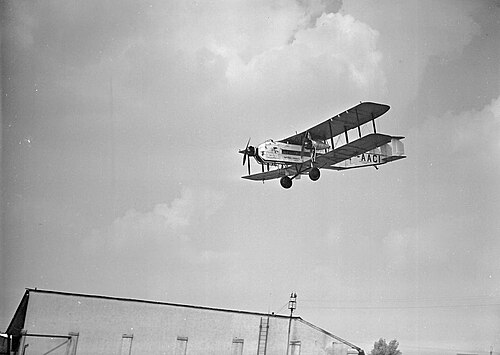
The aircraft was an Armstrong Whitworth Argosy II, registration G-AACI, and was named City of Liverpool. It was a three-engine passenger aircraft operated by Imperial Airways.
The Argosy was designed during the 1920s for commercial passenger and mail services. Its three engines provided the power needed for regular European flights.
The aircraft was an important example of the transition from experimental aviation to scheduled airline operations.
Passengers could travel between major European cities on a regular timetable rather than relying only on ships and trains.
However, aircraft of this period had limited fire protection compared with modern airliners. A serious fire inside the passenger cabin could become extremely dangerous within a very short time.
The Planned Journey
On 28 March 1933, the City of Liverpool was operating a scheduled service connecting Cologne, Brussels, and Croydon.
The aircraft had arrived at Brussels-Haren Airport and was preparing for the next part of the journey to Britain.
There were 12 passengers and three crew members aboard.The destination was Croydon Airport, which at that time was London’s principal airport.
The aircraft departed Brussels at approximately 1:36 p.m., around half an hour later than scheduled. It flew north-west over Belgium toward the coast and Britain.At first, the flight appeared to be completely normal.
The Last Normal Radio Message
The aircraft climbed to approximately 4,300 feet and was traveling at about 95 knots.
The radio navigator communicated with ground authorities and reported that everything was normal.
This message was important because it showed that there was no known emergency only a few minutes before the disaster.
The aircraft continued toward the area around Diksmuide.
Then, suddenly, something went seriously wrong.
Fire Breaks Out
While the aircraft was flying over the Belgian countryside, a fierce fire broke out inside the aircraft.
People on the ground saw the aircraft catch fire.
The fire was particularly dangerous because it appears to have started inside the rear portion of the aircraft rather than in one of the engines.
Investigators later determined that the fire had probably begun around the lavatory or luggage area at the rear of the cabin. There was no evidence that the engines or fuel systems had caught fire before the crash.
The crew immediately faced an emergency that was extremely difficult to control.
The fire spread rapidly.
The Pilot’s Emergency Action
The pilot realized that the aircraft could not continue flying normally.
He began an emergency descent in an attempt to land the aircraft.
The pilot was trying to bring the aircraft down in an open area.
This was the only realistic option because the fire was already seriously affecting the aircraft.
The crew had very little time to respond.
There were no modern emergency systems that could automatically detect and suppress a fire.
Passengers and crew also had limited protection from smoke and flames.
The Final Descent
The aircraft continued to descend toward the countryside near Diksmuide.
The pilot managed to bring the aircraft down to approximately 200 feet above the ground.
However, at such a low altitude, the aircraft was no longer able to maintain safe flight.
It stalled and crashed into an open field. The aircraft broke apart and was immediately consumed by fire. All 15 people aboard died.
The accident became the deadliest disaster in British civil aviation up to that time.
The Passenger Who Fell from the Aircraft
One of the most unusual details of the accident involved a passenger named Albert Voss.
Witnesses reported seeing a man leave the aircraft during its descent.
The man fell from the aircraft without a parachute.
He was later identified as Albert Voss, a German-born dentist who had moved to Britain and practiced in Manchester.
His death became an important part of the subsequent investigation.
Investigators wanted to understand why he had left the aircraft before it crashed.
It was unclear whether he had deliberately jumped, had been forced out by the fire, or had fallen from the aircraft.
The circumstances surrounding his death created considerable public interest.
Investigation into the Fire
After the accident, investigators carefully examined the wreckage.
One of the most important findings was that there was no evidence of an engine failure causing the fire.
The wings and engines did not show signs of a mechanical problem that could explain the disaster.
Investigators found evidence that the fire had started toward the rear of the aircraft.
This narrowed the possible explanations.
They considered whether a combustible substance might have accidentally ignited.
Another possibility was that the fire had been caused deliberately.
The investigation could not establish the answer with certainty.
The Sabotage Theory
The possibility of sabotage became one of the most controversial parts of the case.
Some investigators wondered whether the fire could have been deliberately started.
At the time, there was no clear proof that anyone aboard had deliberately caused the disaster.
However, the strange circumstances surrounding Albert Voss attracted attention.
Questions were raised about his personal affairs and his activities.
His brother later made allegations about Voss’s business activities, including claims involving the illegal movement of drugs. These allegations became part of the public discussion surrounding the accident, but they were not sufficient to prove that Voss had caused the fire.
It is therefore important to distinguish between suspicion and proof.
The accident is often described as a suspected case of sabotage, but sabotage was never conclusively established.
The Inquest
An inquest was held into the death of Albert Voss.
Investigators examined his body and the circumstances in which he left the aircraft.
A post-mortem examination found that he had not suffered major burns before leaving the aircraft. This added another unusual detail to the case. (Papers Past)
Witnesses could not agree with certainty on whether Voss had deliberately jumped or had been forced out.
The coroner considered the available evidence, but the case remained uncertain.
The jury eventually returned an open verdict.
This meant that the evidence was not sufficient to establish exactly how or why Voss died.
Why the Cause Remained Unclear
The investigation faced a major problem: the aircraft had been almost completely destroyed by fire.
Fire can destroy or seriously damage evidence.
Modern investigators can use flight recorders, surveillance information, digital records, and advanced forensic technology.
Investigators in 1933 had none of these resources.
They had to depend mainly on physical examination of the wreckage and witness statements.
If the fire itself destroyed evidence of its origin, investigators had very little chance of proving exactly how it started.
This was one reason the sabotage theory remained unresolved.
Aviation Safety at the Time
The Diksmuide accident also highlighted the limitations of aircraft safety in the early 1930s.
Modern passenger aircraft contain sophisticated fire-detection and fire-suppression systems.
Cabin materials are carefully selected to reduce the spread of fire.
Passengers have emergency exits, safety briefings, smoke protection, and other safety equipment.
In 1933, these systems were much less developed.
A fire in the cabin could spread extremely quickly.
Once the fire began on the City of Liverpool, the crew had very little time to save the aircraft.
Impact on Imperial Airways
The disaster was a serious event for Imperial Airways.
The airline was operating an important international passenger service, and the loss of an aircraft with all occupants aboard was a major blow.
The accident also attracted attention from the British government.
The House of Commons discussed the disaster on 29 March 1933. The government stated that investigators had traveled to the crash site and that reports about the cause, including claims of an engine fire, should be treated cautiously until the investigation was complete. This shows how seriously the British authorities treated the accident.
A Major Event in British Civil Aviation
The Diksmuide crash was particularly significant because it was the deadliest accident in British civil aviation up to that date.
All 15 people aboard were killed.
The accident therefore became an important part of the history of British aviation.
It also demonstrated that international airline operations involved risks that governments and airlines needed to address.
The growing number of passenger flights meant that aviation safety was becoming increasingly important.
The Broader Mystery
The City of Liverpool disaster is remembered partly because the exact cause of the fire was never conclusively established.
Investigators knew that the fire began in the rear part of the aircraft.
They found no convincing evidence that the engines or fuel systems caused it.
They considered accidental ignition and deliberate action.
But they could not prove which explanation was correct.
This uncertainty made the accident one of the most mysterious airline disasters of the early 1930s.
Legacy
The crash occurred during a period when commercial aviation was developing rapidly.
Airlines were carrying more passengers, operating longer routes, and crossing national borders.
Safety standards were also developing.
Every major accident provided important information about aircraft design, emergency procedures, fire protection, and investigation methods.
The Diksmuide disaster demonstrated the particular danger of an uncontrolled cabin fire.
It also showed how difficult it could be to determine the cause of an accident when an aircraft was destroyed by fire.
The case remains historically important because it combines aviation development, tragedy, investigation, and an unresolved question about the origin of the fire.
Conclusion
The 1933 Imperial Airways Diksmuide Crash of 28 March 1933 was a devastating accident involving the Armstrong Whitworth Argosy II City of Liverpool.
The aircraft was flying from Brussels to Croydon when a fierce fire suddenly broke out in the rear part of the aircraft. The pilot attempted an emergency landing, but the aircraft descended too rapidly, stalled at low altitude, and crashed near Diksmuide, Belgium. All 15 people aboard—12 passengers and three crew members—were killed.
The investigation found no convincing evidence of an engine or wing failure. Instead, investigators concluded that a combustible substance had ignited somewhere around the rear cabin, luggage area, or lavatory. They considered both accidental ignition and deliberate action, but the evidence was not enough to prove sabotage.
The unusual death of passenger Albert Voss, who was seen leaving the aircraft during the emergency, added further mystery to the case. His death was investigated separately, but the inquest returned an open verdict.
The Diksmuide crash remains an important event in early aviation history. It showed the dangers of aircraft fires during an era when passenger-aircraft safety systems were still developing. Most importantly, it remains a reminder that not every aviation disaster can be explained with complete certainty, especially when the evidence is destroyed in the accident itself.

Ajeet Yadav is an aviation enthusiast covering airline news, airports, aircraft, and industry developments through well-researched and reliable reporting.