















Imperial Airways de Havilland Hercules Jask Crash 6 September 1929
The Imperial Airways de Havilland Hercules Jask Crash was a tragic aviation accident that happened on 6 September 1929 at Jask Airport in Iran, then commonly referred to in British records as Persia. The aircraft was a de Havilland DH.66 Hercules, operated by Imperial Airways and named City of Jerusalem. It was carrying mail and people on an important international route between Britain and India when it crashed during a night landing. Three of the five people aboard were killed, while two survived with serious injuries.
The accident was one of the important tragedies of Imperial Airways’ early international operations. It showed the difficulties faced by pilots flying long-distance routes in the late 1920s, especially when landing at night at remote airfields with limited lighting and navigation equipment.
Imperial Airways and the Eastern Air Route
During the 1920s, air travel was changing rapidly. Airlines were beginning to connect countries and continents by regular services. Imperial Airways was Britain’s main international airline and played a major role in developing air routes between Britain, Europe, the Middle East, India, and other parts of the British Empire.
The journey between Britain and India was particularly important. Before regular long-distance air services, traveling between the two regions took a long time by sea and land. Aircraft offered the possibility of reducing travel time considerably.
However, such flights were very different from modern international flights. Aircraft had limited navigation equipment, weather information was less detailed, and many airports had only basic facilities. Pilots had to fly long distances through difficult environments, including deserts and remote areas.
Jask was one of the important stops on the route toward India.
The de Havilland DH.66 Hercules
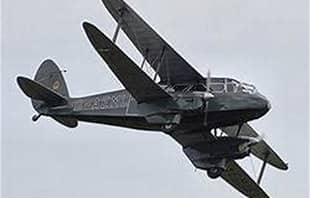
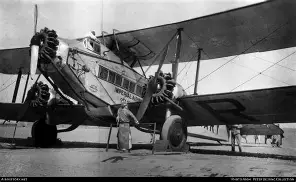
The aircraft involved in the accident was a de Havilland DH.66 Hercules, a large three-engine biplane designed for long-distance passenger, mail, and freight operations.
The aircraft carried the British registration G-EBMZ and was named City of Jerusalem by Imperial Airways. It had been delivered to the airline in 1927 and was part of the company’s growing fleet for its eastern routes.
The Hercules was an important aircraft for its time. Its three engines gave it greater capability for long-distance operations, while its large structure allowed it to carry passengers and mail.
The aircraft was powered by Bristol Jupiter engines and was designed to operate over some of the difficult routes between the Middle East and India.
Although the Hercules represented advanced aviation technology for the late 1920s, flying it safely still depended heavily on the pilot’s skill and the conditions at each airport.
The Journey Toward Jask
On 6 September 1929, the City of Jerusalem was operating on an international service carrying mail from Britain toward India.
The aircraft was traveling along the eastern Imperial Airways route. Records indicate that the flight was operating between Bandar Lengeh and Jask, with Jask serving as an important stopping point before the aircraft continued toward India.
The aircraft arrived at Jask later than expected. Because of the delay, the crew had to approach the airport during darkness.
Night flying was much more difficult in 1929 than it is today. Modern aircraft use advanced instruments, satellite navigation, radar, precision approach systems, and extensive airport lighting. In 1929, pilots had far fewer tools available.
The approach to Jask therefore required careful judgment.
The Night Landing
The aircraft approached Jask Airport at night.
During the landing approach, the pilot misjudged the aircraft’s height above the ground. According to accident records, the aircraft was too low during the approach and the pilot flared too early. This caused the aircraft to lose speed and stall.
A stall occurs when an aircraft’s wings no longer produce enough lift to keep the aircraft flying normally. It does not necessarily mean that the engines have stopped. Instead, the aircraft loses aerodynamic lift because the wing is operating at an excessive angle of attack.
At low altitude during landing, a stall is extremely dangerous because there may not be enough height to recover.
The Hercules suddenly lost control and struck the ground.
The Crash and Fire
The impact badly damaged the aircraft.
The landing gear was destroyed and the aircraft’s left-side wings were seriously damaged. The wing fuel tanks ruptured during the crash, allowing fuel to escape.
The aircraft was also equipped with flares on the wingtips. These flares were intended to provide illumination during night operations and help the pilot see the landing area.
Unfortunately, after the crash, the damaged fuel tanks released fuel near the wing. The burning landing flares ignited the spilled fuel, causing the aircraft to catch fire.
The fire made the already serious accident much more dangerous.
People inside the aircraft had very little time to escape.
The People on Board
There were five people aboard the aircraft. Sources identify three fatalities and two survivors.
The people killed included the pilot, Captain Albert Edward Woodbridge, a mechanic, and the sole passenger. The two surviving crew members suffered serious injuries.
Captain Woodbridge had a notable military aviation background. He had served as a military pilot during the First World War. Historical sources also associate him with an encounter involving the famous German fighter pilot Manfred von Richthofen, commonly known as the Red Baron.
His death was therefore especially notable in aviation circles.
The loss of the passenger was also significant because international air travel was still relatively uncommon. Passengers flying on long-distance routes were taking part in a new form of transportation that carried considerable risks compared with modern air travel.
What Caused the Accident?
The main cause identified in historical accident records was pilot error during the night landing.
The pilot misjudged the aircraft’s height and flared too early. The aircraft then stalled at low altitude and crashed.
However, it is important to understand the circumstances surrounding the accident.
The aircraft had arrived late at Jask, meaning the crew had to make a night approach. Visibility and lighting conditions were limited. Airport facilities in remote areas were also much less developed than modern airports.
Therefore, the accident reflected not only the pilot’s mistake but also the difficult operating environment of early international aviation.
The Problem of Night Flying
Night flying was one of the biggest challenges faced by early airline pilots.
During the day, pilots could use landmarks, roads, coastlines, mountains, and other geographical features to help them navigate. At night, many of these features disappeared.
Landing was especially difficult. Modern airports have illuminated runways, approach lights, instrument landing systems, and other equipment. In 1929, many airports depended on simpler lighting arrangements.
The use of wing-mounted flares was itself evidence of the technology available at the time.
The Jask accident showed the dangers of depending on visual judgment during a night approach.
The Investigation
Following the accident, authorities investigated the circumstances of the crash.
The investigation involved the Government of India and the British Air Ministry. Investigators examined the aircraft, the circumstances of the approach, and the conditions surrounding the accident.
The investigation concluded that additional precautions should be adopted.
Interestingly, the investigators did not simply reject the use of wing-mounted flares. Historical records indicate that such flares were still considered a satisfactory emergency landing aid at the time.
This shows how aviation safety developed gradually. Investigators often recommended improvements rather than completely replacing existing systems.
Importance of the Jask Crash
The Jask accident demonstrated several important risks of early long-distance aviation.
First, it showed the dangers of night flying at remote airports.
Second, it demonstrated how quickly a minor landing error could become fatal. A mistake in judging altitude that might be recoverable during a higher-altitude maneuver could become impossible to correct only a few metres above the ground.
Third, the accident showed the danger created by fuel fires. Once the wing tanks ruptured, the spilled fuel was ignited by the landing flares.
Fourth, it highlighted the need for better airport facilities and more reliable methods of determining aircraft height and position during landing.
Development of Safer Aviation
The aviation industry continued to improve rapidly after the accident.
During the following decades, airports developed better lighting systems and radio navigation. Aircraft received improved instruments, and pilots received more specialized training for night flying and instrument approaches.
Aircraft construction also improved. Fuel systems, fire protection, emergency exits, and other safety features became more advanced.
Long-distance routes became more reliable as airlines gained more experience.
The lessons from accidents such as the Jask crash contributed to this gradual development.
The Fate of the City of Jerusalem
The City of Jerusalem, registration G-EBMZ, was destroyed in the crash and written off.
Imperial Airways continued operating the DH.66 Hercules type after the accident. The aircraft had played an important role in establishing the airline’s international routes, particularly between the Middle East and India.
The loss of the City of Jerusalem did not stop these services, but it demonstrated that long-distance aviation still involved considerable danger.
Conclusion
The Imperial Airways de Havilland Hercules Jask Crash of 6 September 1929 was a tragic event in the early history of international aviation. The City of Jerusalem, a DH.66 Hercules registered G-EBMZ, was carrying mail and people toward India when it attempted a night landing at Jask Airport in Iran.
The aircraft arrived late and approached the airport in darkness. The pilot misjudged its height, flared too early, and the aircraft stalled at low altitude. It crashed, its fuel tanks ruptured, and spilled fuel was ignited by the wing-mounted landing flares.
Three of the five people aboard died, including the pilot, a mechanic, and the passenger. Two crew members survived but were seriously injured.
The accident showed the risks faced by pilots and passengers during the early development of international air travel. It also demonstrated the importance of better night-landing procedures, airport lighting, pilot training, navigation equipment, and aircraft safety systems.
Today, landing an airliner at night is supported by advanced technology and carefully designed airport systems. In 1929, however, pilots had to rely much more heavily on their own judgment. The Jask crash is therefore an important part of aviation history and an example of the difficult lessons that helped make long-distance commercial flying safer.

Ajeet Yadav is an aviation enthusiast covering airline news, airports, aircraft, and industry developments through well-researched and reliable reporting.