






- Indian airports like Bengaluru, Delhi, and Noida are embracing Multi-Modal Transport Hubs (MMTHs) to integrate metro, rail, buses, and shared mobility options, aiming to streamline passenger flow and improve airport-city connectivity.
- While MMTHs are backed by government policy and funding, experts emphasise the need for better terminal integration and future-ready design to maximise accessibility and operational efficiency.
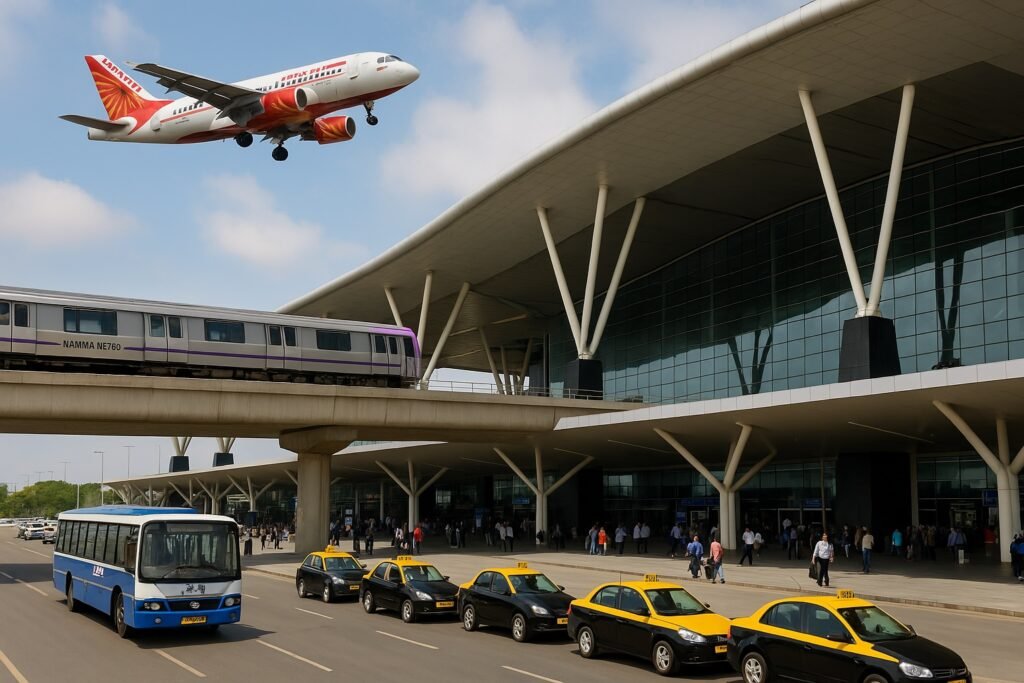
A quick getaway from the airport post-landing is every arriving passenger’s first priority. In sync with this ground reality, airports worldwide have put the spotlight on Multi-Modal Transport Hubs (MMTH) to guarantee hassle-free and seamless travel integration. Metro lines, suburban train tracks, buses and shared mobility cabs are all converging under one roof, maximising passenger comfort.
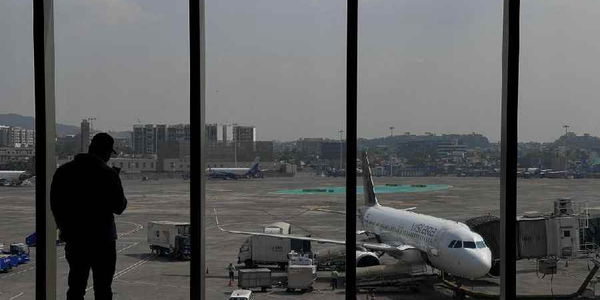
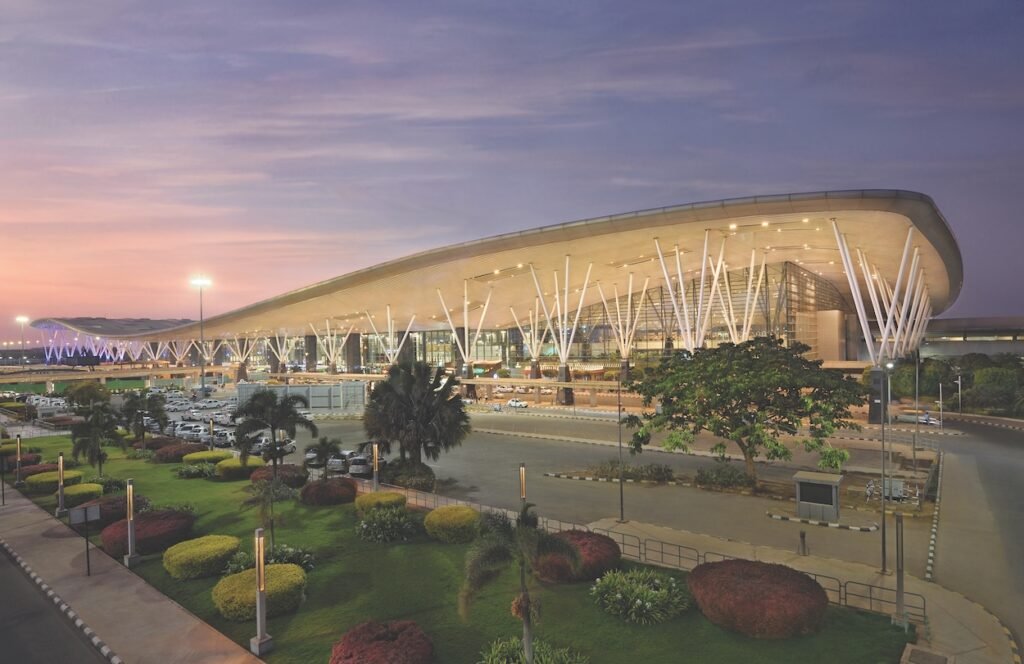
Indian airports, the Bengaluru and Delhi ones in particular, have been quick to adopt this global trend. Architecturally aligned to the Kempegowda International Airport (KIA)’s flashy second terminal (T2), the aerodrome’s MMTH will house the Namma Metro’s airport line, the Bengaluru Metropolitan Transport Corporation (BMTC)’s Vayu Vajra Volvo buses and a terminal for the Bengaluru Suburban Rail Project (BSRP)’s airport corridor.
KIA’s MMTH is currently at an advanced stage of construction. Sections such as a temporary parking area and drop-off area are being already operationalised. The hub will also integrate private car parking, multiple taxi services, and inter and intra-city buses operated by BMTC and the Karnataka State Road Transport Corporation (BMTC).
The hub is expected to dramatically alter the way passengers commute the long distance between the city proper and the airport located over 40km away. Currently, about 72% of the passengers depend on cabs or drop-off private cars, while the rest 28% use the Vayu Vajra buses. Commuters wait for 30 minutes to almost an hour to get a taxi at the often-chaotic pickup points. A dedicated, neatly demarcated MMTH is expected to address these passenger concerns and assure seamless multi-modal transport options, once it is fully commissioned.
To ensure that suburban rails are also integrated into the MMTH, the Bangalore International Airport Limited (BIAL) is reportedly at an advanced stage of discussion with the BSRP implementer, KRIDE (Rail Infrastructure Development Company, Karnataka, Limited). The airport line within the KIA campus is expected to be just below ground level, but not underground.
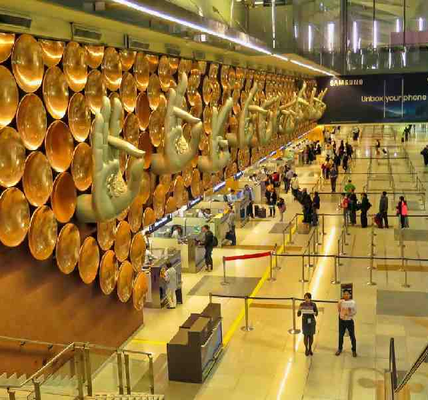
MMTH at Delhi’s IGI Airport
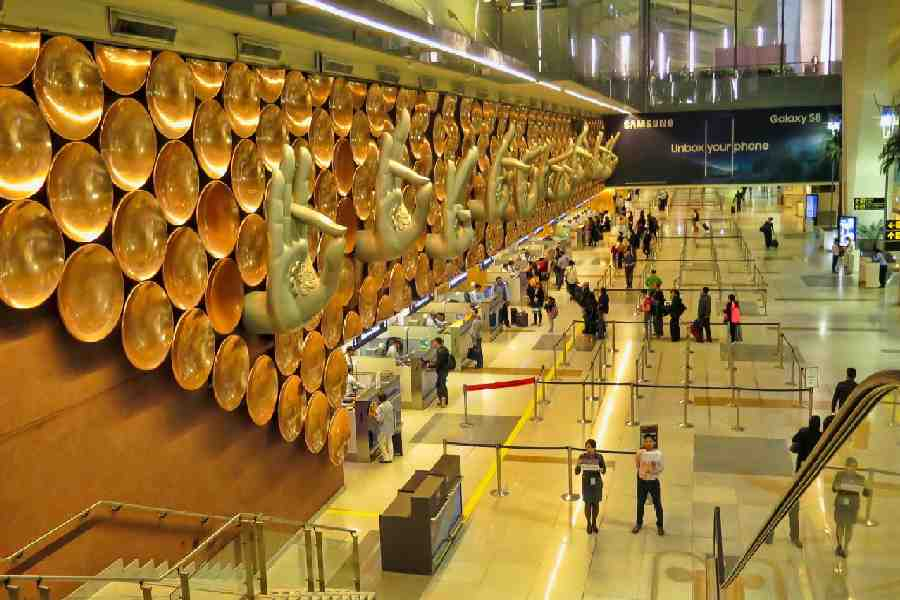
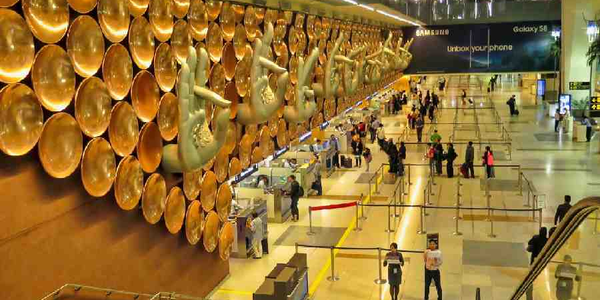
Taking the hub concept a step further is the Indira Gandhi International Airport in Delhi. The country’s first inter-state MMTH taking shape there provides linkage between Metro lines, buses and the air train plying between terminals. This connectivity upgrade is critical to meet the requirements of an estimated 13.5 crore passengers per annum capacity anticipated by 2032.
Arrival and departure passengers at the IGI airport could take the hub route to get easy access to an Interstate Bus Terminus (ISBT), line 4 of the Delhi Metro Rail Corporation (DMRC), the proposed Passenger Transport Centre (PTC) and the proposed Rapid Rail Transit System (RRTS) station. The hub will also integrate the station for Automated Passenger Mover (APM) near the GMR Aerocity.
Beyond Bengaluru and Delhi, greenfield airports are also being built with an integrated approach. These aerodromes are now seen as nodes that link multiple modes of mass transit, boosting trade, tourism and commerce while ensuring seamless passenger movement. The development of holistic, connected facilities and ancillary infrastructure are part of this approach.
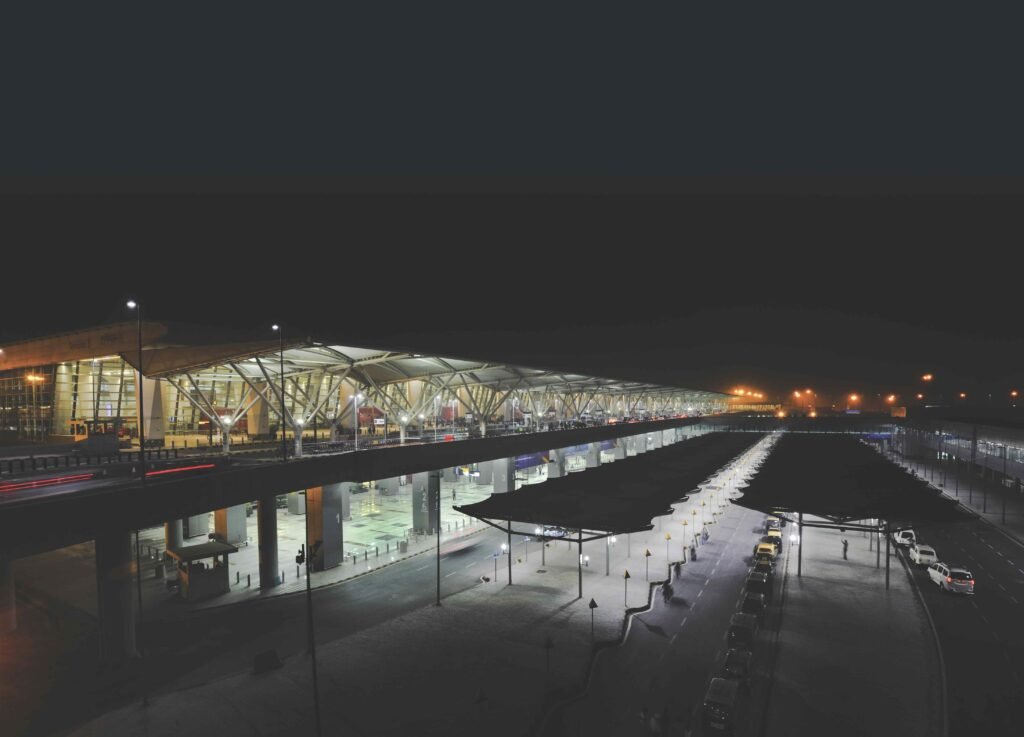
The Union budget of 2023-24 had given MMTH a big push by chalking out plans to develop 50 new airports along with heliports and water drones to expand regional accessibility. A dedicated Urban Infrastructure Development Fund of about Rs 100 billion per annum was earmarked to fund part of this under urban planning reforms. Transit-oriented development and enhancement of multimodal integration were key elements of these reforms, designed to boost first and last-mile connectivity.
Policy push to mainstream MMTH
This policy push backed by funds has mainstreamed MMTH as a viable concept aimed at simplifying passenger movements. The plan mandates transfer stations with parking bays for private vehicles and multiple public transport modes; terminals with adequate entry and exit points that are universally accessible, complete with pedestrian footpaths, crossings and ramps. The facilities are envisioned as safe, well-illuminated pathways connected to approach roads with adequate right of way. All these are linked to an integrated command and control centre to boost efficiency and functionality.
Designed to reduce the total time and cost of logistics with a faster turnaround, the MMTH at the upcoming Jewar International Airport in Noida also follows the same pattern. Equipped with night parking stands for airlines and dedicated cargo facilities, the hub will allow separate access for air cargo and logistics.
Besides, the transport hub will be linked to the Jewar-New Delhi Metro rail, Delhi-Varanasi high-speed rail project and the Delhi-Mumbai expressway. This will make travel between these cities seamless and much quicker than current commute times. To make all these work in tandem, the airport will have a ground transportation centre, also integrating taxi and bus services besides private parking.
‘Integrate hubs with terminal building’
While the hub concept is being adopted everywhere, there are a few integration concerns. As Sanjeev Dyamannavar, a seasoned aviation analyst points out, the multiple transport options should be placed right under the terminal building. However, he notes that this is not the case at the Bengaluru airport, where the passengers could end up walking at least 400 to 500m to reach the hub. “This is standard design in many city airports in the West. Here, the way the hubs are planned, the distance from the terminal to the transport pickup and drop points will be more,” he points out.
Even in Delhi, says Sanjeev, the distance from the Airport Express station to the terminal is long. “But in cities like Amsterdam and Paris, the stations are right below the arrival and departure areas. The long walking distance will be tough for international travellers who carry big luggage. The authorities need to be sensitive about this. In Paris, you don’t need to go out of the terminal building, a lift will take you directly to the train platform.
While many well-off passengers prefer to take a taxi to bypass the hassles of last-mile connectivity, a growing number of travellers depend on affordable public transport options to cover the distance. Data shows that most airport workers too prefer this mode. “At the time of the airport commissioning, the demand might not be there. But airport operators should make the provision to integrate the MMTH within the terminal building structure, in consultation with the local transport authorities,” notes Sanjeev.
Boon for airport workers
Airport workers hugely depend on buses and trains if they are comfortably located within a short walking distance from the terminal. The hassles of taking an autorickshaw or cab to cover the last mile to their houses are added headaches. But a properly designed MMTH could minimise their troubles at least at the origin end, reducing their total travel time.
Suburban rail is very suited to airport employees, says aviation expert Devesh Agarwal. “For every one million passengers, there are a thousand airport employees. So, if Bengaluru has 38 million passengers per annum, there are roughly 38,000 employees. With six-day working weeks, that is about 600 home-airport-home trips per employee every year. But challenges remain. For instance, the best high-speed rail in the world, in Hong Kong, has managed only a 22 per cent passenger penetration rate so far despite being directly connected to the Metro network,” he explains.
In his view, the bulk of the passengers still prefer On Demand Public Transport (ODPT). “They want to travel on their schedule. They want to get dropped directly in front of their door. When you land at a city airport, the first thing in your mind is to reach home quickly. You are willing to pay more. The mindset of the passenger has to be understood. You are not willing to travel at someone else’s schedule.”
Established global trend
Bengaluru, Delhi and Noida airports are all following a long-established global trend on hubs. For instance, London’s Heathrow Airport has set out to expand this further by emerging as a truly multimodal hub incorporating air, road, rail and water. In January 2022, the airport unveiled a Sustainable Travel Zone (STZ) integrating improved multimodal options of rail, tube, bus and coach services. Heathrow’s ultimate aim is to drastically reduce single-occupancy vehicle trips to and from the airport by pushing enhanced mass transit options.
Internalising the idea fully, the airport has also ensured that late-night and early-morning public transport caters to all 24-hour aerodrome staff. Bus service providers are encouraged to offer discounted tickets to the staff. To boost active mobility, the airport has designed new cycling and walking routes within its campus. Secure cycle parking spaces are now in place, while moves are afoot to integrate local authority cycle hire schemes into the airport ecosystem through docking stations.
At Amsterdam’s Schiphol, one of the busiest airports in Europe, a public transport interchange and plaza has been in place since the 1990s. The airport has consciously strived to become more than an aviation hub, offering a variety of transport options for both air passengers and cargo movement. The airport is also building new and larger train and bus stations as part of its Multimodal Hub Schiphol (MHS) project. The lifts and stairs are being upgraded to ease passenger flow, and the platforms and plazas are enhanced with more space.
Planned integration to SEZ
Back in India, the Multi-modal International Hub Airport of Nagpur (MIHAN) is integrated into the master plan of a proposed Special Economic Zone (SEZ). To link the region’s working population to their preferred commute modes, the Jawaharlal Nehru Port Trust is developing a dry port about 40km from the airport. The hub concept will also be applied to the proposed second airport for Chennai in Parandur. The airport, to be built on a 400-acre plot, will be integrated into the Bengaluru-Chennai Expressway and a future Metro line.
The MMTH concept has spread to tier-2 city airports as well. In Goa, for instance, the hub concept is being used to boost last-mile connectivity at the Dabolim and MOPA airports through the introduction of more electric buses. To tide over the high costs, the government has proposed a multimodal transport application, enabling passengers to choose from multiple commute modes at affordable rates. Buses, rickshaws, taxis and even motorcycles are part of this system. The hub will be integrated with the logistics park proposed on the 232 acres of commercial land available at MOPA.
Future-proofing MMTHs
So, is the future secure in terms of airports integrating the MMTH into their infrastructure and planning? Not fully, since the fast-evolving mobility platforms offer challenges, points out a study by the Industrial Design Engineering faculty of the Delft University of Technology. “Three elements make the transition to an MTH complex. First, airport hubs deal with complex ecosystems and long development times of infrastructure. Hence, airport hubs must commit to alternative modalities on time,” notes the study authors.
Drawing attention to the uncertain future of the mobility industry and the long development times of infrastructure and new modalities, they state that it would be challenging to understand which modalities will be relevant in the future. “Besides, airport hubs depend on modality operators and are therefore bound to partnerships to gain insight into the potential value of modalities and provide inter-modal transfers at a later stage.”
The message is this: Airport operators will need to see mobility platforms and options as dynamic and build MMTH infrastructure that is future-ready. The study reiterates this when it says: “Airport MMTHs must connect travel modes’ networks and arrange information facilities, create short walking and times distances, and handling of luggage between the modes of transport. Barriers are the regulations between different mobility stakeholders, different design standards among transport operators, incomplete infrastructure, high development costs, absence of open information interfaces, and lack of integrated operations.”
Echoing the MMTH concept is the Multi-Modal Cargo Hub, one of which operates at the Noida International Airport. The AISATS facility is a hub with an Integrated Cargo Terminal (ICT) and Integrated Warehousing & Logistics Zone (IWLZ). The terminal allows seamless traffic movement from air to road and vice versa. The IWLZ ensures synergies and efficiencies within cargo handling processes. Also part of this is a transhipment centre.
At the Bengaluru airport, elements of the cargo hub are already operational. As a BIAL spokesperson informs, the airport’s cargo truck management facility ensures that the entire process of offloading and loading of cargo is digitalised and automated. This ensures that the trucks do not queue up and trigger congestion. The system is directly linked to the airside with gates, ensuring seamless transfer of the goods to the belly of the aircraft.

An independent multimedia journalist based in Bengaluru, Rasheed has authored hundreds of deep-dive features on civil aviation, defence and related topics. His articles have appeared in The Hindu, Deccan Herald, The Times of India and multiple online news platforms. Kappan is also a media trainer and graphic cartoonist