












Pawan Hans, Norway’s Noemi Aerospace to Explore Electric Seaplanes in India

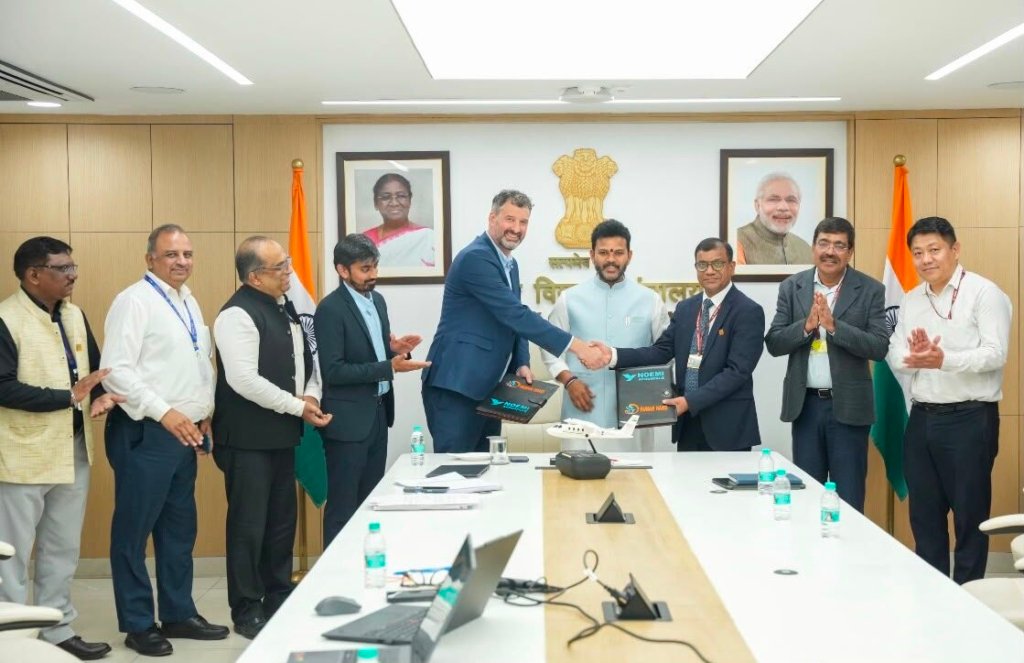
State-owned aviation company Pawan Hans Limited has signed a non-binding memorandum of understanding with Norway’s Noemi Aerospace (Elfly AS) to explore the introduction and development of electric seaplane technologies in India.
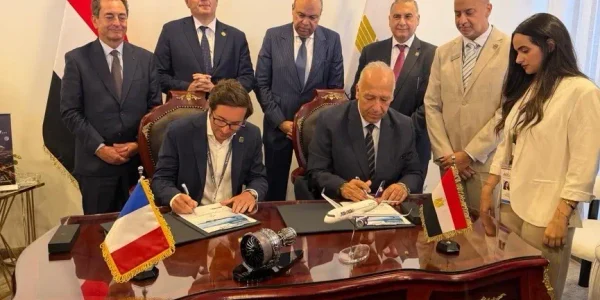
The agreement was signed by Pawan Hans Chairman and Managing Director Sunil Kumar Nagdawne and Noemi Aerospace Chief Executive Officer Eric François Lithun. Civil Aviation Minister Ram Mohan Naidu Kinjarapu and Civil Aviation Secretary Samir Kumar Sinha attended the signing.
Under the proposed partnership, the companies will examine opportunities in electric seaplane technology, technical knowledge-sharing, workshops, skills development and capacity building. Joint feasibility studies will assess possible operating models, infrastructure requirements and applications in India.
No aircraft order, financial commitment, potential route or deployment schedule was disclosed. The agreement represents an initial step towards evaluating the technical and commercial viability of electric seaplane operations.
The partnership supports India’s efforts to improve connectivity to islands, coastal communities and regions where conventional airport infrastructure may be limited. Pawan Hans already provides helicopter services in remote areas, including the North-East, Andaman and Nicobar Islands and Lakshadweep. Initially established to support offshore oil and gas operations, the company has identified amphibious aircraft and small fixed-wing services as potential areas of diversification.
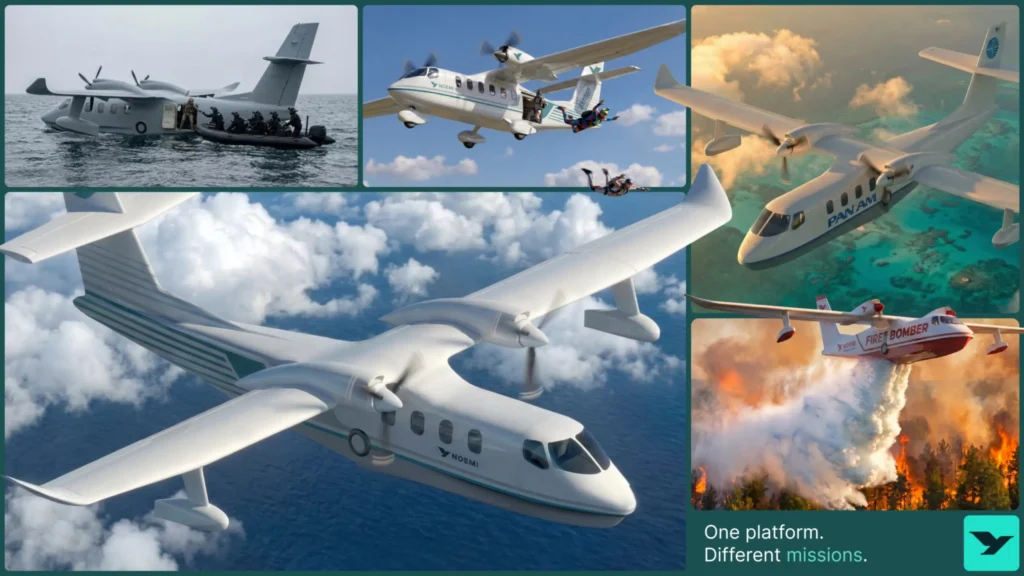
At the centre of the collaboration is NOEMI—short for “No Emissions”—a fully electric amphibious aircraft being developed for regional passenger services. Its design will allow it to use both water and conventional runways, reducing the need for large airport infrastructure.
The aircraft is designed to carry nine passengers and one or two pilots, with a payload capacity of approximately 1,000 kilograms. Its 400-kWh battery system will power two electric motors producing a combined maximum output of 1,200 kW. Design targets include a cruising speed of about 100 knots and a flight duration of up to 60 minutes, excluding reserves.
NOEMI will be approximately 16 metres long, with a 21-metre wingspan extending to 23.1 metres with winglets. Passenger, executive, cargo and special-mission configurations are planned, opening potential applications in medical evacuation, logistics and essential services for remote communities.
The design has undergone water-tank, wind-tunnel, simulation and sub-scale flight testing. A full-scale prototype is under construction, with its first flight planned for 2027 and commercial operations targeted for 2030, subject to testing and certification. The flight-test programme has secured €3 million from Innovation Norway alongside private investment, bringing its funding to approximately €7 million.
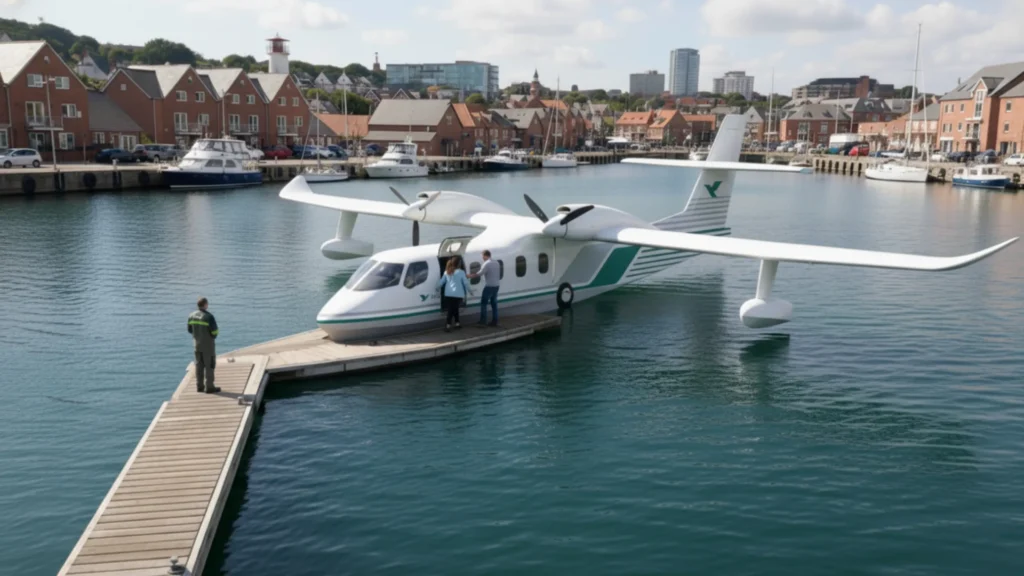
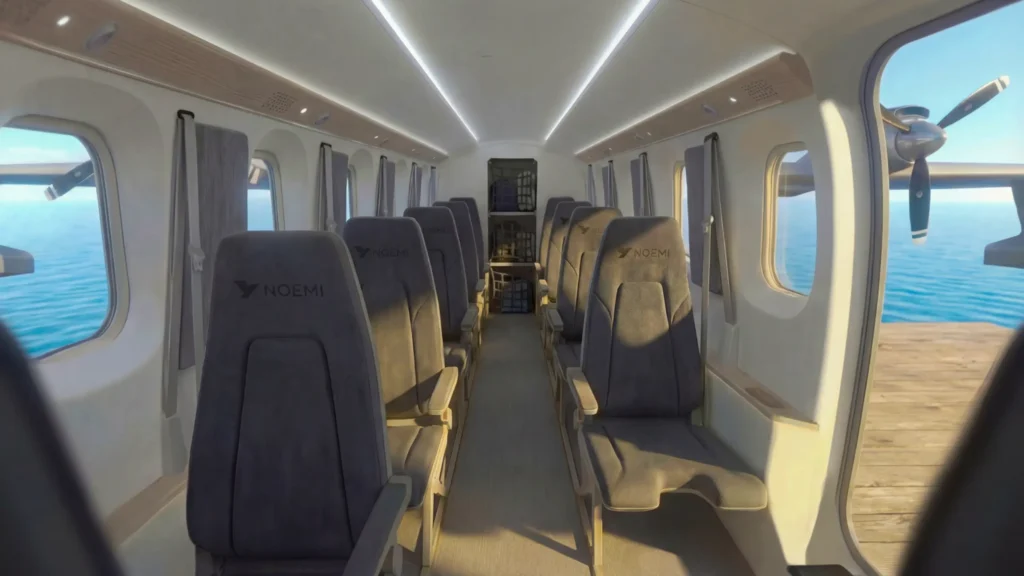
Photo: Noemi Aerospace
NOEMI has also attracted early commercial interest, with more than 70 soft orders reported across five continents. Publicly announced commitments include agreements with UrbanLink/Pan Am for 10 aircraft plus 10 options, Nordic Seaplanes for five aircraft plus 10 options, Cambodia’s VET Airways for five, and Hellenic Seaplanes for up to 10. As soft orders, these remain provisional and subject to certification, final purchase contracts and agreed delivery terms.
Civil Aviation Minister Naidu said India’s ambition extended beyond operating seaplanes to developing domestic manufacturing capabilities under the Make in India programme. The government has also proposed incentives for indigenous seaplane production and viability gap funding to support operations.
Any commercial deployment will depend on aircraft certification, charging infrastructure, route economics and the outcome of the proposed feasibility studies.
Also Read: The Return of the Flying Boat: How Jekta’s Hydrogen Vision Could Transform Regional Aviation

Aviation Jeta is an aviation news platform covering airlines, airports, aircraft, and global aviation developments. We publish accurate, well-researched, and detailed aviation news and industry insights from around the world.