












India Establishes Regulatory Framework for Fractional Aircraft Ownership

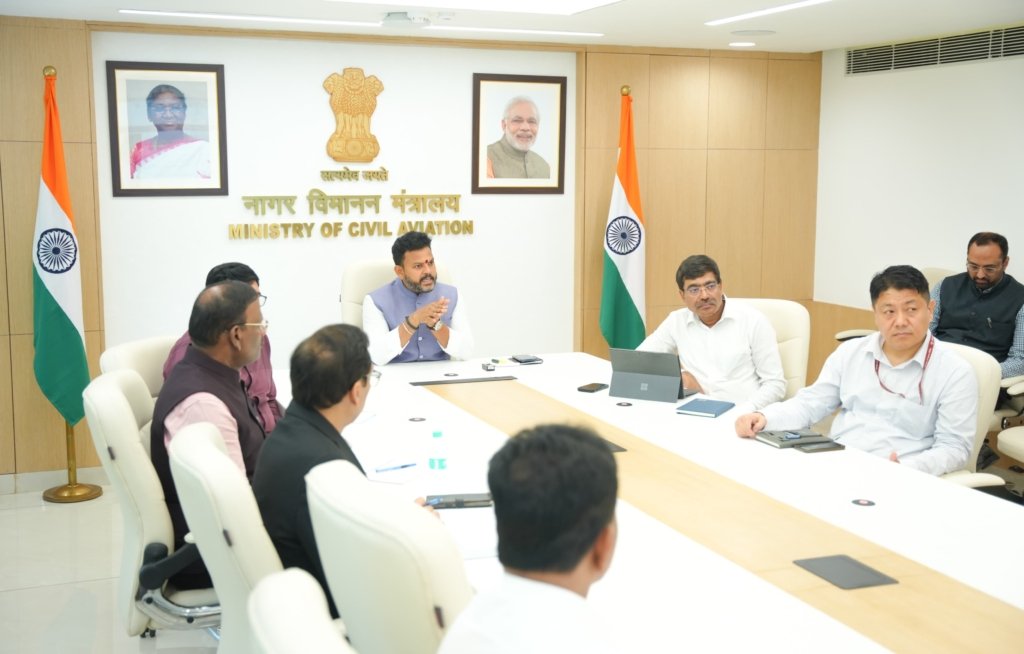
India’s Bharatiya Vayuyan Niyam, 2026, provide a regulatory framework for fractional aircraft ownership, allowing multiple individuals or entities to hold legal ownership of an aircraft.
Its operation can be handled by an aircraft management service provider or through a dry-lease arrangement with a single entity responsible for operations and maintenance.
The provision is part of Rule 188 of the Bharatiya Vayuyan Niyam, 2026, notified by the Ministry of Civil Aviation on October 26 and published in the Gazette of India on October 31. The rules will come into force on January 1, 2027, replacing the Aircraft Rules, 1937.
Although the rules do not use the expression fractional ownership, they permit the operation of an aircraft whose legal ownership is divided among multiple individuals or entities. This provides the regulatory basis for fractional aircraft ownership, under which several parties hold a share in the same aircraft rather than one individual or company owning it outright.
The commercial terms of such ownership, including the size of individual shares or how owners will divide aircraft usage and costs will be contractually governed by the parties.
Under Rule 188(3), an aircraft with divided legal ownership can be operated through either an aircraft management service provider or a dry-lease arrangement with a single entity responsible for its operations and maintenance. In the latter arrangement, the aircraft is leased without crew, and the lessee takes responsibility for operating and maintaining it in accordance with the applicable rules. This provides an alternative to appointing an aircraft management service provider.
The provision also establishes who can provide aircraft management services. Under Rule 188(1), a person must hold an authorisation granted in accordance with the requirements specified by the Directorate General of Civil Aviation (DGCA).
However, an entity holding a valid Air Operator Permit (AOP) granted under Rule 184(3) can provide these services without obtaining a separate authorisation, subject to DGCA requirements. This gives existing non-scheduled operators holding valid AOPs a route to provide aircraft management services, subject to the applicable requirements.
The rules define aircraft management services as services provided to an aircraft owner that are essential or incidental to its operation and maintenance in compliance with applicable regulations. The service provider operates under a commercial agreement with the aircraft owner. Rule 188 does not apply to scheduled air transport services permitted under Rule 183.
Aircraft Management and Operational Control
The aircraft owner and management provider must enter into an agreement that includes the transfer of possession and control of the aircraft to the provider. They must also submit an instrument recording this transfer to the DGCA in a format specified by the regulator.

The management provider’s name will be included as the operator in the aircraft’s Certificate of Registration (CoR).
Rule 188(6) makes the provider the aircraft operator for the aircraft under its management and responsible for operational control and compliance with the Bharatiya Vayuyan Adhiniyam, 2024, and the rules and regulations framed under it.
Legal ownership remains with the individuals or entities holding the respective interests. The transfer of possession and control to the management provider does not, by itself, transfer ownership.
Rule 188(7) also makes clear that the owners will not be absolved of liabilities under any other applicable law.
The rules also allow owners of aircraft registered under the private-use category to utilise aircraft management services under Rule 189(4). Such aircraft, however, cannot be used for hire, reward or remuneration. Using a management provider does not change the restrictions applicable to private aircraft.
Ownership Records and Transfer of Shares
The rules do not specify how the aircraft’s registration documents will record the names of multiple legal owners and their respective shares. Rule 188(5) requires the management provider to be included as the operator in the CoR, but it does not explain how the individual ownership interests will be reflected.
The process for updating the records when an owner sells or transfers a share is also not prescribed. It is expected that the DGCA will specify the documentation and procedure for recording ownership interests and subsequent changes in the Civil Aviation Requirements which will be formulated in relation to fractional ownership.
Depreciation and Tax Treatment
Tax treatment is another consideration for the development of fractional aircraft ownership in India. In particular, prospective owners will want clarity on whether they can claim depreciation in proportion to their share in an aircraft.
Section 33 of the Income-tax Act, 2025, provides for depreciation on qualifying assets owned wholly or partly by an assessee and used wholly and exclusively for business or professional purposes. Where an asset is not used wholly and exclusively for those purposes, the deduction is subject to proportionate restrictions.
Whether an individual or entity holding a fractional interest in an aircraft can claim depreciation will therefore depend on the ownership arrangement, use of the aircraft and applicable tax provisions.
The aviation rules do not provide a separate depreciation entitlement for fractional owners.
The tax treatment will instead be governed by the applicable provisions of the Income-tax Act, 2025.
The question is particularly relevant to owners who may expect to claim depreciation against their respective shares.
The provision gives the business aviation sector a regulatory basis for fractional aircraft ownership and management in India. For an industry that has sought such a framework for several years, the rules mark a significant development.
Whether fractional ownership becomes a viable option will depend on the DGCA’s requirements for implementing the arrangements and the tax treatment applicable to individual owners.
Also Read: Aircraft Management in India: The Opportunity Is Real, the Readiness Is Not

Lovejeet has over 15 years of experience in aviation law, advising on aircraft transactions, leasing, financing, regulatory and commercial matters. His work has been recognised by Legal 500 and Asia Law. He was named a ‘Future Legal Leader 2025′ by India Business Law Journal and a ’40 Under 40 Rising Star’ by Legal Era.