
















As Europe’s SAF Dream Falters, Could India Become Aviation’s Green Fuel Hub?

- Global SAF production is falling far behind aviation’s decarbonisation targets, with multiple projects worldwide facing delays, cutbacks and cancellations.
- India’s agricultural base, ethanol ecosystem and refining infrastructure could support more competitive SAF production than many developed markets.
- The widening gap between aviation’s decarbonisation goals and SAF supply may create opportunities for India.

The global aviation industry arrived in Rio de Janeiro this year still publicly committed to achieving net-zero emissions by 2050. Yet behind the speeches and sustainability pledges at the 82nd IATA Annual General Meeting, a more uncomfortable reality emerged: the world is nowhere near producing enough Sustainable Aviation Fuel (SAF) to meet its own targets.
That gap may unexpectedly create an opportunity for India.
SAF has become aviation’s primary decarbonisation strategy because it is the only realistic near-term pathway for reducing aviation emissions.
The problem is scale. Global SAF production is expected to reach only 2.4 million tonnes in 2026, while annual aviation fuel demand stands at roughly 300 million tonnes. To achieve the industry’s target of 65% SAF usage by 2050, production would eventually need to approach 500 million tonnes annually.
The numbers simply do not add up. Worse still, energy companies are retreating from SAF investments. Projects across Sweden, Germany, the Netherlands, Spain, Denmark, the United Kingdom, and Singapore have been delayed, scaled back, or cancelled as fossil fuel margins remain far more attractive commercially.
At Rio, IATA officials effectively acknowledged what many airlines already feared: SAF production is failing to keep pace with political mandates.
That may create space for India.
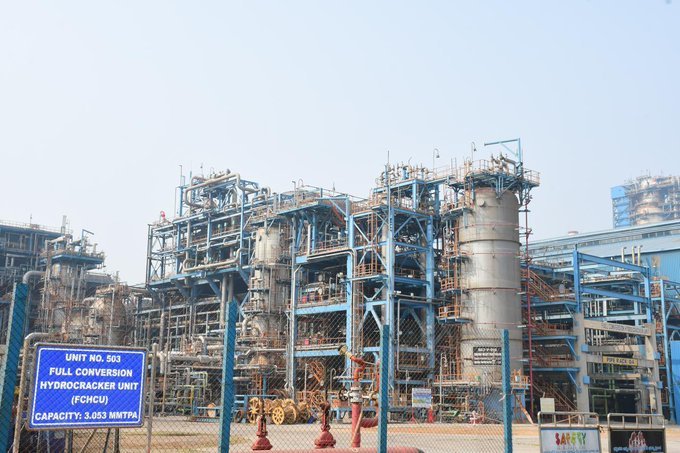
India possesses several structural advantages that could allow it to emerge as a significant SAF producer over the next decade. The country already has a large ethanol ecosystem supported by an extensive agricultural base and refining infrastructure. Indian Oil Corporation, Bharat Petroleum, and Hindustan Petroleum have all begun exploring SAF pathways.
Unlike Europe, India potentially has access to lower-cost agricultural residue, municipal waste, sugar-based ethanol, and biomass feedstocks. Its production economics could therefore prove more competitive over time.
Besides that, there is a strategic reason too. India imports a large portion of its crude oil needs, and aviation fuel is a big part of the foreign exchange burden.
Building a local SAF industry might not only lessen India’s dependence on unpredictable energy markets but also position the country as a supplier of jet fuel for airlines in Asia and the Middle East.
The government may have paved the way for biofuels expansion through its ethanol blending programme, and this policy knowledge and infrastructure can also be extended to aviation fuels one day.
Yet, the difficulties remain. Economically producing SAF on a large scale involves many other issues such as supply of raw materials, land use, refining technology, certification standards, and logistics.
Airlines are also very mindful of costs and would not be ready to accept a large increase in fuel costs unless there are incentives or regulatory support.
There are also concerns about credibility. Environmental groups continue questioning whether some SAF feedstocks genuinely deliver the emissions reductions being promised, particularly where agricultural land use becomes contentious.
Electro-SAF, often described as the industry’s long-term solution, remains commercially negligible and would require enormous investment to scale.
Still, the broader geopolitical context may favour India. Global aviation’s centre of gravity is steadily shifting towards Asia, and India is expected to become one of the world’s largest aviation markets within the next decade.
At the same time, Europe’s energy transition is becoming more politically and economically difficult, while oil companies prioritise near-term profitability over long-duration SAF investments.
In that widening gap between political ambition and physical supply lies India’s opportunity. If India can combine policy support, refining investment, feedstock management, and airline participation into a coherent SAF strategy, it could emerge not merely as a consumer of sustainable aviation fuel, but as one of the few countries capable of producing it at meaningful global scale.
Rio exposed the fragility of aviation’s green transition. It may also have revealed where the industry’s next major energy story could emerge.
Also Read: MRO Compliance: What the DGCA Mandates Mean for NSOP Operators

With more than four decades across print and audiovisual media, Tirthankar (TG) Ghosh is a veteran journalist specialising in aviation, air cargo and logistics. His reporting combines deep industry knowledge, original research and sharp analysis to produce authoritative, evidence-led journalism.