





27 June 1923: First Successful Aircraft-to-Aircraft Refuelling

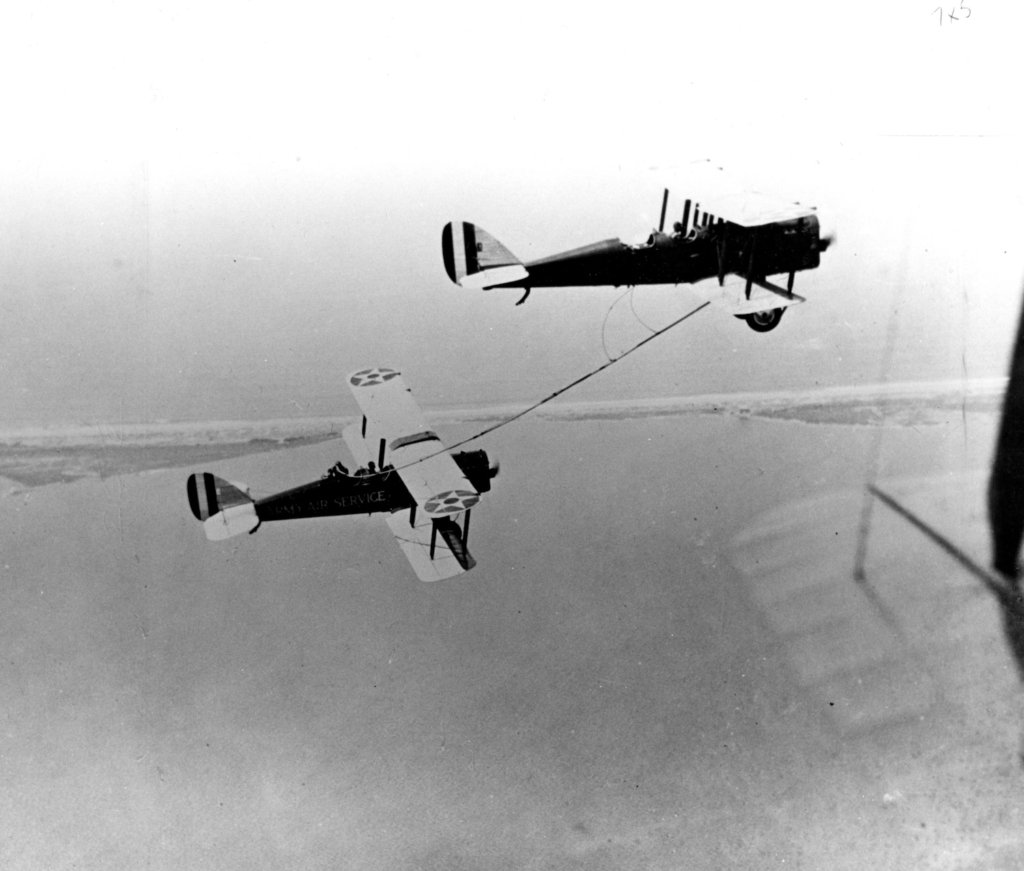
On 27 June 1923, two U.S. Army Air Service DH-4B biplanes conducted the first successful hose-based aircraft-to-aircraft refuelling over Rockwell Field in San Diego.
The experiment demonstrated that fuel could be transferred through a purpose-built system while both aircraft remained in flight.
By the early 1920s, the U.S. Army Air Service was seeking ways to increase aircraft endurance.
On 5–6 October 1922, Lieutenants John A. Macready and Oakley G. Kelly set a world endurance record of 35 hours, 18 minutes and 30 seconds in a Fokker T-2 over San Diego.
They carried as much fuel as the heavily loaded aircraft could accommodate, but eventually had to land because their fuel supply was running low.
The flight demonstrated the limitation of increasing endurance simply by placing more fuel aboard an aircraft before take-off.
An earlier and very different experiment had taken place on 12 November 1921. Barnstormer Wesley May crossed in flight from a Lincoln Standard piloted by Frank Hawks to a Curtiss JN-4 piloted by Earl Daugherty. With a five-gallon fuel can strapped to him, May climbed toward the JN-4’s engine and poured gasoline into its tank.
This is generally recognised as the first known air-to-air transfer of fuel. However, it depended on a person physically moving between the aircraft and was not a practical or repeatable military refuelling system.
Rockwell Field Experiments
The Rockwell Field programme sought to develop a controlled aircraft-to-aircraft procedure that trained crews could repeat.
Alexander de Seversky, a Russian-born aviator and engineer, had previously proposed and patented an early hose-and-valve arrangement for transferring fuel between aircraft. His work formed part of the technical background to early aerial-refuelling development, although a direct connection between his patent and the Rockwell Field equipment is not firmly established.
Major Henry “Hap” Arnold directed the Rockwell Field experiment beginning in April 1923. The crews carried out equipment and handling trials before attempting a live transfer.
The system was relatively simple. A tanker DH-4B flew slightly above and ahead of a receiver DH-4B.
The tanker’s rear-seat operator lowered a rubber hose approximately 50 feet long, equipped with manually operated quick-closing valves.
The crewman in the receiver caught the hose and guided it into the aircraft’s fuel tank opening. Once the connection was secure, gravity carried the gasoline from the tanker to the receiver without the use of a pump.
The 27 June Flight
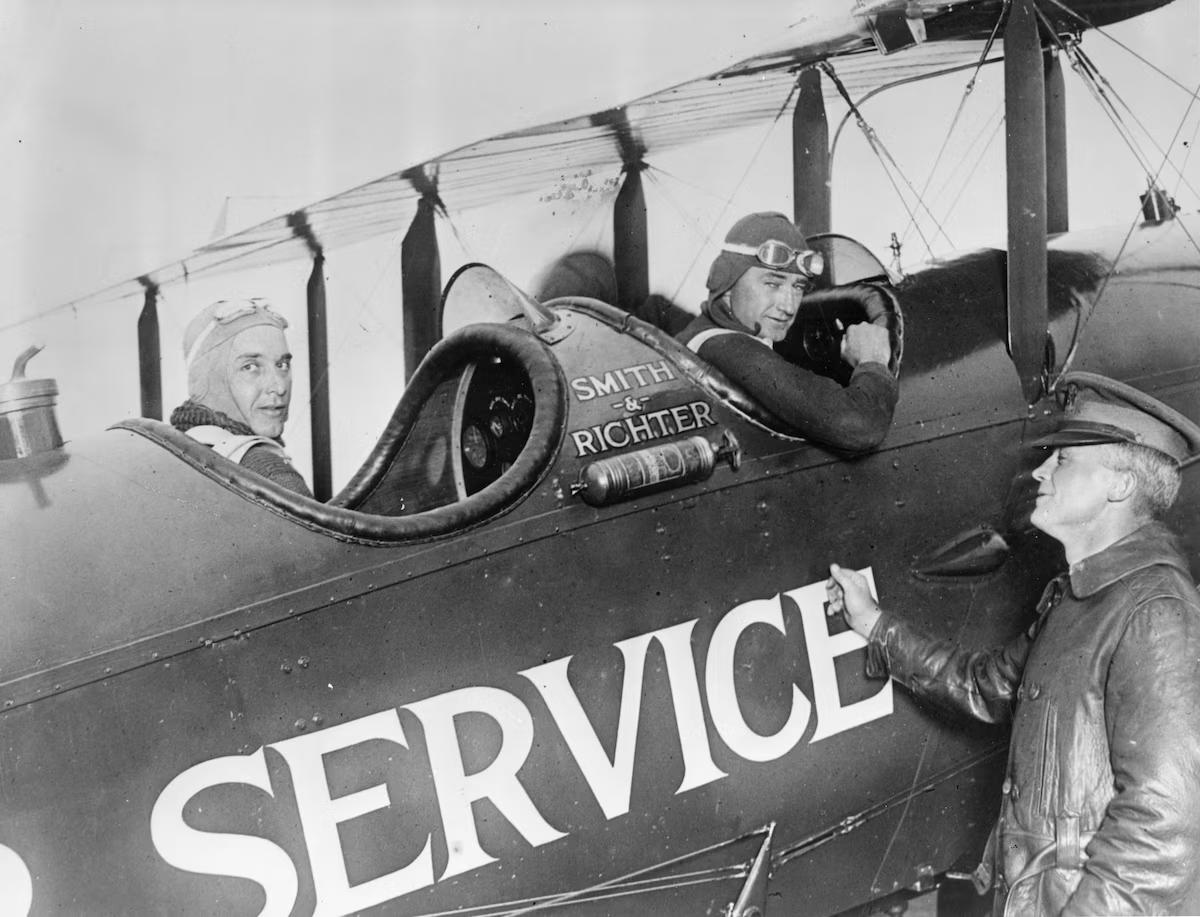
Captain Lowell H. Smith piloted the receiver DH-4B, with First Lieutenant John P. Richter in the rear cockpit. Above them, First Lieutenant Virgil Hine flew the tanker, while First Lieutenant Frank W. Seifert operated the hose and controlled the fuel flow from its rear cockpit.
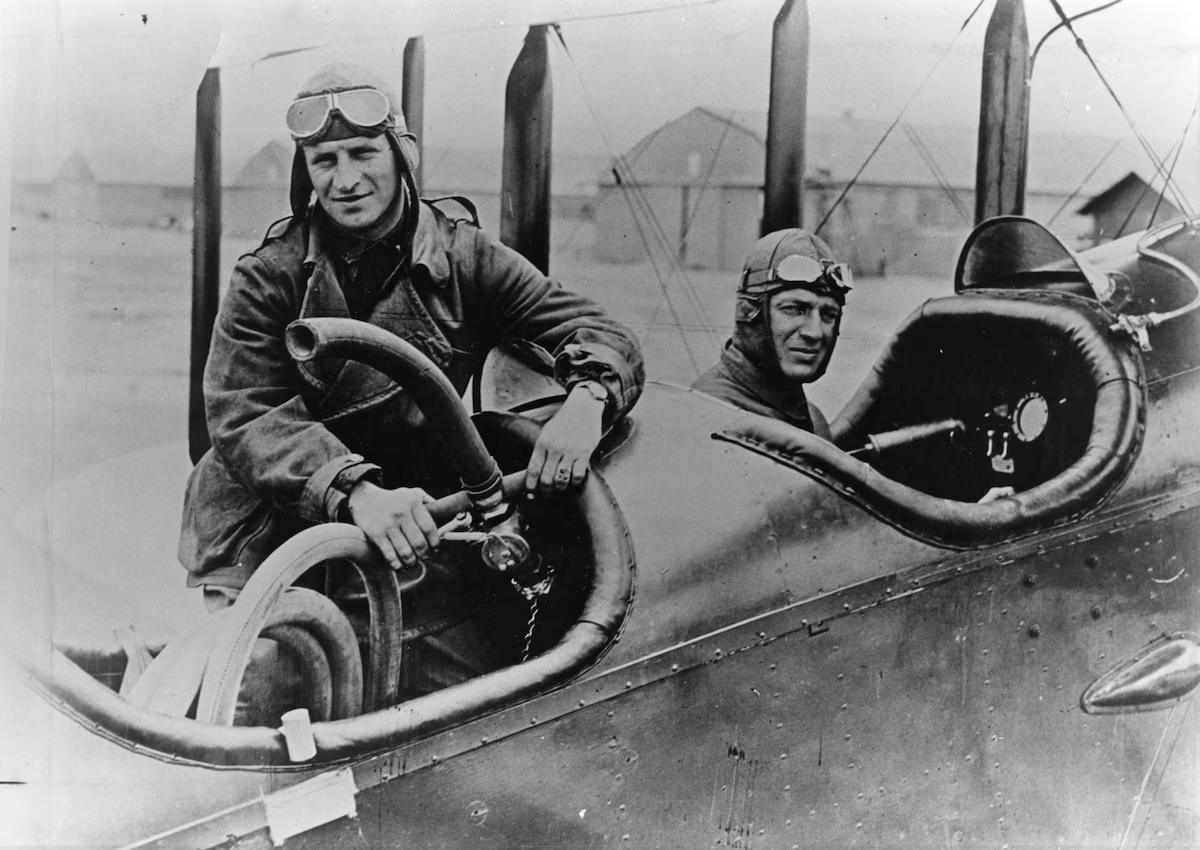
At approximately 500 feet above Rockwell Field, the aircraft maintained close formation. Seifert lowered the hose, and Richter caught it and placed it into the receiver’s fuel-tank opening.
After Richter signalled that the hose was secure, Seifert opened the valve. Approximately 75 gallons of gasoline were transferred in flight.
The receiver remained airborne for approximately 6 hours and 38 minutes before engine trouble brought the flight to an end.
Although the flight did not establish a new endurance record, it successfully demonstrated that an engineered system could transfer a useful quantity of fuel between two aircraft in flight.
The Air Service had conducted a preliminary demonstration on 25 June 1923, two days earlier. The 27 June flight is generally cited as the first successful aircraft-to-aircraft aerial refuelling because it combined fuel transfer with a clear endurance gain.
Later Flights in 1923
On 27–28 August 1923, Smith and Richter remained airborne over San Diego for 37 hours and 15 minutes. Sixteen refuelling contacts supported the flight, which established multiple records for endurance, distance and speed.
On 25 October 1923, Smith and Richter completed a nonstop border-to-border flight. They began near Sumas, Washington, on the Canadian border and continued south to the Mexican border near Tijuana before landing at Rockwell Field. Tanker aircraft supported them near Eugene, Oregon, and Sacramento, California.
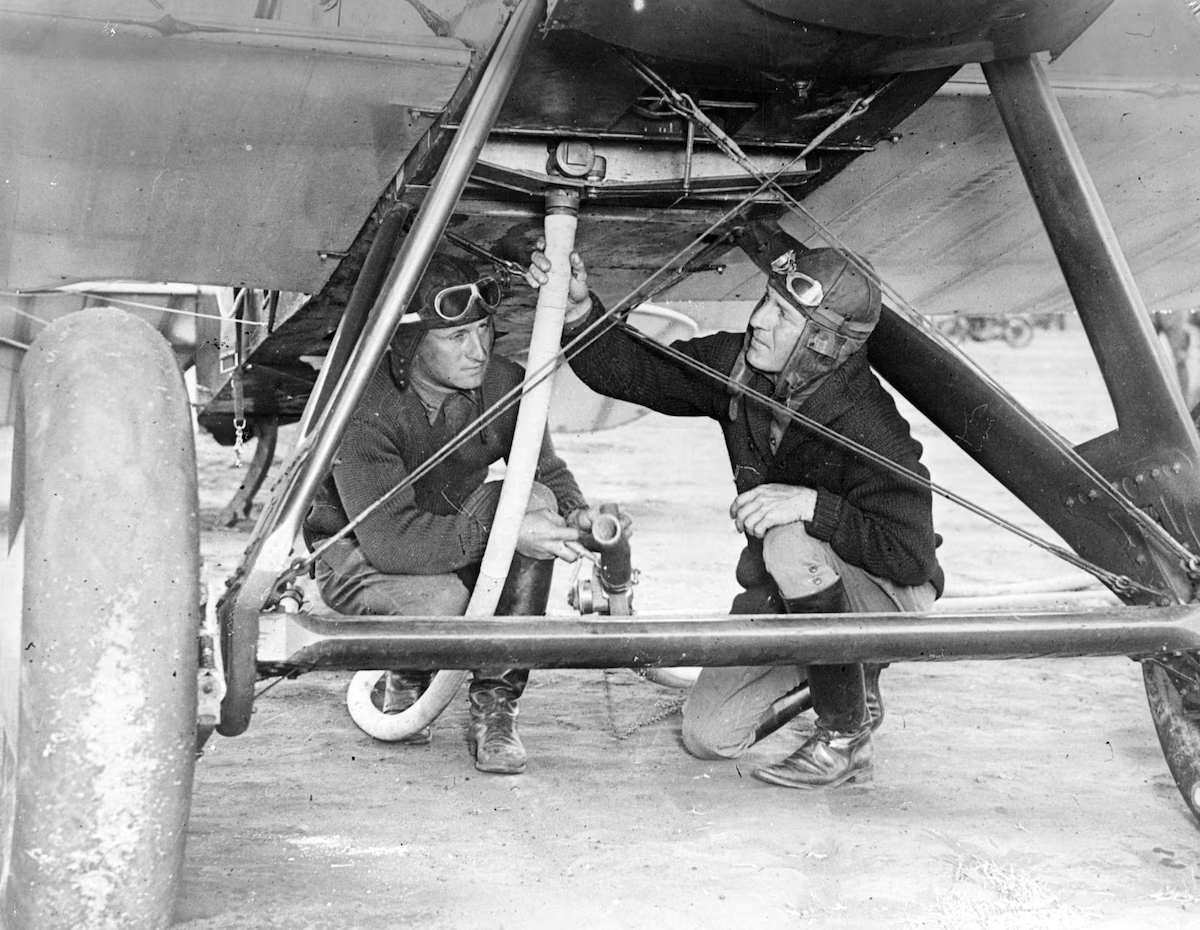
The flight demonstrated that aerial refuelling could extend not only an aircraft’s time in the air but also its practical operating range.
The early experiments remained extremely hazardous. On 18 November 1923, an aircraft was wrecked and a pilot killed during an aerial-refuelling demonstration at Kelly Field, Texas.
It was the first fatal accident associated with aerial refuelling.
Smith, Richter, Hine and Seifert later received the Distinguished Flying Cross for their roles in the pioneering 1923 aerial-refuelling programme.
Legacy
Aerial refuelling did not immediately become a standard military practice. Interest rose and declined during the interwar years, and later engineers developed safer and more controlled systems, including looped-hose equipment, probe-and-drogue systems and the flying boom.
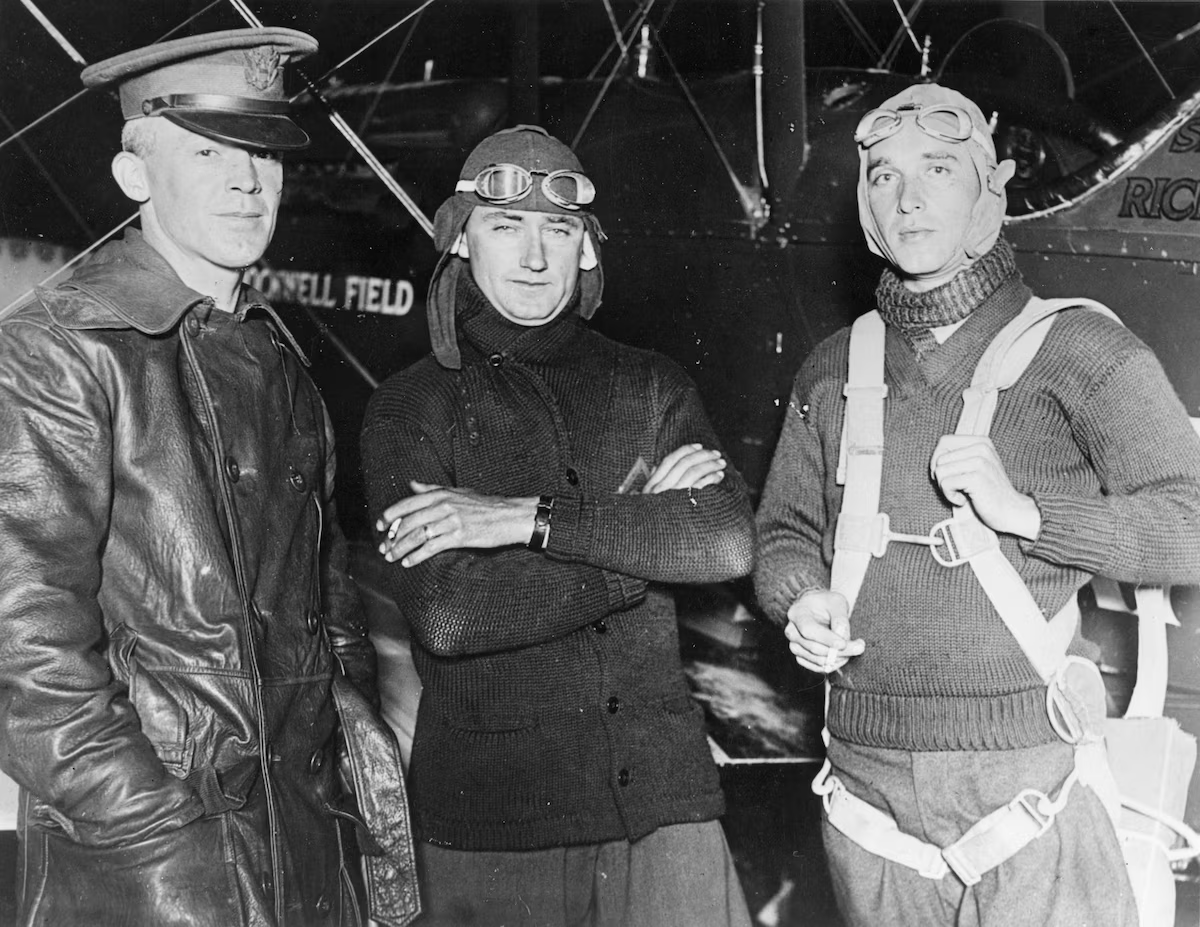
Nevertheless, the Rockwell Field experiments established the feasibility and potential operational value of transferring fuel between aircraft in flight.
During the Cold War, aerial refuelling became central to American airpower, enabling bombers, fighters, transports and reconnaissance aircraft to remain airborne longer and operate across much greater distances.
The equipment used in 1923 was primitive by modern standards, but the principle demonstrated over Rockwell Field transformed the potential reach of military aviation.
Also Read: History of Air Navigation – Part III: Ground-Based Direction Finding