










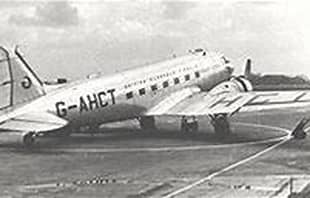
BOAC Douglas C-47 Crash January 11, 1947
The BOAC Douglas C-47 crash of January 11, 1947, was a tragic accident involving an aircraft operated by British Overseas Airways Corporation (BOAC) during the early years of post-war commercial aviation. The accident happened at a time when airlines were rebuilding their international networks after the end of World War II.
The Douglas C-47 was one of the most widely used transport aircraft of the period. It had been developed from the famous Douglas DC-3 and had served extensively during World War II. After the war, many military C-47s were transferred to civilian airlines and converted to carry passengers and cargo.
BOAC was one of Britain’s most important airlines. It operated long-distance services connecting Britain with countries around the world. The company played a major role in rebuilding Britain’s international air transport network after the war.
The January 11 accident was a reminder that the transition from wartime aviation to civilian commercial flying was not without danger.
BOAC and Post-War Aviation
The British Overseas Airways Corporation, commonly known as BOAC, was created in 1939 through the merger of British Airways Ltd and Imperial Airways.
During World War II, the airline played an important role in maintaining Britain’s overseas air links.
After the war ended in 1945, BOAC began expanding its international passenger and cargo services.
There was strong demand for air travel.
Business people, government officials, military personnel, diplomats, and ordinary passengers increasingly wanted to travel between Britain and other countries.
However, the post-war aviation environment presented many challenges.
Airports had to be repaired.
Aircraft had to be maintained.
New crews needed training.
Navigation systems had to be improved.
Airlines also had to adapt military aircraft and procedures for civilian operations.
The Douglas C-47
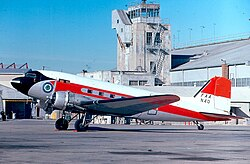
The aircraft involved in the accident was a Douglas C-47, one of the most successful transport aircraft ever built.
The C-47 was the military version of the Douglas DC-3.
During World War II, thousands of C-47s were used by Allied forces.
They carried troops, equipment, supplies, and paratroopers.
The aircraft earned a reputation for being strong and dependable.
After the war, many C-47s were sold or transferred to civilian operators.
Airlines could acquire these aircraft relatively quickly and use them to expand passenger services.
The C-47 was well suited to this role because it could operate from many airports and had good range for regional and medium-distance flights.
A New Era of Commercial Aviation
The crash occurred during an important period in the development of commercial aviation.
The war had accelerated aircraft technology.
Aircraft engines had become more powerful.
Navigation systems had improved.
Pilots had gained extensive experience flying long distances.
After the war, these developments were transferred to civilian aviation.
But the industry was still learning how to operate large numbers of passenger flights safely.
There were new problems.
Airlines needed to create standardized procedures.
Pilots had to become familiar with different aircraft types.
Airports had to handle more traffic.
Weather forecasting and navigation services had to improve.
The BOAC accident occurred within this larger period of change.
The Flight
On January 11, 1947, the BOAC C-47 was operating a scheduled service.
The aircraft was being flown by an experienced crew and was carrying passengers.
The flight was expected to be a normal operation.
However, the aircraft later encountered difficulties.
The accident happened during a period when aircraft navigation and landing systems were not as sophisticated as modern systems.
Pilots had to rely heavily on their own judgment, radio navigation, maps, and information from ground stations.
When something unexpected happened, there were fewer automated systems available to assist them.
Weather Conditions
Weather was an important factor in many aviation accidents during the 1940s.
Aircraft frequently encountered fog, low clouds, rain, snow, and strong winds.
Modern pilots can access detailed weather information before and during a flight.
They can use weather radar, satellite data, digital forecasts, and real-time reports.
In 1947, weather information was much more limited.
Forecasts were based on observations from ground stations and other aircraft.
A weather system could change before an aircraft reached its destination.
Fog was particularly dangerous because it could hide the runway and surrounding terrain.
Navigation in the 1940s
Navigation technology had improved greatly during World War II, but it was still primitive compared with today’s systems.
Pilots used radio beacons, compasses, charts, and dead reckoning.
Dead reckoning required the crew to calculate the aircraft’s expected position based on:
- Direction
- Speed
- Flight time
- Wind
If the wind was different from the expected conditions, the aircraft could drift away from its planned route.
Navigation errors could become particularly dangerous near airports.
A pilot could believe that the aircraft was in one location while it was actually several miles away.
Today, GPS and other satellite systems provide much more precise information.
The Accident
During the flight on January 11, the BOAC C-47 encountered circumstances that eventually resulted in a crash.
The aircraft was lost, and the accident caused fatalities.
Emergency personnel responded to the crash site.
The incident was investigated by the appropriate authorities.
Because the aircraft did not have modern flight recorders, investigators had to reconstruct the accident using other evidence.
This included wreckage examination, weather reports, flight plans, radio communications, and witness statements.
Aircraft Investigation
Investigators normally examine every possible factor following an aviation accident.
For the BOAC C-47, investigators would have been interested in several areas.
These included:
Aircraft condition: The engines, propellers, controls, landing gear, and other systems were examined.
Weather: Investigators reviewed the weather conditions at the time.
Navigation: They studied the aircraft’s route and the available navigation aids.
Pilot actions: The crew’s decisions and procedures were considered.
Airport facilities: Investigators examined the runway and navigation equipment.
Maintenance: Records were checked to determine whether the aircraft had received the required inspections.
This type of investigation was important because the aviation industry was learning how to safely operate former military aircraft in civilian service.
Military Aircraft in Civilian Service
The use of C-47 aircraft by civilian airlines was extremely common after World War II.
However, converting military aircraft to civilian operations required careful maintenance and inspection.
Military transport aircraft could have accumulated many flying hours during the war.
They might have operated in harsh conditions.
Civilian airlines therefore needed to establish strong maintenance programs.
Engines and airframes had to be inspected regularly.
Aircraft systems had to be maintained according to civilian standards.
This was an important part of the transition from wartime to peacetime aviation.
Pilot Training
Pilot training was another important safety issue.
Many post-war airline pilots were former military pilots.
They had extensive experience, but commercial airline flying required different skills.
Civilian pilots needed training in:
- Passenger operations
- Airline navigation
- Weather planning
- Fuel management
- Instrument flying
- Emergency procedures
- Communication with air traffic control
As commercial aviation expanded, airlines developed increasingly detailed training programs.
The goal was to make operations more standardized and predictable.
Human Factors
Pilots in the 1940s had to manage a heavy workload.
They had to manually control the aircraft while monitoring several instruments.
They also had to navigate, communicate by radio, check engine performance, and monitor weather.
During an emergency or difficult approach, this workload could increase quickly.
Modern aircraft use automation to reduce some of these tasks.
However, pilots still need to make important decisions.
The lessons learned from early aviation accidents helped develop modern cockpit procedures and crew coordination.
Airport Safety
Airports were also undergoing major development.
The rapid growth of passenger aviation required better facilities.
Airports needed:
- Longer and stronger runways
- Better lighting
- Navigation aids
- Weather stations
- Radio communication
- Air traffic control
- Fire and rescue services
Some airports had excellent facilities, while others were still developing.
The quality of airport infrastructure could have a major effect on flight safety.
The Human Cost
The most important part of any aviation accident is the loss suffered by people.
The passengers aboard the BOAC aircraft were traveling for different reasons.
Some may have been traveling for work.
Others may have been returning home or visiting relatives.
The crew members were professionals responsible for safely operating the aircraft.
When the aircraft crashed, families and friends were suddenly faced with the loss of loved ones.
The accident also affected BOAC employees and the wider aviation community.
Importance of Accident Investigation
Aviation accident investigations serve an important purpose.
Investigators do not simply try to determine what happened.
They also try to identify safety improvements.
A technical problem might lead to a change in aircraft design.
A navigation problem could lead to improved procedures.
A pilot-training issue could result in additional training.
A weather-related accident might lead to better forecasting or airport equipment.
This process of learning from accidents is one of the reasons aviation safety has improved so much.
Aviation Safety After 1947
The years following the accident brought major changes.
Radio navigation systems became more reliable.
Radar became increasingly important.
Air traffic control became more organized.
Weather forecasting improved.
Airports installed better landing systems.
Pilot training became more standardized.
Aircraft maintenance procedures became more detailed.
These developments helped reduce the risk of many types of accidents.
Eventually, jet aircraft replaced piston-powered airliners on many major routes.
The introduction of jets brought another major transformation to international travel.
The Importance of BOAC
BOAC played an important role in Britain’s aviation development.
The airline operated routes across Europe, Asia, Africa, and other parts of the world.
It helped maintain Britain’s international connections during the transition from war to peace.
BOAC later became part of British Airways when Britain’s major state-owned airlines were reorganized in 1974.
Its history is therefore closely connected with the development of modern British international aviation.
Legacy of the C-47
The Douglas C-47 has an important place in aviation history.
It served during World War II and continued operating for many decades afterward.
Thousands of aircraft were built.
They were used by military organizations, airlines, cargo companies, and other operators around the world.
The aircraft’s durability allowed it to remain in service long after newer aircraft had been introduced.
The BOAC accident was therefore part of the broader history of an aircraft type that had an enormous influence on air transportation.
Lessons From the Accident
The BOAC C-47 accident provides several general lessons.
Weather Must Be Taken Seriously
Poor weather can quickly increase the difficulty of a flight.
Navigation Must Be Accurate
Pilots need reliable information about their position.
Aircraft Must Be Properly Maintained
Former military aircraft require careful inspection before civilian use.
Pilots Need Specialized Training
Military experience is valuable, but commercial aviation requires additional skills.
Airports Need Reliable Facilities
Navigation, communication, lighting, and emergency services all contribute to safety.
Investigations Must Lead to Improvements
The most valuable result of an accident investigation is preventing similar accidents in the future.
Modern Aviation
Flying today is much safer than it was in 1947.
A modern passenger aircraft can use satellite navigation, radar, digital flight-management systems, weather radar, and automated warning systems.
Air traffic controllers have advanced surveillance systems.
Pilots receive detailed weather information.
Airports have sophisticated instrument approaches.
Aircraft also carry flight-data and cockpit voice recorders.
These technologies allow pilots to manage risks that would have been extremely difficult to handle in the 1940s.
Conclusion
The BOAC Douglas C-47 crash of January 11, 1947, occurred during a difficult but important period in the development of international commercial aviation.
BOAC was rebuilding its worldwide passenger network after World War II. The Douglas C-47, originally developed as a military transport aircraft, had become an important part of the post-war civilian fleet.
The accident demonstrated the challenges of operating aircraft during an era when navigation, weather forecasting, airport facilities, and cockpit technology were still developing.
Pilots had to rely heavily on their experience and relatively basic instruments. Aircraft did not have GPS, modern weather radar, computerized navigation, or advanced warning systems. Airports also had fewer navigation and emergency facilities than modern airports.
The accident was a tragedy for the passengers, crew, families, and BOAC community. At the same time, accidents from this period helped the aviation industry understand the importance of better training, maintenance, navigation, weather information, and airport procedures.
Over the following decades, aviation changed dramatically. Radar, improved radio navigation, better weather forecasting, instrument landing systems, jet aircraft, satellite navigation, and computerized systems transformed commercial aviation.
The history of the January 11, 1947 BOAC C-47 crash therefore forms part of the larger story of how aviation safety developed. It reminds us that modern air travel is the result of many decades of technological progress, careful investigation, improved training, and lessons learned from the accidents of earlier generations.

Ajeet Yadav is an aviation enthusiast covering airline news, airports, aircraft, and industry developments through well-researched and reliable reporting.