











American Airlines Flight 009 Crash February 23, 1945
American Airlines Flight 009 was involved in a tragic aviation accident on February 23, 1945, during the final months of World War II. The flight was operated by American Airlines and involved a Douglas DC-3 aircraft. The accident occurred in New York State and resulted in the deaths of everyone aboard.
The disaster took place at a time when commercial aviation was developing quickly. Airlines were operating regular passenger services across the United States, but pilots still faced many dangers that are much easier to manage today. Night flying, poor weather, navigation problems, and mountainous or difficult terrain could turn an ordinary flight into a disaster.
The story of Flight 009 is therefore an important part of the history of American commercial aviation.
The Aircraft
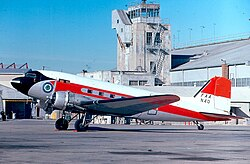
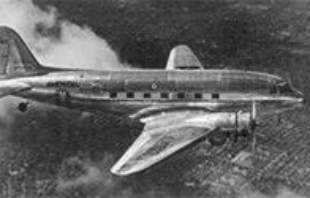
The aircraft involved in American Airlines Flight 009 was a Douglas DC-3, one of the most important passenger aircraft of the 1930s and 1940s.
The DC-3 was designed as a twin-engine aircraft and became famous for its reliability and efficiency. It could carry passengers over considerable distances and was used extensively by American Airlines.
During World War II, versions of the DC-3 were also used for military transportation.
By 1945, the aircraft had become a familiar sight in American skies.
Although the DC-3 had a strong reputation, the technology available to pilots was still limited compared with today’s aircraft.
The Flight
American Airlines Flight 009 was operating a scheduled passenger service on February 23, 1945.
The flight was taking place during a period when the United States was heavily involved in World War II. Air travel was important for both civilian and wartime transportation.
Passengers used commercial airlines to travel between major American cities, while airlines also transported mail and other essential cargo.
The aircraft departed as planned and began its journey.
At first, there appeared to be nothing unusual about the flight.
However, conditions later became difficult.
Night Flying
One of the challenges faced by airline pilots during this period was flying at night.
Today, aircraft crews have electronic flight displays, satellite navigation, weather radar, digital charts, and advanced communication systems.
Pilots in 1945 had none of these modern tools.
They depended on instruments, radio navigation, magnetic compasses, maps, and visual references.
When the weather was clear, this system could work well.
But when an aircraft entered clouds or darkness, the crew had fewer ways to confirm its exact location.
This was especially dangerous when flying near mountains, hills, or other high terrain.
Weather Conditions
Weather was an important factor in many aviation accidents during the 1940s.
Pilots could receive weather reports before and during their flights, but forecasting technology was much less advanced.
There was no satellite weather information and no modern weather radar network providing detailed pictures of storms.
Clouds, fog, snow, and strong winds could make navigation difficult.
A pilot who lost visual contact with the ground had to rely heavily on instruments.
If the aircraft’s position was not accurately known, the crew could unintentionally fly into dangerous terrain.
The Final Part of Flight 009
As Flight 009 continued, the aircraft encountered conditions that made the flight increasingly difficult.
The aircraft eventually went off its intended flight path.
The crew was unable to maintain a safe separation from the surrounding terrain.
The aircraft crashed in New York State, resulting in the deaths of everyone aboard.
The impact was severe, and the aircraft was destroyed.
Rescue workers and local authorities were sent to the crash site.
Because the accident occurred away from a major airport, reaching the wreckage was difficult.
The Search
When the aircraft failed to arrive at its destination, authorities became concerned.
Search aircraft and ground teams were used to locate the missing DC-3.
During the 1940s, search and rescue operations were much more difficult than they are today.
There were no modern satellite tracking systems.
Aircraft could disappear from radar coverage, and rescue teams had to depend on radio communications, estimated positions, and reports from people on the ground.
Once the wreckage was found, investigators began the difficult task of examining the accident site.
The Investigation
After the crash, aviation investigators examined the aircraft and reconstructed the final part of the flight.
They looked at:
- The aircraft’s mechanical condition
- Weather conditions
- Radio communications
- Navigation information
- The flight crew’s actions
- The aircraft’s estimated position
- The terrain surrounding the crash site
Investigators wanted to determine whether the aircraft had experienced a mechanical problem or whether the accident resulted from navigation or operational difficulties.
The investigation was important because every major airline accident provided information that could be used to improve future safety.
Navigation Technology of the 1940s
Navigation technology was still developing when Flight 009 crashed.
Pilots often used radio beacons to determine their direction.
They also used dead reckoning, which involved calculating their position using heading, speed, time, and estimated wind conditions.
This method could become inaccurate if one of the calculations was wrong.
For example, if an aircraft experienced stronger winds than expected, it could drift away from its planned route.
The crew might not immediately realize how far the aircraft had moved.
Modern GPS makes this problem much easier to manage, but pilots in 1945 had to calculate their position using much more limited information.
The Danger of Terrain
Flying near hills and mountains at night was one of the most serious risks of early commercial aviation.
A mountain could be invisible because of darkness or cloud.
Even if the aircraft was only slightly off course, it could eventually approach terrain.
The pilot might not see the obstacle until the aircraft was dangerously close.
Modern aircraft have terrain-awareness systems that can warn crews about rising ground.
In 1945, such systems did not exist.
The pilot had to know the aircraft’s position and altitude and use charts and navigation information to maintain a safe route.
The Douglas DC-3 and Aviation Safety
The DC-3 was generally considered a successful and dependable aircraft.
Its design played a major role in transforming commercial aviation.
However, the accident involving Flight 009 demonstrates that aircraft reliability alone cannot guarantee safety.
Safe aviation requires several elements working together.
These include:
- A well-maintained aircraft
- Accurate navigation
- Reliable weather information
- Proper pilot training
- Good communication
- Safe flight procedures
- Effective air traffic control
If several of these elements fail at the same time, the risk of an accident can increase.
The Human Cost
The most important part of the Flight 009 story is the people who died.
The passengers were traveling for different reasons.
Some may have been traveling for business or personal matters, while others were moving around the country because of wartime responsibilities.
The crew members were trained professionals.
They were responsible for operating the aircraft and protecting their passengers.
For the families of those aboard, the accident was devastating.
The loss of an aircraft was not simply a technical event. It meant the sudden loss of loved ones.
Aviation During World War II
The accident happened in February 1945, only a few months before the end of World War II.
The United States was operating a huge aviation industry.
Aircraft production was at historic levels, and thousands of pilots and mechanics were working in both military and civilian aviation.
Commercial airlines continued to operate important routes.
At the same time, aviation technology was improving rapidly because of wartime research.
Navigation, radio communication, aircraft design, and weather forecasting were all developing.
The lessons from civilian aviation accidents contributed to this broader development.
Lessons From the Accident
American Airlines Flight 009 highlighted the importance of accurate navigation and safe operations in difficult conditions.
The accident demonstrated that pilots needed reliable information about their position, especially during night flights.
It also reinforced the need for careful planning when operating near areas of high terrain.
Modern aviation procedures have been shaped by decades of experience.
Today, pilots are trained to use multiple sources of navigation information.
They also receive detailed weather reports and are trained to divert or change their route when conditions become unsafe.
Improvements After the 1940s
Aviation safety improved greatly after World War II.
Air traffic control systems became more advanced.
Radar allowed controllers to monitor aircraft more effectively.
Radio navigation systems became more accurate.
Aircraft instruments improved.
Later, jet aircraft introduced new levels of speed and performance.
Satellite navigation eventually changed aviation completely.
Modern aircraft can determine their position with extraordinary accuracy.
Terrain-warning systems can alert pilots when an aircraft is approaching the ground.
These technologies have dramatically reduced the risks that pilots faced in the 1940s.
Remembering Flight 009
American Airlines Flight 009 remains part of the history of commercial aviation.
The accident occurred during a period when air travel was developing from a relatively new technology into an important part of everyday transportation.
The people aboard the aircraft became part of that history through a tragic accident.
Their story also reminds us that aviation safety has been built over many decades.
Every generation of aviation professionals has learned from the experiences of earlier pilots and investigators.
Conclusion
The American Airlines Flight 009 accident of February 23, 1945, was a tragic event during a difficult period in aviation history.
The aircraft was a Douglas DC-3, one of the most successful airliners of its time. The flight ended in disaster in New York State, with the loss of everyone aboard.
The accident occurred when aviation technology was still developing. Pilots did not have GPS, satellite weather information, modern radar systems, or terrain-warning equipment.
Flying at night and navigating in difficult weather required considerable skill and careful judgment.
The tragedy of Flight 009 illustrates how important navigation, weather information, aircraft maintenance, and pilot training are to aviation safety.
Today, air travel is much safer because the aviation industry has learned from decades of experience. Modern technology gives pilots information that was unavailable in 1945, while improved procedures and training provide additional protection.
The story of American Airlines Flight 009 is therefore not only a story of loss. It is also part of the long history of aviation safety and the continuing effort to make air travel safer for everyone.

Ajeet Yadav is an aviation enthusiast covering airline news, airports, aircraft, and industry developments through well-researched and reliable reporting.