









Pan Am Sikorsky S-43 Crash 13 August 1939
The Pan Am Sikorsky S-43 accident of 13 August 1939 was a tragic event in the history of early commercial aviation. It involved a Sikorsky S-43 flying boat operated by Pan American Airways, one of the world’s best-known airlines during the 1930s.
The accident took place during the final months before the beginning of the Second World War. At that time, flying boats were an important part of international passenger aviation. They allowed airlines to connect distant cities and countries without depending on large airports and long concrete runways.
The Sikorsky S-43 was an advanced aircraft for its time. However, like all aircraft of the period, it operated without many of the safety systems that are standard today.
Pan American Airways
Pan American Airways, commonly called Pan Am, was one of the most important airlines in the history of international aviation.
During the 1930s, Pan Am developed a large network of routes across oceans and between countries.
The airline was especially famous for its flying boats.
Pan Am aircraft connected the United States with destinations in:
- The Caribbean
- Central America
- South America
- The Pacific
- Asia
Flying boats were essential to this network because many destinations did not have airports capable of handling large aircraft.
The Sikorsky S-43
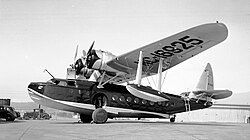
The aircraft involved was a Sikorsky S-43, sometimes known as the Baby Clipper.
The S-43 was a twin-engine flying boat designed for passenger and cargo transportation.
It was smaller than Pan Am’s famous long-range flying boats but was still an important commercial aircraft.
The aircraft could take off and land on water.
Its hull allowed it to operate from rivers, bays, lakes, and coastal waters.
This made it particularly useful for island and coastal routes.
Flying Boats in the 1930s
The 1930s were the golden age of flying boats.
Large aircraft could cross oceans by using water as their runway.
This was especially important because airport infrastructure was still limited.
A flying boat did not need a conventional runway.
Instead, pilots needed a suitable stretch of water.
However, operating from water created its own dangers.
Waves, wind, currents, floating objects, and poor visibility could all affect an aircraft.
The Pan Am Network
Pan Am’s international network required crews to operate in many different environments.
Pilots had to understand local weather conditions.
Navigators had to calculate positions over large bodies of water.
Radio operators maintained communication with ground stations and other aircraft.
Engineers maintained the aircraft and engines.
Flying-boat crews therefore worked as a highly coordinated team.
The Flight
On 13 August 1939, a Pan Am Sikorsky S-43 was involved in a serious accident.
The aircraft was operating in the Pacific region during a period when international air travel was rapidly expanding.
The flight involved passengers and crew who expected a normal commercial journey.
Unfortunately, the aircraft was lost in an accident.
The event resulted in fatalities and became part of the history of Pan Am’s early operations.
The Importance of the Date
The accident occurred only a few weeks before the beginning of the Second World War.
In September 1939, Germany invaded Poland.
Britain and France declared war on Germany.
The conflict soon spread across Europe and eventually became a global war.
The aviation industry was about to undergo enormous changes.
Weather and Water Operations
Flying boats had to deal with weather in ways that land aircraft did not.
A pilot preparing to land on water had to examine:
- Wind direction
- Wave height
- Water movement
- Visibility
- Current
- Available landing distance
A rough sea could make landing extremely difficult.
A flying boat could strike a wave at the wrong angle and suffer severe structural damage.
Navigation Over Water
Navigation over oceans was one of the greatest challenges of early commercial aviation.
There were no GPS satellites.
Pilots and navigators used:
- Magnetic compass
- Charts
- Dead reckoning
- Radio signals
- Celestial navigation
The navigator could use calculations based on speed, direction, and elapsed time.
Small errors could accumulate over long distances.
Radio Operators
Many long-distance flights had dedicated radio operators.
The radio operator maintained communication with stations on land.
Messages could contain:
- Position
- Weather information
- Estimated arrival time
- Mechanical problems
- Emergency information
Radio communication was essential for long-distance flights.
However, radio systems were much less sophisticated than modern satellite communications.
Emergency Communication
If an aircraft encountered trouble, the crew could send a radio message.
This allowed authorities to begin organizing assistance.
But locating an aircraft over water could still be difficult.
There were no satellite-based emergency beacons.
There was no global aircraft tracking system.
Search-and-rescue teams often depended on the last known position of the aircraft.
Passenger Safety
Passengers on flying boats had to follow crew instructions during emergencies.
Life jackets and other emergency equipment were important.
The crew needed to explain emergency procedures.
Passengers had to know where exits were located.
They also needed to understand how to use life-saving equipment.
Modern aviation has highly standardized safety demonstrations.
In 1939, procedures were less standardized.
Aircraft Design
The Sikorsky S-43 was a relatively modern aircraft for its time.
It had a streamlined hull and two engines.
The aircraft was designed for commercial operations.
However, the technology of the 1930s had limitations.
There were no modern computerized systems.
There were no digital displays.
There was no ground-proximity warning system.
The crew had to monitor the aircraft using mechanical instruments.
Engine Reliability
The S-43 was powered by two piston engines.
Twin-engine aircraft provided an advantage because the aircraft could potentially continue flying if one engine failed.
However, losing one engine could still be dangerous, especially during takeoff or landing.
The aircraft would have reduced power and could become difficult to control.
Flying boats were particularly sensitive to engine problems during water operations.
Maintenance
Aircraft maintenance was essential for Pan Am.
Flying boats operated frequently and covered long distances.
Their engines and hulls required regular inspection.
The hull was exposed to salt water and could suffer corrosion.
Mechanical components had to be carefully checked.
Maintenance crews played an important role in keeping aircraft safe.
Aviation Safety in 1939
Aviation safety was improving rapidly.
Governments were introducing stronger regulations.
Airlines were developing better training programs.
Aircraft manufacturers were improving structural design.
Navigation systems were becoming more reliable.
But aviation remained more dangerous than modern commercial flying.
Accidents were still relatively common.
No Flight Recorders
One major difference between aviation then and now was the lack of flight recorders.
Modern aircraft contain flight-data recorders and cockpit voice recorders.
These devices provide investigators with detailed information.
In 1939, investigators did not have this technology.
They had to depend on:
- Wreckage
- Witnesses
- Radio messages
- Weather reports
- Crew records
- Maintenance records
This made accident investigation much more difficult.
The Investigation
After the accident, authorities examined the available evidence.
Investigators generally looked at several possible causes.
These could include:
- Mechanical failure
- Pilot actions
- Weather
- Navigation
- Water conditions
- Maintenance
- Operational procedures
The goal was to understand what had happened and prevent similar accidents.
The Human Factor
Pilots in the 1930s carried a great deal of responsibility.
They had to fly the aircraft while also monitoring instruments and weather.
Navigation was often performed manually.
Radio communication required careful attention.
During emergencies, pilots had to make decisions quickly.
Modern aviation has reduced pilot workload through automation.
Pilots today have access to computers and sophisticated navigation systems.
The Role of Pan Am
Pan Am had a strong reputation for international aviation.
The company operated some of the most ambitious air routes in the world.
Its flying boats were symbols of modern transportation.
Pan Am crews often flew in remote areas where emergency assistance was limited.
This required extensive training and careful planning.
The Pacific and International Aviation
The Pacific was particularly challenging for early aviation.
Distances between islands could be enormous.
Weather could change quickly.
There were relatively few airports.
Flying boats offered a practical solution.
They could land on sheltered coastal waters near important settlements.
Pan Am used this technology to build important international routes.
The End of an Era
The accident occurred near the end of the golden age of flying boats.
Although flying boats remained important during the early years of the Second World War, land-based aircraft were rapidly becoming more capable.
Runways were being built around the world.
Large landplanes were becoming faster and more efficient.
The development of aircraft such as the Douglas DC-4 would eventually reduce the importance of flying boats.
World War II
The Second World War changed aviation completely.
Pan Am’s aircraft and crews became involved in wartime transportation.
Flying boats were used for military and logistical purposes.
Aircraft technology improved rapidly.
Navigation, radio communication, and radar developed significantly.
These technologies later helped transform civilian aviation.
Search and Rescue
Search-and-rescue operations were difficult in the 1930s.
If an aircraft went missing, authorities had limited information.
The last radio transmission could provide a rough location.
Ships and aircraft then searched large areas.
Today, satellite tracking and emergency transmitters can greatly reduce search areas.
Lessons From Flying-Boat Accidents
Flying-boat accidents provided important lessons.
Airlines learned about:
- Water landing techniques
- Weather planning
- Aircraft maintenance
- Emergency equipment
- Passenger evacuation
- Navigation
- Radio communication
These lessons contributed to later improvements in aviation.
The Importance of Crew Training
Crew training was particularly important for flying boats.
Pilots needed experience with water operations.
Engineers needed knowledge of marine environments.
Radio operators had to communicate over long distances.
Cabin crew needed to manage passengers during emergencies.
The success of an operation depended on teamwork.
Modern Comparison
Modern commercial aircraft are very different.
Today’s aircraft use advanced navigation.
They receive detailed weather information.
They have collision-avoidance systems.
They carry emergency locator equipment.
They use satellite communication.
Aircraft can be tracked across oceans.
These technologies make modern air travel much safer.
Historical Importance
The Pan Am Sikorsky S-43 accident is important because it represents an era when international commercial aviation was still developing.
Flying boats opened routes that had previously been almost impossible for passenger aircraft.
They connected distant communities.
They carried mail and passengers across oceans.
They also helped establish the foundations of modern international aviation.
Remembering the People
The most important part of any aviation disaster is the people involved.
Passengers were traveling for ordinary reasons.
Crew members were doing their jobs.
Their families expected them to return.
The accident changed many lives.
Historical records of aviation disasters should therefore remember not only the aircraft and technical details but also the people who were affected.
Aviation Safety Legacy
Every serious accident contributes to the development of aviation safety.
Investigators identify weaknesses.
Airlines change procedures.
Manufacturers improve aircraft.
Governments introduce new regulations.
Pilots receive better training.
Over time, these changes make flying safer.
The history of early Pan Am operations demonstrates this process.
Why This Accident Matters
The 13 August 1939 Pan Am Sikorsky S-43 accident occurred during a period of enormous change.
The aviation industry was moving from pioneering flying boats toward modern land-based airliners.
The Second World War was about to accelerate technological development.
Within a few years, aviation would be transformed by better engines, radar, navigation, communications, and aircraft design.
Conclusion
The Pan Am Sikorsky S-43 accident of 13 August 1939 belongs to the fascinating but dangerous early history of international commercial aviation.
Pan American Airways was one of the leading airlines of its time. Its flying boats connected countries and islands across oceans at a time when large airports were still uncommon. The Sikorsky S-43, known as the Baby Clipper, was an important part of this era.
Flying boats offered many advantages, but they also created special challenges. Pilots had to operate on water, where waves, wind, currents, and visibility could affect takeoff and landing. Long-distance flights also required careful navigation and radio communication.
In 1939, pilots did not have GPS, satellite communications, modern weather radar, digital navigation systems, or advanced emergency equipment. Crews therefore depended heavily on experience, maps, radio, compass readings, and careful calculations.
The accident also occurred at a major turning point in world history. Only weeks later, the Second World War began. The conflict would transform commercial aviation and lead to enormous advances in aircraft technology and navigation.
Flying boats gradually became less important after the war as improved land-based aircraft and large airports became available. However, the pioneering work of airlines such as Pan Am helped establish international air travel.
The story of the Sikorsky S-43 is therefore not only about an aircraft accident. It is also about an important stage in aviation history. Flying boats opened routes across oceans and helped bring distant parts of the world closer together.
The accident reminds us that early commercial aviation required courage, careful planning, and skilled crews. It also shows how much aviation safety has changed since the 1930s.
Today, aircraft can be tracked across oceans, pilots have highly accurate navigation systems, weather information is available in real time, and emergency equipment is far more advanced.
The people involved in the Pan Am Sikorsky S-43 accident remain part of the history of this remarkable period. Their story helps us understand the risks faced by the pioneers of international aviation and the long process through which the airline industry became safer.
The golden age of flying boats eventually ended, but the technology, experience, and lessons developed during that period helped build the modern global aviation system we know today.

Ajeet Yadav is an aviation enthusiast covering airline news, airports, aircraft, and industry developments through well-researched and reliable reporting.