











Pan Am Flight 229 Hawaii Clipper Disappearance
The Pan Am Flight 229 – Hawaii Clipper was a tragic aviation mystery that occurred on 28 July 1938. The aircraft was a Sikorsky S-42 flying boat operated by Pan American Airways, one of the world’s leading airlines during the 1930s. The aircraft disappeared over the western Pacific Ocean while flying from Guam toward Manila.
There were nine people aboard the aircraft, including passengers and crew members. The aircraft never reached its destination, and no confirmed wreckage or survivors were found. The disappearance became one of the most mysterious events in the history of early trans-Pacific aviation.
The accident was especially important because Pan Am was operating some of the most advanced long-distance aircraft of its time. The Hawaii Clipper was part of a pioneering service that connected the United States with Asia by air. Its disappearance demonstrated the enormous challenges faced by crews flying thousands of miles over the Pacific before modern navigation, tracking, and satellite communication existed.
Pan American Airways
During the 1930s, Pan American Airways, commonly known as Pan Am, was a major force in international aviation.
The airline operated routes across the Caribbean, Atlantic, and Pacific.
Pan Am was particularly famous for its flying boats.
These aircraft could take off and land on water, which made them ideal for long-distance routes during a period when many remote locations did not have suitable airports.
Pan Am created a network of bases and stopping points across the Pacific.
This allowed aircraft to travel between the United States and Asia.
The Sikorsky S-42
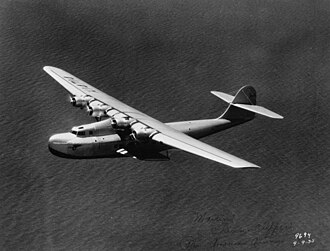
The Hawaii Clipper was a Sikorsky S-42 flying boat.
The S-42 was a large four-engine aircraft designed for long-distance passenger and mail operations.
It had a boat-like hull that allowed it to land on water.
The aircraft was powered by four radial engines.
It could carry passengers, crew, fuel, baggage, and mail over long distances.
At the time, the S-42 was considered an advanced aircraft.
Flying boats like the S-42 played a major role in the development of international air travel.
The Hawaii Clipper
The aircraft involved was known as the Hawaii Clipper.
It had been used on Pan Am’s Pacific routes for several years.
The aircraft was registered NC16735.
It was part of the airline’s important Pacific network.
The aircraft had experience operating long-distance flights between Pacific islands and Asian destinations.
Its crew was trained specifically for the challenges of ocean flying.
However, the Pacific was an enormous and unforgiving environment.
If an aircraft developed a serious problem far from land, there were very few places to make an emergency landing.
The Pacific Air Route
The route operated by Pan Am was divided into a series of stages.
Aircraft traveled between locations such as:
- San Francisco
- Honolulu
- Midway
- Wake Island
- Guam
- Manila
- Hong Kong
These stops provided fuel, maintenance, communications, and rest for crews.
The Hawaii Clipper was operating in the western Pacific when it disappeared.
The flight was part of a regular commercial service.
The Flight of 28 July 1938
On 28 July 1938, the Hawaii Clipper was flying from Guam toward Manila.
The aircraft had already completed earlier parts of its journey.
The flight was expected to continue normally.
The crew maintained radio communication with ground stations.
The aircraft was flying over open water.
At first, there appeared to be no major problem.
Then the aircraft disappeared.
Last Radio Contact
The Hawaii Clipper maintained communication with Pan Am’s radio stations.
During the flight, the crew reported their position.
The aircraft was approximately 800 miles from Manila when it disappeared.
The final radio communications did not clearly indicate that a major emergency was occurring.
This made the disappearance especially mysterious.
There was no confirmed distress call.
There was no known crash witnessed by another aircraft or ship.
The aircraft simply failed to arrive.
The Missing Aircraft
When the Hawaii Clipper did not reach Manila, concern quickly grew.
Pan Am officials began trying to establish the aircraft’s location.
Radio operators attempted to contact the crew.
No response was received.
The aircraft was officially considered missing.
Because the flight was over the Pacific, determining its location was extremely difficult.
There were no modern satellite tracking systems.
There was no GPS.
There were no emergency locator transmitters like those used on modern aircraft.
Search and Rescue
A major search operation began.
Ships and aircraft searched the area where the Hawaii Clipper was believed to have disappeared.
Pan Am and military resources were involved in the search.
Aircraft flew over large areas of ocean looking for wreckage.
Ships searched the water for floating debris or survivors.
However, the Pacific is enormous.
Finding a relatively small aircraft in thousands of square miles of ocean was extremely difficult.
No Wreckage Found
One of the most unusual aspects of the disaster was the lack of confirmed wreckage.
No substantial wreckage was recovered.
No bodies were found.
No survivors were found.
This left investigators with very little physical evidence.
Without a wreckage site, it was impossible to determine exactly what had happened.
Possible Mechanical Failure
One possibility was a mechanical failure.
The Hawaii Clipper was a large aircraft with four engines.
Although four-engine aircraft were designed to provide greater reliability, serious mechanical problems could still occur.
A major engine or structural problem could have forced the aircraft into the ocean.
However, there was no evidence proving that mechanical failure caused the disappearance.
Possible Weather Problems
Weather was another possibility.
The Pacific can experience severe storms and tropical weather.
A large flying boat could encounter strong winds, heavy rain, turbulence, and lightning.
Weather forecasting during the 1930s was much less advanced.
Pilots had access to weather reports, but they did not have satellite images or modern weather radar.
A severe storm could therefore be difficult to detect or avoid.
Navigation Difficulties
Navigation over the Pacific was challenging.
Pilots had to calculate their position using radio navigation, celestial navigation, compass readings, and estimated speed and time.
There were no GPS satellites.
There were no digital maps.
There was no continuous satellite tracking.
If an aircraft deviated from its intended route, locating it could become extremely difficult.
A navigation error combined with bad weather could have made the aircraft’s position uncertain.
Fuel Problems
Fuel was another important consideration.
Flying boats needed large quantities of fuel to travel between Pacific bases.
The crew had to carefully calculate fuel consumption.
Headwinds could increase fuel use.
Bad weather could force an aircraft to change course.
If the aircraft used more fuel than expected, it might not have enough to reach its destination.
However, there was no confirmed evidence that fuel exhaustion caused the Hawaii Clipper’s disappearance.
The Possibility of Fire
Another possibility was an onboard fire.
Aircraft fires can become extremely dangerous.
The Hawaii Clipper carried fuel and other materials capable of burning.
A serious fire could have forced the crew to land on the ocean.
If the aircraft was far from ships or islands, survival would have been difficult.
However, investigators did not have enough evidence to prove that fire caused the accident.
The Possibility of Sabotage
Because the Hawaii Clipper disappeared without leaving a known wreckage site, sabotage was also considered.
The political situation in Asia was tense in 1938.
Japan was expanding its military activities in the region.
International relations were becoming increasingly unstable.
Some theories suggested that the aircraft might have been attacked or captured.
However, there was no conclusive evidence proving sabotage.
The mystery therefore remained unresolved.
International Tensions
The disappearance happened only a few months before the beginning of the Second World War in Europe.
In Asia, the situation was already extremely tense because of the ongoing Second Sino-Japanese War.
Pan Am operated in areas where different political and military interests overlapped.
This made the disappearance particularly sensitive.
Nevertheless, there was no confirmed evidence that the aircraft was deliberately attacked.
The Crew
The Hawaii Clipper was operated by an experienced Pan Am crew.
Flying a large flying boat across the Pacific required several specialized crew members.
The aircraft needed:
- Pilots
- Navigators
- Radio operators
- Flight engineers
Each person had an important role.
The crew was responsible not only for flying the aircraft but also for navigation, communications, engine monitoring, and passenger safety.
Passengers
The aircraft also carried passengers.
These travelers were using one of the world’s newest forms of international transportation.
A trans-Pacific flight was a major journey.
Passengers understood that the aircraft would spend many hours over open ocean.
However, they trusted Pan Am’s experienced crews and aircraft.
The disappearance brought tragedy to their families.
Communication Technology in 1938
The disaster demonstrates how limited communications were in the 1930s.
The Hawaii Clipper could communicate by radio.
This was a major technological achievement.
However, radio communication depended on distance and atmospheric conditions.
There was no satellite communication.
There was no automatic emergency signal.
There was no global aircraft-tracking network.
If the aircraft stopped transmitting, ground stations had very few ways to locate it.
Why Finding the Aircraft Was Difficult
Imagine trying to find a large aircraft in the Pacific without GPS.
The search area could cover thousands of square miles.
Ocean currents could move floating wreckage.
Weather could hide debris.
Aircraft could disappear beneath the waves.
Ships might pass through the area without seeing anything.
These conditions made search operations extremely difficult.
The Search Operation
Ships and aircraft searched the suspected area.
The search continued for some time.
Searchers looked for oil, floating debris, lifeboats, or other signs of the aircraft.
Nothing that could conclusively identify the wreckage was found.
Eventually, the search was stopped.
The Hawaii Clipper remained missing.
No Final Answer
Because no wreckage was found, there was no definitive conclusion about the cause.
The aircraft could have suffered a mechanical failure.
It could have encountered severe weather.
It could have experienced navigation or fuel problems.
An onboard fire was another possibility.
Sabotage theories were also discussed.
But none could be proven.
The Importance of Radio Reports
The radio communications made the disappearance particularly unusual.
The crew had been communicating with ground stations.
The final communications did not provide a clear warning of disaster.
This suggested that whatever happened may have occurred suddenly.
A rapid mechanical failure or other emergency could potentially explain why no detailed distress message was received.
Pan Am’s Response
The disappearance was a serious shock to Pan American Airways.
The airline had invested heavily in developing its Pacific routes.
Flying boats were symbols of the company’s international ambitions.
The loss of the Hawaii Clipper raised questions about the risks of operating long-distance flights over remote oceans.
Pan Am continued its Pacific operations, but the disaster remained an important part of the company’s history.
Impact on Public Confidence
Air travel was still relatively new.
Passengers knew that flying involved risks.
A disappearance without a trace could increase public concern.
However, Pan Am had established a reputation for operating long-distance routes professionally.
The airline continued to develop its network.
The incident did not end trans-Pacific aviation.
Flying Boats and the Development of Aviation
Flying boats were important because they made international routes possible before large airport networks existed.
A water landing area could be much easier to establish than a long paved runway.
Pan Am developed bases around the Pacific.
Passengers could travel from one continent to another by a series of flights.
The Hawaii Clipper was part of this pioneering system.
Later Development of Aircraft
The aviation industry changed rapidly during the following decade.
World War II accelerated aircraft development.
Military aircraft became faster and more capable.
Navigation systems improved.
Radio systems became more sophisticated.
Long-range land-based aircraft became increasingly practical.
After the war, large airports expanded around the world.
This eventually reduced the need for flying boats.
Modern Search and Rescue
If an aircraft disappeared over the Pacific today, the search would be very different.
Modern aircraft can transmit their position through several systems.
Aircraft have emergency locator equipment.
Satellites can help identify distress signals.
Air traffic control systems track flights.
Search aircraft can cover large areas quickly.
Ships can receive accurate coordinates.
These technologies dramatically increase the chances of locating a missing aircraft.
The Mystery of the Hawaii Clipper
The Hawaii Clipper remains one of aviation’s famous unsolved mysteries.
Unlike accidents where wreckage is recovered, there was no confirmed crash site.
This means historians cannot provide a final answer.
The disappearance has therefore attracted many theories over the years.
Some are based on technical possibilities.
Others are connected with the political situation of the Pacific in the late 1930s.
The lack of physical evidence makes it difficult to separate fact from speculation.
Lessons From the Disappearance
The Hawaii Clipper disaster demonstrated several important lessons.
Ocean Flying Is Challenging
Long flights over open water leave few emergency landing options.
Reliable Communication Is Essential
Radio communication can provide valuable information during an emergency.
Navigation Must Be Accurate
Small navigation errors can become significant over long distances.
Aircraft Need Emergency Systems
Modern emergency transmitters and tracking systems greatly improve search operations.
Weather Information Matters
Better weather forecasting helps crews avoid dangerous conditions.
Importance of Aircraft Tracking
One of the biggest changes since 1938 has been aircraft tracking.
Modern aircraft can be tracked using several technologies.
Controllers can monitor an aircraft’s position.
Airlines can monitor flights from operations centers.
Emergency services can receive distress information.
This means an aircraft is much less likely to simply disappear without leaving any electronic record.
The Human Side of the Disaster
The Hawaii Clipper was not simply a missing aircraft.
It carried people.
The passengers had families waiting for them.
The crew members had families and professional careers.
Their disappearance created uncertainty for their loved ones.
For families, not knowing exactly what happened could be especially painful.
There was no wreckage to provide a clear explanation.
Remembering the Crew
The crew of the Hawaii Clipper were pioneers of international aviation.
They operated aircraft across enormous distances when the technology was still developing.
Navigators and radio operators played roles that are very different from those of modern airline crews.
Their skills were essential to the success of long-distance flying.
Their disappearance was a major loss to Pan Am.
Historical Importance
The Hawaii Clipper disappearance occurred during an important period in world aviation.
Airlines were opening routes that had never existed before.
The Pacific was being transformed into an international air route.
Pan Am was at the center of this development.
The loss of the aircraft showed the risks associated with pioneering long-distance aviation.
Connection With Other Pan Am Flying Boats
The Hawaii Clipper was part of a larger fleet of Pan Am flying boats.
Other aircraft had also operated the Pacific routes.
The airline’s famous China Clipper service had already demonstrated that regular trans-Pacific aviation was possible.
These aircraft created a network that connected distant parts of the world.
The Hawaii Clipper disaster therefore affected a major transportation system.
The End of the Search
After extensive searching, authorities were unable to locate the aircraft.
Without wreckage or survivors, investigators could not determine a confirmed cause.
The case remained open as a mystery.
Over time, many theories appeared.
But none has provided a universally accepted explanation.
Why the Story Still Matters
The Hawaii Clipper disappearance continues to interest aviation historians because it shows how difficult aviation could be before modern technology.
Today, people are accustomed to seeing aircraft tracked on maps.
In 1938, an aircraft could disappear hundreds of miles from land and become almost impossible to find.
The story demonstrates how dramatically aviation technology has changed.
The Future of Aviation Safety
Modern aviation continues to learn from historical accidents.
Aircraft are now designed with multiple safety systems.
Emergency communication is highly developed.
Weather forecasting is extremely advanced.
Aircraft structures and engines are tested extensively.
Search-and-rescue organizations have sophisticated equipment.
These improvements have made long-distance flying much safer.
Conclusion
The Pan Am Flight 229 – Hawaii Clipper disappearance of 28 July 1938 remains one of the most mysterious events in early commercial aviation.
The Sikorsky S-42 flying boat was operating a scheduled Pan American service in the western Pacific when it disappeared while traveling from Guam toward Manila.
The aircraft was part of Pan Am’s pioneering trans-Pacific network. Flying boats like the S-42 made it possible to connect distant countries before modern airports and long-range land aircraft became common.
The Hawaii Clipper was an advanced aircraft for its time. It had four engines, long-range capability, radio communication, and an experienced crew. Yet the aircraft was operating in an environment where emergency landing opportunities were extremely limited.
After the aircraft disappeared, Pan Am and military search teams attempted to locate it. Aircraft and ships searched the Pacific, but no confirmed wreckage or survivors were found.
Because there was no wreckage, investigators could not determine exactly what happened. Possible explanations included mechanical failure, severe weather, navigation problems, fuel difficulties, fire, and sabotage. None of these theories has been conclusively established.
The disappearance also highlighted the limitations of 1930s aviation technology. There was no GPS, satellite tracking, emergency locator transmitter, or global aircraft-monitoring system. Once the Hawaii Clipper stopped communicating, finding it became an enormous challenge.
The tragedy had a particularly important human cost. The passengers and crew were people traveling on what was supposed to be a routine international journey. Their families were left without a clear explanation of how or where they had died.
The disappearance occurred at a significant moment in world history. International tensions were increasing, particularly in Asia, and the Second World War was approaching. This political environment contributed to later speculation about the aircraft’s fate, although there has never been conclusive evidence proving that it was attacked.
The Hawaii Clipper remains an important part of Pan Am’s history and the history of trans-Pacific aviation. Its disappearance reminds us how difficult and dangerous long-distance ocean flying was in the 1930s.
Modern aircraft have transformed the situation. Satellites, GPS, digital communications, emergency transmitters, aircraft tracking, advanced weather systems, and improved search-and-rescue technology make it far easier to locate aircraft and respond to emergencies.
But the mystery of the Hawaii Clipper remains.
More than eighty years later, the aircraft’s final moments are still uncertain. No confirmed wreckage has provided the missing answer. For aviation historians, the disappearance remains a reminder of both the courage of early air crews and the enormous challenges involved in connecting the world’s continents by air.
The story of Pan Am Flight 229 is therefore not only a story about a missing aircraft. It is also a story about the beginning of global air travel, the limits of technology in the 1930s, and the human risks taken by the pioneers who helped create the international aviation system that exists today.

Ajeet Yadav is an aviation enthusiast covering airline news, airports, aircraft, and industry developments through well-researched and reliable reporting.