











Northwest Airlines Flight 2 Crash 10 January 1938
The Northwest Airlines Flight 2 crash was a tragic aviation accident that happened on 10 January 1938 in the Bridger Mountains near Bozeman, Montana, United States. The aircraft was a Lockheed Model 14H Super Electra, operated by Northwest Airlines. It was flying a scheduled passenger and mail service from Seattle to Chicago when it crashed in mountainous terrain.
There were 10 people aboard the aircraft—8 passengers and 2 crew members—and all 10 were killed. The accident was especially important in aviation history because it was the first fatal accident involving a Lockheed Super Electra and the first fatal crash of Northwest Airlines.
The investigation later found that the most likely cause was a structural failure of the aircraft’s upper vertical fins and rudders caused by flutter, followed by a loss of control. The accident revealed an important weakness in aircraft design and helped engineers better understand the dangers of vibration and structural flutter.
Northwest Airlines in the 1930s
Northwest Airlines was an important American airline during the 1930s.
The company operated passenger, mail, and cargo services across the United States. Its routes connected cities in the northern and western parts of the country with the Midwest.
Air travel was developing rapidly at this time. Airlines were introducing larger and faster aircraft, and passengers were beginning to see airplanes as a practical form of long-distance transportation.
However, commercial aviation was still relatively young.
Aircraft were becoming more advanced, but engineers did not yet understand every type of structural problem that could occur during high-speed flight.
The Lockheed Model 14 Super Electra
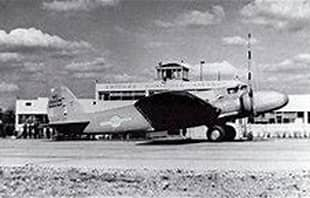
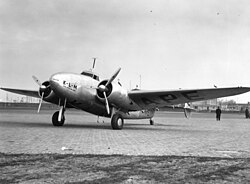
The aircraft involved in the accident was a Lockheed Model 14H Super Electra, registered NC17388.
The Lockheed Model 14 was a modern twin-engine passenger aircraft.
It was designed to provide faster commercial transportation than many earlier aircraft.
The aircraft had an advanced streamlined shape and was capable of operating at relatively high speeds.
The Model 14 had recently entered airline service. The type had been placed into scheduled operations only a few months before the accident.
This meant that the aircraft was a relatively new design when Flight 2 crashed.
The Seattle-to-Chicago Route
Northwest Airlines Flight 2 was operating an eastbound route from Seattle, Washington, to Chicago, Illinois.
The scheduled route included several stops.
The aircraft departed Seattle Boeing Field and traveled toward Spokane, Washington.
It then continued toward Butte, Montana.
After Butte, the aircraft was expected to continue to Billings, Montana, before eventually reaching Chicago.
There were eight passengers aboard, along with the captain and first officer. The flight was a normal scheduled commercial service until it reached the mountainous region near Bozeman.
Departure From Butte
After leaving Butte, Flight 2 continued eastward.
The aircraft was flying at approximately 9,000 feet.
The crew was dealing with winter conditions in Montana.
The route required the aircraft to cross or pass near mountainous terrain.
The Bridger Mountains presented a significant obstacle.
At the time, pilots did not have the sophisticated terrain-warning systems that modern aircraft use.
There was no GPS-based moving map showing the aircraft’s exact position.
The crew had to depend on navigation equipment, maps, radio information, and visual references.
Weather Around Bozeman
The weather in the region was difficult.
A dust storm was affecting the area around Bozeman Pass, and the aircraft changed its course to avoid the conditions.
The flight therefore moved north toward the Bridger Mountains.
This change in route placed the aircraft in a mountainous area.
The first officer communicated with the airline’s radio operator at approximately 3:05 p.m. Mountain Standard Time and reported that the aircraft had reached its cruising altitude of 9,000 feet. The aircraft had reportedly reached that altitude at about 2:53 p.m.
This communication was among the last known radio information from the aircraft.
The Final Moments
Witnesses on the ground later provided important information about the accident.
People in the area saw the aircraft approaching the Bridger Mountains.
The aircraft appeared to be flying normally.
Then, suddenly, it lost control.
Witnesses reported that the aircraft dropped rapidly.
It appeared to enter a stall or steep descent.
The aircraft then spun toward the ground.
The aircraft crashed into the mountainous terrain and caught fire.
The accident happened so quickly that there was no opportunity for the passengers and crew to escape.
The Crash Site
The aircraft crashed approximately 12 miles northeast of Bozeman in Gallatin County, Montana.
The crash occurred in rugged mountain country.
The winter conditions made the site difficult to reach.
The wreckage was badly damaged.
The aircraft broke apart and burned.
All 10 people aboard were killed.
Local authorities immediately began organizing a recovery operation.
Difficult Rescue Conditions
Reaching the crash site was extremely difficult.
There was snow in the mountains.
The terrain was steep and rugged.
Rescuers could not simply drive a vehicle directly to the wreckage.
Instead, local rescue teams used sleds and horses to reach the crash site and recover the victims. Historical photographs from the Museum of the Rockies show rescue crews working with sleds and draft horses in the Bridger Mountain area.
This demonstrates how different emergency response was in the 1930s.
Today, helicopters and specialized mountain rescue teams can often reach accident sites much more quickly.
The Investigation Begins
The accident was investigated by the aviation authorities of the time.
The investigators examined the wreckage carefully.
They wanted to determine why a modern aircraft had suddenly lost control while flying at cruising altitude.
The investigation considered several possibilities.
These included:
- Weather
- Turbulence
- Pilot error
- Navigation
- Engine problems
- Structural failure
- Aircraft control problems
The evidence eventually pointed toward a serious structural problem.
Missing Tail Components
One of the most important discoveries was that both vertical fins and both rudders were missing from the aircraft.
This was a major clue.
The vertical fins and rudders are important parts of an aircraft’s tail.
They help the aircraft maintain directional stability and allow the pilot to control yaw.
If these components fail or separate from an aircraft during flight, the aircraft can become extremely difficult or impossible to control.
Investigators therefore focused on the possibility of a structural failure involving the tail.
What Is Flutter?
The investigation eventually identified flutter as the most likely cause.
Flutter is a dangerous type of vibration that can occur when aerodynamic forces interact with an aircraft’s structure.
Imagine a flexible object being exposed to a strong airflow.
Under certain conditions, the object can begin to vibrate.
If the vibration becomes stronger instead of weaker, the structure can eventually fail.
Aircraft engineers must carefully design wings, tails, control surfaces, and other components to prevent this from happening.
In 1938, the understanding of aeroelastic flutter was much less developed than it is today.
Structural Failure
The official investigation concluded that the likely cause was structural failure of the upper vertical fins and rudders due to flutter.
Once these components failed, the aircraft lost important aerodynamic stability.
The pilots could no longer maintain normal control.
The aircraft then entered a rapid descent and crashed into the mountains.
This was an important discovery because the accident was not simply a case of poor weather or pilot error.
It was linked to the aircraft’s structural design.
A New Aircraft With an Unexpected Problem
The Model 14 Super Electra was a relatively new aircraft.
It had been introduced into scheduled airline service only a few months before the accident.
The crash showed that even a modern aircraft could have hidden design problems.
This was an important lesson for aircraft manufacturers.
A design might perform well during normal testing but still encounter dangerous conditions that had not been fully understood.
The Importance of Vibration Testing
One of the major lessons from the accident involved aircraft testing.
Engineers need to understand how an aircraft behaves under different speeds, loads, and airflow conditions.
This includes studying vibration.
The accident revealed that existing testing methods were not sufficient to identify the dangerous flutter condition that could affect the aircraft’s tail.
The problem therefore became an important subject for aircraft engineers.
Changes to the Lockheed Model 14
The accident led to greater attention being given to the structural design of the Model 14.
The aircraft’s tail structure and flutter characteristics were studied.
Engineers worked to improve the aircraft’s resistance to dangerous vibrations.
The lessons also influenced broader aircraft engineering practices.
Flutter testing became increasingly important for new aircraft designs.
Importance to Aviation Engineering
The Northwest Airlines accident was important because it demonstrated that aircraft could fail because of aerodynamic forces and structural vibrations even when the engines were operating normally.
This was an important development in aviation engineering.
Engineers increasingly recognized that aircraft structures had to be tested not only for strength but also for their behavior under airflow.
Modern aircraft undergo extensive structural and aeroelastic testing before entering commercial service.
The Role of the Pilots
The crew of Flight 2 included experienced pilots.
The captain was Nick Mamer, a well-known aviation pioneer.
Mamer had extensive experience in aviation and had been involved in early long-distance flying.
His death was therefore particularly significant to the aviation community.
The accident was not simply the loss of an airline crew; it also took the life of a notable figure in American aviation.
Nick Mamer
Nick Mamer was known as a pioneering pilot.
He had taken part in important early aviation flights and had earned a reputation as an experienced aviator.
His experience made the accident particularly striking.
It showed that even a highly experienced pilot could be unable to prevent an accident caused by sudden structural failure.
Public Reaction
News of the crash quickly spread across the United States.
Ten people had died aboard a modern passenger aircraft.
The accident was especially shocking because the aircraft was relatively new.
Newspapers reported the disaster prominently.
The difficult recovery operation also attracted attention.
The deaths of the passengers and crew were widely mourned.
The First Fatal Northwest Airlines Crash
The accident had another major historical distinction.
It was the first fatal accident involving Northwest Airlines. For the airline, this was a serious tragedy.
It also raised questions about the safety of the company’s new aircraft.
Northwest and aviation authorities had to respond to concerns about the Model 14.
The First Fatal Super Electra Crash
Flight 2 was also the first fatal accident involving the Lockheed Super Electra.
This made the crash particularly important for Lockheed.
The company needed to understand the structural problem and ensure that other aircraft of the same type did not face the same danger.
The accident therefore had consequences beyond Northwest Airlines.
The Importance of Accident Investigation
The investigation demonstrated why detailed accident investigations are important.
Investigators did not simply conclude that the aircraft had crashed because of bad weather.
They examined the wreckage and identified missing tail components.
They then investigated how those components could have separated from the aircraft.
This process helped identify flutter as the probable cause.
Such investigations can lead to engineering improvements that protect future passengers.
Aviation Technology in the 1930s
The accident also highlights how different aviation was in 1938.
Pilots did not have:
- GPS
- Modern radar
- Terrain-warning systems
- Flight-data recorders
- Cockpit voice recorders
- Digital navigation
- Satellite communications
- Modern weather radar
The crew had to operate with much less information.
This made flying through mountainous areas particularly challenging.
Mountain Flying
Mountain flying requires careful planning.
Pilots must consider terrain elevation, weather, wind, visibility, and aircraft performance.
Mountain waves and turbulence can also create unusual airflow.
At the time of Flight 2, the aviation industry did not fully understand all of the effects of mountain atmospheric conditions.
This made flying near mountain ranges more difficult.
Weather and Structural Stress
Weather was an important part of the circumstances surrounding Flight 2.
The aircraft had changed course to avoid a dust storm near Bozeman Pass.
The aircraft then flew near the Bridger Mountains.
Although the final investigation focused on structural flutter, atmospheric conditions and turbulence could have placed additional stress on the aircraft.
The combination of aircraft design and airflow was therefore important to understanding the accident.
Lessons for Modern Aviation
The Flight 2 disaster taught several important lessons.
Aircraft Structures Must Be Tested Carefully
Aircraft must be tested under many different airflow and speed conditions.
Flutter Must Be Understood
Dangerous vibration can destroy aircraft components very quickly.
New Aircraft Need Extensive Testing
A new aircraft design should be carefully examined before widespread commercial use.
Mountain Weather Matters
Pilots must understand the effects of wind and turbulence near mountains.
Accident Investigation Saves Lives
Studying crashes can reveal hidden weaknesses and lead to safer aircraft.
Modern Aeroelastic Testing
Today, aircraft manufacturers use sophisticated engineering methods to study flutter.
Computers can model aircraft behavior.
Wind-tunnel tests can examine airflow.
Engineers can measure structural vibrations.
Full-scale aircraft tests can be performed before an aircraft enters commercial service.
These systems are far more advanced than the methods available in 1938.
Modern Flight Safety
A modern passenger aircraft flying from Seattle to Chicago would operate with many safety advantages.
The aircraft would have precise navigation.
Air traffic controllers would monitor the flight.
Weather information would be continuously available.
Terrain-warning systems could alert pilots about dangerous proximity to mountains.
Structural components would have undergone extensive testing.
The difference between modern aviation and the aviation of 1938 is enormous.
The Human Cost
Behind the technical lessons of Flight 2 were ten human lives.
Eight passengers were traveling to their destinations.
The two crew members were working on a normal airline flight.
Their families expected them to arrive safely.
Instead, they died in the mountains of Montana.
The tragedy affected families, friends, Northwest Airlines, and the wider aviation community.
Remembering the Victims
Historical aviation accidents should not be remembered only through aircraft numbers and technical causes.
The people aboard Flight 2 had families, careers, and personal stories.
The crew had dedicated their lives to aviation.
The passengers had ordinary plans that were suddenly interrupted.
Remembering them gives a human meaning to the history of the accident.
Long-Term Impact
The Flight 2 accident contributed to improvements in aircraft engineering.
The understanding of flutter became increasingly important.
Aircraft designers learned that structural components had to be evaluated carefully under aerodynamic loads.
The accident also demonstrated the need for better testing of new aircraft.
These lessons helped shape the engineering standards used by later generations of aircraft.
Northwest Airlines After the Accident
Northwest Airlines continued operating after the disaster.
The airline remained an important American carrier for many decades.
Its aircraft fleet expanded and changed as aviation technology developed.
Piston-engine aircraft were eventually replaced by turboprops and jet aircraft.
Northwest later became a major international airline.
The company’s history eventually became part of the history of Delta Air Lines, following their merger in the 2000s.
Why Flight 2 Remains Important
Northwest Airlines Flight 2 remains significant because it was one of the early accidents that demonstrated the dangers of aeroelastic flutter.
The accident occurred during an important period in aviation development.
Aircraft were becoming faster.
As aircraft speeds increased, engineers had to understand new aerodynamic and structural problems.
Flutter was one of those problems.
Conclusion
The Northwest Airlines Flight 2 crash of 10 January 1938 was a major tragedy in the early history of commercial aviation.
The Lockheed Model 14H Super Electra was flying from Seattle to Chicago, with stops including Spokane, Butte, and Billings. After departing Butte, the aircraft flew toward the Bozeman area of Montana.
The aircraft was operating at about 9,000 feet when it encountered the conditions that preceded the crash. It eventually lost control and crashed into the Bridger Mountains approximately 12 miles northeast of Bozeman. All 10 people aboard—8 passengers and 2 crew members—were killed.
The investigation discovered that the aircraft’s vertical fins and rudders had separated. Investigators concluded that the most probable cause was structural failure caused by aeroelastic flutter, which resulted in the loss of aircraft control.
The accident was especially important because the Lockheed Model 14 was a relatively new aircraft. The disaster showed that new aircraft designs could contain dangers that were not immediately obvious.
It also demonstrated the importance of studying aircraft vibrations and structural behavior. Following the accident, engineers placed greater attention on flutter testing and the strength and stability of aircraft control surfaces.
The tragedy also highlighted the dangers faced by early airline pilots. The crew did not have modern navigation systems, weather radar, terrain-warning technology, or flight recorders. They had to depend on the technology and information available in the late 1930s.
Today, aircraft designers use advanced computer models, wind-tunnel testing, structural analysis, and flight testing to identify dangerous vibration and flutter conditions before aircraft enter passenger service.
The Northwest Airlines Flight 2 accident is therefore remembered not only as a tragic loss of ten lives but also as an important event in the development of aircraft engineering and aviation safety. It demonstrated that every part of an aircraft must be carefully tested and understood, especially as aircraft become faster and more complex.
The lessons from Flight 2 helped aviation engineers better understand the relationship between airflow, vibration, and aircraft structure. Those lessons remain important in modern aircraft design and continue to contribute to the safety of passengers and crews around the world.

Ajeet Yadav is an aviation enthusiast covering airline news, airports, aircraft, and industry developments through well-researched and reliable reporting.