









Australian National Airways Southern Cloud
The Australian National Airways Southern Cloud disappearance was one of the most famous unsolved aviation mysteries in Australian history. On 21 March 1931, an Australian National Airways (ANA) aircraft named Southern Cloud disappeared during a scheduled flight from Sydney to Melbourne. The aircraft was carrying six passengers and two crew members. It never arrived at Melbourne, and despite a large search, no trace of the aircraft was found for almost 27 years.
The disappearance became a major mystery for Australia. Families waited for answers, investigators studied the possible causes, and search teams explored large areas of difficult mountain country. The mystery was finally solved in 1958, when the wreckage was accidentally discovered in the Snowy Mountains. The discovery confirmed that the aircraft had crashed in rugged terrain during bad weather.
Australian National Airways
Australian National Airways was one of Australia’s early commercial airlines. It operated passenger and mail services between major Australian cities during the early years of commercial aviation.
During the 1920s and early 1930s, air travel in Australia was developing rapidly. Aircraft offered a much faster way to travel between cities such as Sydney and Melbourne.
However, aviation was still relatively new. Pilots had limited navigation equipment, weather forecasting was less accurate than today, and large parts of Australia remained difficult to access.
The route between Sydney and Melbourne was important, but it crossed areas of mountains and rough countryside.
The Southern Cloud was one of ANA’s aircraft used on this growing network.
The Southern Cloud Aircraft
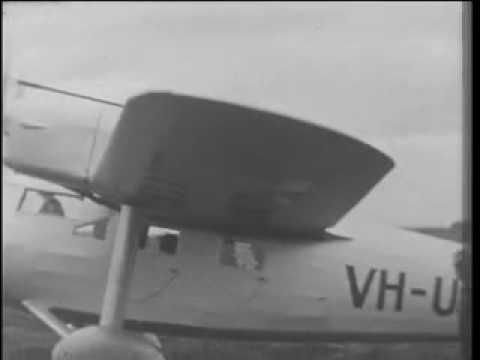
The aircraft involved was a Avro 618 Ten, a British-designed aircraft developed from the Avro Ten. It was operated by Australian National Airways and carried the name Southern Cloud.
The aircraft had been designed for passenger and mail transportation. It was a relatively modern commercial aircraft for its time and was suitable for Australian domestic routes.
Southern Cloud was registered VH-UMF.
The aircraft was equipped for scheduled passenger service and was operated by an experienced crew.
Despite this, flying in Australia during the early 1930s remained challenging because pilots often had to navigate using landmarks and basic instruments.
There were no modern satellite-navigation systems, digital maps, weather radar, or terrain-warning systems.
The Flight on 21 March 1931
On the morning of 21 March 1931, Southern Cloud began a scheduled flight from Sydney to Melbourne.
There were eight people aboard:
- Two crew members
- Six passengers
The aircraft departed from Sydney and began heading south toward Melbourne.
The journey was expected to take several hours.
The flight was taking place during a period when weather conditions could change quickly. The route passed through areas of hills and mountains, particularly around the Snowy Mountains.
The aircraft would have to cross difficult terrain before reaching Melbourne.
Bad Weather
The weather became a major factor in the disappearance.
Southern Cloud encountered cloud and poor visibility while flying toward Melbourne.
At the time, pilots relied heavily on visual navigation. When clouds covered mountains and landmarks, maintaining an accurate position became much more difficult.
Modern aircraft can fly safely through cloud using sophisticated instruments and navigation systems. In 1931, pilots had much less information available.
The crew had to estimate their position and altitude while dealing with difficult weather.
This created a dangerous situation over mountainous country.
The Last Known Position
Southern Cloud was expected to arrive in Melbourne, but it never appeared.
As time passed, concern grew.
The aircraft’s failure to arrive suggested that something serious had happened.
Authorities and aviation officials began searching for the missing aircraft.
The disappearance was especially difficult because there was no precise information about where the aircraft had been when it encountered trouble.
There was no modern emergency locator transmitter that could automatically send a distress signal.
There was also no flight-data recorder or satellite tracking system.
Search teams therefore had to cover large areas of rugged terrain.
The Search Begins
A major search operation was launched.
Aircraft searched from the air while ground parties explored areas where the Southern Cloud might have crashed.
The Snowy Mountains were particularly difficult to search.
The region contained steep slopes, forests, valleys, rocks, and areas that were difficult to reach on foot.
Weather could also make search operations dangerous.
Search aircraft had to fly over large areas while looking for very small pieces of wreckage.
From the air, a crashed aircraft could easily be hidden by trees or mountains.
Despite extensive efforts, the aircraft could not be found.
Why the Wreckage Was So Difficult to Find
The biggest reason the mystery continued for so long was the remote location of the crash.
The Southern Cloud had crashed somewhere in the mountains, but investigators did not know exactly where.
The aircraft was relatively small compared with modern airliners.
After a crash, much of the wreckage could become hidden among trees and rocks.
Snow and vegetation could cover the remains.
Search teams also had to deal with the enormous size of the area.
Without an accurate last known position, the search was like looking for a small object across hundreds of square kilometres of difficult country.
As months and years passed, hope of finding the aircraft decreased.
The Mystery Continues
The disappearance of Southern Cloud became one of Australia’s great aviation mysteries.
Families of the passengers and crew were left without a clear explanation.
At that time, aviation accidents were often difficult to investigate because investigators could not always locate the wreckage.
The lack of a crash site meant that there was no direct evidence showing exactly what had happened.
Several possible explanations were considered.
Bad weather was one possibility.
Navigation error was another.
A mechanical problem could also have caused the aircraft to crash.
Without the wreckage, however, investigators could not determine the exact cause.
The Long Wait
For almost three decades, Southern Cloud remained missing.
The disappearance became part of Australian aviation history.
People continued to remember the aircraft and the people aboard it.
The case also demonstrated the limitations of search-and-rescue operations during the early days of aviation.
Modern search teams have helicopters, satellites, GPS, emergency beacons, mobile communications, and sophisticated mapping systems.
In 1931, searchers depended mainly on aircraft, maps, eyewitness reports, and ground expeditions.
The difference was enormous.
Discovery of the Wreckage in 1958
The mystery was finally solved in 1958.
A worker named Thomas McLeish discovered aircraft wreckage while working in the Snowy Mountains during the construction of the Snowy Mountains Scheme.
The discovery was made near Mount Twynam, in the Snowy Mountains region of New South Wales.
The wreckage was identified as belonging to the missing Southern Cloud.
The discovery ended 27 years of uncertainty.
Investigators were finally able to examine the remains and understand where the aircraft had come down.
What the Wreckage Revealed
The discovery showed that Southern Cloud had crashed in a remote mountainous area.
The aircraft had been hidden among the rugged terrain for decades.
The location explained why earlier search efforts had failed.
The wreckage was located far from the areas where many people had expected the aircraft to have crashed.
The mountain environment had made the aircraft extremely difficult to see from the air.
The discovery also provided an opportunity to examine the physical remains of the aircraft.
Although much of the wreckage had deteriorated over the years, enough remained to confirm its identity.
The Cause of the Crash
The exact cause of the Southern Cloud crash could not be established with complete certainty.
However, the evidence strongly indicated that poor weather and difficult navigation played an important role.
The aircraft was flying through mountainous country in cloud and poor visibility.
It appears that the crew lost their accurate position relative to the terrain.
The aircraft eventually struck the mountainside.
This type of accident is now known as controlled flight into terrain, where an aircraft under the control of its pilots unintentionally hits the ground or a mountain.
Such accidents were more common during the early period of aviation because pilots had limited navigation and terrain-awareness equipment.
The Role of Navigation
Navigation was one of the greatest challenges facing early airline pilots.
Pilots could use maps, compasses, landmarks, and basic radio equipment.
But these methods were not always reliable in poor weather.
If mountains were hidden by cloud, a pilot could not easily determine the aircraft’s position by looking outside.
A small error in navigation could place an aircraft several kilometres away from its intended route.
Over flat land, such an error might not be immediately dangerous.
Over mountains, however, it could be fatal.
The Southern Cloud disaster demonstrated this problem very clearly.
The Human Cost
Eight people lost their lives in the disappearance.
Six passengers had boarded the aircraft expecting to reach Melbourne safely.
The two crew members were responsible for operating the aircraft and completing the journey.
Their deaths were a major tragedy for their families and for the Australian aviation community.
Because the aircraft was not found for 27 years, the families had to live for decades without knowing exactly where the aircraft had disappeared.
The discovery in 1958 finally provided some answers and a confirmed location.
Importance to Australian Aviation
The Southern Cloud disappearance became an important lesson in Australian aviation.
It demonstrated the dangers of flying through mountainous regions in poor weather.
It also showed the need for better navigation systems, weather information, communications, and search-and-rescue capabilities.
Australian aviation continued to develop rapidly after the disaster.
Radio navigation became more reliable, aircraft instruments improved, and weather forecasting became increasingly accurate.
These developments reduced the risks faced by pilots flying across remote parts of Australia.
The Snowy Mountains Connection
The discovery of Southern Cloud in 1958 was closely connected with the huge Snowy Mountains Scheme.
The scheme involved the construction of dams, tunnels, power stations, and other infrastructure across the mountainous region.
Workers were exploring areas that had previously been difficult to access.
It was during this period of increased activity in the mountains that the wreckage was finally located.
The discovery demonstrated an unusual connection between Australia’s infrastructure development and one of its longest-running aviation mysteries.
Legacy of Southern Cloud
The story of Southern Cloud continues to attract interest because of the long period between the disappearance and discovery.
It is unusual for an aircraft to remain missing for nearly three decades and then be found relatively intact in a remote location.
The story also illustrates how quickly aviation technology changed.
In 1931, finding a missing aircraft in the mountains was extremely difficult.
By 1958, better aircraft, mapping techniques, and increased activity in remote areas made the discovery possible.
The Southern Cloud story therefore represents both an aviation tragedy and a historical record of Australia’s technological development.
Conclusion
The Australian National Airways Southern Cloud disappearance of 21 March 1931 remains one of the most memorable mysteries in Australian aviation history.
The Avro 618 Ten Southern Cloud, registered VH-UMF, disappeared while flying from Sydney to Melbourne with eight people aboard. The aircraft encountered poor weather while crossing mountainous country, and it failed to reach Melbourne.
A huge search operation was launched, but no wreckage was found. For 27 years, the fate of Southern Cloud remained unknown.
In 1958, the wreckage was finally discovered in the Snowy Mountains by a worker during the development of the Snowy Mountains Scheme. The discovery confirmed that the aircraft had crashed in rugged mountainous terrain.
The disaster highlighted the dangers of early commercial aviation, particularly poor visibility, limited navigation equipment, and difficult terrain. It also showed how difficult search-and-rescue operations could be before modern technology.
Today, the Southern Cloud remains an important part of Australia’s aviation history. The tragedy is remembered not only because eight people lost their lives, but also because the aircraft remained hidden for nearly three decades. Its story is a powerful reminder of how much aviation has changed and how improvements in navigation, weather forecasting, communication, and rescue technology have made air travel safer.

Ajeet Yadav is an aviation enthusiast covering airline news, airports, aircraft, and industry developments through well-researched and reliable reporting.