









Imperial Airways Handley Page W.10 English Channel Ditching 17 June 1929
The Imperial Airways Handley Page W.10 English Channel Ditching was an important early aviation incident that took place on 17 June 1929. A Handley Page W.10 aircraft operated by Imperial Airways was flying across the English Channel when it was forced to land on the sea. The aircraft was carrying passengers and crew, and the incident became notable because the people on board survived the emergency landing.
The event took place during an important period in the development of commercial aviation. Aircraft were beginning to connect Britain with mainland Europe on regular schedules, but flying over the sea remained dangerous. Navigation equipment was limited, aircraft were not designed with the same safety systems found on modern airliners, and pilots had to depend heavily on their own judgment.
The successful handling of this emergency demonstrated the importance of good piloting, aircraft design, and rescue arrangements for international air services.
Imperial Airways in the 1920s
Imperial Airways was Britain’s principal long-distance airline during the interwar period. It was established in 1924 and operated passenger, mail, and freight services within Britain and to destinations across Europe, Africa, and the Middle East.
During the late 1920s, the airline was expanding its international operations. One of the most important parts of its network was the connection between Britain and continental Europe.
The English Channel was a major obstacle for aircraft traveling between Britain and France. Even though the distance across the Channel was not very large, flying over open water created serious risks.
If an aircraft experienced an engine failure or another major mechanical problem, the pilot could not simply land at the nearest airport. Instead, the pilot might have to land on the sea.
The 17 June 1929 incident showed exactly why this was such a serious problem.
The Handley Page W.10
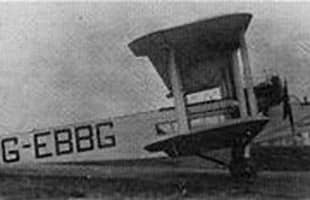
The aircraft involved was a Handley Page W.10, a British twin-engine passenger aircraft developed from the earlier Handley Page W.8 design.
Handley Page was one of Britain’s leading aircraft manufacturers. Its aircraft were used extensively by Imperial Airways during the development of commercial air transportation.
The W.10 was designed for passenger and mail operations. It was a large aircraft for its period and represented the transition from early experimental aircraft toward more practical commercial machines.
The aircraft had two engines and was capable of carrying passengers and mail over international routes.
Although the W.10 was an advanced aircraft for the late 1920s, it lacked many of the safety features that passengers expect today. There were no modern emergency flotation systems, advanced radio navigation equipment, satellite navigation, or sophisticated flight-management computers.
A forced landing on the English Channel was therefore a very serious emergency.
The Flight Across the English Channel
On 17 June 1929, the Imperial Airways aircraft was operating on a scheduled international service.
The aircraft departed from Britain and began its journey across the English Channel toward continental Europe.
At first, the flight was normal. The passengers and crew expected to complete the crossing without difficulty.
However, while the aircraft was over the Channel, a serious problem developed.
The aircraft could no longer continue its flight safely and the pilot was forced to make a decision. With open water beneath the aircraft and no suitable airport immediately available, the safest option was to ditch the aircraft in the sea.
The Decision to Ditch
Ditching an aircraft means deliberately landing it on water.
This is one of the most difficult procedures a pilot can face. Water can look smooth from the air, but it can be difficult to judge its surface conditions. Waves can damage an aircraft’s wings or fuselage during impact, and there is a risk that the aircraft will break apart or sink.
The pilot therefore has to select the best possible landing direction and speed.
In 1929, pilots had far fewer instruments to help them make such decisions. They depended on visual observation, experience, and knowledge of the aircraft.
The Handley Page W.10 was brought down onto the English Channel.
The successful ditching was a major achievement because a controlled water landing gave the people on board a much better chance of survival than an uncontrolled crash.
Landing on the Water
The aircraft touched the surface of the Channel and came to rest on the water.
The impact was serious, but the aircraft remained sufficiently intact to allow the people on board to escape.
This was particularly important because an aircraft that lands on water can quickly become unstable. Water can enter the fuselage, causing the aircraft to sink or roll.
Passengers and crew therefore have to leave the aircraft quickly.
The successful ditching of the W.10 demonstrated the value of maintaining control until the final moments of an emergency.
Instead of losing control and crashing at high speed, the aircraft was brought down deliberately.
Rescue After the Ditching
Once the aircraft was on the water, the next challenge was rescue.
The English Channel was an important shipping route, and ships were present in the area. Rescue arrangements for aviation were not as advanced as those used today, but ships could provide assistance to people involved in an accident.
The people aboard the aircraft were rescued following the ditching.
The survival of the passengers and crew was an important aspect of the incident. It showed that a controlled ditching could provide a realistic chance of survival, even when an aircraft was forced to land in open water.
The event also demonstrated the importance of communication and cooperation between aviation services and maritime traffic.
Why Flying Across the Channel Was Dangerous
The English Channel was one of the earliest areas where regular international air services developed.
However, crossing the Channel involved risks that were not present during a flight entirely over land.
If a pilot experienced an engine failure over Britain or France, there was usually some possibility of finding a field or road where the aircraft could be landed.
Over the Channel, the options were extremely limited.
Weather was another major concern. Fog, wind, clouds, and poor visibility could make navigation difficult. The aircraft of the period were also less capable of dealing with bad weather than modern airliners.
Radio communication and navigation technology were developing but were not nearly as sophisticated as they are today.
For these reasons, an emergency over the Channel required considerable skill from the pilot.
The Importance of Pilot Skill
The incident highlighted the importance of pilot training and judgment.
A commercial pilot in the 1920s needed to understand the aircraft, weather, route, navigation, and possible emergency procedures.
The pilot of the Handley Page W.10 had to recognize that continuing the flight was no longer safe and make the difficult decision to ditch.
That decision may have prevented a much more serious accident.
In aviation, a controlled emergency landing is often safer than attempting to continue a flight when the aircraft is not capable of reaching an airport.
The event therefore became an example of the importance of sound decision-making in early commercial aviation.
Aircraft Design and Water Landings
The incident also demonstrated the importance of aircraft construction.
An aircraft intended for commercial operations needed to be strong enough to withstand the stresses of normal flight as well as unexpected situations.
The W.10 was not specifically designed as a modern seaplane, but its structure was able to survive the water landing sufficiently for the people aboard to escape.
Aircraft designers gradually learned more about how aircraft behaved during emergency landings.
Information from incidents and accidents helped engineers improve fuselage strength, seating arrangements, exits, flotation equipment, and other safety features.
The experience gained during the early years of commercial aviation contributed to later improvements in passenger aircraft.
Passenger Safety in the 1920s
Passenger safety procedures were also much less developed in 1929.
Modern airline passengers receive safety demonstrations before takeoff. They are shown emergency exits, life jackets, oxygen masks, and other safety equipment.
In the 1920s, such procedures were not yet standardized.
An emergency over water made these shortcomings particularly important.
Passengers needed to leave the aircraft quickly and safely after ditching. Crew members had to manage the evacuation while also dealing with the aircraft’s condition and the surrounding water.
Successful survival incidents helped airlines understand the importance of organized emergency procedures.
Importance for Imperial Airways
The incident was significant for Imperial Airways because the airline was building a reputation for operating international passenger and mail services.
Regular flights across Europe required airlines to deal with many different risks, including mechanical failures and difficult weather.
Every emergency provided valuable operational experience.
The 17 June 1929 ditching showed that even when an aircraft could not complete its flight, good pilot judgment and effective rescue arrangements could prevent the loss of life.
It was part of the wider learning process through which Imperial Airways and other airlines developed more reliable operating procedures.
Development of Safer Commercial Aviation
During the following decades, commercial aviation changed dramatically.
Aircraft became faster and more reliable. Engines improved, navigation systems became more accurate, and radio communication became increasingly important.
Airports also developed better facilities, and aviation authorities introduced stronger safety regulations.
Aircraft operating over water eventually received better emergency equipment, including life rafts and life jackets.
The lessons learned from early ditchings and crashes helped shape these improvements.
The Handley Page W.10 incident belongs to this early period when pilots and airlines were still developing many of the practices that are considered normal today.
Conclusion
The Imperial Airways Handley Page W.10 English Channel Ditching of 17 June 1929 was an important event in the early history of commercial aviation. The aircraft was flying across the English Channel when an emergency forced the pilot to make a controlled landing on the water.
The successful ditching demonstrated the importance of pilot skill, aircraft strength, emergency planning, and rescue services. At a time when aircraft technology and safety equipment were still developing, landing safely on open water was a considerable challenge.
The incident also highlighted the dangers of early international air travel. Crossing the English Channel may seem simple today, but in the 1920s it was a significant aviation operation. Pilots had limited navigation equipment, aircraft had fewer safety systems, and rescue procedures were still developing.
The survival of those aboard the Handley Page W.10 showed what could be achieved when an emergency was managed successfully. Events like this helped airlines, pilots, aircraft manufacturers, and authorities learn valuable lessons.
The 17 June 1929 English Channel ditching therefore forms part of the larger story of how commercial aviation developed from a risky new technology into the highly organized and safety-focused industry that exists today.

Ajeet Yadav is an aviation enthusiast covering airline news, airports, aircraft, and industry developments through well-researched and reliable reporting.