









- Accessibility took centre stage at Hamburg this April, with Airbus’s U Suite, which allows wheelchair users to fly in their own chairs, becoming the show’s defining statement.
- From RECARO’s recycled-material seats already flying on Iberia to Boeing’s CirculAir Playbook, sustainability moved from concept to measurable, in-service reality.
- India arrived on the global cabin stage with a DGCA-certified seat platform and aerospace-grade foam products, drawing attention from an industry that has long looked only westward.
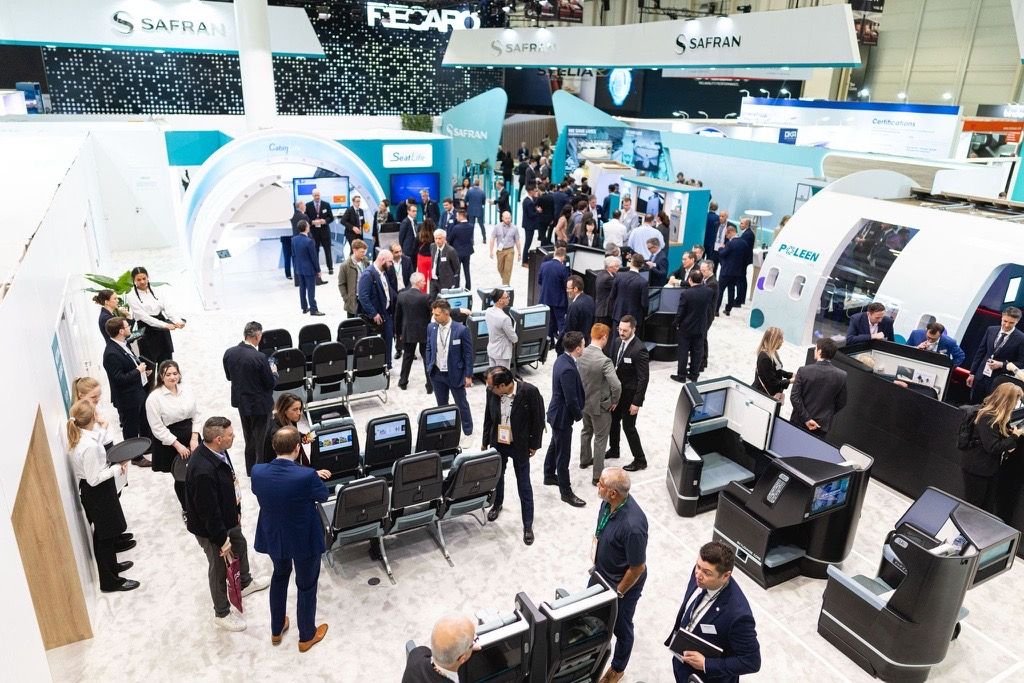
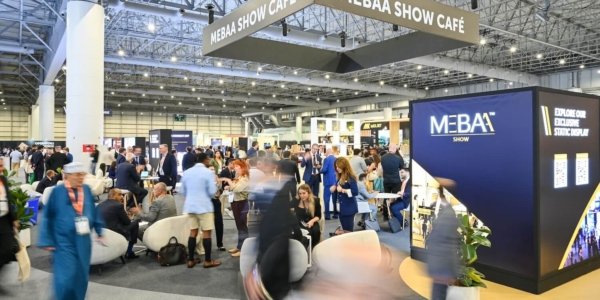
Every year, the global aviation industry gathers at the Hamburg Messe to take stock of where the aircraft cabin stands—and where it is heading. The 25th edition of the Aircraft Interiors Expo (AIX), held from April 14 to 16, 2026, drew more than 450 exhibitors and 13,000 professionals, putting on display the technologies that will define the next decade of passenger travel.
The theme of this year’s show was the Convergent Cabin—a vision where artificial intelligence (AI), high-bandwidth internet, and earth-friendly materials work together to create a journey that is personal, inclusive, and sustainable.
Airbus: Dignity by Design
Airbus addressed a problem the industry has long deferred by presenting the Airspace U Suite. For decades, wheelchair users have faced the stressful process of transferring into narrow-aisle chairs and risked damage to their custom equipment. The U Suite allows these passengers to remain in their own personal wheelchairs, which are secured directly to the floor.
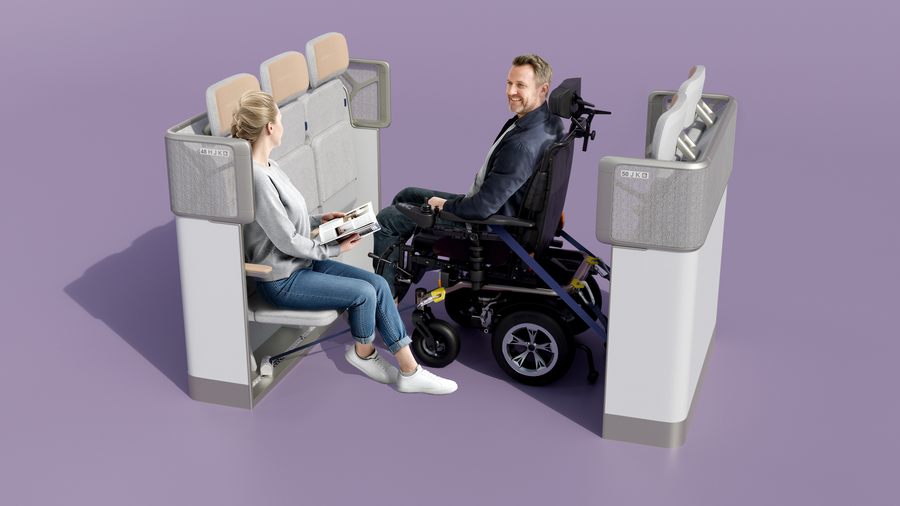
In March 2026, Airbus Design Office Engineer and wheelchair user Dirk Thalheim successfully flight-tested the wheelchair and restraint system to validate its early-phase ergonomics. The full compartment test remains the next phase, with the first delivery projected for 2032, subject to aviation authority certification.
The space is also multi-purpose; it can be quickly reconfigured for families, business meetings, or as a standard lie-flat seat for other travellers. The concept is designed to be suitable across all Airbus aircraft.
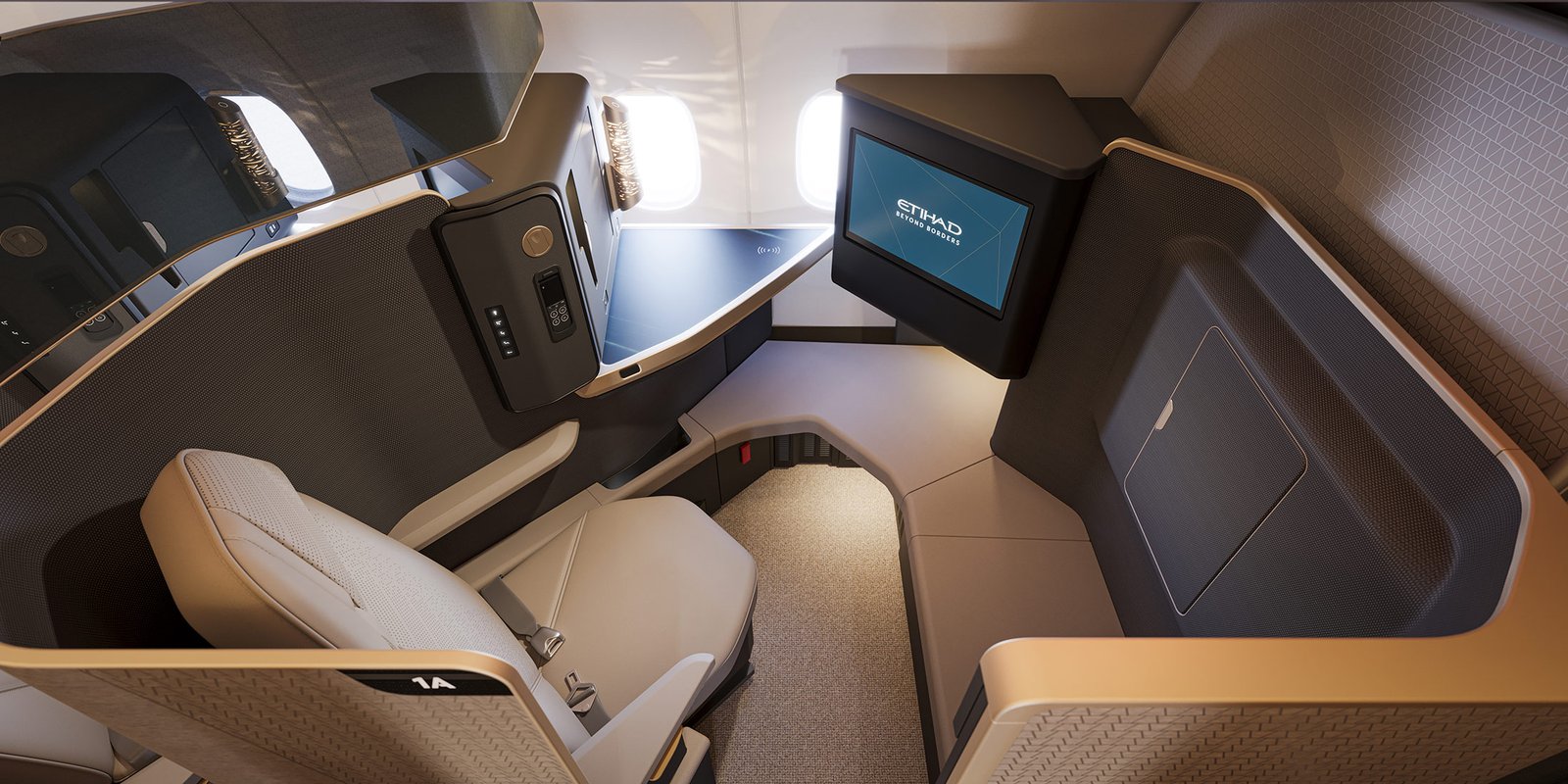
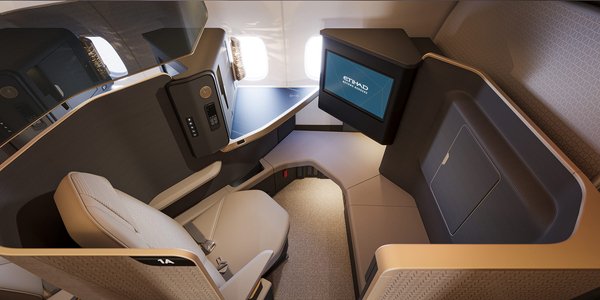
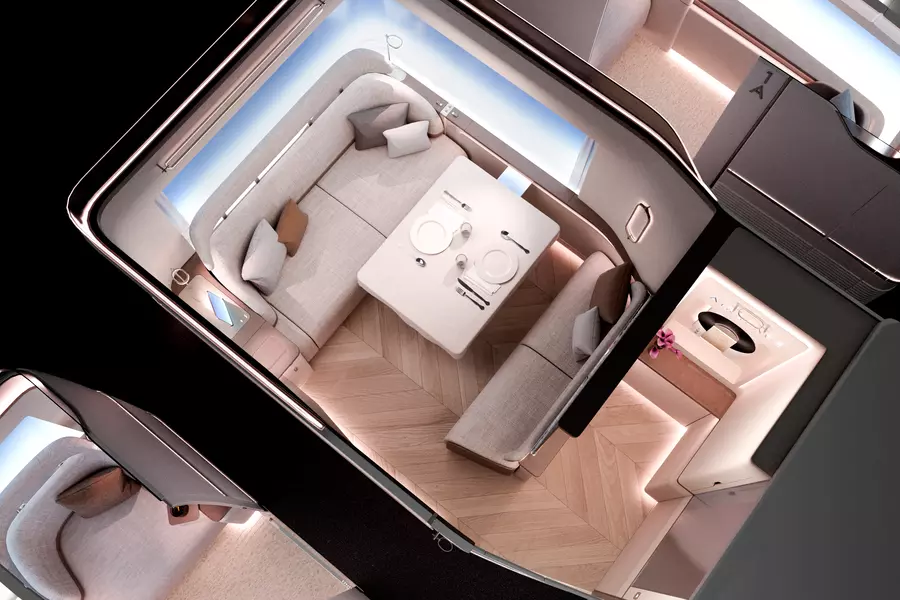
For its flagship widebody, Airbus showcased the A350-1000 First Class Master Suite. Arranged in a 1-1-1 layout, the central suite offers two passengers a full double bed, a private bar, and a dedicated lavatory.
To maximise this space, Airbus moved traditional storage monuments to a new Centre Module at the front of the cabin, which also houses crew rest access, significantly reducing noise and foot traffic through the premium zone.
Airbus is also bringing widebody-level comfort to its smaller aircraft. On the A321XLR, designed for long missions of up to 11 hours, engineers have achieved a cabin altitude of just 6,000 feet—a lower pressure that helps passengers land feeling notably more refreshed and less fatigued.
Safran & RAVE: Digital Immersion
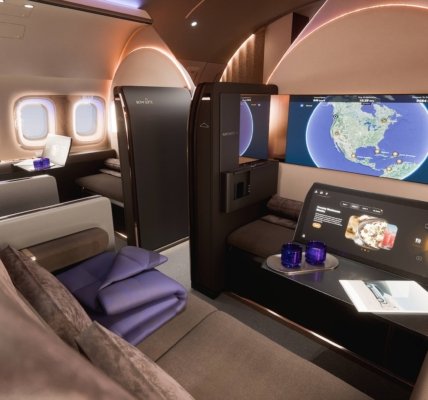
Safran focused on hyper-personalisation through the Origin concept, a collaboration with RAVE Aerospace. This premium suite replaces the traditional seatback TV with a massive, U-shaped micro-LED screen that wraps around the passenger.
It functions like digital wallpaper, allowing a traveller to transform their space from a high-tech office with multiple windows to a home theatre or a calming beach scene.
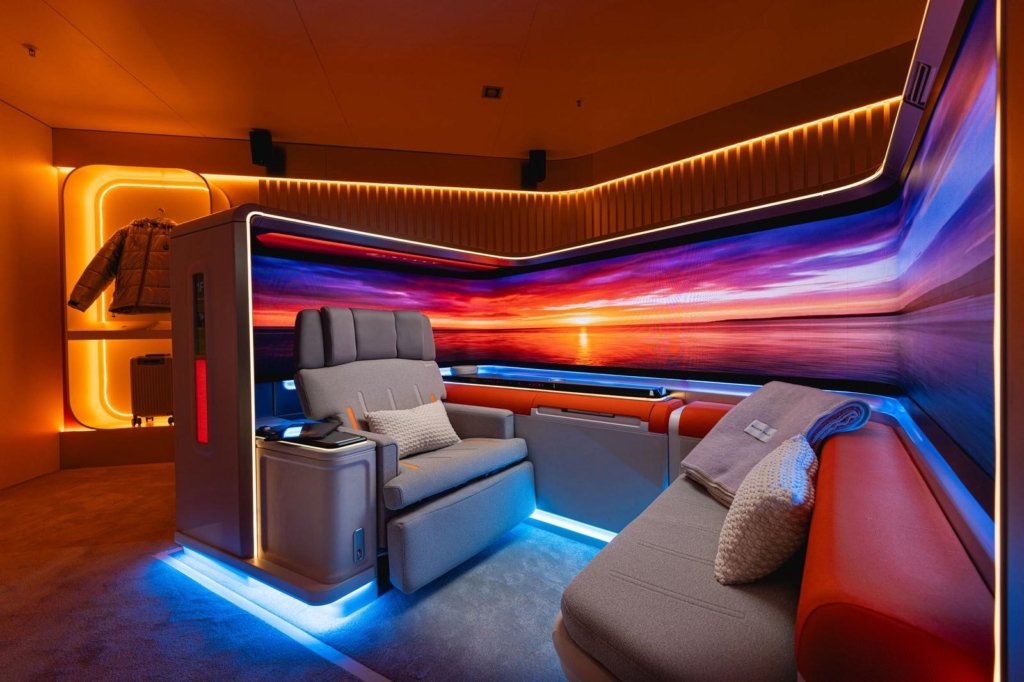
The seat itself features dynamic comfort and temperature management systems that optimise cushion pressure and regulate the suite’s microclimate to reduce muscle stiffness. This is paired with the latest version of Euphony, a headset-free audio system built into the headrest that delivers high-fidelity sound without the discomfort of heavy headphones.
Safran also demonstrated its Elite solutions, which bring first-class attributes into the business-class footprint by optimising the front row of the cabin.
RECARO: Lighter, Greener, Smarter
RECARO Aircraft Seating showcased its vision for a lighter, smarter cabin. Their R Sphere seat won the Crystal Cabin Award for Sustainable Cabin by using materials like upcycled fishing nets, recycled PVC, sugarcane composites, and wood inlays.
By reducing weight by 1.5 kg per passenger, a single-aisle aircraft can cut its CO₂ emissions by 55 metric tons every year—a figure that compounds significantly across a fleet. The fishing-net pockets and wood inlays are already flying in a trial on Iberia’s A320neo.
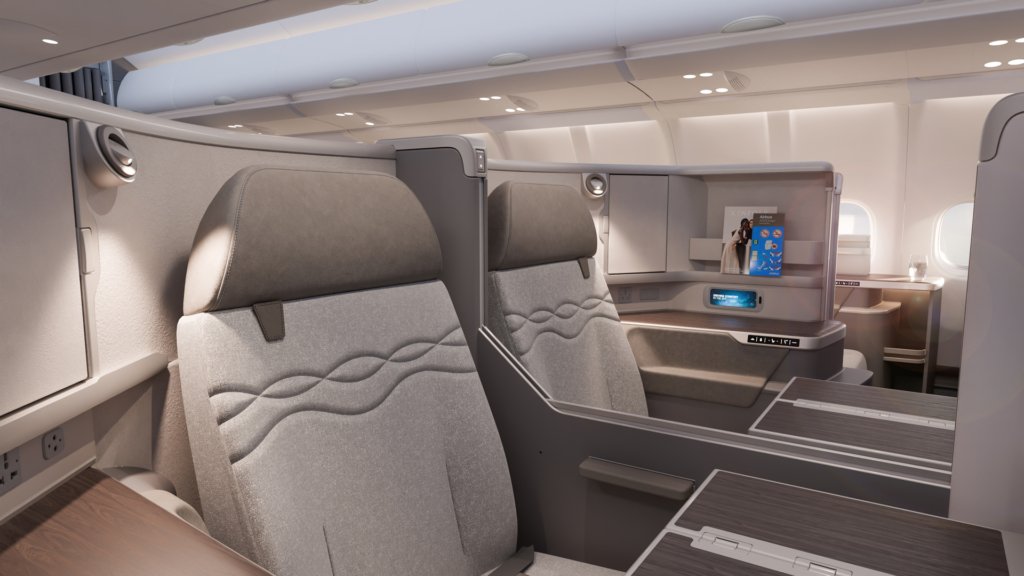
In the premium segment, RECARO launched the R7 Business Class platform, which is 20% lighter than standard seats. It features the Horizon technology demonstrator, an AI-powered assistant that understands voice commands in over 90 languages.
Passengers can simply tell their seat to recline or adjust the Lumina Sync lighting, designed to help reset their internal clocks and reduce jet lag.
Boeing: Space, Rethought
Boeing‘s presence emphasised the architectural flexibility of its newest jets.
The 777X Sky Interior features sculpted sidewalls and the largest windows in the industry, creating a sense of openness.
A major innovation is the aircraft’s upper deck—a concealed crew rest area above the main passenger cabin.
By moving crew sleeping bunks off the main floor, Boeing frees up significant space for additional passenger seating or premium amenities.
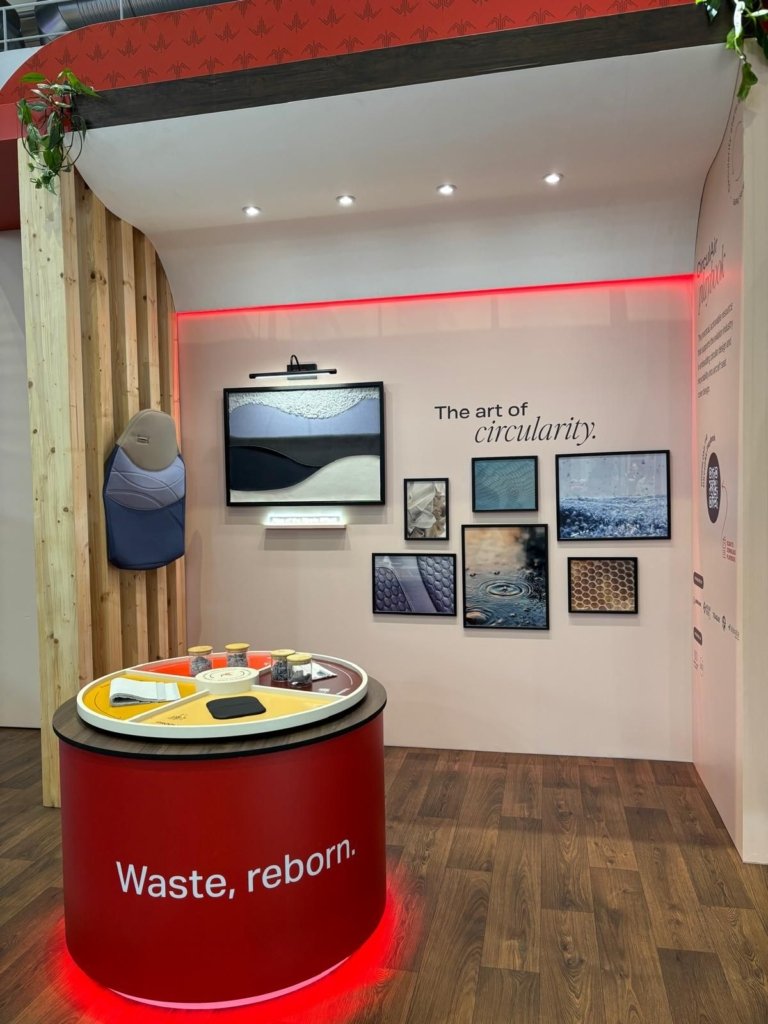
Boeing also highlighted its commitment to environmental responsibility by partnering with materials firm Gen Phoenix on the CirculAir Playbook—a practical guide showing airlines how to recover old seat covers and turn them back into high-quality fibres for new cabin products.
Collins Aerospace: Maximising Every Inch
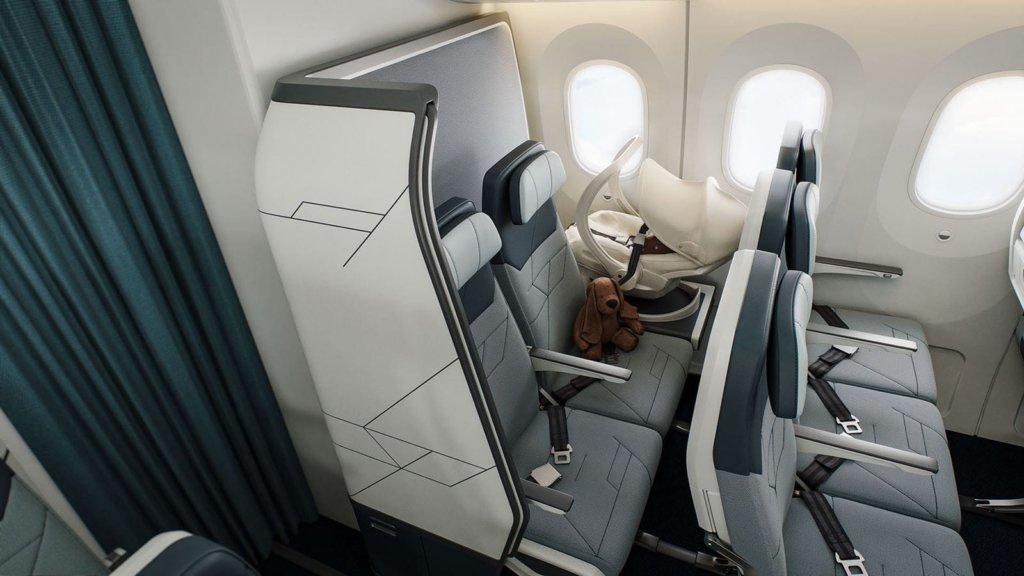
Collins Aerospace took home the Crystal Cabin Award for Passenger Comfort with the SkyNook—a solution that turns the tapered space at the very back of widebody planes into a private retreat for families, complete with a sliding door and enough room for a baby’s travel cot or a service animal to stretch out.
Air Canada was announced as the launch customer for Collins’ Aurora suites for its new A321XLR fleet. With Air Canada’s A321XLRs entering service this spring, the announcement carries immediate weight.
These lie-flat suites use a proprietary shape tailored to the exact dimensions of the A321XLR, enabling an additional row of premium seating, while the companion Meridian+ economy seats use a contoured design to give passengers more room for their hips and knees.
In-Flight Connectivity
One of the biggest hurdles for passengers has been logging into slow plane Wi-Fi. SES and Google announced a partnership to fix this for Android users—on equipped aircraft, the airline’s login portal opens automatically in an Android Custom Tab and autofills saved passwords and payment details.
Viasat has entered Boeing’s technical evaluation process to qualify its new AERA antenna on the 737 MAX, 777X, and 787 fleets. The antenna connects to GEO, MEO, and LEO satellite networks at the same time, ensuring a consistent, high-speed connection even across remote regions. Market entry is planned for early 2028.
To render this connectivity, Thales launched FlytEDGE Aura, the first screen in the sky to use 4K Tandem OLED technology. The entire unit is 30% lighter than the previous generation, with a port module 80% smaller than before and a Qualcomm processor six times more powerful than its predecessor.
India Steps Forward
AIX 2026 marked a visible step forward for the Indian aerospace sector.
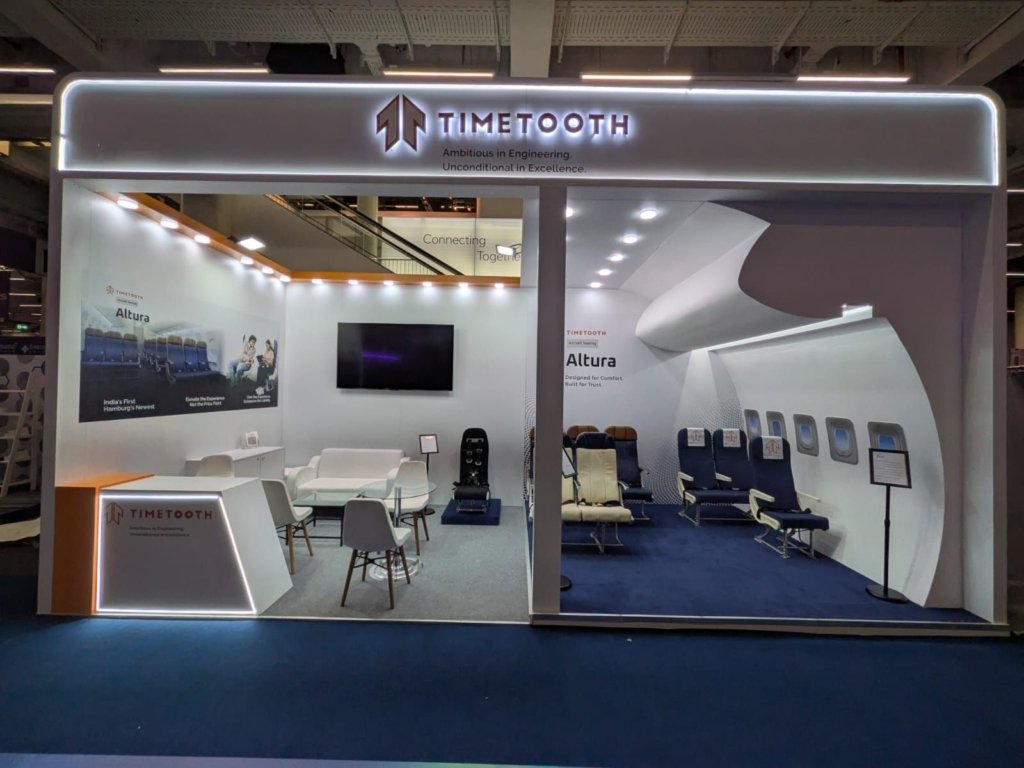
Noida-based Timetooth Technologies, a Tier I aerospace and defence supplier founded in 2009, introduced its DGCA-certified seat platform Altura to the international market—developed in partnership with regional carrier FLY91 for the ATR 72-600 and first unveiled domestically at Wings India 2026 in January.
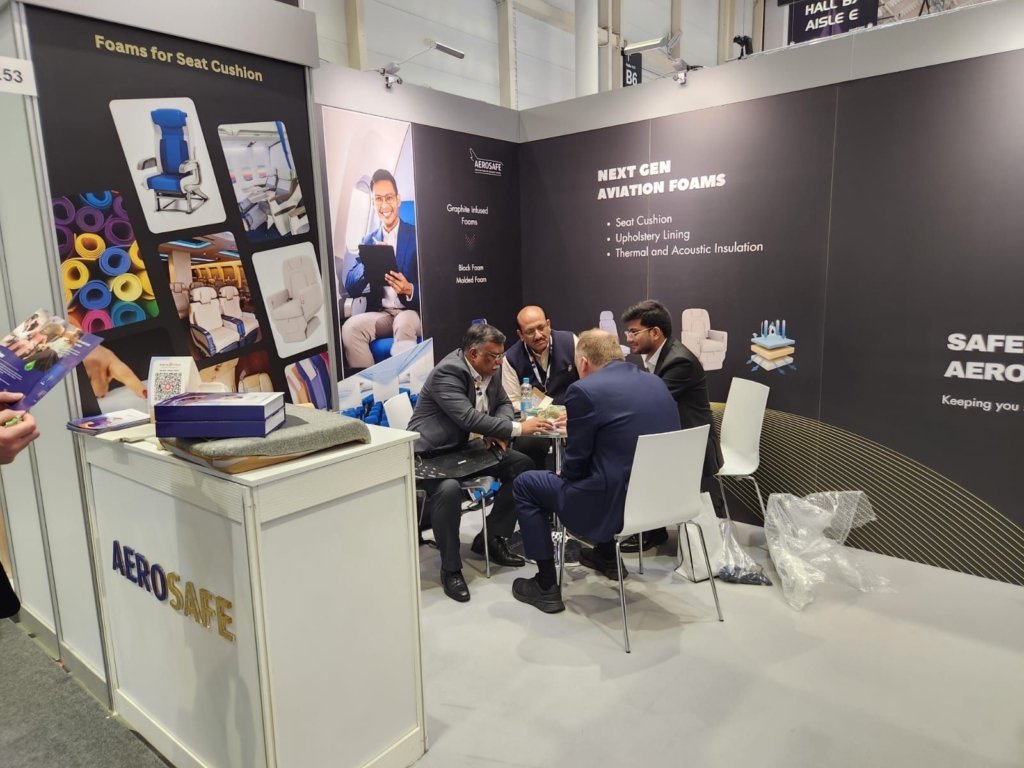
Navi Mumbai’s AeroChamp showcased its Aerosafe foam range, developed in collaboration with Sheela Foam Limited, India’s largest foam manufacturer.
The graphite-infused foams meet stringent aerospace fire, smoke, and toxicity standards, and are already supplied to customers across the Middle East and Asia from factories in India, Spain, and Australia.
For most of commercial aviation’s history, the cabin has been engineered around the aircraft. AIX 2026 suggested that the equation is shifting—slowly, but with intent. The passenger, not the airframe, is becoming the starting point.
Also Read: India’s Two-Tier Aviation Economy: Protected vs Penalised