





- Launched in January 2024 alongside Boeing’s Bengaluru engineering campus, the Sukanya Program was designed to address two gaps at once — early exposure to science and aviation in schools, and financial barriers faced by women during the advanced stages of pilot training.
- In two years, the programme has expanded to 32 STEM labs across government schools in regions ranging from Uttarakhand and Jammu & Kashmir to Odisha, reaching close to 20,000 students annually through hands-on learning in science, mathematics and aeromodelling.
- The initiative moved from outreach to direct support for pilot training in February 2026 when Boeing announced the first Sukanya pilot scholarships from the Air India Cadet Pilot Programme — backing six aspiring pilots at the stage where many aviation careers stall due to cost.
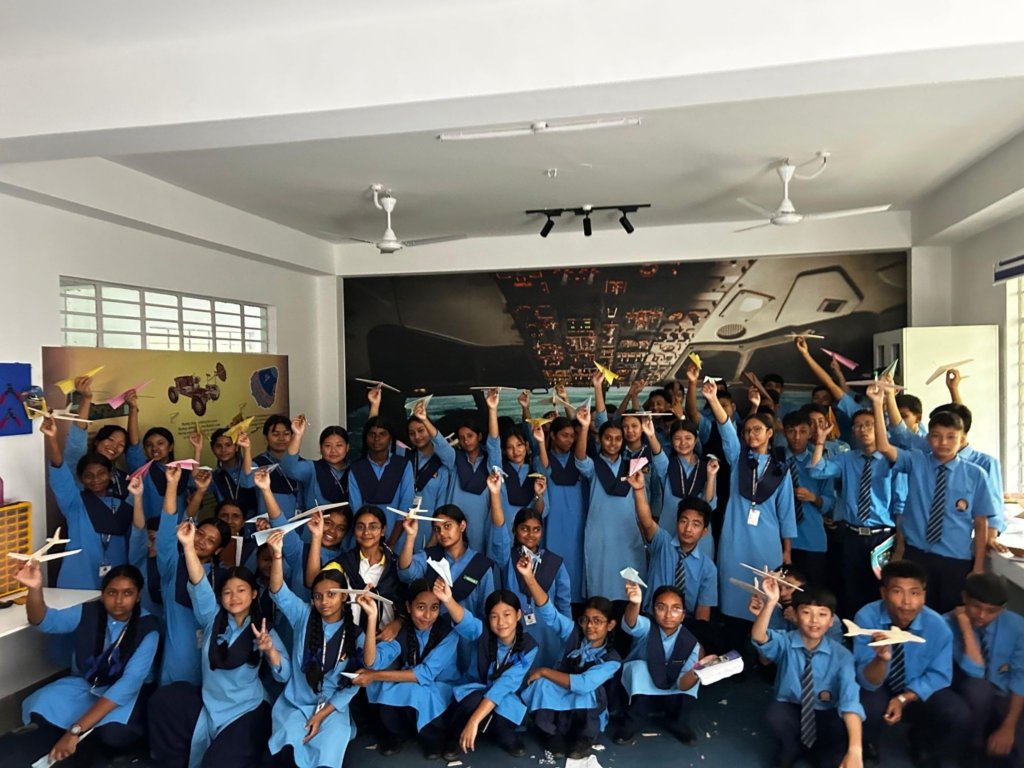
The Boeing Sukanya Program, launched in January 2024 alongside Boeing’s 43-acre engineering campus near Bengaluru, combines school-level STEM labs with financial support for women in advanced pilot training — addressing the problem at both ends, not just one.
Two years in, 32 STEM labs are running across India, reaching close to 20,000 students annually in government schools from Uttarakhand to Odisha, with Boeing’s sights set on 150 locations nationwide.
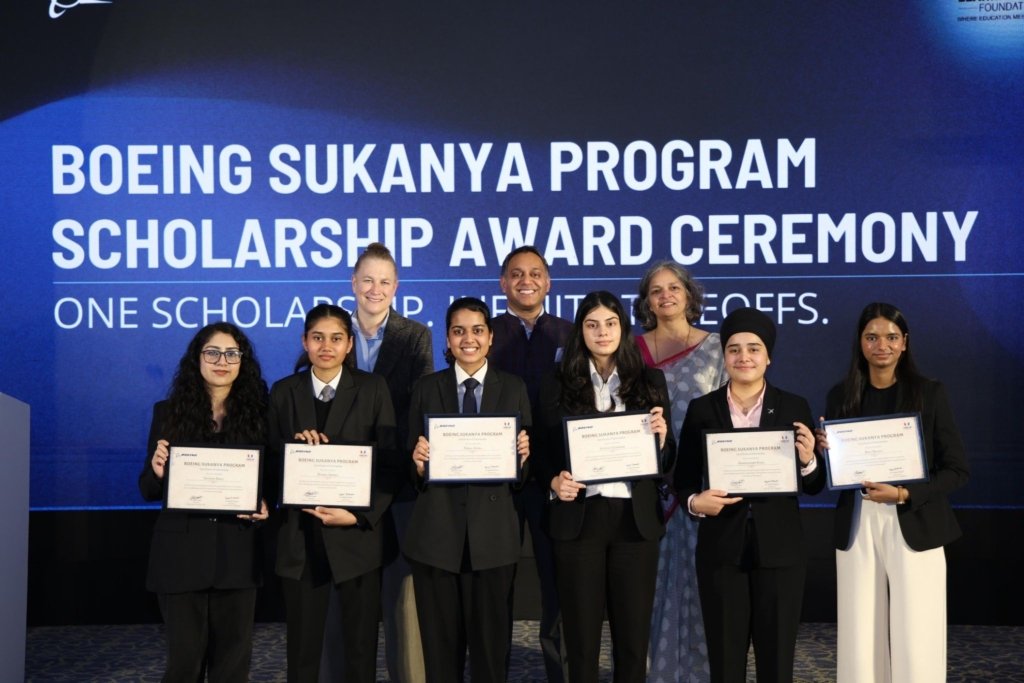
In February 2026, the programme moved from intention to action by naming its first six pilot scholarship recipients from the Air India Cadet Pilot Programme — Gungun Lohchab, Gauhar Khan, Riya Bharti, Nabeeha Ahmed, Nehal Sinha, and Harmandeep — and backing them at the training stage where most careers quietly end.
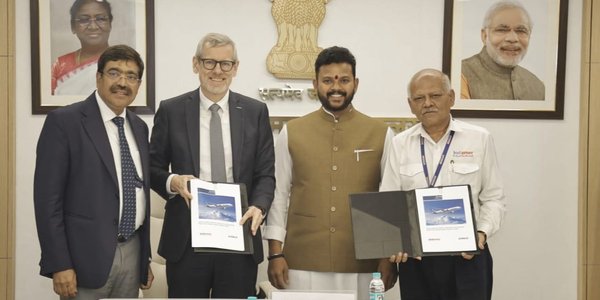
When Boeing opened its India Engineering and Technology Centre campus near Bengaluru in January 2024, the scale of the facility drew most of the attention. It was Boeing’s largest engineering investment outside the United States. But on the same day, Boeing announced a second initiative — one that had nothing to do with buildings or aircraft programmes. The Boeing Sukanya Program was launched alongside the campus with a straightforward aim: to bring more girls and women into aviation in India, from the classroom all the way to the flight deck.
Two years on, Sukanya has labs running in government schools, a first round of pilot scholarship recipients named, and a reach that extends well beyond major cities. It is a programme that has grown steadily and without much noise — which, in India, says something in itself.
What the Programme Sets Out to Do
Sukanya addresses two distinct stages where girls and women tend to lose ground in aviation. The first is early exposure. Students in government schools, particularly outside large cities, rarely get structured contact with science, mathematics, or aviation as a subject. Without that early familiarity, the field stays out of reach long before any career choice is consciously made.
The second is the cost barrier. Even women who get through initial flight training frequently hit a wall at the advanced stages — simulator hours, additional certifications, and the expensive final phases of qualifying for commercial operations — where financial support is scarce.
Sukanya was built to tackle both: the school years and the final stretch of pilot training.
Boeing’s support for the pilot training side covers flight training costs, certifications, simulator sessions, and career development programmes. Boeing was clear from the start that awareness alone would not move the needle. Without financial backing at the right moments, many capable candidates do not make it through.
India already has around 15 per cent women among its commercial pilots — roughly three times the global average. The Sukanya Program is built to take that further and bring more women into the wider range of careers aviation offers.
Labs in Schools, Across the Country
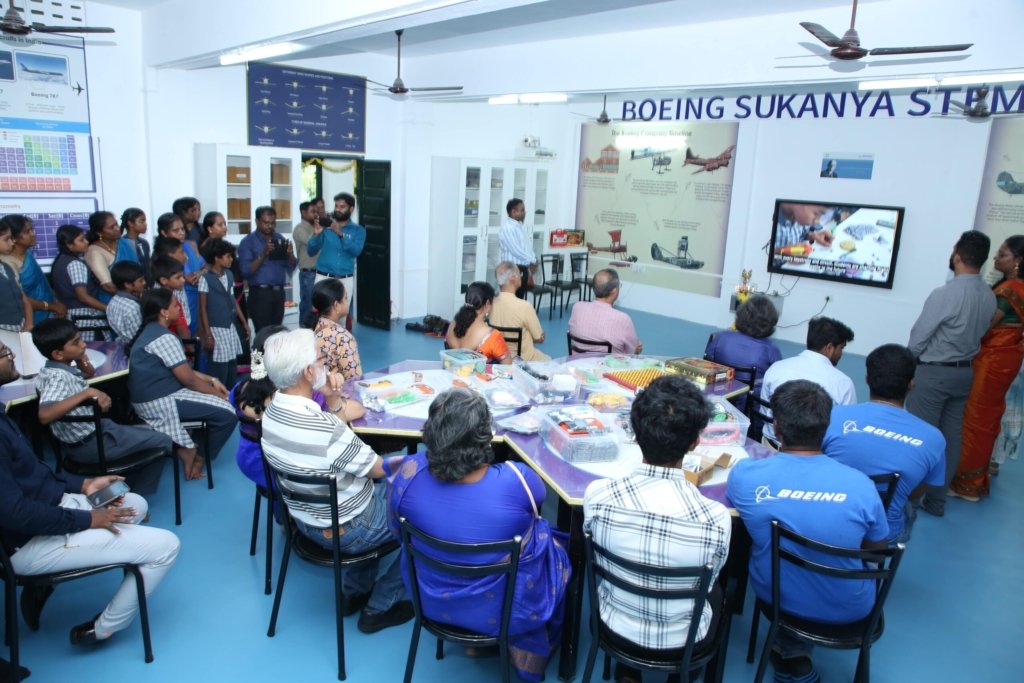
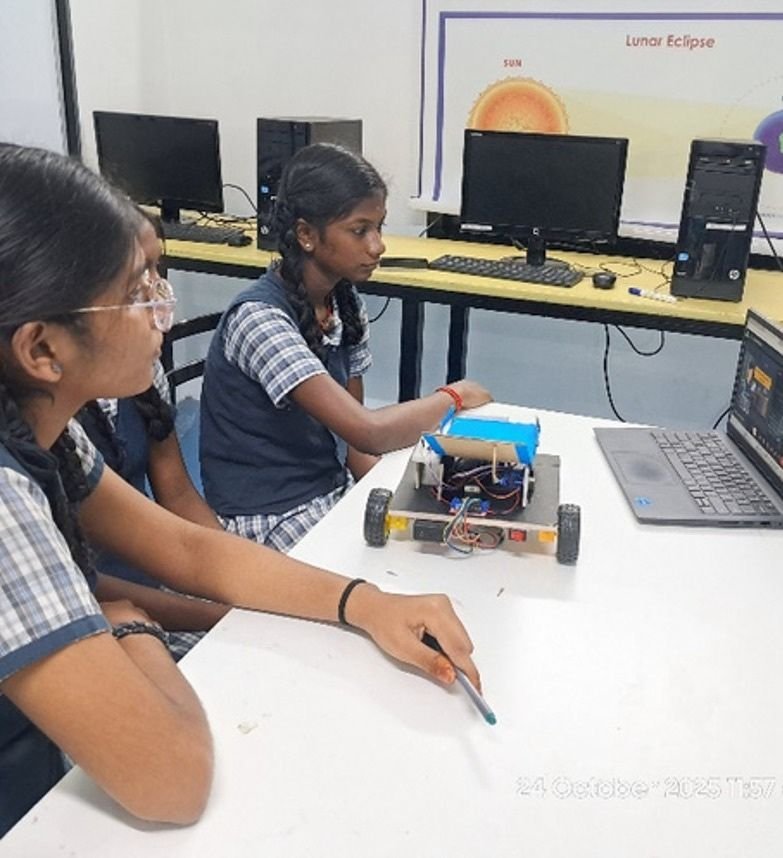
Boeing has partnered with Learning Links Foundation to set up and run Boeing Sukanya STEM labs in government schools. Each lab is built around hands-on learning — experiential kits, digital tools, and structured modules covering science, mathematics, aviation concepts, and aeromodelling. The focus is on students from Classes VI to X, an age group where interest in science either takes root or begins to fade.
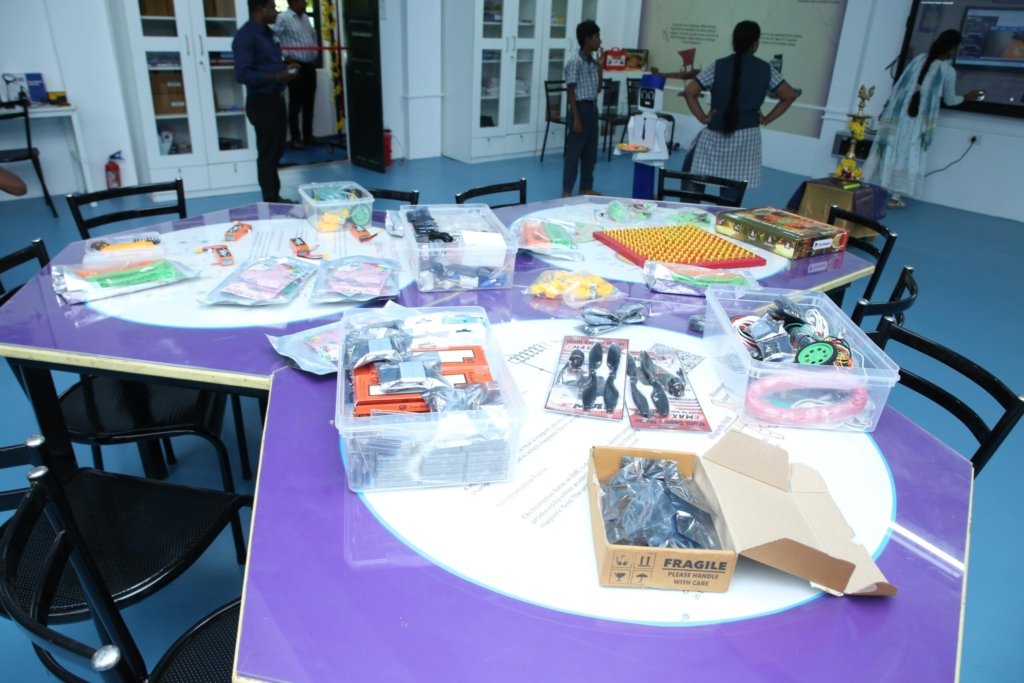
Students work through workshops, projects, and practical activities. They are encouraged to enter aeromodelling and STEM competitions at regional and national levels.
Teachers are part of the process too — the labs are woven into the school’s regular functioning rather than added on as an extra.
The programme has spread well beyond expected geography. Labs are now running in the Northeast, Jammu and Kashmir, and Uttarakhand, alongside more accessible locations. In January 2026, new labs were opened in government schools in Odisha’s Sambalpur district, timed to coincide with National Girl Child Day. In Odisha alone, more than 3,000 students are covered annually.
Government schools come with real challenges. Resources differ widely between states. School schedules are fixed. Students arrive with very different levels of prior exposure to science. The fact that Sukanya has continued to expand within this environment, rather than gravitating toward better-equipped private institutions, suggests the programme was designed for the harder path, not the easier one.
The Pilot Scholarships: Moving from Promise to Action
The scholarship side of Sukanya made its first concrete mark in February 2026 when Boeing named its first round of recipients — six women cadet pilots from the Air India Cadet Pilot Programme. This was the first time scholarships had actually been awarded under the programme, taking it from an announced intention to a tangible commitment.
Pilot training places its heaviest financial demands toward the end — advanced certifications and preparations for commercial operations are where many candidates drop out, not for lack of ability but for lack of funds.
Sukanya’s support is aimed at exactly this phase. Boeing India President Salil Gupte described it as backing candidates “at a decisive stage of their careers.”
Boeing has kept its public communication on the scholarships grounded. No placement figures, no completion rates — just a clear account of what is being supported and at what stage.
Given how many programmes over-promise at launch, that restraint is worth noting.
India’s aviation sector is expected to need around 141,000 new aviation professionals over the next two decades — pilots, engineers, technicians, and cabin crew. Meeting that number will require drawing talent from a far wider base than the industry has traditionally relied on. Programmes that bring in women and candidates from smaller cities and rural areas are not a side agenda. They are central to the solution.
Sukanya was built with this picture in mind. The school labs create early familiarity with aviation and the sciences behind it. The pilot scholarships reduce dropout at a point where candidates are closest to qualifying. Between them, the programme works across the full length of the journey.
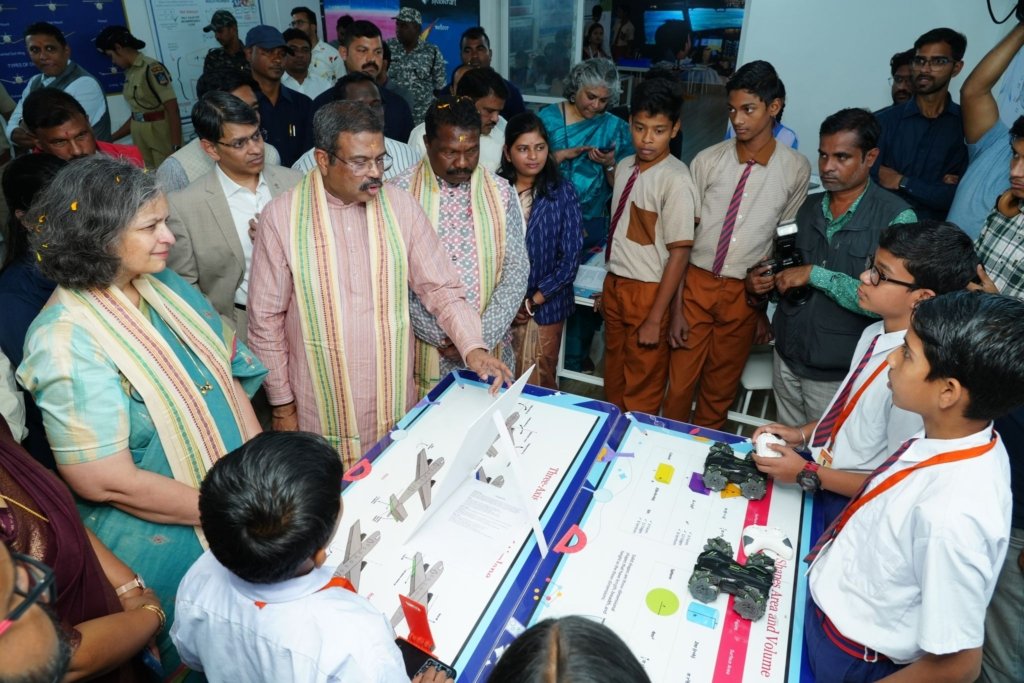
Photo: Boeing
Given the scale of the workforce demand ahead, Boeing’s target of 150 STEM lab locations now appears less like an ambitious goal and more like a practical starting point.
Sukanya does not promise every student a career in the cockpit. At the school level, aviation is the lens through which science and mathematics come alive — a starting point that can lead to roles as pilots, aircraft maintenance engineers, air traffic controllers, aerospace engineers, or many other technical careers that keep the aviation industry running.
Expansion has been steady and incremental — one implementation partner, verified lab installations built into school systems, and a public record that runs from lab inaugurations in 2024 through to scholarship awards in early 2026.
Some Doors Are Already Open
For students across Odisha, the Northeast, Jammu and Kashmir, and Uttarakhand, the shift is real: science and aviation-linked learning that was simply not accessible before, now sitting inside their school. Whether those students go on to fly aircraft, maintain them, design them, or manage the airspace they travel through, early exposure changes what a young person believes is within reach.
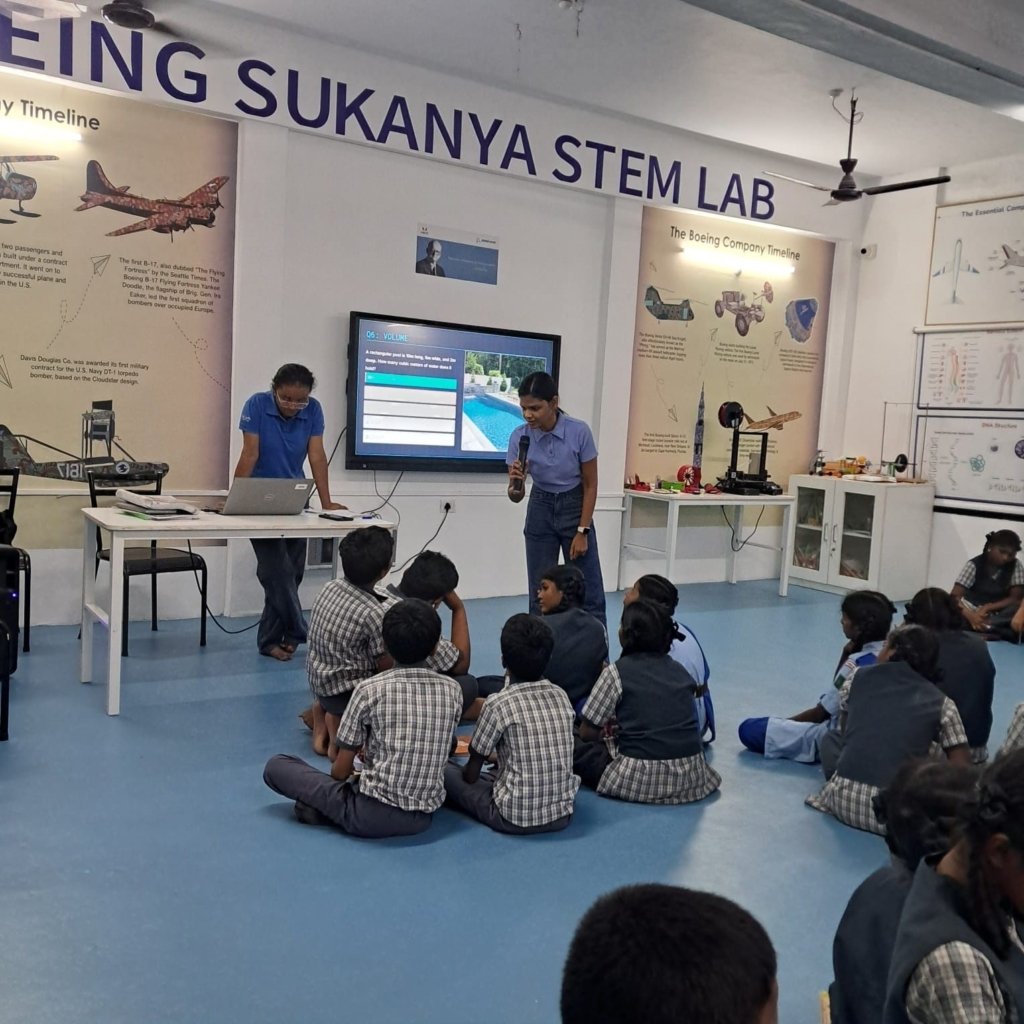
Photo: Bala Mandir
For Gungun, Gauhar, Riya, Nabeeha, Nehal, and Harmandeep — the six women who received the first Sukanya pilot scholarships — the support has arrived at exactly the point where many careers end, not through failure but through financial exhaustion.
The scholarships do not come with guarantees. But they remove the obstacle that would otherwise make the decision for you.
Two years in, with labs in classrooms and names on scholarship letters, Sukanya has done what most programmes in this space do not: it has stayed the course, built on the ground, and let the work speak.
In Indian aviation, where the demand for talent is only going to grow, that kind of commitment — unglamorous, consistent, and pointed in the right direction — is exactly what the industry needs more of.
Also Read: Repositioning Aircraft Leasing: GIFT City’s Emerging Role