










GE Aerospace Partners with NASA, BETA Technologies, and Boeing on World’s First High-Altitude Hybrid Electric Flight

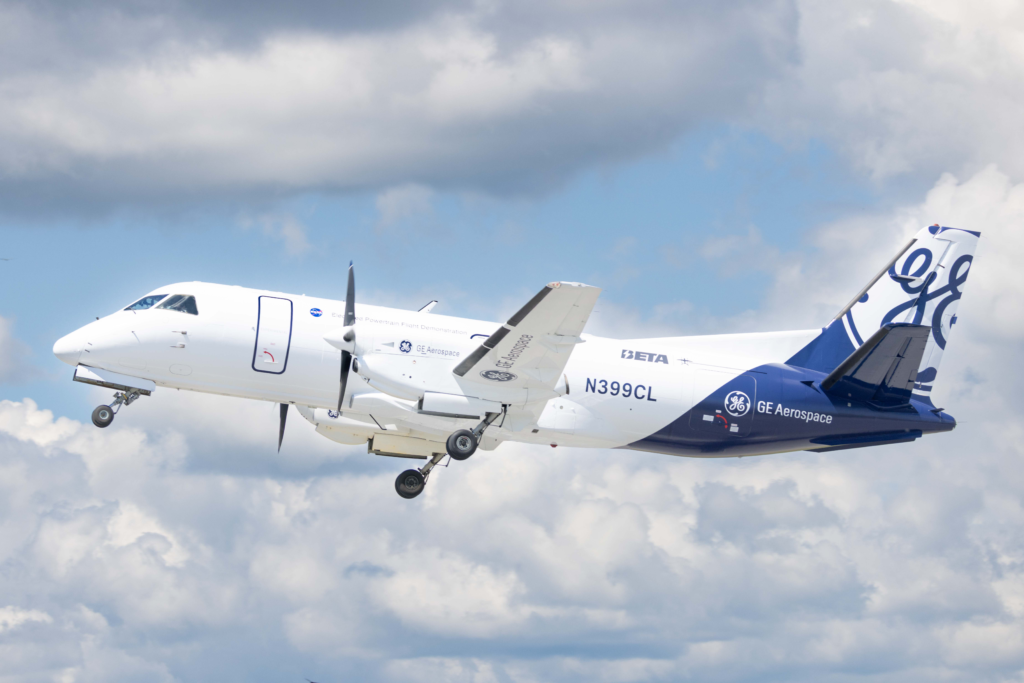
GE Aerospace (NYSE: GE) announced today at the Farnborough International Airshow an industry first to advance the future of flight, demonstrating the viability of more electric aircraft engine systems for aviation. In collaboration with NASA, BETA Technologies, Inc. (NYSE: BETA) (“BETA”) and Boeing, GE Aerospace conducted the first hybrid electric flight above 30,000 feet, reaching the same altitude levels of passenger commercial aircraft. During tests, the team’s single longest flight in hybrid electric operation was more than two hours.
The record-breaking test campaign was enabled by GE Aerospace’s fully integrated megawatt-class and multi-kilovolt hybrid electric propulsion system developed through the NASA Electrified Powertrain Flight Demonstration (EPFD) project.
H. Lawrence Culp, Jr., Chairman and CEO, GE Aerospace, said, “The aviation industry’s first high-altitude hybrid electric flight is one for the history books. GE Aerospace is grateful to NASA, BETA Technologies and Boeing for their collaborative partnership to accelerate hybrid electric technology tomeet customer needs for greater efficiency, durability and range.”
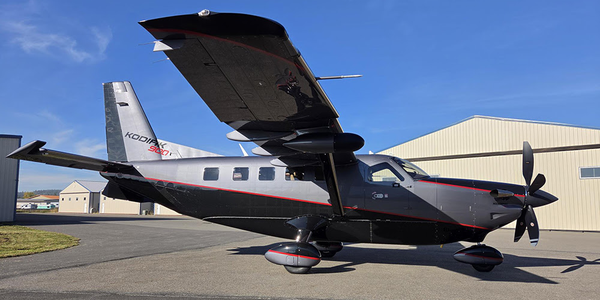
The right side of the EPFD aircraft, a Saab 340B, was modified for flight tests with a hybrid electric system that fits inside an inverted nacelle, providing extra ventilation. The system includes GE Aerospace-developed motor/generators, power converters and inverters, controllers, Avio Aero* gearboxes, Dowty* propellers, Unison* heat exchangers, torque sensing, and engine harnesses, and a CT7 engine. BAE Systems provided the batteries used and Boeing subsidiary Aurora Flight Sciences supplied the complete nacelle.
Pilots from GE Aerospace and BETA Technologies supported flight tests in the U.S., where the historic milestone was achieved. BETA Technologies served as the systems integrator and BETA pilots ferried the aircraft to the UK for the airshow, operating in hybrid electric mode during each leg of the journey.
Kyle Clark, Founder and CEO of BETA, said, “This hybrid electric system improved the high-altitude performance and climb capability while creating a flying laboratory to inform all future hybrid designs. The GE Aerospace team brought rigorous design, test and operational expertise. The ground and safe flight test campaigns, capped by a flight across the North Atlantic, is the first of many important milestones for hybrid electric technology.” Public demonstration flights are planned as part of daily Farnborough flying displays. Airshow attendees can also see the aircraft on static display before the afternoon flight schedules.
Graham Drozeski, CTO of Aurora Flight Sciences, a Boeing company, said: “This team delivered multiple first-of-a-kind advancements to successfully integrate a high-voltage electrified propulsion system into an aircraft operating at commercial altitudes. Together, we’ve taken a significant step forward in hybrid-electric technology.
Hybrid Electric Benefits
A hybrid electric engine system combines an electric powertrain with a traditional gas turbine to optimize power management during different phases of operation. Hybrid electric systems are highly compatible with different fuel types and advanced aircraft engine architectures like Open Fan. As electric vehicles become more common on the ground, there are many unique challenges for more electric skies. Engineering and test teams addressed heat management, lower atmospheric pressures and power density using flightworthy components that meet higher safety and reliability requirements than typical test hardware. During flight tests, the electric powertrain helped successfully power the propeller and generated power to the battery.
Mohamed Ali, President and CEO, GE Aerospace Commercial Engines & Services, said, “Hybrid electric technologies are durable and efficient. By flying a hybrid electric engine system at altitudes never achieved before, we’re proving to our customers and to the industry the advanced capabilities we can bring to next-generation aircraft with ready technologies.”
Hybrid Electric Experience
GE Aerospace was first awarded the NASA EPFD contract in 2021 to demonstrate flight readiness of hybrid electric technologies for single-aisle aircraft.
Several key milestones have been achieved over the last decade for hybrid electric technology development:
- 2016: An electric motor-driven propeller ground test;
- 2022: The world’s first test of a megawatt-class and multi-kilovolt hybrid electric propulsion system in altitude conditions up to 45,000 feet at the NASA Electric Aircraft Testbed facility that simulated single-aisle commercial flight;
- 2025: A strategic partnership and equity investment announced with BETA Technologies to accelerate hybrid electric aviation included plans to co-develop a hybrid electric turbogenerator for Advanced Air Mobility (AAM) and other applications.
- 2025: Successfully demonstrating a narrowbody hybrid electric configuration with power transfer and injection in a modified high-bypass turbofan engine – no energy storage required – through the NASA HyTEC project; and
- 2026: Ground tests of the megawatt-class hybrid electric propulsion system developed through NASA’s EPFD program, paving the way for flight tests announced today.
CFM RISE Program Testing
GE Aerospace has leveraged several NASA projects to mature technologies for more electric aircraft engines through the CFM International RISE** program. Unveiled in 2021, the RISE program is one of the aviation industry’s most comprehensive technology demonstrators with approximately 500 test campaigns and more than 3,000 endurance cycles completed to date, including tests on Open Fan, compact core, hybrid electric systems and other technologies. The RISE program prioritizes safety, durability and efficiency, targeting more than 20% better fuel burn compared to commercial engines in service today.

Aviation Jeta is an aviation news platform covering airlines, airports, aircraft, and global aviation developments. We publish accurate, well-researched, and detailed aviation news and industry insights from around the world.