





Lufthansa Technik, F/LIST and Pilatus unveil the nice intelligent cabin divider

- Taking signature design elegance to new heights with seamless screen integration in cabin divider
- Collaboration agreement to jointly advance Hidden Touch technology towards series maturity
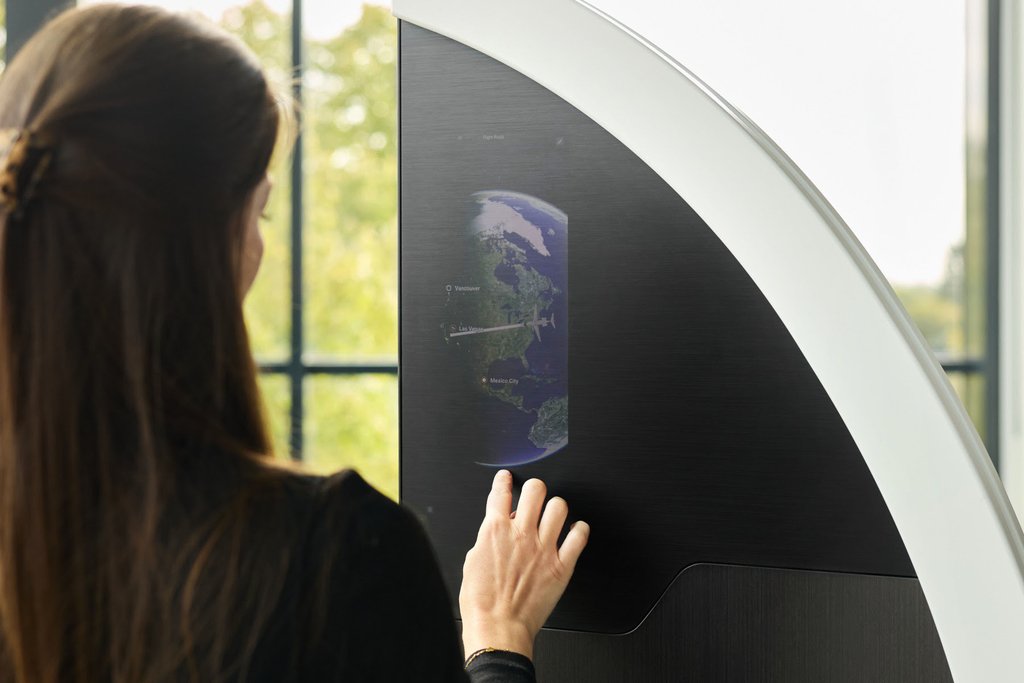
Today at NBAA-BACE in Las Vegas, three leading players in business aviation have joined forces in unveiling the »nice« intelligent cabin divider, the first business jet cabin divider making use of Lufthansa Technik’s award-winning Hidden Touch technology.
By seamlessly blending comprehensive touch control and content functionality into a signature design piece from F/LIST’s interiors portfolio, the »nice« intelligent cabin divider explores a potential future line and retrofit solution for Pilatus’ aircraft lineup. A collaboration agreement on the joint advancement of the technology towards series maturity was signed by the three partners during the unveiling ceremony.
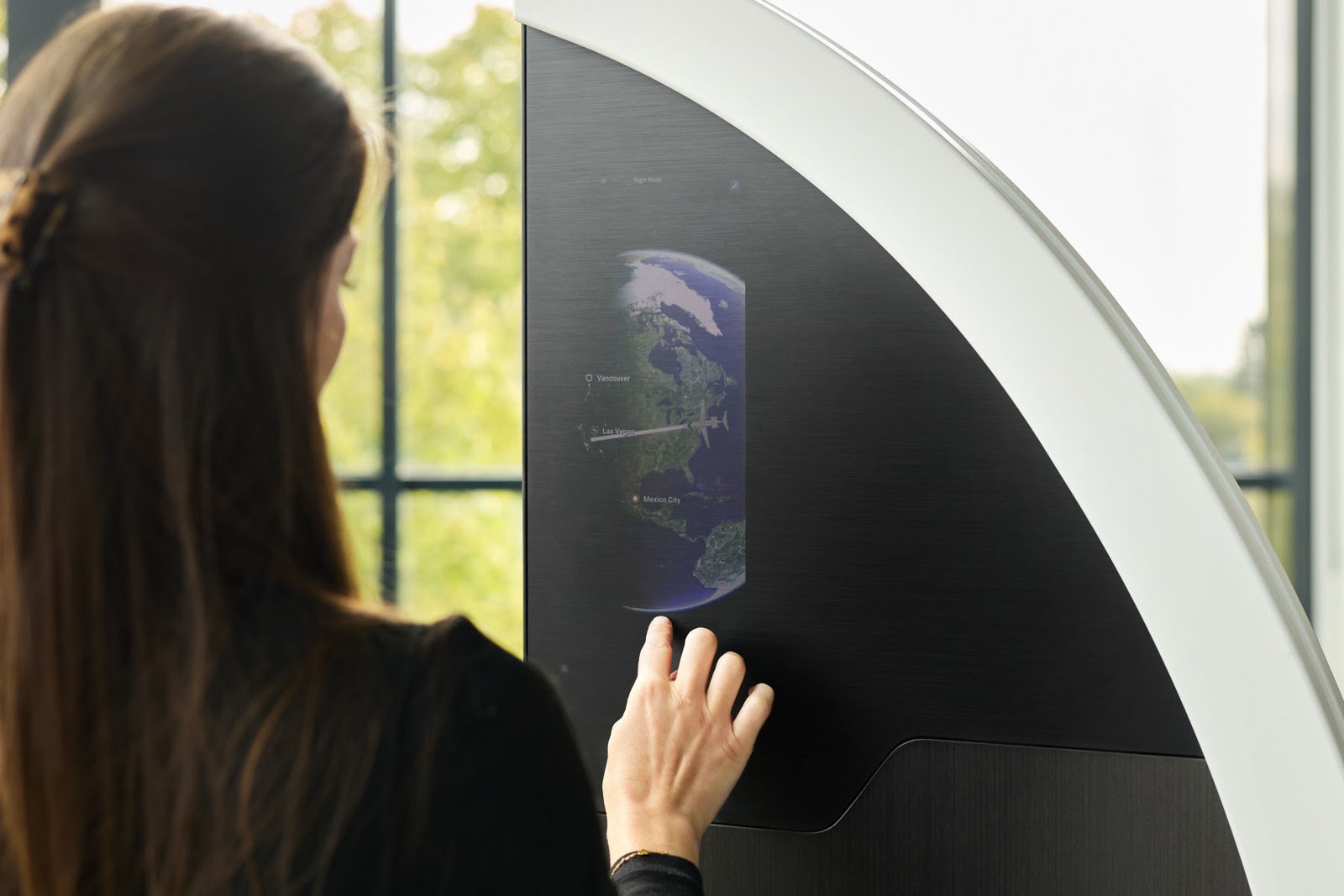
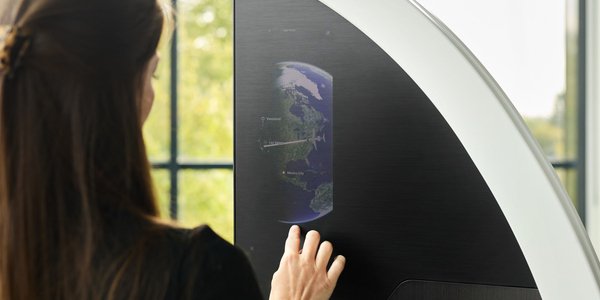
The unveiled demonstrator integrates the full functionality of a 14.5-inch high-resolution OLED touchscreen directly and seamlessly into the high-quality haptic material of the cabin divider. At just the touch of a fingertip, the screen’s fully customizable digital content emerges right out of the “brushed hairline dark” surface, a mix of wooden veneer and metallic gloss.
The screen thereby displays a widget-based graphical user interface featuring flight information, a moving map, PED screen mirroring as well as seat and lighting adjustment functions, to name just a few. The highlight: When no longer needed, the screen completely vanishes back into the haptic surface, leaving nothing but a high-class look and feel for the passengers’ eyes and hands.
“Following the successful integration of our first in-flight entertainment and cabin management system into the PC-24 in 2022, we have continued to explore new ways to enhance the cabin experience together with Pilatus,” stated Andrew Muirhead, Vice President Original Equipment and Special Aircraft Services at Lufthansa Technik. “This demonstrator brings together premium design and advanced technology to create a more seamless and intuitive cabin experience. Together with F/LIST, we have developed an innovative solution that integrates technology discreetly into the cabin while preserving the integrity of its design.”
“Our customers want technology that makes life on board easier while preserving the calm and comfort of their cabin. For us, luxury means intuitive, effortless interaction, with technology integrated so naturally into materials and furniture that it becomes part of the experience,” explains Anita Gradwohl, Group Director of Customer Relations and Sales for the New Aircraft Interiors business unit at F/LIST. “Achieving this requires collaboration from the very beginning, developing materials, functionality and the passenger experience together. With the »nice« intelligent cabin divider, we brought our material expertise, craftsmanship and product design into the collaboration with Lufthansa Technik and Pilatus, seamlessly integrating Hidden Touch technology into the cabin divider. The result puts the passenger first: functionality that is available when needed, within a surface that retains its aesthetic character.”
“The »nice« intelligent cabin divider combines innovative technology with the quality and understated design our customers expect,” explains André Zimmermann, Vice President of Business Aviation at Pilatus. “This collaboration allows us to explore new ways of making the cabin experience more intuitive, flexible and elegant.”
The showcased »nice« intelligent cabin divider represents the next strategic advancement of Lufthansa Technik’s Hidden Touch technology, which in 2025 won the prestigious Red Dot Design Award and has already been showcased in cabinet and foldable tray table applications. Customizable for surface appearances such as wood veneer, carbon fiber or metal, to name just a few, all control interfaces can blend seamlessly into the interior design, providing passengers with an equally intuitive yet optically and haptically sophisticated control experience. It also gives interior designers entirely new degrees of freedom.

Aviation Jeta is an aviation news platform covering airlines, airports, aircraft, and global aviation developments. We publish accurate, well-researched, and detailed aviation news and industry insights from around the world.