








Transcontinental & Western Air Fokker F-10 Trimotor Crash 31 March 1931

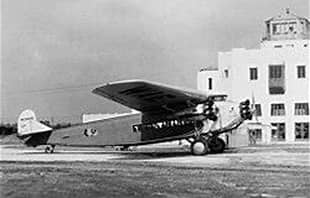
Transcontinental & Western Air Fokker F-10 Trimotor
The Transcontinental & Western Air Fokker F-10 Trimotor Crash of 31 March 1931 was one of the most important early airline accidents in the United States. The aircraft, a Fokker F-10 Trimotor, crashed near Bazaar, Kansas, during a flight from Kansas City to Los Angeles. All eight people aboard were killed. The accident became especially famous because one of the passengers was Knute Rockne, the legendary football coach of the University of Notre Dame.
The disaster attracted enormous public attention. It also raised serious questions about the safety of the Fokker F-10’s wooden wing structure. The accident eventually contributed to major changes in aircraft inspection, airline safety rules, and public confidence in commercial air travel.
Transcontinental & Western Air
The aircraft was operated by Transcontinental & Western Air, commonly known as TWA. The airline was one of the major American carriers developing during the early years of commercial aviation.
During the late 1920s and early 1930s, American airlines were expanding rapidly. Air travel was becoming more practical, and companies were developing routes that connected major cities across the country.
A flight from Kansas City to Los Angeles was a long journey for the period. Aircraft had to cross large areas of the United States, often with limited navigation facilities.
The airline used several different aircraft types, including the Fokker F-10.
The Fokker F-10 Trimotor
The Fokker F-10 was a larger version of the Fokker F.VII series. It was a trimotor, meaning it had three engines.
The aircraft was designed to carry passengers and was considered an advanced commercial airplane during the late 1920s.
Its three engines provided useful power and helped make the aircraft suitable for long-distance airline operations.
However, the F-10 used a wooden wing structure. This was common in aircraft construction at the time, but it created a potential weakness if the wood became damaged or deteriorated.
The aircraft involved in the accident carried the registration NC999E and was named Texas.
It had entered service with the airline several years earlier.
The Flight on 31 March 1931
On 31 March 1931, the Fokker F-10 was operating a scheduled flight from Kansas City, Missouri, to Los Angeles, California.
There were eight people aboard:
- 6 passengers
- 2 crew members
The aircraft departed Kansas City and began its westward journey.
Among the passengers was Knute Rockne, who was one of the most famous sports personalities in America.
Rockne was traveling to California for business and personal reasons.
Nobody aboard the aircraft expected the journey to become one of the most famous aviation disasters in American history.
Who Was Knute Rockne?
Knute Rockne was the head football coach at the University of Notre Dame.
He was one of the most successful and influential coaches in American college football.
Under his leadership, Notre Dame became a nationally recognized football program.
Rockne was also a popular public figure. His death in an airplane accident therefore received far more attention than an ordinary commercial aviation accident might have received.
Newspapers across the United States reported the crash.
The loss of such a famous person caused the public to focus heavily on aviation safety.
The Flight Near Bazaar
The Fokker continued across Kansas.
At approximately 10:30 a.m., the aircraft was flying near Bazaar, Kansas, in the eastern part of the state.
The weather conditions were not considered extremely severe, but there were strong winds in the region.
While the aircraft was flying at an altitude of approximately 2,000 feet, the left wing suddenly failed.
The wing separated from the aircraft.
Without the wing, the aircraft immediately became uncontrollable.
The Fokker entered a steep descent and crashed into the ground.
The Crash
The aircraft struck the ground in a rural area near Bazaar.
The impact destroyed the airplane.
All eight people aboard were killed.
The crash was devastating because the aircraft had broken apart in the air rather than simply making a hard landing.
The location was relatively remote, but people in the surrounding area quickly learned about the disaster.
Emergency responders and local residents went to the crash site.
The bodies of the victims were recovered from the wreckage.
Among the dead was Knute Rockne.
The News Spreads Across America
The death of Knute Rockne made the accident a national story.
Newspapers published dramatic reports about the crash and Rockne’s death.
Millions of Americans knew Rockne as a successful football coach.
His death caused widespread shock.
Many people began asking whether commercial aircraft were safe.
At the time, passenger aviation was still trying to gain public confidence.
People were already nervous about flying because aircraft accidents were relatively common compared with modern standards.
The death of such a famous public figure made the issue impossible to ignore.
Investigation of the Crash
Investigators examined the wreckage to determine why the wing had failed.
The investigation found that the aircraft’s left wing had broken apart in flight.
The failure was associated with the wooden wing structure.
Investigators discovered evidence that the wood had suffered deterioration caused by moisture.
The wing structure contained wooden components that had become weakened.
The problem was particularly serious because the aircraft’s wooden structure was covered and could not easily be inspected from the outside.
The wing therefore appeared normal even though important internal components had become weak.
Moisture and Wood Damage
Wooden aircraft structures require careful protection and inspection.
Moisture can enter wooden components and cause deterioration.
If the damage is hidden inside the structure, it can be difficult to detect.
In the case of the Fokker F-10, investigators believed that moisture had weakened the wood used in the wing.
The aircraft had also been operating for several years.
The combination of age, moisture, and structural stress created a serious risk.
The wing eventually failed while the aircraft was flying.
This was an important lesson for the aviation industry.
Questions About the Fokker F-10
The Bazaar crash was not the first serious accident involving a Fokker F-10.
There had already been concerns about the aircraft’s wooden wing construction.
The disaster therefore caused aviation authorities to look more closely at the design.
The accident raised questions about whether the aircraft could safely continue carrying passengers.
After the crash, authorities took action involving the Fokker F-10 and similar aircraft.
The aircraft type faced increased scrutiny and restrictions.
Grounding of the Fokker F-10
Following the accident, the Fokker F-10 fleet was grounded while authorities investigated the cause.
This was a major decision because the aircraft was being used by commercial airlines.
Airlines needed reliable aircraft to operate scheduled passenger services, but safety concerns had to be addressed.
The grounding caused operational problems for TWA and other operators.
More importantly, it demonstrated that aviation authorities were becoming more willing to remove an aircraft from service when there was evidence of a serious structural problem.
Changes to Inspection Rules
One of the most important effects of the accident was the improvement of aircraft inspection procedures.
Previously, aircraft with wooden structures could be inspected without removing large sections of the covering.
After the Fokker F-10 accidents, regulators placed greater emphasis on detailed structural inspection.
Aircraft operators were required to examine wooden structures more carefully.
This included removing fabric or other coverings when necessary to inspect internal components.
The goal was to find hidden deterioration before it caused a structural failure.
These changes represented an important step toward modern aircraft maintenance practices.
Impact on Airline Safety
The Bazaar accident also contributed to the development of stronger airline safety regulations in the United States.
Government authorities became more involved in determining how commercial aircraft should be designed, inspected, and operated.
Airlines had to maintain detailed records and follow more carefully defined maintenance procedures.
Aircraft certification standards also became increasingly strict.
The accident therefore had effects that went beyond the Fokker F-10 itself.
It contributed to a broader shift toward stronger government oversight of commercial aviation.
Impact on Public Confidence
The crash also affected public attitudes toward air travel.
The death of Knute Rockne made the risks of aviation highly visible.
However, the accident also encouraged the industry to demonstrate that safety problems could be identified and corrected.
The public wanted to know that airlines were taking the problem seriously.
Over time, better aircraft construction and maintenance helped increase confidence in commercial aviation.
Air travel continued to expand despite the tragedy.
The Legacy of Knute Rockne
Knute Rockne’s death became an important part of the history of American football as well as aviation.
His death at only 43 years of age shocked the sporting world.
His name became permanently associated with the disaster.
Films, books, newspaper articles, and later historical accounts discussed his life and the circumstances of his death.
His death also helped bring aviation safety issues into the public conversation.
Because Rockne was so famous, the accident received attention from people who might otherwise never have followed aviation news.
The Fokker F-10 After the Crash
The Fokker F-10 eventually disappeared from regular passenger service.
The accident and other structural concerns damaged the aircraft’s reputation.
Aircraft manufacturers increasingly moved toward metal construction, which offered advantages in durability and inspection.
All-metal aircraft would become increasingly common during the 1930s.
The transition from wooden structures to metal structures was already underway, but accidents such as the Bazaar crash reinforced the advantages of more easily inspected and durable materials.
Broader Lessons for Aviation
The accident provided several important lessons.
First, aircraft structures must be regularly inspected for hidden damage.
Second, materials used in aircraft construction need to be protected from environmental damage.
Third, an aircraft that has been in service for several years may require more detailed structural inspections.
Fourth, aviation authorities need the power to ground aircraft when serious safety concerns arise.
Finally, public confidence depends heavily on airlines demonstrating that safety problems are being addressed.
These principles remain important in modern aviation.
Conclusion
The Transcontinental & Western Air Fokker F-10 Trimotor Crash of 31 March 1931 was a major tragedy in the history of American aviation.
The aircraft, Fokker F-10 NC999E, was flying from Kansas City to Los Angeles when its left wing failed in flight near Bazaar, Kansas. The aircraft crashed, killing all eight people aboard.
The most famous victim was Knute Rockne, the legendary Notre Dame football coach. His death turned the accident into a national story and generated widespread concern about airline safety.
The investigation found serious problems with the aircraft’s wooden wing structure. Moisture had weakened parts of the wing, creating a hidden structural problem that eventually caused the wing to fail.
The accident led to increased inspection requirements and greater scrutiny of wooden aircraft structures. The Fokker F-10 was grounded while authorities investigated the problem, and the disaster contributed to wider improvements in American aviation regulation.
Although the crash was a terrible tragedy, it helped aviation authorities understand the importance of detailed structural inspections and stronger safety standards.
The 31 March 1931 Fokker F-10 crash is therefore remembered not only for the loss of eight lives and the death of Knute Rockne, but also for its lasting influence on aircraft maintenance and commercial aviation safety. It became one of the events that helped push the aviation industry toward safer aircraft, better inspections, and stronger regulations.

Ajeet Yadav is an aviation enthusiast covering airline news, airports, aircraft, and industry developments through well-researched and reliable reporting.