









India is one of the world’s largest aviation markets, yet it accounts for only about 1 to 1.5 per cent of global aerospace manufacturing. International aerospace companies, which earlier sourced mainly engineering services from India, are now placing more manufacturing work in the country. Jeh Aerospace has built its business around this demand, supplying precision components for aero-engines, landing gear and actuation systems to Tier 1 and Tier 2 customers overseas. India has the talent and manufacturing capacity to secure a much larger share of global aerospace production, says, Venkatesh Mudragalla, Co-Founder and COO of Jeh Aerospace.
Could you share how Jeh Aerospace has grown since 2022?
Vishal Sanghavi and I founded Jeh Aerospace in August 2022. For the first 15 to 18 months, we were essentially two people with a presentation. In aerospace, that is a difficult place to start because customers first want to see your capabilities, equipment, facilities, certifications, and quality systems. We did not have any of those when we began.
What helped us was the credibility Vishal and I had built during our earlier careers. We had both worked with the Tata Group, where we led large aerospace joint ventures and worked with several leading global OEMs. That experience helped us open doors, but it was not enough on its own. We still had to establish the facilities, build the team and demonstrate that we could deliver.
Our first customer was RH Aero Systems in the US. When we received that first order, we had a team of about 10 people. In roughly two years, the team has grown to around 250.
We mainly manufacture precision-machined components from aerospace materials such as titanium and nickel- and cobalt-based alloys, including Inconel. Most of the parts currently go into aero-engines, although we also manufacture components for landing gear and actuation systems. These are critical components manufactured to very tight tolerances.
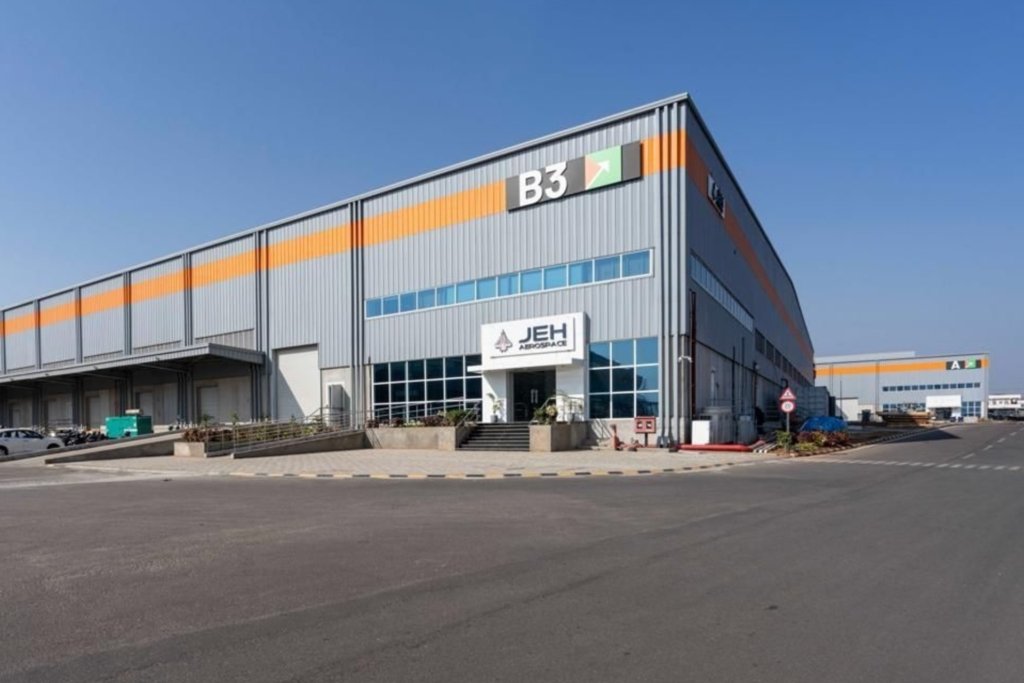
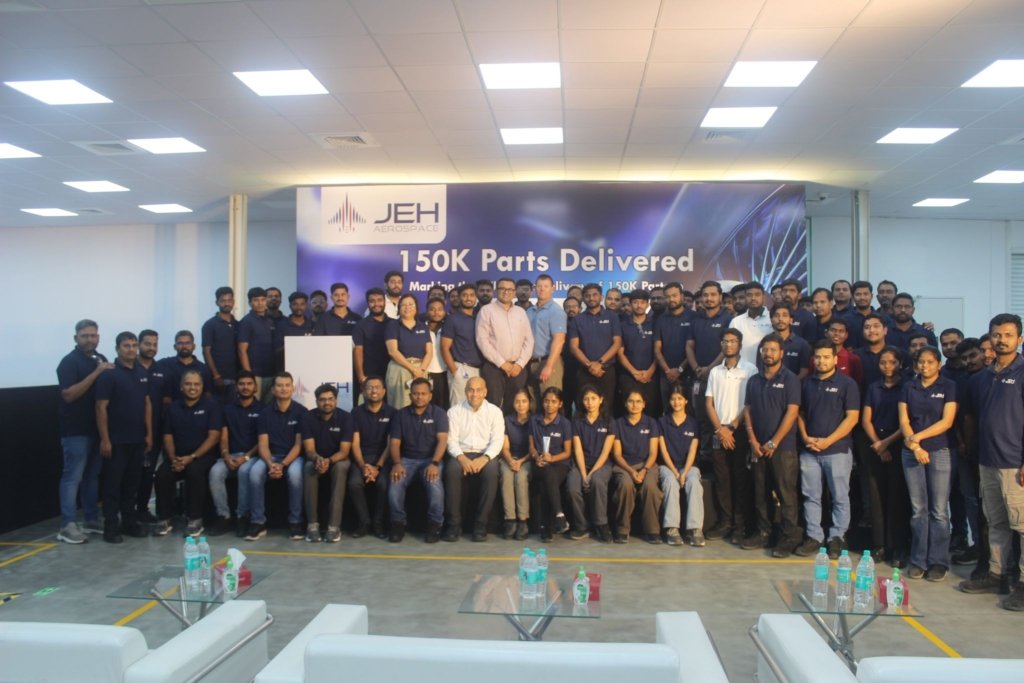
Our first Hyderabad facility, Mach 1, covers about 60,000 sq. ft. and has more than 50 CNC (computer numerical control) machines. We operate almost continuously across three shifts. Over the past 24 months, we have delivered more than 300,000 components to customers in the US and Western Europe and have built around 150 SKUs.
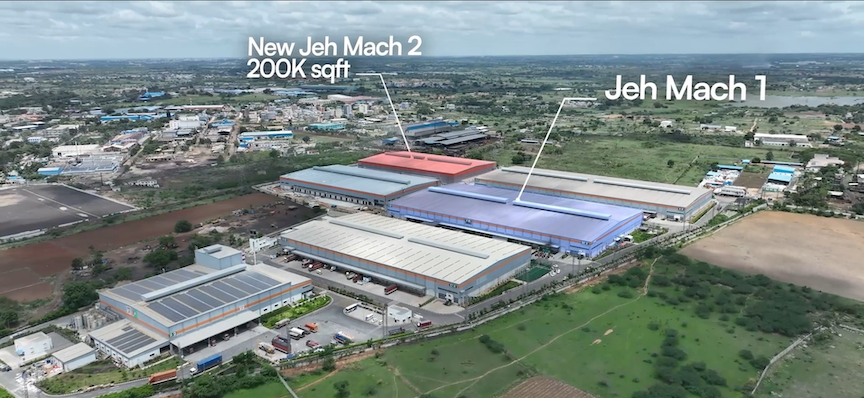
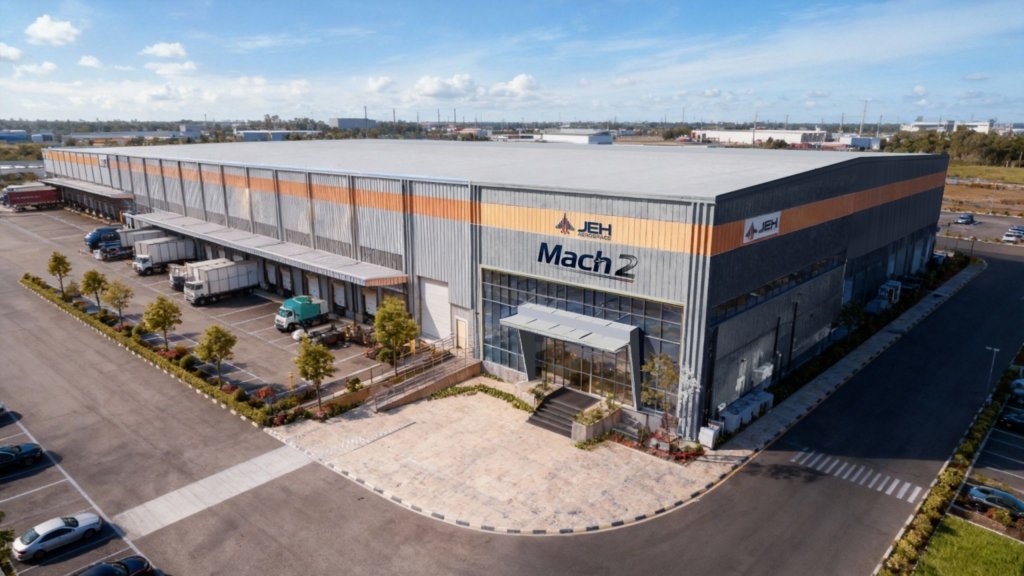
We have also taken possession of Mach 2, a new facility of about 200,000 sq. ft. It is more than three times the size of Mach 1 and will support the next phase of our growth.
Why has Jeh focused on Tier 1 and Tier 2 suppliers rather than working directly with OEMs?
That was a conscious decision. Vishal and I have worked closely with OEMs throughout our careers, and we understand how they operate. However, although OEMs are the public face of the aerospace industry, they carry out only about 30 per cent of value-added work in-house. Tier 1 and Tier 2 suppliers account for roughly 70 per cent of the value added across the supply chain.
Our objective is to make India’s manufacturing capabilities and capacity available to those companies. We therefore remain focused on Tier 1 and Tier 2 customers and do not currently work directly with OEMs.
How do you ensure your components meet customers’ quality standards?
We have the certifications required for aerospace manufacturing, including AS9100D . We also hold the required occupational health and safety ISO certifications and are ISO 27001 certified for information security management.
For the special processes carried out in-house, we hold Nadcap accreditation. Nadcap is an industry-managed accreditation programme for critical aerospace processes.
Certifications are only one part of meeting customer requirements. Our customers also audit our facilities, and we have successfully completed every audit conducted so far.
The processes, controls and quality systems we have built are intended to meet the requirements expected across international aerospace programmes.
Jeh currently exports all of its production. Do you also see opportunities in India’s aerospace and engine MRO market?
When a company is starting out, it has to choose a clear market and remain focused. We selected the US because it is the world’s largest aerospace market and one that we understood well from our previous experience.
At present, all our production is exported. However, the manufacturing capabilities we are building are also relevant to India’s aerospace and MRO ecosystem. As suitable opportunities develop, we would be open to supporting customers in India as well.
Can you give us a sense of how quickly the business is growing?
We do not share revenue figures publicly at this stage, but there are other indicators that show the scale of our growth. From our first year of operations to the second, the business grew by about four times. This year, we expect to be at around four times the previous year’s level again.
The growth in our workforce is another indicator. We had about 10 people two years ago and now have around 250. We currently operate from a 60,000 sq. ft. facility and are adding another 200,000 sq. ft. facility. Together, these numbers provide a clear indication of how quickly the company is expanding.
Why is India becoming more important to the global aerospace manufacturing supply chain?
Several factors are working in India’s favour. Unlike many other industries, more than 80 per cent of aerospace manufacturing remains concentrated in high-cost countries, particularly the US and Western Europe.
The industry went through the single aisle crisis and was then hit by the COVID-19 pandemic. When air travel returned, demand recovered much faster than the supply chain. Manufacturers in established aerospace markets continued to face labour shortages, attrition and a shortage of specialised talent. They also experienced levels of inflation not seen for decades. These factors made it difficult for supply to keep pace with demand.
Aerospace supply chains are being rebalanced across more geographies than before. That shift creates a real opening for India—a large engineering and manufacturing talent pool and a sizeable, fast-growing domestic aviation market.
Air India and IndiGo have both placed very large aircraft orders, reflecting the scale and growth of India’s domestic aviation market.
Earlier, much of the aerospace work sourced from India was concentrated in engineering services. Today, global companies are looking more seriously at hardware and manufacturing as well.
India’s share of global aerospace manufacturing is still small, at about 1 to 1.5 per cent by our estimate. Given the country’s talent, market and industrial capability, that share can increase considerably.
As Jeh expands, do you measure growth by the number of SKUs, or by the type of customer programmes you take on?
We continue to add new SKUs, but the number of SKUs is not, by itself, our measure of growth. We begin with the customer’s requirement and the problem the customer wants us to solve.
Some programmes may involve fewer SKUs but very high volumes. Others may involve highly complex components produced in lower volumes. Both can be important, depending on the customer’s needs.
A good example is a titanium impeller that requires continuous five-axis machining. We were able to industrialise that component within four weeks of receiving the purchase order. For a part of that complexity, that is an unusually short period.
For any component you manufacture, are you the only supplier to your direct customer?
Yes. For several components, we are the only supplier to our direct customers. However, because our customers are Tier 1 and Tier 2 companies, we do not always have visibility into whether they, in turn, are the sole source for the OEM programme.
Can you give us an example of a difficult component Jeh has industrialised and explain what makes it challenging to manufacture?
We work across turning, milling, multitasking and continuous five-axis machining. As the company develops, we are moving towards parts that require higher levels of engineering and manufacturing complexity.
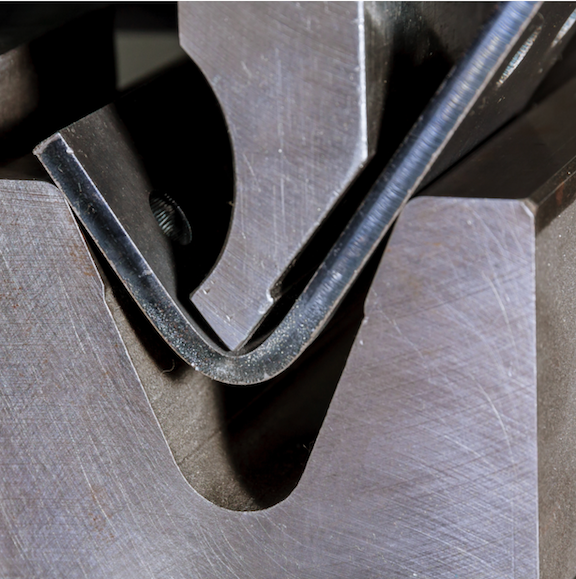
Photo: Jeh Aersospace
The titanium impeller is a useful example. It begins as a solid block of metal and is machined as a single component.
More than 95 per cent of the original material is removed before the final shape is produced. The tool movement and machining strategy are highly complex because of the different profiles and geometries involved.
Jeh handles the manufacturing engineering, process planning, numerical control (NC) programming and raw-material preparation in-house. The component then undergoes semi-finishing and finishing, followed by several stages of inspection.
One of these checks is fluorescent penetrant inspection, which is a non-destructive testing process. A penetrant is applied to the component and it is then examined under ultraviolet light to identify surface-breaking cracks or defects that may not be visible to the naked eye.
What role do digital systems and AI play in Jeh Aerospace’s manufacturing operations?
From the beginning, we wanted Jeh Aerospace to be a digitally native company. From the time a customer order is received until the component is delivered, the process is managed digitally.
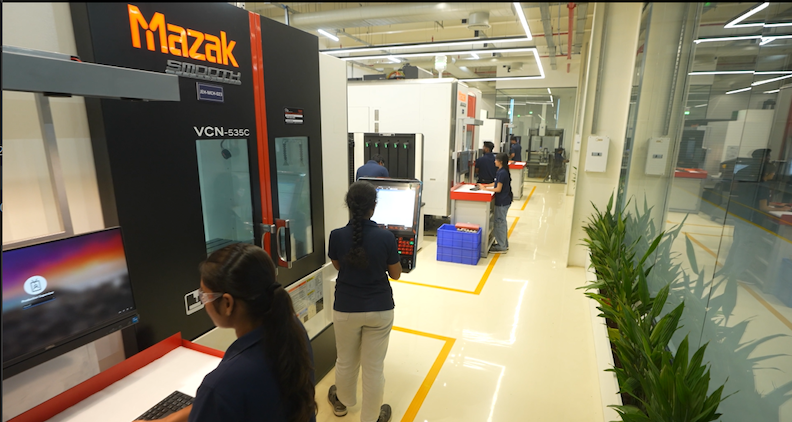
We operate a paperless factory. Each machine is equipped with a screen that gives the operator access to the drawings, manufacturing instructions and other information required for the job. On a traditional shop floor, much of this information would be provided through printed drawings and instruction sheets.
Because our operations are digital, we can collect data across the factory, process it through our Database layer and apply AI tools to it. The dashboards and operating metrics used in our production and management meetings are generated with the help of AI agents.
We have an in-house digital team that includes AI engineers. We also work with specialist technology companies where outside expertise is required, but the systems are developed or adapted around our own manufacturing requirements.
What led Jeh to establish JCAS (Jeh Center For Aerospace Skill), and how does it help address the shortage of industry-ready talent?
India produces a large number of engineering graduates and diploma holders each year, but many are not immediately ready for aerospace manufacturing. There is still a gap between what educational institutions teach and what the industry requires.
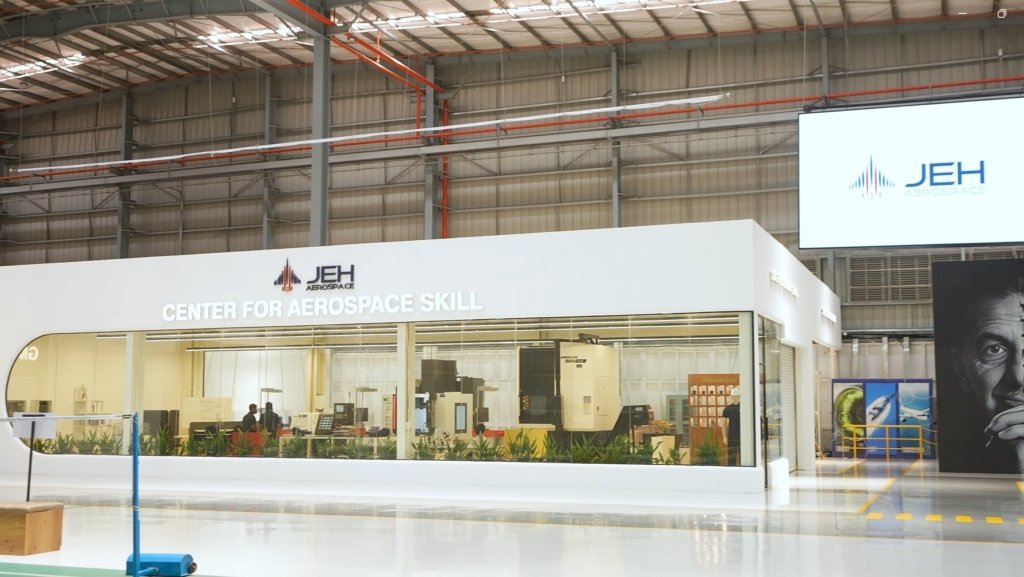
Photo: Jeh Aerospace
To address that gap, we established the Jeh Center of Aerospace Skill, or JCAS. The centre has a classroom for theoretical instruction and machines for practical and on-the-job training.
This allows us to develop and nurture our own talent according to aerospace requirements.
It also gives us a trained workforce that can support the company as it scales, without creating avoidable disruption when production is ramped up.
How is the JCAS training programme structured, and how many employees have completed it so far?
We recruit diploma engineering trainees, graduate engineers and post-graduate engineers from colleges across the country. Each group goes through a structured programme designed around the work it will perform.
Diploma engineering trainees complete a 16-week course combining classroom instruction, practical learning and on-the-job training. We have also started working with some diploma colleges so that part of the training can begin during the final three months of the students’ academic programme. This gives them relevant exposure before they join us and reduces the training time required after recruitment.
The programme consists of 16 modules developed internally by our subject-matter experts.
The content is specific to aerospace manufacturing and is based on our production processes and customer requirements.
We currently have about 250 people in the organisation, of whom more than 100 joined us directly from college. All of them have completed the JCAS training programme.
Also Read: Boeing Ventures Assesses Investment and Partnership Opportunities in India