






Key Takeaways
- GMR Aero Technic is investing nearly $100 million to expand its Hyderabad facility, doubling aircraft maintenance capacity by 2028 and adding widebody positions.
- The company plans to enhance services for widebody aircraft, including cabin and composite maintenance, while establishing a training centre for composite expertise.
- To support component maintenance, GMR Aero Technic emphasizes the need for international partnerships and flexibility, while targeting a global market beyond India.
- The growth in maintenance capacity requires more skilled engineers, leading to the establishment of the GMR School of Aviation for training in aircraft maintenance.
- Gopinath envisions GMR Aero Technic as a leading MRO in the Asia-Pacific region, addressing both local and international market demands.
India’s expanding aircraft fleet is increasing the requirement for maintenance capacity within the country. Meeting that demand will involve more than adding hangar space.
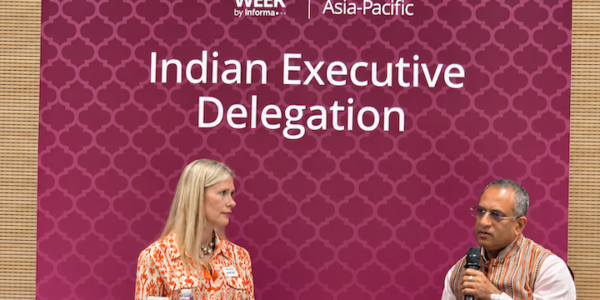
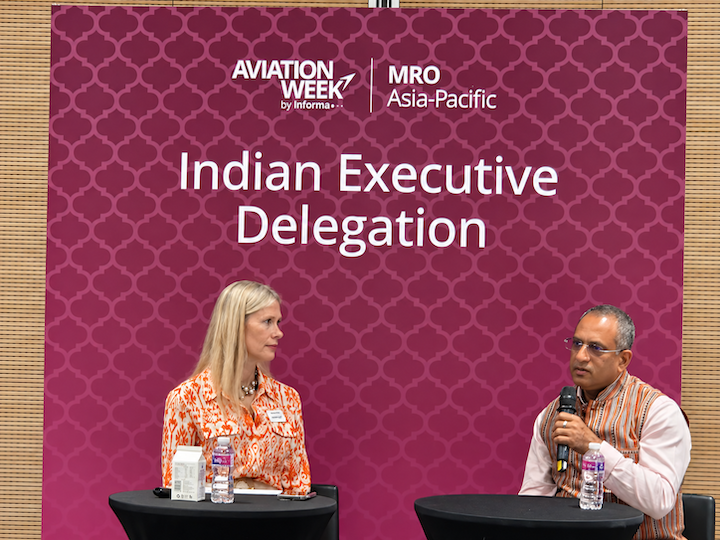
Speaking at MRO Asia-Pacific 2026, Ashok Gopinath, President and Accountable Manager of GMR Aero Technic, stressed that “if you have to scale up, the time window is very important.”
GMR Aero Technic is investing just under $100 million in a new complex at its existing facility in Hyderabad.
Expected to be completed by the end of 2028, the project will nearly double the company’s aircraft maintenance capacity and add three widebody positions.
The facility currently accommodates nine to ten narrowbody aircraft. Gopinath expects overall capacity to increase to the equivalent of 17-18 narrowbodies following the expansion. The widebody hangars will be able to accommodate aircraft such as the Boeing 777 and Airbus A350. The company is also developing composite inspection and repair capabilities for the Boeing 787.
GMR Aero Technic has expanded from basic airframe checks into heavy maintenance, modifications, end-of-lease work and Boeing 737-800 passenger-to-freighter conversions. Its existing widebody hangar, which can accommodate an Airbus A330 or Boeing 777, is currently used mainly for narrowbody work. The new complex will provide dedicated widebody capacity and supported by expanded cabin, structural and composite repair capabilities.
Widebody Maintenance
Adding widebody capacity changes the range of work that must be handled during an aircraft visit.
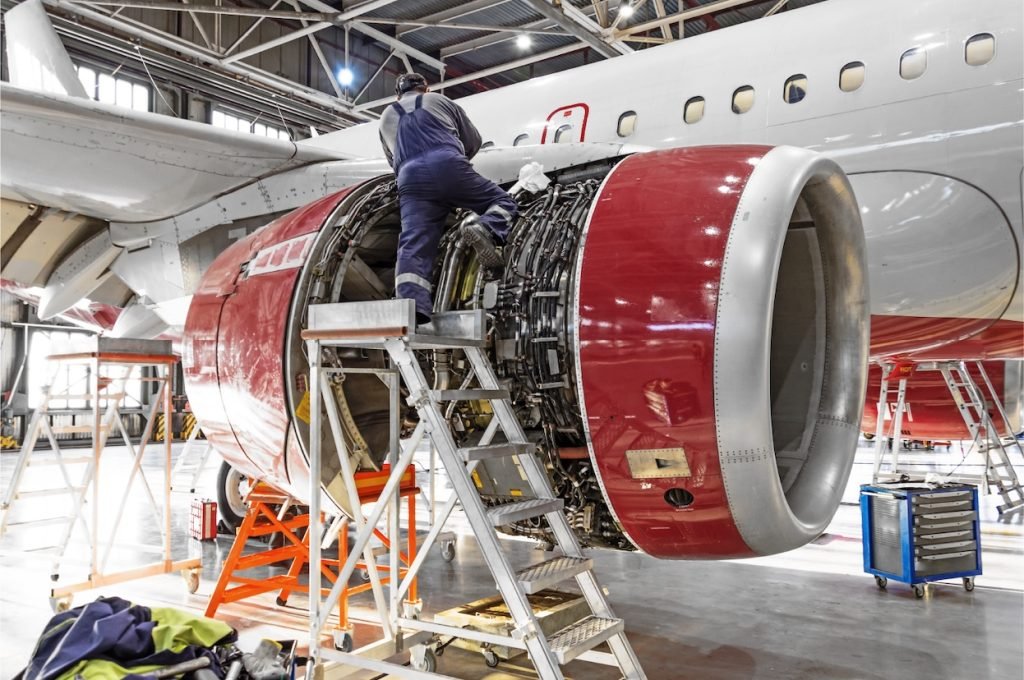
“When you get into widebody maintenance, it is not just about airframe maintenance. You need the entire ecosystem along with it,” Gopinath said, referring to the cabin, structural and composite work required during a widebody check.
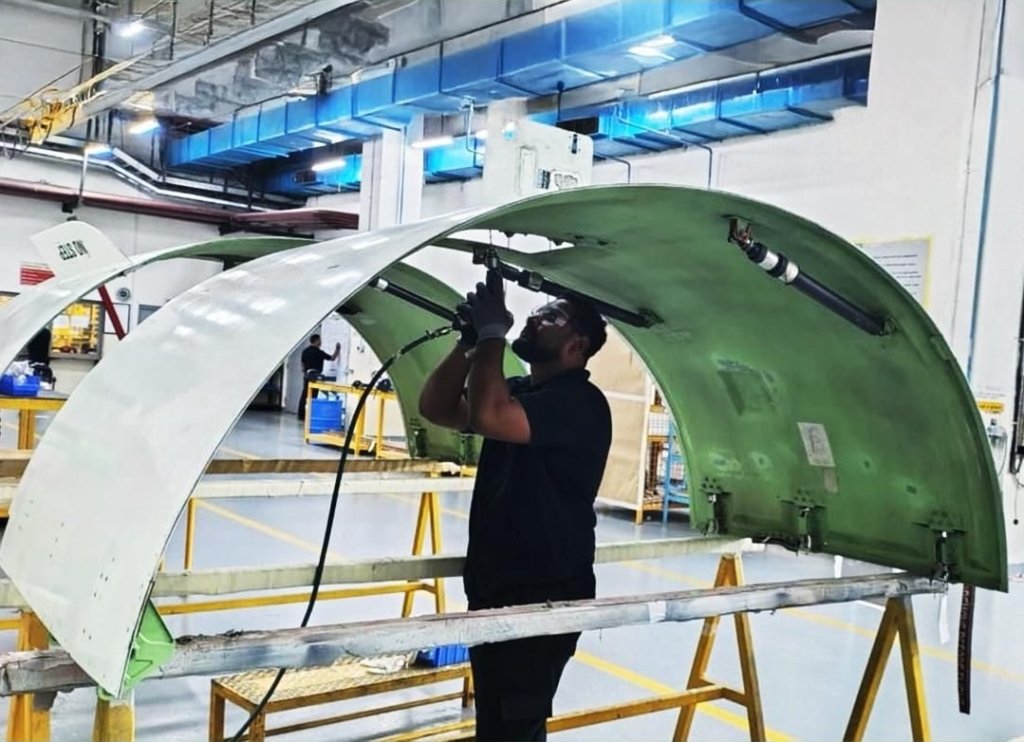
Photo: GMR Aero Technic
Cabin work may include the inspection, repair and refurbishment of seats and cabin monuments.
GMR Aero Technic already has facilities for seat refurbishment, structural repairs, non-destructive testing, composites, flight-control surfaces and heat exchangers. These services will be expanded for widebody aircraft.
Composite inspection and repair will be particularly important for the Boeing 787 and Airbus A350.
Gopinath said engineers require specialised knowledge not only to carry out repairs but also to inspect composite structures and determine whether a repair is necessary.
GMR Aero Technic and GMI Aero, supported by Hypercoat/HPCC, have signed an agreement to establish the GMR School of Aviation as a Centre of Excellence for composite training. Gopinath said composite expertise was also being developed within the maintenance facility.
Part 21G and Part 21J support are also among the capabilities planned for widebody maintenance. Part 21G covers production organisation approval, while Part 21J covers design organisation approval for aircraft changes and repairs.
Demand for widebody maintenance is expected from India and other markets in the region.
Gopinath cited flydubai, an existing GMR Aero Technic customer that has ordered 30 Boeing 787-9s, as an example of an airline in a neighbouring market adding widebody aircraft.
Component MRO Through Partnerships
Component repair requires a customer base extending beyond India, according to Gopinath. Even as the domestic fleet grows, the number of units available within an individual component category may not be enough to support every repair capability.
“When it comes to components, we need a global market,” he said. “If you have to create a global market, you need to join hands with somebody, and there should be some value you bring in.”
GMR Aero Technic brings flexibility, established airline relationships and access to the Indian market to these agreements, according to Gopinath. Its customers extend from the Middle East to East and Southeast Asia, providing a source of work beyond the domestic fleet. More than half of GMR Aero Technic’s revenue and base-maintenance work comes from overseas customers.
“Our vision is to be one of the leading MROs in the Asia-Pacific region, not only in India,” Gopinath said. “Almost all Indian operators are our customers,” Gopinath said. “But the idea is to serve not just India, but the global market. Our focus is global.”
Component repair also depends on access to OEM licences and technical support. Gopinath said working with manufacturers and maintenance specialists gives the company access to technical knowledge and repair capabilities that would take longer to establish independently.
“Today is a connected world. You cannot do everything by yourself,” he said. “One way of doing it is to join them, either as a joint venture or as a technical partner.”
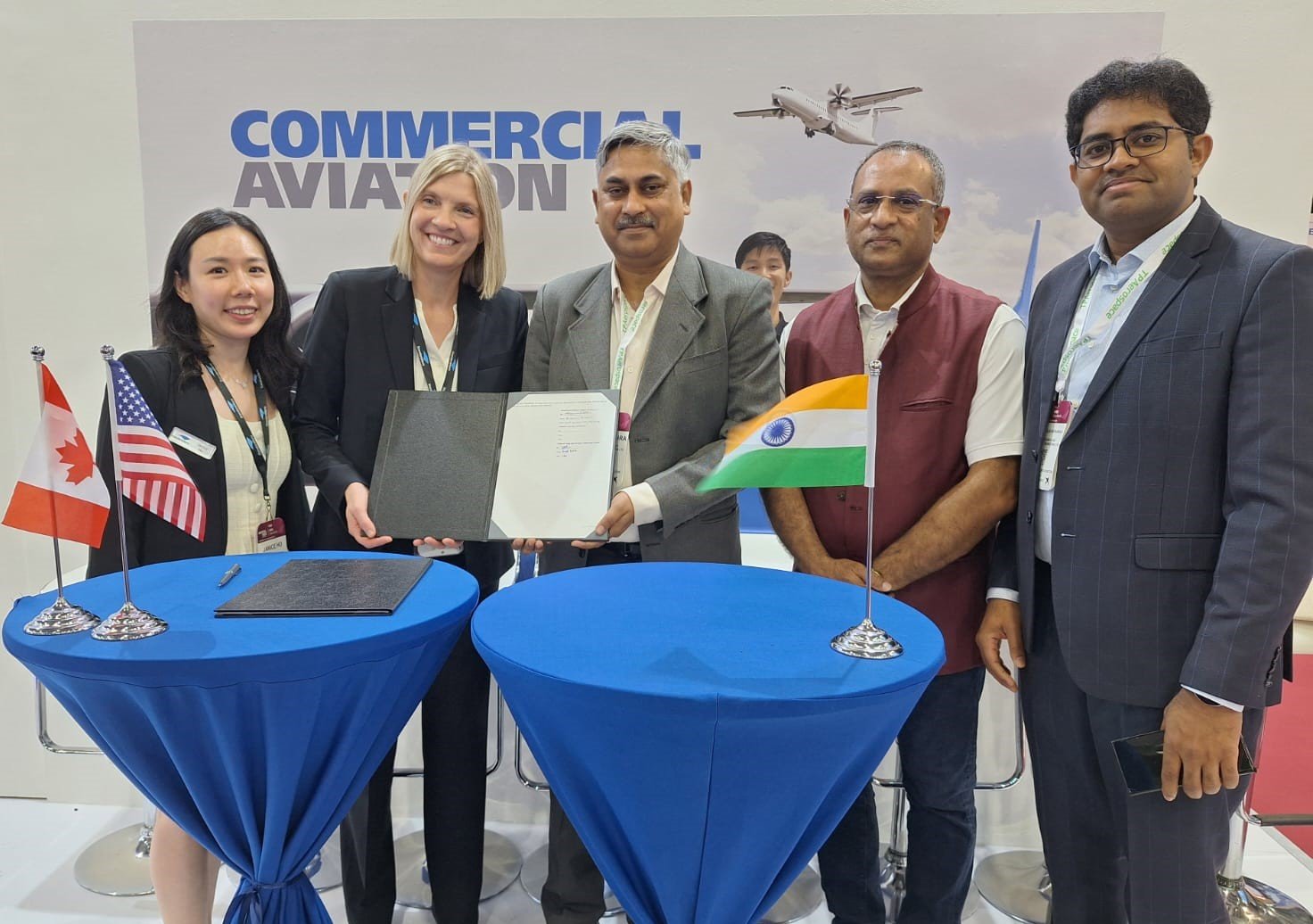
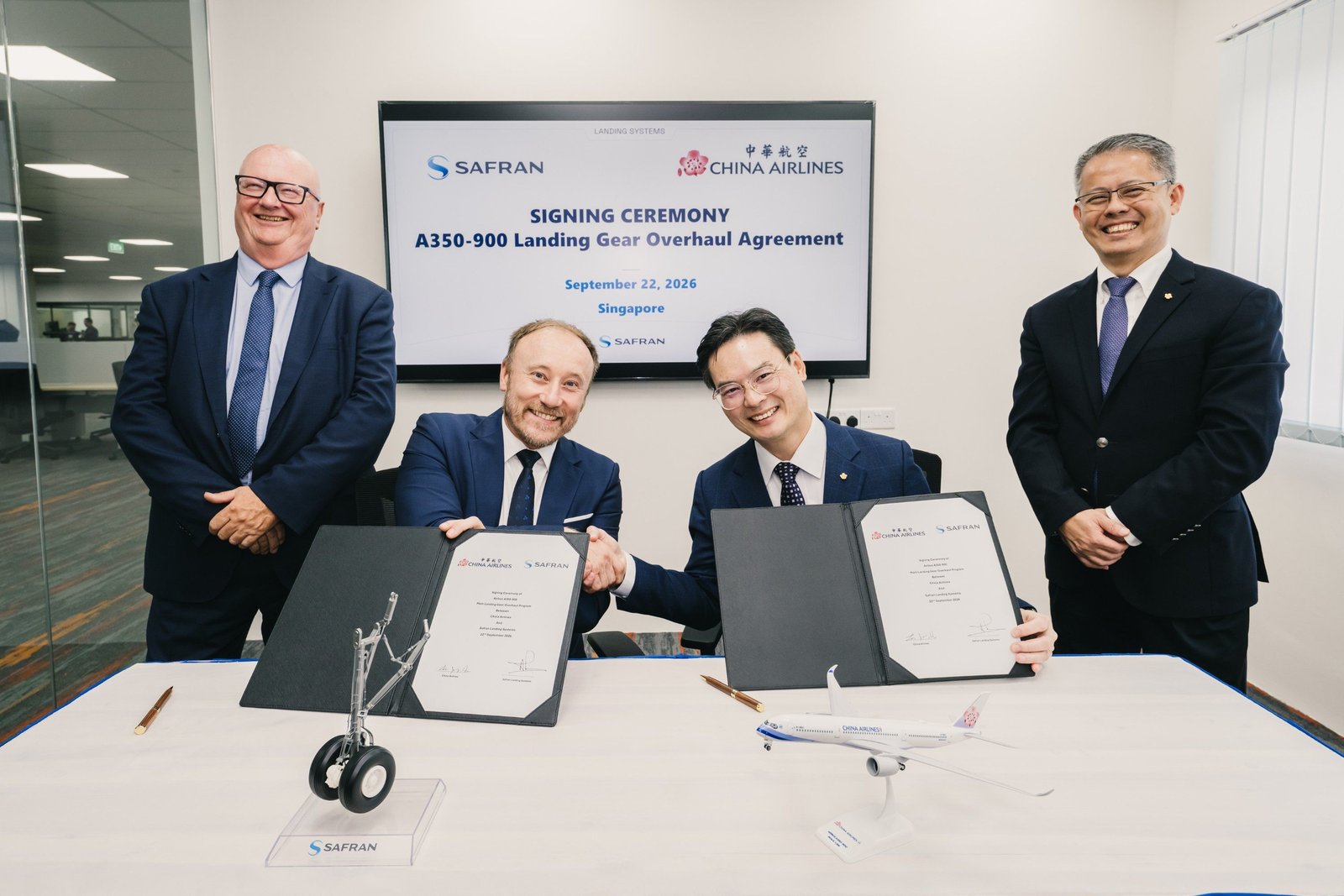
GMR Aero Technic signed an agreement with Spirit AeroSystems to become an authorised repair centre in India for nacelles, radomes and flight-control surfaces on narrowbody aircraft, including the Boeing 737 NG and MAX. Spirit AeroSystems became part of Boeing in December 2025.
Repairing these components in India can reduce transport costs and turnaround times. Large nacelle parts require specialised packing and may occupy an entire road trailer. Gopinath said that, for some of these parts, “the cost of shipping is more than the repair cost.”
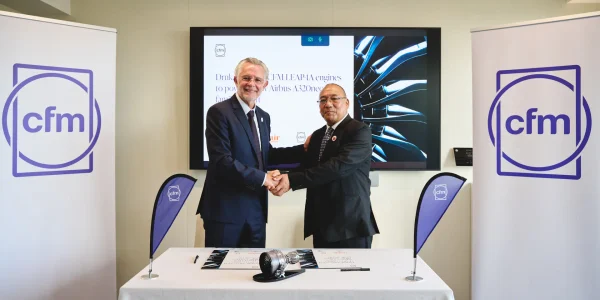
A more recent licence agreement with Honeywell covers the maintenance, repair and overhaul of seven line-replaceable unit types installed on CFM International LEAP engines powering the Airbus A320neo and Boeing 737 MAX. Line-replaceable units (LRU) can be removed and replaced individually without dismantling the complete engine.
Gopinath described the seven LRU types as representing a pool of more than 1,000 components. He said GMR Aero Technic would enter this segment gradually.
The company also wants to handle more of the component work arising during an airframe check. Gopinath identified nacelles, flight-control surfaces and heat exchangers among the items that can be repaired in Hyderabad, reducing the need for airlines to transport them to another facility.
Training for Growth
The increase in aircraft and component capacity will require more qualified engineers and technicians. Gopinath said India has a large labour pool, but maintenance organisations need personnel who have completed the technical and practical training required for the job.
“I am not worried about manpower because we have about 1.4 billion people. Manpower is not the issue; it is the trained, ready-to-go people,” he said. “That is why we have our own school, with DGCA and EASA approvals, where we do basic training, type courses and ancillary training for the industry.”
Now in its third year of operation, the GMR School of Aviation offers aircraft maintenance engineering programmes under DGCA and EASA requirements. Its four-year integrated programme combines two years of classroom instruction with two years of practical training at GMR Aero Technic, followed by aircraft type training.
Airbus is the school’s technical partner, supporting its curriculum, maintenance and training standards, and instructor development.
Gopinath said training numbers must also account for Indian engineers taking up positions with MRO companies in Singapore, the Middle East and other overseas markets.
He expects this movement to continue and believes India must train enough qualified personnel to meet requirements at home and abroad.
“India is a supply source for the world,” he said.“We need to factor in that headcount. There will be a certain number of people going overseas, but we have to build those numbers so that there are still enough people to serve the industry.”
Also Read: Safran Marks a Strategic Shift with Hyderabad Emerging as the New Global LEAP Engine Hub

Aviation Jeta is an aviation news platform covering airlines, airports, aircraft, and global aviation developments. We publish accurate, well-researched, and detailed aviation news and industry insights from around the world.