












Gogo’s Multi-Orbit Connectivity Strategy for Business Aviation in India


Business aviation connectivity is entering a phase in which operators want more than simple in-cabin internet access. They are looking for dependable coverage across regions, better support for different aircraft types, and solutions that can adapt to changing mission needs. In markets such as India, that expectation is becoming even more important as fleets grow, routes diversify, and customers place greater value on consistency, privacy, and service support. Tom Phillips, Regional Director – APAC, Gogo, says the company is addressing that need through a portfolio built around global coverage, flexible deployment and support for customers that move between systems as their requirements change. Gogo Galileo, Plane Simple and air-to-ground connectivity form the core of that offering, with privacy, cybersecurity and upgrade paths also part of the wider approach.
How has the integration of Satcom Direct changed Gogo’s positioning in business aviation connectivity, and what does the company now define as its core offering?
Thanks to the integration of Satcom Direct, Gogo is now the only multi-orbit, multi-band in-flight connectivity provider that delivers solutions purpose-built for business and military/government aviation.
Previously a mostly US-focused company, Satcom Direct also allowed Gogo to become truly global, with 16 offices worldwide and an international network of MROs and customers. Gogo’s wide-ranging industry-leading product portfolio offers best-in-class solutions for all aircraft types, from small to large and heavy jets and beyond.
The Gogo offering now uniquely incorporates air-to-ground systems in the continental United States and parts of Canada (CONUS region) and provides access to multiple high-speed satellite networks: both low earth orbit (LEO) and geostationary earth orbit (GEO).
Gogo’s solutions deliver consistent, global tip-to-tail connectivity through a sophisticated suite of software, hardware, and advanced infrastructure supported by a 24/7/365 in-person customer support team as well as an extensive educational curriculum.
Another important part of Gogo’s core offering is its commitment to data privacy and cybersecurity. It even offers cybersecurity training for customers and never uses customer data for any other purpose than to help tailor future solutions. It does not use customer data to develop other products or artificial intelligence.
What are the key products and connectivity solutions Gogo is currently offering to business aviation customers?
Gogo’s three main connectivity solutions are the Gogo Galileo and the Plane Simple satcom services, which offer worldwide coverage, and the Gogo Air-to-Ground (ATG) tower network, which offers coverage in North America.
The Gogo Galileo terminal, launched last year, is powered by the Eutelsat OneWeb low-earth-orbit (LEO) constellation, delivering reliable high-speed, low-latency broadband globally. There are two types of electronically steered antennas (ESA) that can be chosen within the Gogo Galileo portfolio: HDX and FDX.
The HDX provides a compact, lightweight, low-power and high-performance solution with reliable speeds of up to 60 Mbps, optimised for light to large-cabin aircraft. The FDX, the larger full-duplex antenna for larger business jets and executive airliners, can deliver consistent speeds of up to 195 Mbps to the aircraft, delivering maximum throughput and performance for the most demanding connectivity customers.
The Gogo Plane Simple system connects with geostationary earth orbit (GEO) satellites, which provide global high-speed broadband. The Viasat Global Xpress constellation delivers Ka-band while SES FlexExec provides Ku-band connectivity dedicated to business aviation. The Plane Simple antennas are tail-mounted and small enough to be installed on mid-size aircraft.
The Air-to-Ground (ATG) hardware provides affordable equipment for those with limited budgets flying within the contiguous United States, Alaska and parts of Canada.
Gogo has been placing increasing emphasis on LEO, GEO and multi-orbit connectivity. What is driving this shift in how operators evaluate connectivity solutions?
Customers in India and the entire Asia-Pacific region have diverse operational profiles, from light jets operating domestically to large-cabin aircraft flying intercontinentally. Gogo offers scalable solutions that align with these mission needs and budgets, including flexible hardware options and service plans. The company works with customers to find the best connectivity solution for their aircraft, operational profile, and budget.

Gogo’s multi-orbit, multi-band connectivity architecture is designed to give business aviation operators more redundancy to support a consistent, flexible, and seamless inflight internet experience by intelligently combining LEO, GEO, and, if in North America, ATG networks.
Rather than relying on a single satellite system, customers with more than one system can select the best available network in real time, or allocate specific systems to the principal, crew, or entourage, to optimise speed, latency, and reliability across different flight regions and operating conditions.
This approach enables uninterrupted global coverage — including remote and polar routes — while providing redundancy in high-traffic or congested airspace environments.
How does Gogo Galileo fit into your current connectivity offering, and what role is it intended to play for business aviation customers?
The Gogo Galileo satcom solution is the newest technology offering, launched in March 2025. It stands out as providing high-speed and low-latency connectivity globally, allowing multiple passengers to stream movies, conduct video calls, email, text, game – simultaneously.
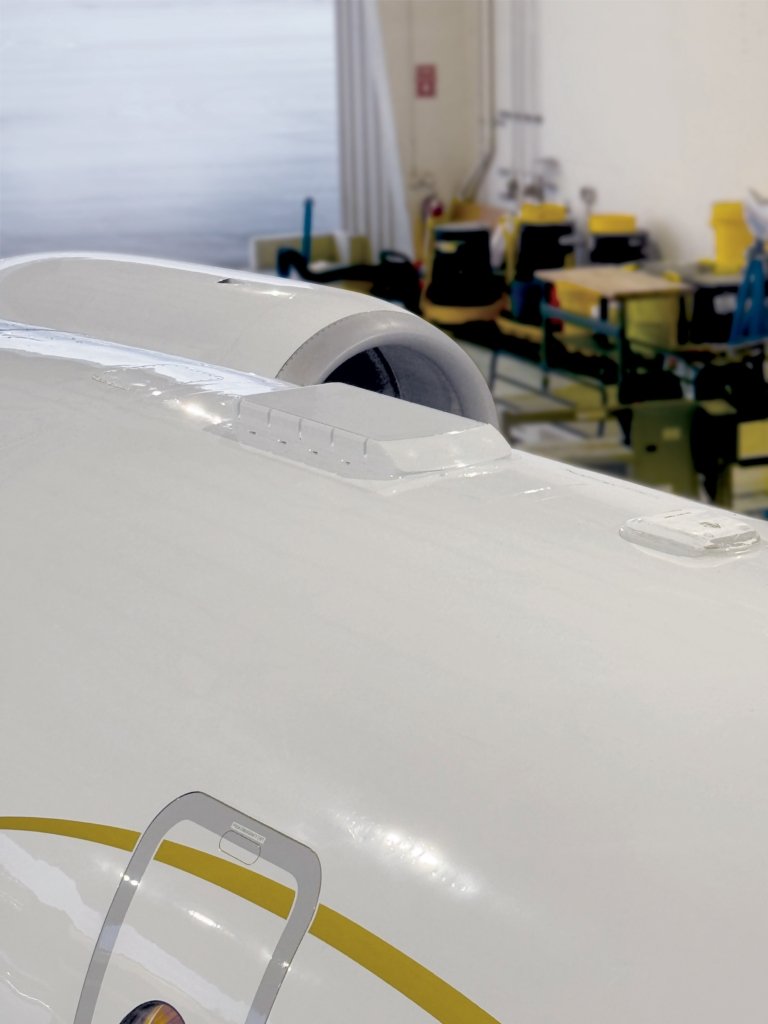
Powered by state-of-the-art LEO satellites, the cabin broadband is fast, snappy and responsive.
In addition to this, the smaller antenna in the Gogo Galileo portfolio, the HDX antenna, can be mounted on light aircraft, such as the Pilatus PC-12 and PC24, the Embraer Phenom 300 and Cessna Citations, delivering low-latency internet to this category for the first time.
The larger full duplex antenna, the FDX, is designed to support the needs of large to heavy jets and executive airliners, enabling passengers to live their digital terrestrial lives at altitude by delivering maximum throughput and performance.
Our Gogo Galileo satcom service, like all Gogo services, is supported by a 24/7/365 team to make sure that our customers are always connected.
Where does Plane Simple GEO sit within Gogo’s portfolio, and which operator segments is it designed for?
Gogo’s tail-mounted Plane Simple antennas are small enough to be equipped on mid-size aircraft and enable high performance and global coverage using GEO satellites. GEO satellites are mature, proven technology and involve fewer satellites covering a wide area, stationed further from the Earth. Connectivity with the Plane Simple hardware, even in congested areas, can be ensured by manipulating the antenna’s direction.
Operators in India and Asia-Pacific requiring a more resilient, flexible, and seamless inflight internet experience can opt for a multi-orbit system, combining the Gogo Galileo and the Gogo Plane Simple options. This approach enables uninterrupted global coverage — including remote and polar routes — while providing redundancy in high-traffic or congested airspace environments.
Gogo Plane Simple, for example, plays a critical role for flights operating over mainland China by enabling compliant, uninterrupted connectivity where other solutions may be restricted, significantly simplifying flight planning and operational execution for customers in the region.
What role does the AVANCE platform play in Gogo’s current offering, particularly for operators looking to upgrade existing systems?
The AVANCE portfolio is a router, and like Gogo’s entire family of routers, it acts as the in-cabin broadband enabler. Depending on which solution suits the aircraft mission profile, the appropriate AVANCE or SDR router will be selected.
For example, legacy ATG customers upgrading to the new LTE tower network in North America will require an AVANCE L3 box, while a customer selecting the new Gogo 5G ATG service will require an AVANCE LX5, which can also connect with the Gogo Galileo system should the mission profile change
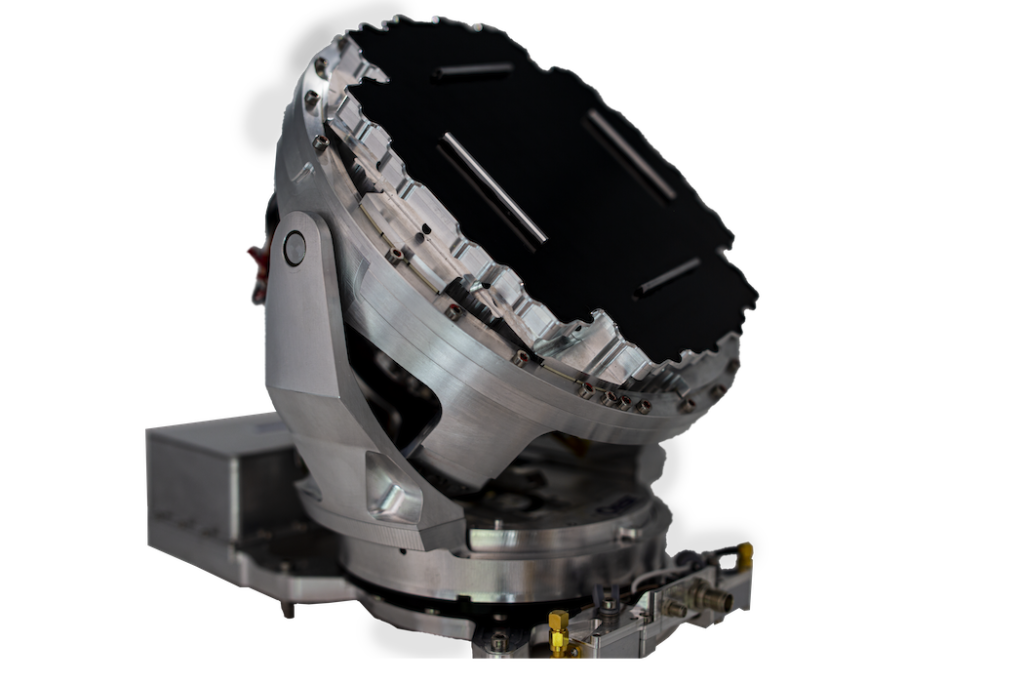
The AVANCE platform supports operational flexibility and simplified upgrade pathways for customers who change their flying patterns or when aircraft are sold, and the next owners choose to opt for satcom as opposed to ATG options. Gogo is making the option to switch, upgrade or add new connectivity systems easy to achieve.
We recognise the need to minimise downtime, so we have focused on always holding inventory, creating systems that are easy to install, and that comprise common infrastructure, so that replacing units is streamlined. Gogo is future-proofing connectivity for its customers so they can protect their connectivity investment.
Gogo has partnered with Elektronik Lab India for the Indian market. How does that partnership support your approach to market entry and execution?
Elektronik Lab (EIPL) is an authorized Gogo partner in India, providing local sales, and in-country support. As the demand for consistent global inflight connectivity grows across India, having such a partner is crucial to offer flexible, multi-orbit, multi-band solutions purpose-built for business aviation and military/government applications to customers on the Indian sub-continent.
Gogo believes a local presence is essential in a region like India. Having teams on the ground enables faster response times, deeper regulatory understanding, and closer customer relationships. It also ensures that operators receive timely technical support, installation guidance, and operational assistance, which directly translates into higher reliability, reduced downtime, and improved customer confidence.
Are there recent deployments in Asia-Pacific or nearby markets that you see as relevant benchmarks for India?
Gogo is actively investing in long-term partnerships with MROs, OEMs, completion centres, and service providers across APAC. Our strategy focuses on knowledge sharing, joint training, and local enablement so partners can deliver consistent, high-quality support. By empowering regional partners with tools, expertise, and direct access to Gogo resources, we create a collaborative ecosystem that benefits operators throughout the region.
In terms of nearby benchmarks, Australia is a good example. Over the past decade, Australia has become a cornerstone of Gogo’s APAC strategy. Key milestones include establishing local support capabilities, expanding our partner network, and supporting a growing fleet of business and special-mission aircraft. These achievements have given us deep regional insight, operational maturity, and a strong foundation to support future growth across the broader APAC market.
Where does India rank in Gogo’s Asia-Pacific priorities today, and which parts of your offering are best suited to the market?
India is among Gogo’s top priorities in the Asia-Pacific region as the country’s rapidly growing business aviation sector is driving increased demand for reliable, high-speed inflight connectivity to support secure communications, operational efficiency, and evolving passenger expectations across business, military, and government aircraft. We have worked with an Indian agent for more than a decade and understand that this is a market that is now beginning to rapidly evolve. It’s an exciting market for us.
We are supporting this activity by attending the growing number of dedicated Indian business aviation events, investing in forming local partnerships with MROs and resellers and working alongside our Indian customers to understand their specific needs.
Gogo has indicated that it is seeking approval for LEO satcom installations in India. What is the current status of that process?
We are monitoring the evolution of the approvals and are ready to work with our customers once they are confirmed. As mentioned above, we recognise that India presents a huge opportunity and is a country that embraces new technology.
We want to help our customers optimise their connectivity solutions when LEO comes online. In the meantime, we can easily support their connectivity needs through our existing GEO options – which perfectly exemplifies why our multi-orbit, multi-band strategy is of benefit to business aviation globally. We always have a solution.

Once approvals are in place, what do you see as the main constraint to scaling in India?
As a maturing business aviation sector, India has enormous amounts of potential to be a world leader in business aviation. However, challenges remain to attain that status. The business aviation infrastructure is not quite adequate yet for optimal scaling in India: dedicated terminals, hangar space and Fixed-Base Operator (FBO) services are not numerous enough to ensure smooth operations for business aviation around the country.
The regulatory environment is also complex and includes hurdles such as high import duties on aircraft and spare parts, slowing the expansion of an industry that could otherwise likely take off very rapidly. For Gogo, the number of connectivity solutions we can sell depends on the number of business aircraft in a country, so evidently, for us, the more business aircraft there are, the more opportunities we have to sell.
Which aircraft segments or operator types in India do you expect to adopt these systems first?
We anticipate that owners of mid to large jets will be the ones equipping their aircraft with our systems initially. As the market evolves, we believe there will be further interest from the light categories. We also anticipate that special mission and government operations will want to optimise their connectivity solutions with our offering. We know the government is very focused on aviation, so we are pleased to engage with the Indian sector to support its evolution.
Also Read: What LEO and Multi-Orbit Connectivity Mean for Business Aviation in India