










Asia’s sustainable aviation fuel market is moving from early trials to commercial production, with new capacity, policies and cross-border partnerships taking shape across the region. IATA expects global SAF production to reach about 2.4 million tonnes in 2026, equivalent to roughly 0.8 per cent of worldwide jet-fuel use, leaving considerable room for growth. Singapore has established an early production and policy base; Malaysia, Indonesia and Thailand have brought facilities into operation or advanced major projects; and India has announced indicative SAF blending targets for international flights while assessing its domestic feedstocks. LT Leong, President and Executive Officer of the Sarawak-based advisory firm NGen Energy, discusses the technologies, raw materials, project structures and regional cooperation that will influence the next phase of SAF development in Asia.
What role does NGen Energy play in the sustainable-fuels sector, and how did that work begin?
NGen Energy is a boutique advisory and project-development firm based in Sarawak. We work across sustainable aviation fuel, renewable diesel and related renewable-fuel projects, helping companies assess feedstocks, select technology, structure partnerships and connect with investors, engineering firms and potential fuel buyers.
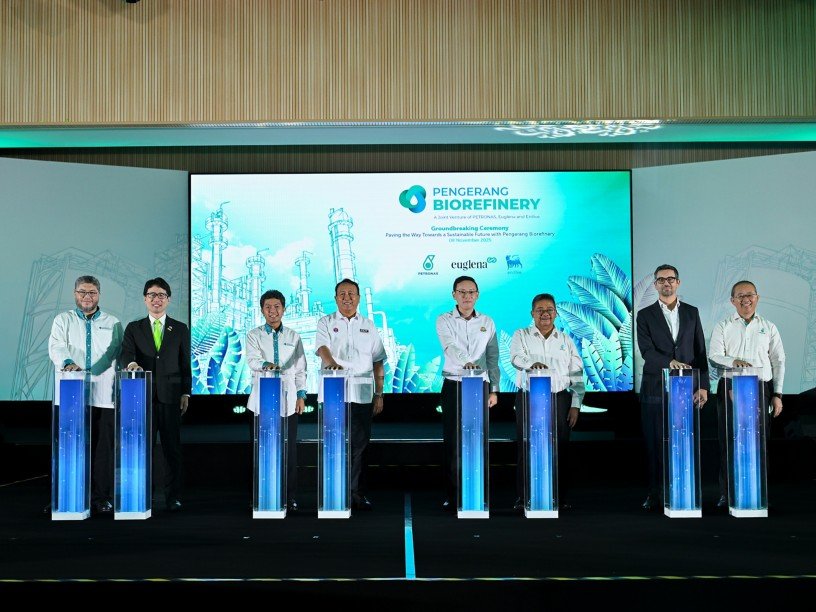
One of our earliest major assignments was with Euglena of Japan. The company began with algae-based health and consumer products before expanding into biofuels. I have worked with Euglena as a strategic adviser on SAF for about eight years, including support for its activities in Malaysia. In 2019, we introduced Euglena to Petronas, and that relationship later became part of the biorefinery now under construction in Pengerang, Johor, with Enilive.
The Pengerang facility is designed to process up to 650,000 tonnes of renewable feedstock a year into SAF, hydrotreated vegetable oil and bio-naphtha. Operations are expected to begin in the second half of 2028. The 650,000-tonne figure refers to feedstock throughput, not SAF output alone.
We have also worked on a proposed HEFA project in Sarawak involving Sulzer, Apeiron Bioenergy, Oiltek and SEDC Energy. Our role is often to assemble the commercial and technical relationships that a project needs before it can move forward.
How far has the Asia-Pacific SAF market progressed?
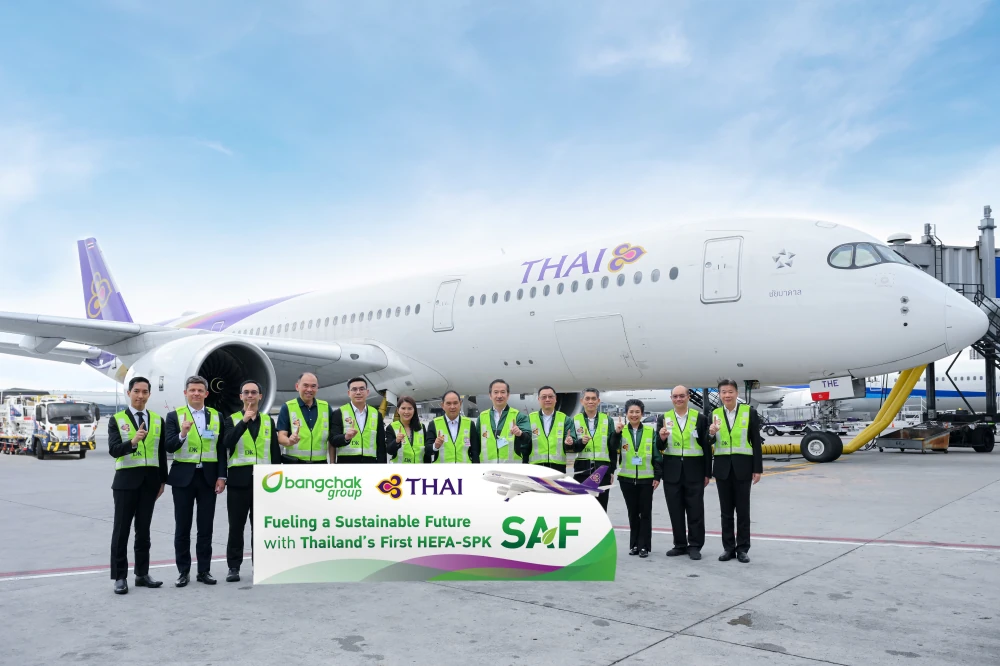
The region has moved beyond isolated demonstration projects, although each market is at a different stage. Singapore has taken an early lead: Neste says its expanded Singapore refinery can produce up to one million tonnes of SAF a year. Thailand’s Bangchak plant began commercial operations in May 2026 and has a stated production capacity of one million litres a day, using used cooking oil as its main feedstock.
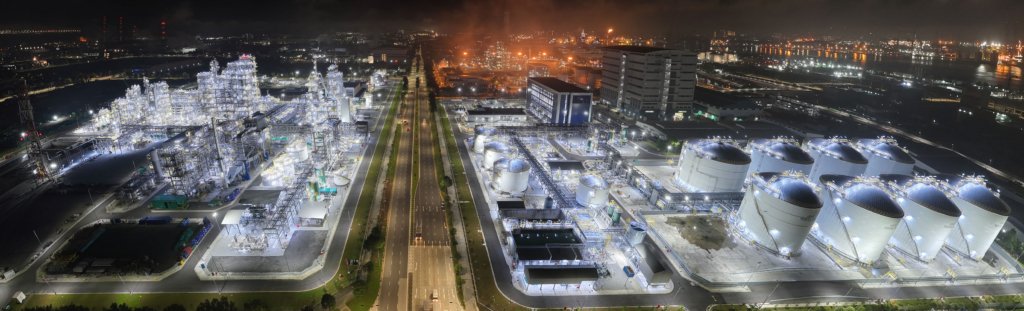
Indonesia’s Pertamina began shipments in August 2025 of SAF produced at its Cilacap refinery and made partly from used cooking oil. In Malaysia, EcoCeres commissioned and started up its Johor facility in October 2025 and inaugurated it in January 2026. The plant has a combined maximum capacity of 420,000 tonnes a year across SAF, hydrotreated vegetable oil and renewable naphtha. The Pengerang biorefinery remains under construction.
These projects are at different stages: some plants are operating, others have been commissioned, and Pengerang remains under construction. Together, they show that a regional production base is forming as governments introduce targets and support measures for the period from 2027 to 2030.
How does CORSIA affect demand for SAF in the region?
CORSIA (Carbon Offsetting and Reduction Scheme for International Aviation) does not prescribe a SAF blending percentage.
Airlines can, however, reduce their CORSIA offsetting requirements by claiming the lifecycle-emissions reductions from CORSIA-eligible fuels. Actual demand therefore depends on national blending policies, airline procurement plans, commercial agreements and the support available to narrow the price gap with conventional jet fuel.
Which production pathways are best suited to Southeast Asia?
HEFA (hydroprocessed esters and fatty acids) is likely to remain the region’s dominant commercial pathway in the near term because Southeast Asia has access to used cooking oil, animal fats and eligible residues from vegetable-oil processing. The technology is commercially established, and banks and project developers are more familiar with it than with newer routes.
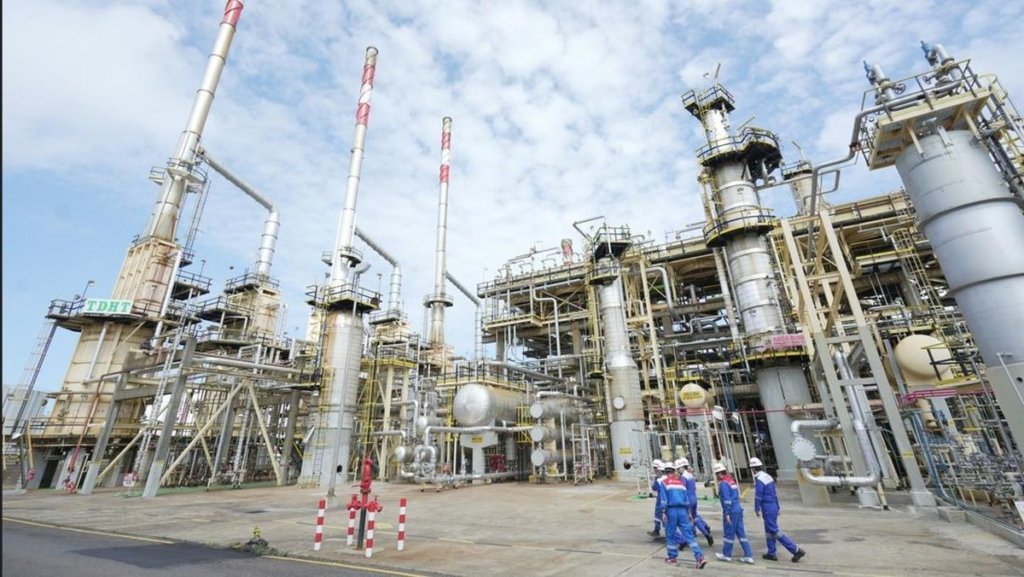
HEFA will not be the only option. Agricultural and forestry residues can support Fischer-Tropsch projects, in which biomass is converted into synthesis gas and then into liquid fuel.
Depending on collection costs and sustainability requirements, possible raw materials include rice straw, sugarcane residues, coconut residues and forestry waste.
Alcohol-to-jet may also be relevant in markets with established sugar and ethanol industries, including Thailand and India, although the economics will depend on local feedstock cost and supply.
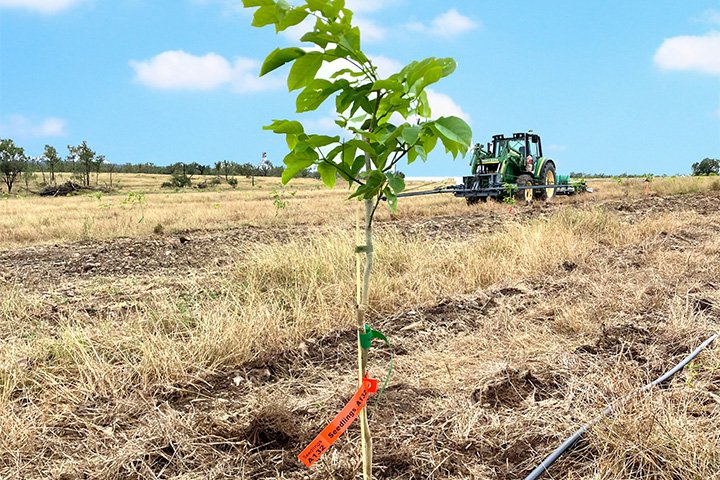
Algae-derived oils remain technically interesting, but commercial cultivation is still expensive. Pongamia is another option under study. It is a non-edible oilseed tree being evaluated as a possible HEFA feedstock. An Australian demonstration project is assessing its growth, yield and land compatibility, but commercial viability has not yet been established.
In the longer term, electrofuels made from renewable hydrogen and captured carbon dioxide are expected to become more important. Their present cost and electricity requirements make projects difficult to finance in many Asian markets, particularly where established bio-based pathways are easier to develop.
Can airlines use SAF without changing aircraft or airport fuel systems?
Yes. Once a SAF component is blended within its approved limit and the finished fuel meets the applicable jet-fuel specification, it can be used in existing aircraft, engines and airport fuel infrastructure without modification. That compatibility is one of SAF’s main practical advantages.
Most approved SAF components must currently be blended with conventional jet fuel. The maximum permitted share depends on the production pathway. Under ASTM D7566, the principal HEFA-SPK pathway permits blends of up to 50 per cent, while some other pathways have lower limits. Flights using 100 per cent SAF have been demonstrated, but work is still under way to approve unblended SAF for general commercial use.
Actual blends are generally well below the certified maximum because supply remains limited and SAF costs several times more than conventional jet fuel. Initial national targets of one or two per cent can still be useful because they allow producers, airlines, airports and regulators to establish supply, accounting and certification systems before volumes rise.
What determines whether a feedstock can support a viable SAF project?
The feedstock assessment must come before the refinery design. Demand for used cooking oil has increased because SAF and renewable diesel producers compete for the same material, while Asian supplies are also sold into overseas markets. A project therefore needs reliable information on recoverable volume, collection costs, competing uses, transport distance and documentation of origin.
Technical suitability alone is not enough. To qualify under CORSIA or meet European rules, the fuel and its feedstock must satisfy the applicable sustainability and lifecycle-emissions criteria, with traceability throughout the supply chain.
A material may work in the process but still fail to satisfy a target market’s rules if its origin cannot be demonstrated.
Location is equally important. Transporting used cooking oil over long distances adds cost, while moving low-density biomass can be even more expensive.
Plants should therefore be assessed in relation to mills, plantations, agricultural areas or established collection hubs. Projects that rely on imported feedstock must also account for possible changes in export taxes, domestic-supply rules and trade policy.
Can smaller or modular plants play a meaningful role?
Large refineries will remain important because they can produce at scale, but they also require substantial capital and a wide feedstock gathering area. Where a feedstock is dispersed, a smaller plant closer to the source may be more practical.
In our experience, plants in the range of about 50,000 to 150,000 tonnes of annual capacity can be developed in stages, but the capacity measure must be defined as either product output or feedstock throughput.
A distributed model can shorten transport routes and create opportunities for local companies and communities. It does not remove the basic requirements of the business: the project still needs dependable feedstock, proven technology, finance, certification and a buyer for the fuel. Modular construction may reduce initial capital and development time, but it cannot repair a weak commercial plan.
Where do you see the strongest opportunities for India?
India has several potential feedstock routes rather than a single national answer. Used cooking oil and other eligible lipids may support HEFA projects; the country’s sugar and ethanol industries may support alcohol-to-jet; and agricultural residues may support Fischer-Tropsch production or, after conversion to cellulosic ethanol, alcohol-to-jet.
The right choice will depend on local supply, collection systems, power and hydrogen availability, water, logistics and the intended buyer.
India has announced indicative SAF blending targets for international flights of one per cent in 2027, two per cent in 2028 and five per cent in 2030. These are policy targets rather than a binding blending mandate. The important next steps are to define eligible feedstocks, certification rules, incentives and compliance arrangements. A strong domestic market could also support exports, subject to sustainability standards and trade policy.
How is NGen Energy approaching possible work in India?
We are meeting Indian producers and feedstock companies to understand what raw materials are available to them and what support they require. Depending on the project, we can introduce technology providers, engineering firms, investors, feedstock buyers or airline customers.
We are also advising Southeast Asian companies that are examining feedstock supplies from India. Our aim is to connect complementary capabilities rather than impose a single model on every project.
What is the purpose of the India–Asia-Pacific SAF Working Group?
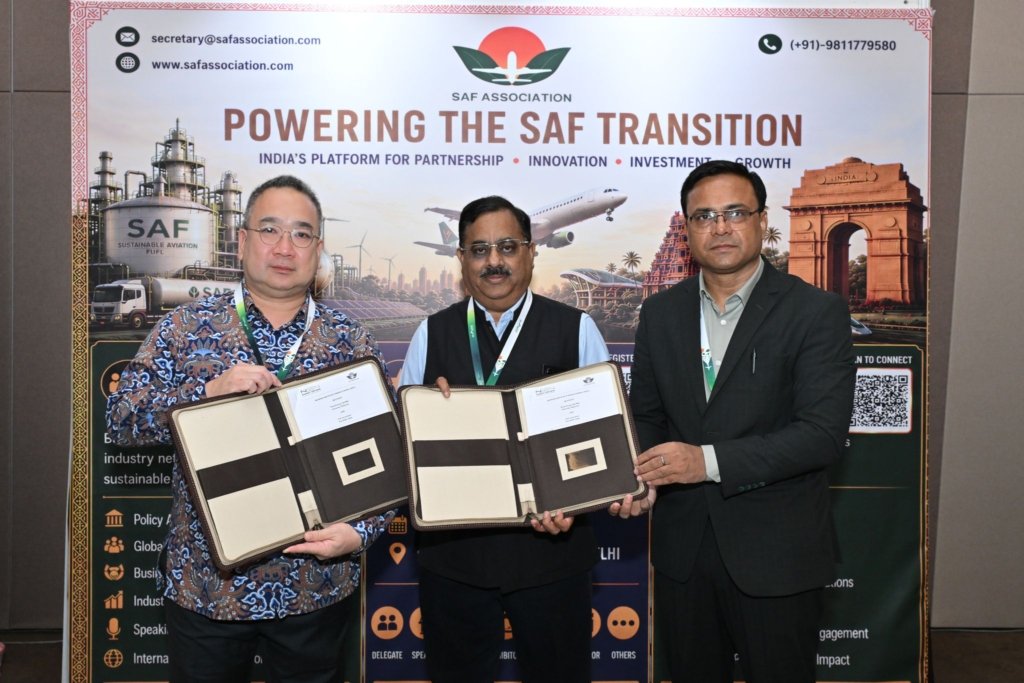
The SAF Association and NGen Energy launched the India–Asia-Pacific SAF Working Group in July 2026.
It is intended to bring together policymakers, airlines, airports, energy companies, fuel producers, technology developers, certification bodies, investors and research organisations.
The initial priorities include feedstock development, sustainability standards, regional trade and supply chains, policy coordination, investment and project development.
It is a cooperation framework rather than a single refinery or investment commitment, so its value will depend on whether it produces practical task forces, commercial introductions and implementable projects.
What is MyAERO, and how does it support this work?
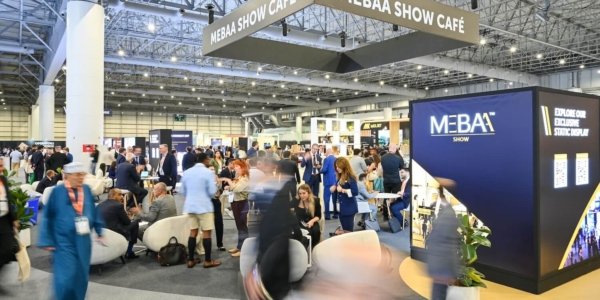
The event discussed here is the MyAERO Sustainable Aviation APAC Symposium, co-organised by NGen Energy and the National Aerospace Industry Corporation Malaysia, or NAICO Malaysia. It is an industry conference, not an NGen compliance or data platform. We began it because discussions involving airlines, fuel producers, technology companies, airports, financiers and government agencies were often taking place separately.
The event has grown from a half-day programme into a three-day conference. NGen reports that the latest edition attracted more than 400 participants from over 20 countries. The purpose is to make the discussion accessible to a broad cross-section of the industry and to give participants time to identify partnerships across the supply chain.
What changes do you expect in Asia’s SAF market over the next three to five years?
More HEFA capacity is likely to enter operation because it is the most mature commercial route and several regional projects are already advanced.
At the same time, feedstock constraints should encourage more work on Fischer-Tropsch, alcohol-to-jet and electrofuels, as well as smaller plants located nearer to their raw-material base. The decisive issue will be whether policy creates dependable demand. Producers need clear rules, airlines need access to supply at a manageable cost, and financiers need confidence in feedstock, certification and long-term purchase arrangements.
If Asian markets can coordinate standards and strengthen cross-border supply chains while developing several technology pathways, the region will be better placed to expand SAF without relying too heavily on any single raw material.
Also Read: Cleared for Take-Off: India’s SAF Push Gains Momentum