












India’s SAF transition must move from policy ambition to commercial scale

Key Takeaways
- The India SAF Conclave 2026 emphasised the need for commercially viable sustainable aviation fuel projects and a reliable supply chain.
- Key speakers called for collaboration across government, industry, and investors to power the SAF transition effectively.
- India can leverage diverse SAF pathways, including used cooking oil and waste, to support its aviation decarbonisation goals.
- Successful implementation of SAF requires a focus on cost efficiency, carbon intensity, and equitable distribution of benefits across stakeholders.
- The conclave aims to connect Indian stakeholders with international partners for knowledge exchange and technological advancements.
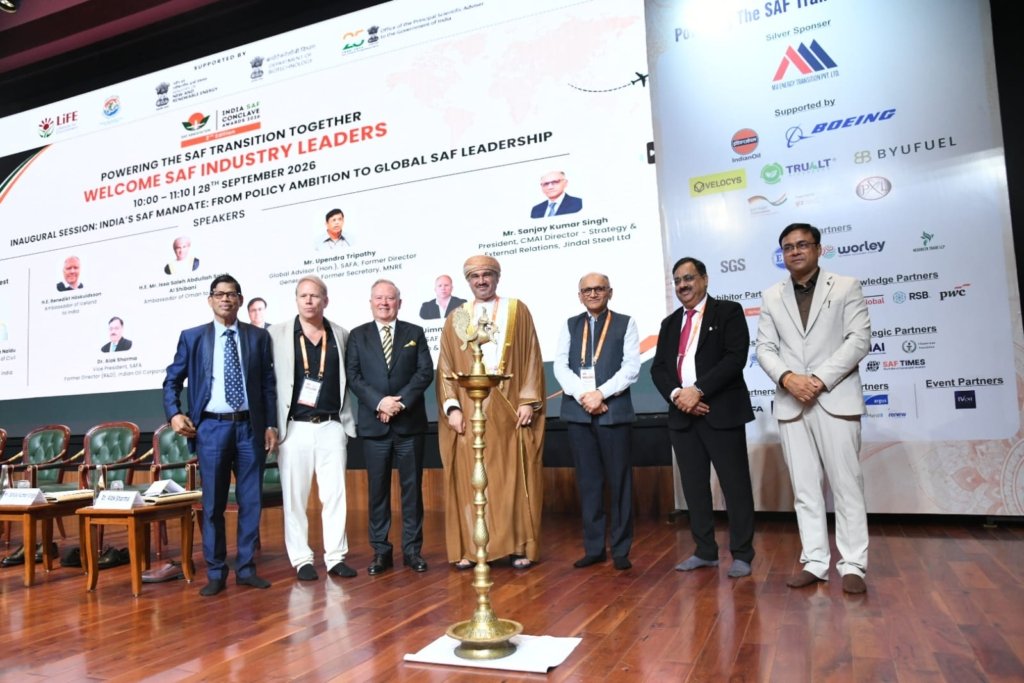
India’s sustainable aviation fuel (SAF) transition must now move beyond policy ambition and early-stage technology demonstrations to commercially viable projects, reliable feedstock supply and investment-ready infrastructure.
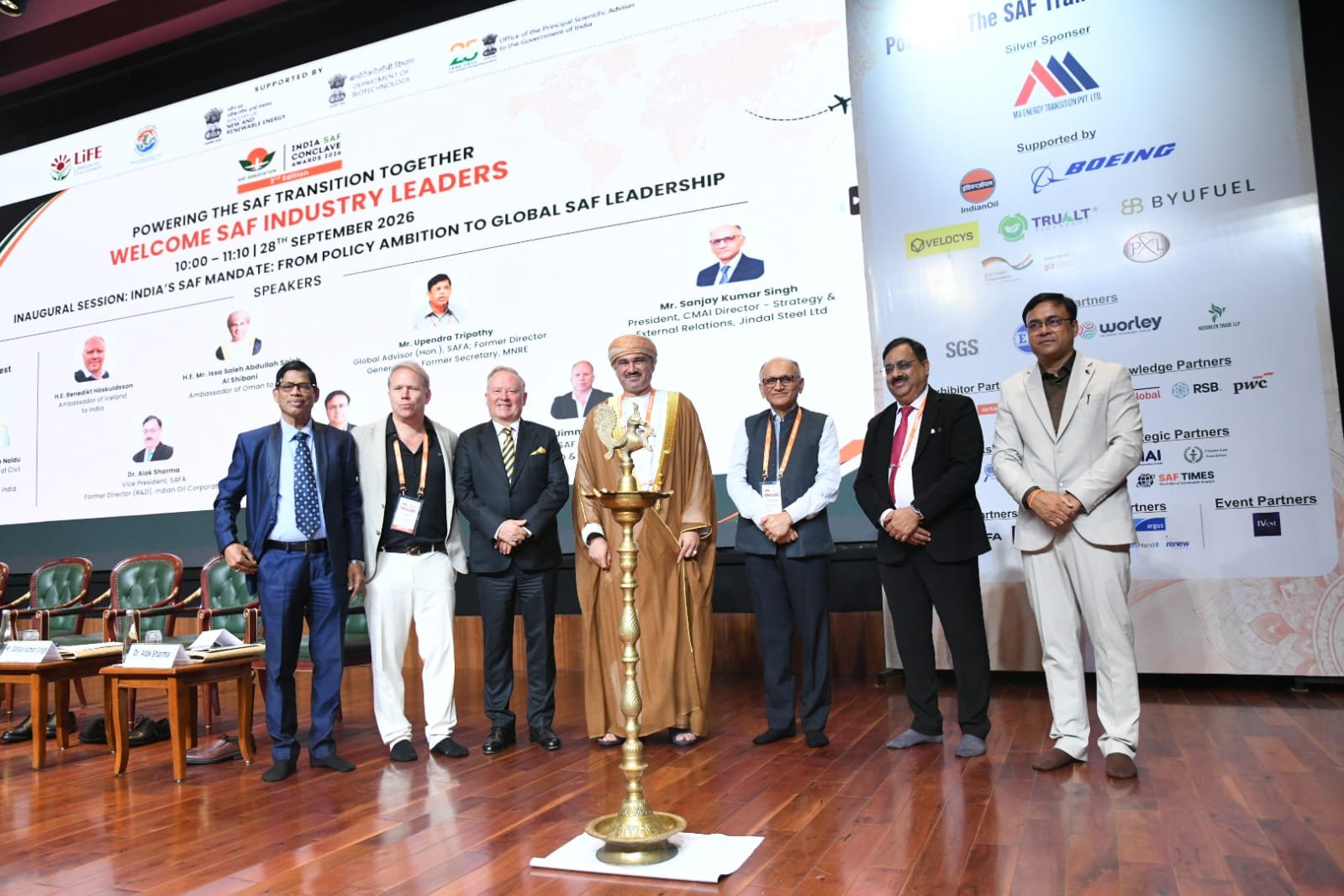
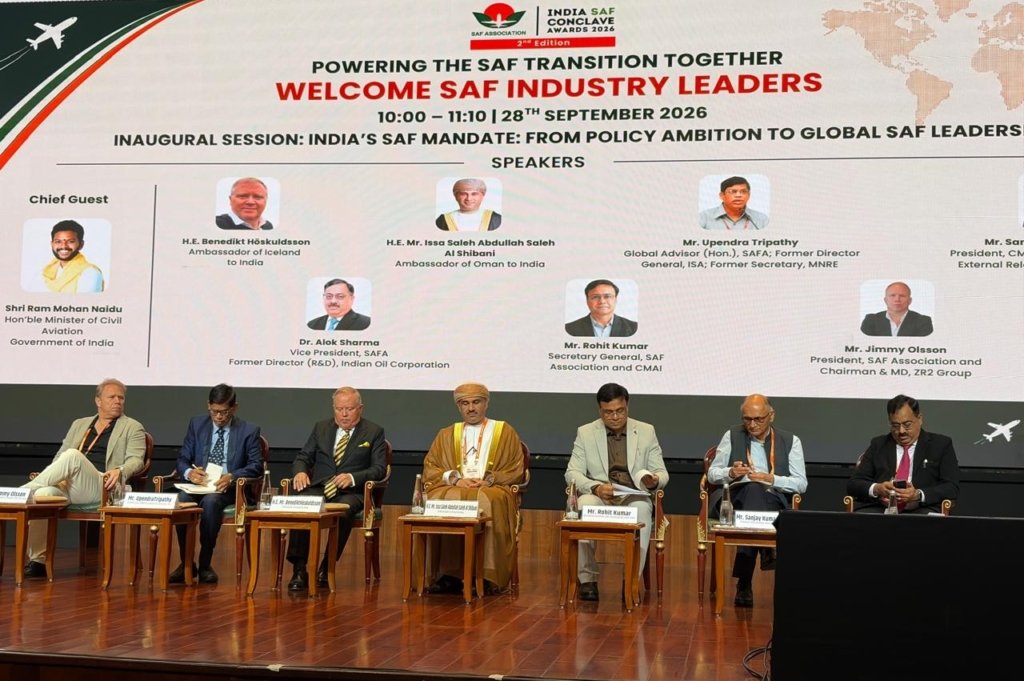
That was the central message at the inaugural session of the India SAF Conclave & Awards 2026, which brought together policymakers, airlines, refiners, technology developers, investors and other participants across the SAF value chain.
The event is expected to attract more than 500 delegates, participants from more than 25 countries and more than 100 industry speakers.
Opening the session, Rohit Kumar, Secretary General of the SAF Association, said the association’s objective was to “power the SAF transition” through collaboration.
He described the conclave as “not just an event”, but an opportunity for technical learning, policy discussion and engagement across the SAF ecosystem. He said the association wanted to build a strong foundation for SAF through a “bottom to top” approach, covering feedstock, technology, policy and investment.
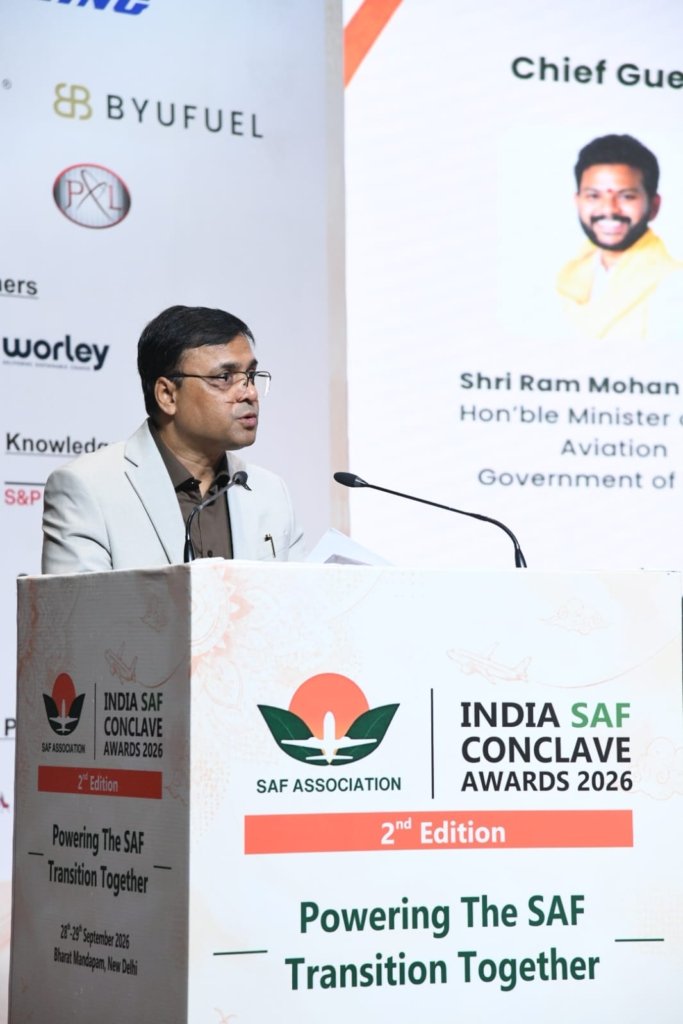
India, he said, had an opportunity to develop multiple SAF pathways, including those based on used cooking oil, agricultural and municipal waste, alcohol-to-jet technologies and emerging e-SAF routes.
Kumar also pointed to the potential contribution of SAF to the wider bioeconomy, including additional income for farmers and the creation of new industrial value chains.
Kumar said the association was awaiting the government’s SAF mandate and had been informed that it could be announced in the first or second week of October.
He added that the mandate would be important in translating industry interest into projects, while stressing that effective implementation would require close coordination between policymakers and the private sector.
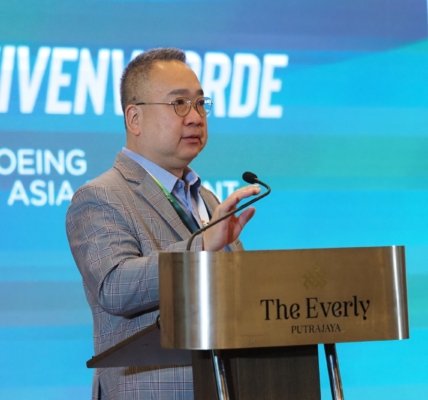
Jimmy Olsson, President of the SAF Association, said India had a major opportunity to implement SAF at scale. In the context of geopolitical uncertainty and a depreciating currency, he described SAF as a potential source of economic value for the country.
“It can be a dual source income for India,” Olsson said, referring to the possibility of supporting farmer incomes, increasing exports and reducing imports. He argued that India was among the countries best positioned to develop the sector, although he acknowledged that the transition would involve both challenges and significant opportunities.
Olsson said SAF should not be treated as a single fuel or technology. “SAF is many products into one. It’s actually a platform,” he said, referring to the range of technologies and feedstocks that could be used, including hydrogen, agricultural products, biomass, solar energy, batteries, waste-energy cogeneration and power-to-liquid technologies.
He urged developers to focus on three priorities: cost efficiency, carbon intensity and the distribution of value across the SAF chain. SAF production, he said, would need to become cost-efficient, with a target of bringing the price below US$2,000 per tonne. Producers should also focus on delivering high-quality fuel with the lowest possible carbon-intensity score.
The benefits of SAF development, Olsson added, should not be concentrated among project developers. “Distribute this wealth not only for yourself,” he said, calling for value to be shared with farmers, technology partners, suppliers and vendors.
Dr Alok Sharma, Vice-President of the SAF Association and former Director of Research and Development at Indian Oil Corporation, placed the transition within the context of India’s proposed blending targets of 1% by 2027 and 5% by 2030.
He said these targets should be viewed not merely as obligations, but as milestones towards establishing an aviation decarbonisation industry.
“SAF should not be viewed as a single technology,” Sharma said. Instead, it should be understood as a portfolio of pathways with different levels of technological maturity, feedstock requirements, production economics, lifecycle performance and scalability.
For India, he identified five pillars for successful deployment: sustainable feedstock, proven technologies, reliable infrastructure, predictable airline demand and strong investment signals.
Feedstock availability, particularly used cooking oil, could become a significant constraint as production expands. Sharma also stressed the importance of certification, traceability, chain-of-custody systems, lifecycle emissions accounting and audit readiness.
Sharma said Indian Oil was preparing to begin SAF co-processing at one of its Panipat refinery units and expected the initiative to support the initial 1% requirement.
However, moving from early projects to commercial-scale production would require long-term offtake agreements, viability-gap funding, production incentives, concessional finance, green finance and access to carbon-market revenues.
The conclave’s focus, he said, was not limited to discussion. Its matchmaking sessions were intended to connect SAF developers with airlines, fuel buyers, investors, financial institutions, technology providers, certification bodies and policymakers.
The speakers also highlighted the importance of international cooperation. The conclave’s programme included discussions on feedstocks, ethanol-to-jet technologies, e-SAF, certification and global policy frameworks, reflecting the event’s stated aim of connecting Indian stakeholders with international technology providers, standards bodies and investors.
The message from the inaugural session was clear: India’s SAF transition will require more than a SAF blending mandate. It will depend on coordinated action across government, industry, airlines, refineries, farmers, technology companies, investors and international partners.
As Sharma put it, the key question is no longer whether SAF can be produced, but whether it can be produced “consistently, sustainably, safely and economically at commercial scale.”
Also Read: Building Asia’s Sustainable Aviation Fuel Supply Chain