






Key Takeaways
- VRpilot offers a unique training solution with its VRflow platform, allowing pilots to train together in a virtual cockpit from different locations.
- The platform supports training for over 40 airlines across various aircraft types, enabling pilots to practice procedures until automatic.
- VRflow focuses on task-sharing and structured interactions between crew members, mimicking real-world aviation protocols.
- Instructors receive real-time data during training sessions, helping them track each student’s progress without directly judging performance.
- Onboarding new airlines usually takes 2-3 weeks, as VRpilot customises training content to match each airline’s specific procedures and manuals.
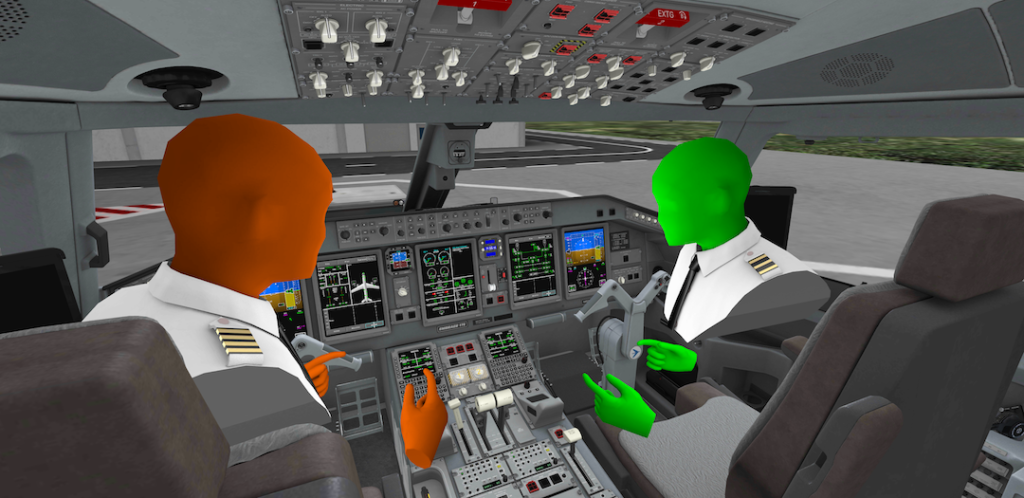
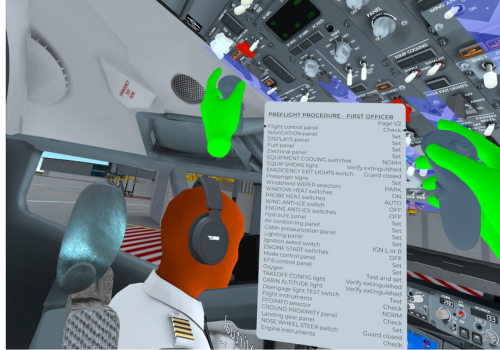
A captain and a first officer who are thousands of miles apart can put on headsets and find themselves standing in the same Airbus A320 flight deck, close enough to watch each other reach for the same switch, while an instructor supervises the session from the jump seat despite being logged in from an entirely different country and time zone.
There is no aircraft involved and no simulator booking required, just a training session running across three locations at once, because that is how VRpilot, a company founded in Denmark in early 2019, has chosen to approach a problem that airlines have wrestled with for decades: pilots need to drill a procedure until it becomes automatic long before they ever sit in a full-motion simulator, and arranging that kind of repetition on real hardware is both costly and hard to schedule.
VRpilot’s answer is a platform called VRflow, built by a team of pilots, software engineers, and 3D graphic artists- a mix that shows up in how closely the platform mirrors real aviation practice rather than resembling a generic training simulation with an aircraft skin on top.
The platform now supports training for more than 40 airlines and ab initio flying schools across roughly 30 aircraft types, including the Airbus A320 family, several variants of the 737, Embraer’s E-Jets, and business aircraft such as the Cessna Citation and the Pilatus PC-12 and PC-24, with custom builds available for aircraft outside that list, ranging from light singles up to full airliners.
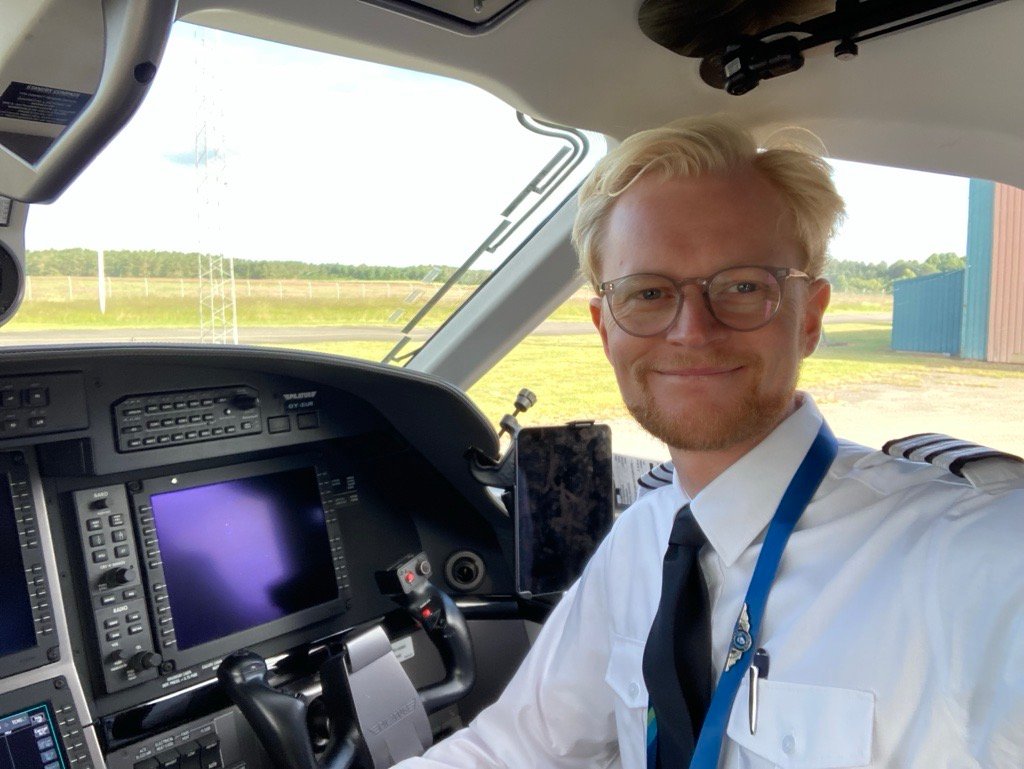
Thor Paulli Andersen, Partner at VRpilot, describes the idea behind the platform as an attempt to turn a document into something a pilot can physically do rather than just read. “We think of what we do as an interactive, live version of the flight crew operating manual or the standard operating procedure document,” he says.
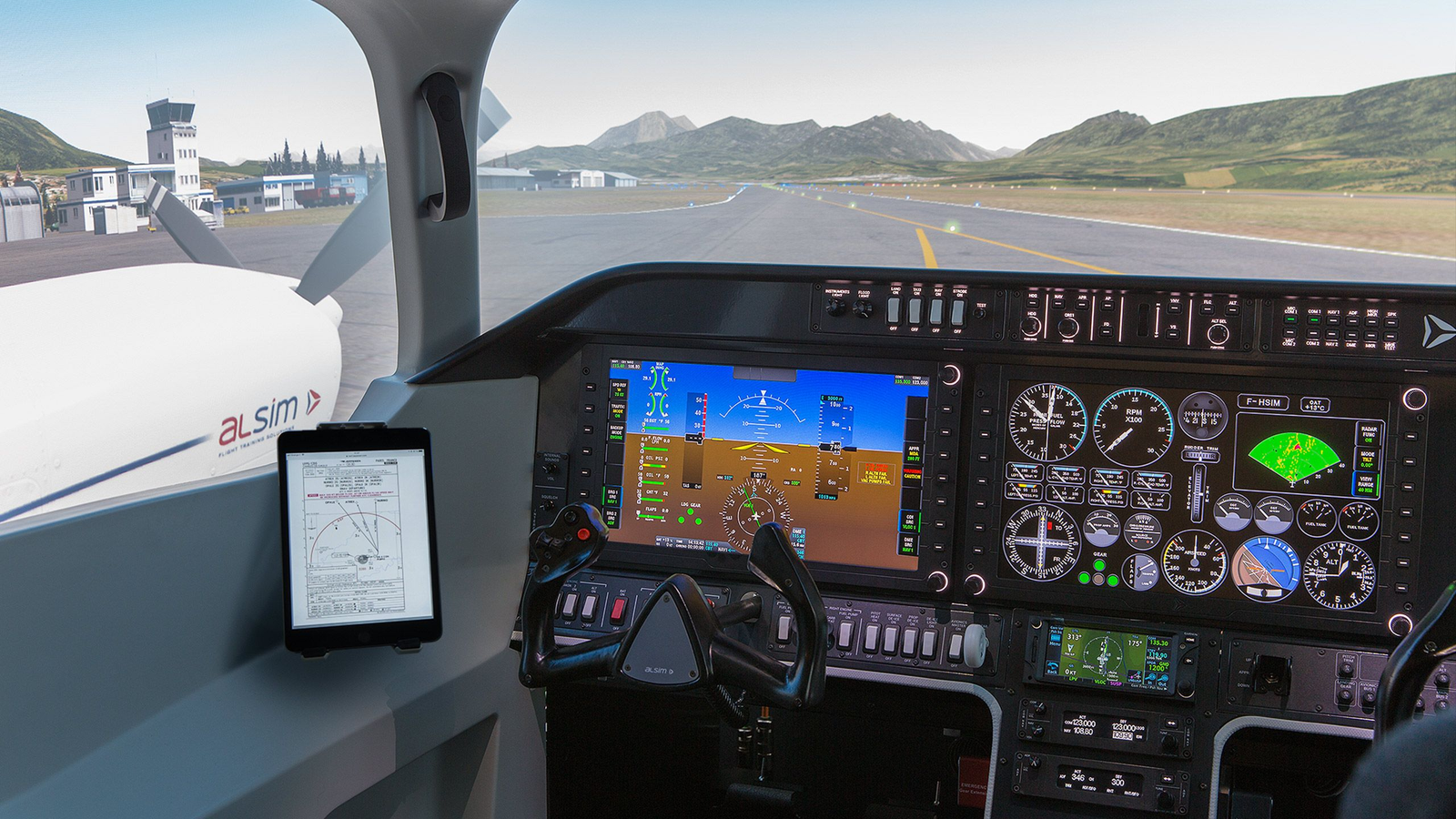
Where a manual tells a pilot the correct sequence of actions, VRflow puts them inside a full-scale replica of the cockpit and has them perform that sequence until it requires no conscious thought.
Training scenarios cover the ordinary phases of a flight such as engine start, takeoff, cruise, descent, and landing, as well as the emergencies that crews hope never to face for real, like a system failure or smoke filling the cabin, with students expected to work through each one exactly as it is laid out in their aircraft’s manual.
Pilots can go through these scenarios alone or with another pilot in the same virtual cockpit, and it is this second option that produces the platform’s most notable feature, since geography stops mattering once both pilots are wearing headsets.
Multi-crew training is not simply two people occupying the same virtual space. Andersen explains that VRflow is built specifically around how airline crews actually divide responsibility: task-sharing between the captain and first officer, the separate roles of pilot flying and pilot monitoring, and the call-outs and visual checks that structure a real flight deck, alongside cabin crew and maintenance training and full replication of how the aircraft’s systems behave.
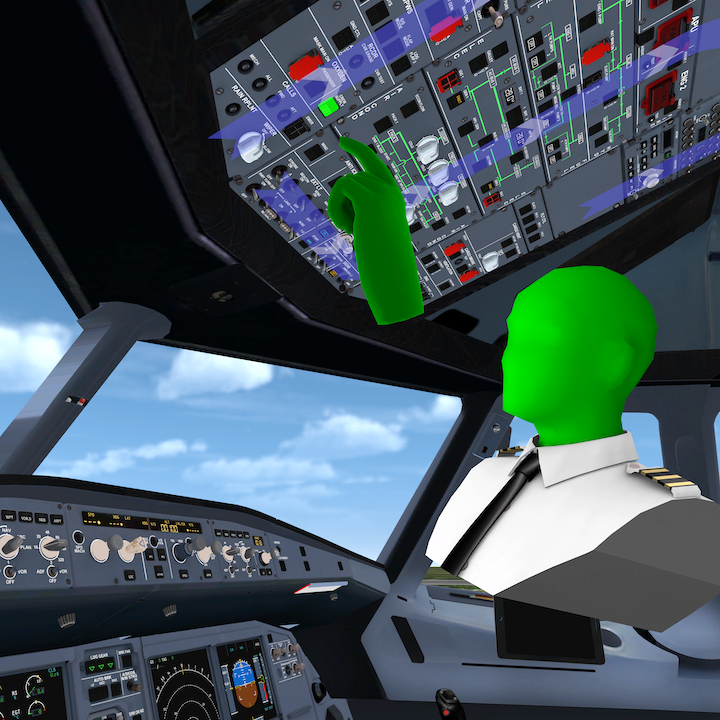
During a shared session, pilots can see each other’s hand and head movements and hear each other’s voices over a live connection, and an instructor joining the same session can communicate with students the same way, watching the procedure play out from the jump seat in real time.
What the platform stops short of doing is deciding whether a student performed well, even though every session produces a stream of data on completion time, error count, and how much guidance was needed along the way, all of which feed into a record instructors can use to see who has cleared both a training mode and an exam mode.
Andersen is firm that this data does not extend into judgment, since interpreting it properly requires knowing an individual airline’s own standards.
“We just provide the raw data,” he says. “We do not judge what is good, what is bad. That is not us being the subject matter experts. That is the task of the instructors, of the different airlines. That’s what they know; that’s what they’re good at.”
He points out that speed alone can be misleading, since a pilot who moves through a procedure too quickly may be skipping a check they should have made, while one who moves too slowly may be revealing a different kind of problem, and only an airline’s own instructors are positioned to tell the difference, given how much it depends on their particular training culture.
Whether all this translates into fewer hours logged on a full flight simulator depends less on the individual student, in his account, than on the operator, since some airlines’ local aviation authorities grant credit for using VRflow in place of flat-panel training, while others use it simply to keep required simulator hours closer to the minimum because their pilots arrive already better prepared.
None of this data disappears once a session ends. Andersen describes training results syncing either to VRpilot’s own dashboard or directly into an airline’s existing training management system every time a student finishes a scenario, which lets instructors track progress in real time rather than waiting for a report afterwards.
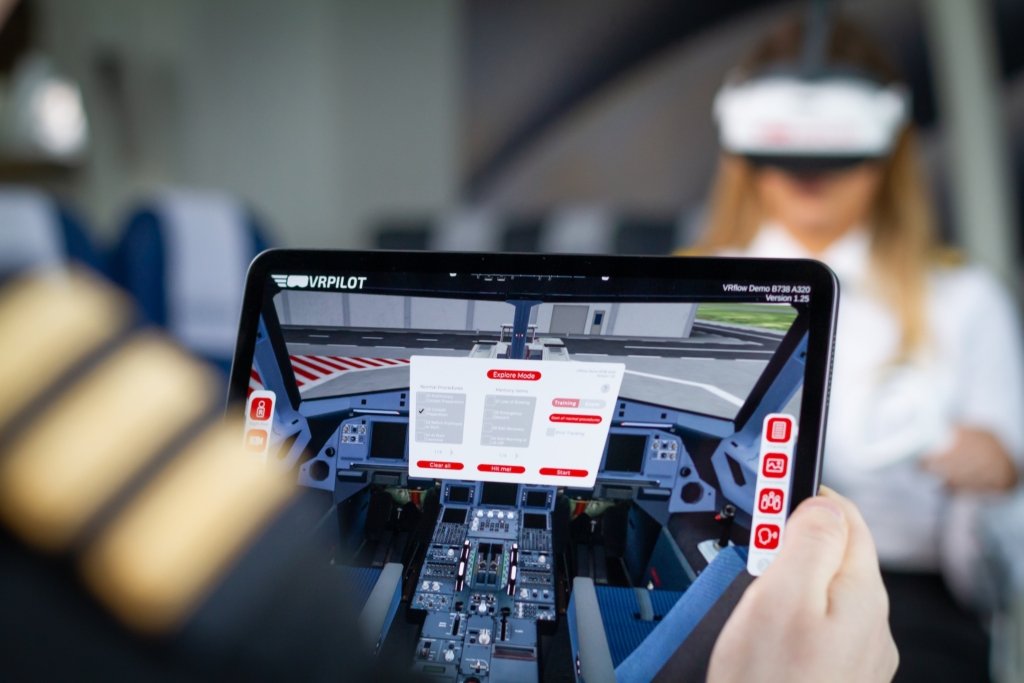
An accompanying instructor app lets a supervisor watching a live session see where a student’s attention is focused and step in as needed, using laser pointers and voice guidance to redirect them without being physically present in the room, let alone in the same country.
New airlines join the platform with the same premise in mind: two airlines flying the same aircraft type will almost never share the same procedure, and VRpilot treats that as the norm rather than a complication.
Onboarding an airline onto an aircraft type already in its library typically takes two to three weeks, during which the airline’s own procedures and manual are compared step by step against the existing build, a draft is sent to the airline’s instructor for review, and a few rounds of feedback follow before it is considered ready for students.
“Not two airlines are the same, even if two airlines operate the exact same aircraft in the same country,” Andersen says. “Their SOPs will be different. So we adapt to both the flight deck layout and to the SOP. That’s what we do.”
Also Read: Business Aviation in India: Long on Demand, Short on Reform